
If you own a Tesla Model X, or you’re thinking about buying one used, battery life is probably top of mind. The good news is that with a few simple habits, you can dramatically maximize Tesla Model X battery life, keep degradation slow and predictable, and preserve both range and resale value over the long haul.
Big picture: Tesla batteries age slowly, not suddenly
Why Model X battery care matters (especially if you’ll own it a long time)
Tesla’s large battery pack is the single most expensive component in your Model X and the backbone of its performance and range. While the car’s software does a lot behind the scenes to protect it, your choices as an owner still make a meaningful difference to long‑term battery health, especially once the original 8‑year battery warranty expires.
What smart battery habits actually buy you
Four reasons to take Model X battery life seriously
Consistent range
Higher resale value
Less stress
Better performance
Step 1: Know your Model X battery chemistry and warranty
Not every Tesla battery behaves the same way. Most Model X packs in North America use nickel‑based chemistries (often referred to as NCA or similar), which prefer living away from full charge and extreme heat. That’s different from some newer Tesla Model 3/Y rear‑wheel‑drive cars that use LFP batteries and are happy at 100% daily.
Model X batteries at a glance
How most Model X packs behave in day‑to‑day use.
| Model X type | Typical chemistry | Daily charge recommendation | Warranty (US) |
|---|---|---|---|
| Most Model X (all years in US) | Nickel‑based (e.g., NCA) | Charge to ~70–90% for daily use | 8 years / 150,000 miles (varies by trim) |
| Newer LFP‑equipped Teslas (Model 3/Y RWD, not X) | LFP | Often recommended to 100% regularly | Varies by model |
If you’re unsure which battery you have, assume a nickel‑based chemistry and follow the conservative guidance below.
Don’t apply LFP advice to a Model X
Your exact warranty terms depend on model year and configuration, but most U.S. Model X packs are covered for 8 years and 150,000 miles with a minimum 70% capacity retention guarantee. That doesn’t mean the pack is “done” at 70%, it just defines Tesla’s obligation. Smart habits can keep you well above that threshold.
Step 2: Daily charging habits that maximize Model X battery life
The single biggest lever you control is how high and how often you charge. Tesla’s own Model X owner’s manual recommends using a daily charge limit below full and reserving 100% for trips you plan in advance.
Daily charging habits for a long‑lived Model X battery
1. Set a sane daily charge limit
For most non‑LFP Model X vehicles, a daily limit between <strong>70% and 85–90%</strong> is a good balance between convenience and battery longevity. If your commute is short, go lower, there’s no benefit to carrying extra unused state of charge every day.
2. Reserve 100% for road trips
Charging to 100% occasionally is fine when you need maximum range. Just <strong>time the charge to finish shortly before departure</strong>, and start driving soon instead of letting the car sit at 100% for hours.
3. Charge more often, by smaller amounts
Depth of discharge matters. Topping from, say, 40% to 70% more frequently is gentler than regularly running from 5–10% up to 90–100%. Think of it as giving the pack lots of light workouts instead of occasional marathons.
4. Favor Level 2 over repeated Supercharging
Level 2 charging at home or work is easier on the battery than frequent DC fast charging. Whenever possible, let nightly Level 2 charging handle most of your energy needs and save Superchargers for road trips or genuine time crunches.
5. Leave the car plugged in when parked at home
Tesla explicitly recommends leaving your Model X <strong>plugged in when you’re not driving</strong>. The car will draw from the grid as needed to manage battery temperature and offset Sentry Mode or standby losses, instead of cycling the pack unnecessarily.
6. Avoid regularly dropping below 5–10%
You don’t have to panic if you see 3% on the dash once in a while, but repeatedly running the pack down to near‑empty is harder on the cells and leaves less buffer for cold weather or detours.
Use location‑based charge limits
Step 3: Use Supercharging and fast charging strategically
Superchargers make the Model X an effortless road‑trip machine, but they’re not designed to be your only fuel source. High‑power DC charging warms and stresses the cells more than slower AC charging, especially as you approach a full pack.
Better for battery life
- Rely on home or workplace Level 2 for your routine energy needs.
- Use trip planning so you arrive at Superchargers around 10–30% rather than near‑empty.
- Unplug once you’ve reached the range you need; going from 10–60% is much faster (and easier on the pack) than sitting from 80–100%.
Habits to avoid making routine
- Daily DC fast charging when a slower alternative exists.
- Regularly charging to 100% at a Supercharger, then letting the car sit for hours.
- Back‑to‑back Supercharging sessions with no time for the pack to cool, unless necessary on a long highway push.
Watch your charging curve
Step 4: Driving habits that protect range and battery life
How you drive affects not just today’s range, but long‑term battery stress. High current, hard launches, high sustained speeds, frequent deep braking, warms the pack and increases wear. Your Model X is built to handle spirited driving, but dialing it back in everyday use pays dividends.
Driving patterns that are kind to your battery
You don’t have to baby the car, but you don’t have to drag race it either.
Smooth acceleration
Moderate cruising speeds
Maximize regen, minimize friction brakes
Think “gentle, not fragile”
Step 5: Temperature, climate control, and seasonal battery care
EV batteries are like people: they’re happiest in mild temperatures. Extended time in extreme heat or cold doesn’t just shrink range in the moment; it can speed up long‑term degradation if you’re not careful about charging and parking habits.
Why temperature management matters for your Model X battery
- Whenever possible, park in shade or a garage in hot climates. Cabin Overheat Protection helps, but it still uses energy and heat cycles the pack.
- In very hot weather, avoid fast‑charging repeatedly on a nearly full battery; high state of charge plus heat is a tough combo for longevity.
- Use the app to precondition the cabin and battery while plugged in before winter drives. Warming from the grid is gentler than asking the pack to heat itself while you drive.
- Don’t be alarmed by the blue snowflake icon in winter, that’s the car protecting a cold battery. Range and regen will come back as the pack warms.
- If you live where it gets bitterly cold and the car will sit outside, aim to park with a bit more charge (for example, 40–60% instead of 20–30%) so the car can run its own thermal management.
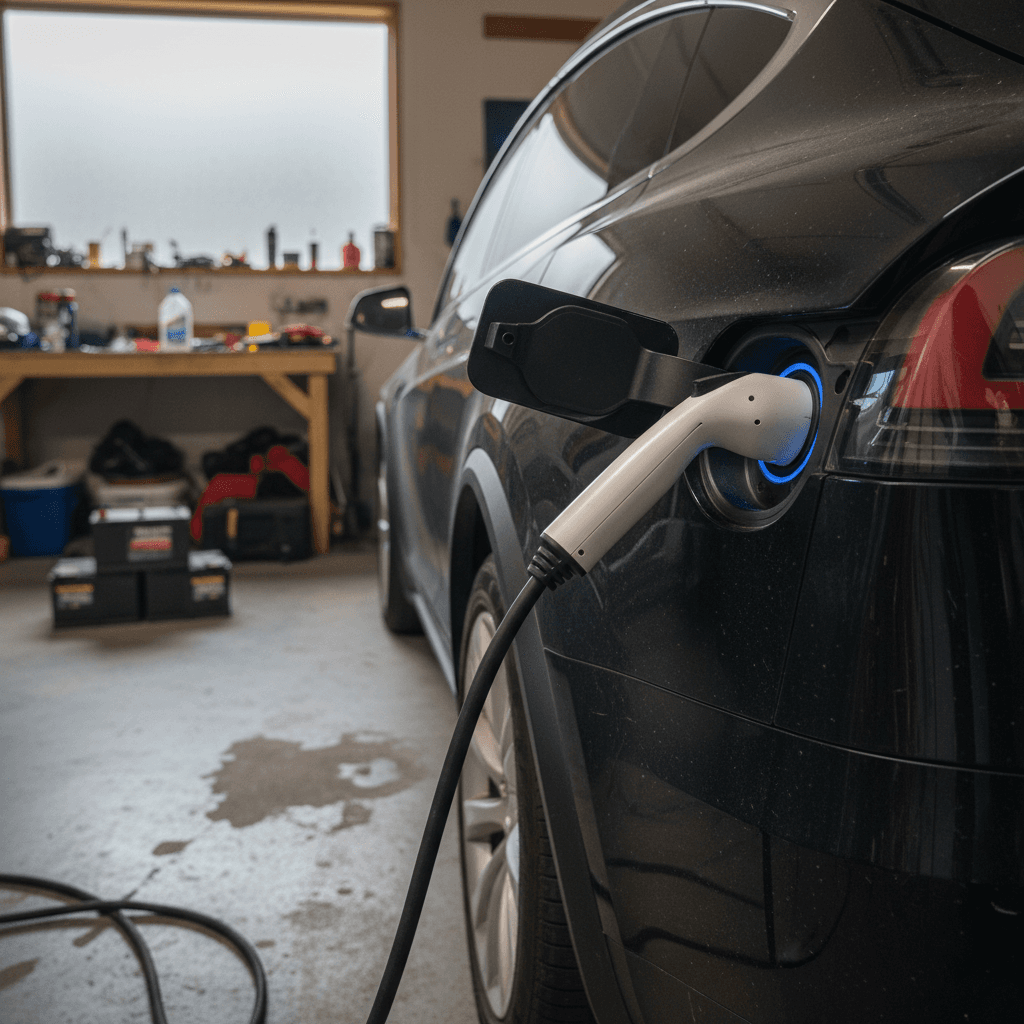
Step 6: Long-term storage and infrequent driving tips
If your Model X will sit for days or weeks, maybe you’re traveling, or it’s a second vehicle, treat storage differently than daily use. The priority shifts from convenience to keeping the pack in a comfortable middle state of charge and avoiding big temperature swings.
How to store a Model X to protect the battery
1. Aim for ~40–60% state of charge
Lithium‑ion cells age slowest in the middle of their range. Before parking for more than a week or two, adjust your charge limit and let the car settle in this band.
2. Leave it plugged in if you can
Tesla recommends leaving the car plugged in for storage. The onboard systems will sip energy as needed to maintain the pack and offset background drains from features like Sentry Mode (which you may want to disable while away).
3. Turn off unnecessary drains
Disable Sentry Mode, live camera viewing, or third‑party apps that ping the car constantly. These keep the vehicle awake and drain the battery faster than necessary during storage.
4. Avoid parking long‑term at 100% or near 0%
Parking for days at the extremes of the battery’s range is tougher on the cells. If you must leave it at a high charge for a trip, shorten that window as much as possible and let it drift back down in normal use afterward.
5. Check on it occasionally in the app
Peeking at the app once in a while is fine. Just avoid connecting so frequently that you keep waking the car and preventing it from entering deeper sleep states.
Step 7: How to monitor Tesla Model X battery health over time
It’s normal for your Model X to lose some rated range in the first couple of years, then settle into a slower decline. The key is to track long‑term trends instead of panicking over one odd reading after a software update or cold night.
Practical ways to keep tabs on battery health
You don’t need to obsess, but a little data goes a long way.
Watch the rated range at known charge levels
Track long‑term, not day‑to‑day
Use professional battery health tools when buying or selling
The reality is more boring and more encouraging: Tesla Model X battery degradation is real, but usually slower and more predictable than most people fear when the car’s been driven and charged sensibly.
If you’re shopping used, ask for charging habits (daily limits and Supercharger usage), typical climate, and any battery‑related service records. A seller who can speak clearly about how they treated the pack is often a safer bet than one who can’t.
Bonus: Battery-life tips if you’re shopping for a used Model X
Battery life isn’t just an ownership concern; it’s a buying decision. A used Model X with a healthy, gently treated pack is a very different ownership experience than one that’s spent years fast‑charging to 100% in desert heat.
Questions to ask about a used Model X battery
Use these prompts to get beyond “it seems fine” when you’re evaluating a car.
| Topic | What to ask | What you want to hear |
|---|---|---|
| Daily charging | “What percent do you usually charge to?” | Something in the 70–90% range, with 100% reserved for trips. |
| Charging location | “Mostly home charging or Superchargers?” | Mostly home or workplace Level 2, with Superchargers for road trips. |
| Climate | “Has the car lived in extreme heat or cold?” | Garage parking, moderate climates, or clear evidence of good habits in harsher areas. |
| Storage | “Did it sit unused for long stretches?” | If yes, that it was left plugged in around mid‑state of charge, not parked for months at 0% or 100%. |
| Diagnostics | “Do you have any battery health reports?” | Third‑party reports or marketplace tools like the Recharged Score that quantify health. |
When you shop through Recharged, much of this detective work is distilled into a single Recharged Score report with verified battery health and pricing context.
How Recharged helps used buyers
Tesla Model X battery life FAQ
Common Tesla Model X battery questions
Key takeaways for maximizing Tesla Model X battery life
- Keep your daily charge limit in a moderate band (around 70–90% for most Model X packs) and reserve 100% for trips you plan.
- Favor Level 2 charging and gentle driving as your default, using Superchargers and full‑throttle launches as exceptions, not your daily routine.
- Respect temperature and storage best practices: park in shade or a garage when you can, precondition from the plug in extreme weather, and store the car around 40–60% if it will sit.
- Don’t obsess over every mile of rated range, track long‑term trends instead, and use professional battery health tools when buying or selling.
- If you’re in the market for a used Model X, consider working with a specialist marketplace like Recharged, where every EV comes with a Recharged Score Report, expert guidance, and nationwide delivery so you can shop confidently from anywhere.
Treat your Model X battery well and it will likely outlast your ownership. The car’s software is already doing a lot of the hard work; your job is to give it a friendly environment, reasonable charge limits, smart charging choices, and a little common sense about temperature and storage. Those small, repeatable habits are what truly maximize Tesla Model X battery life and keep your SUV feeling strong for hundreds of thousands of miles.