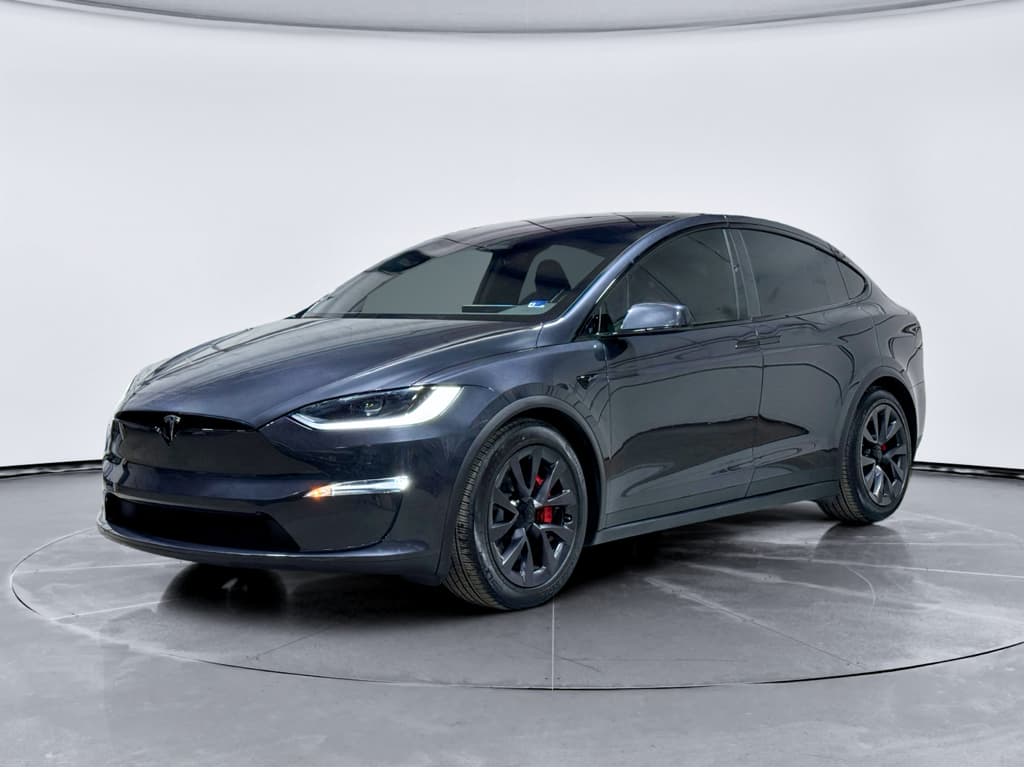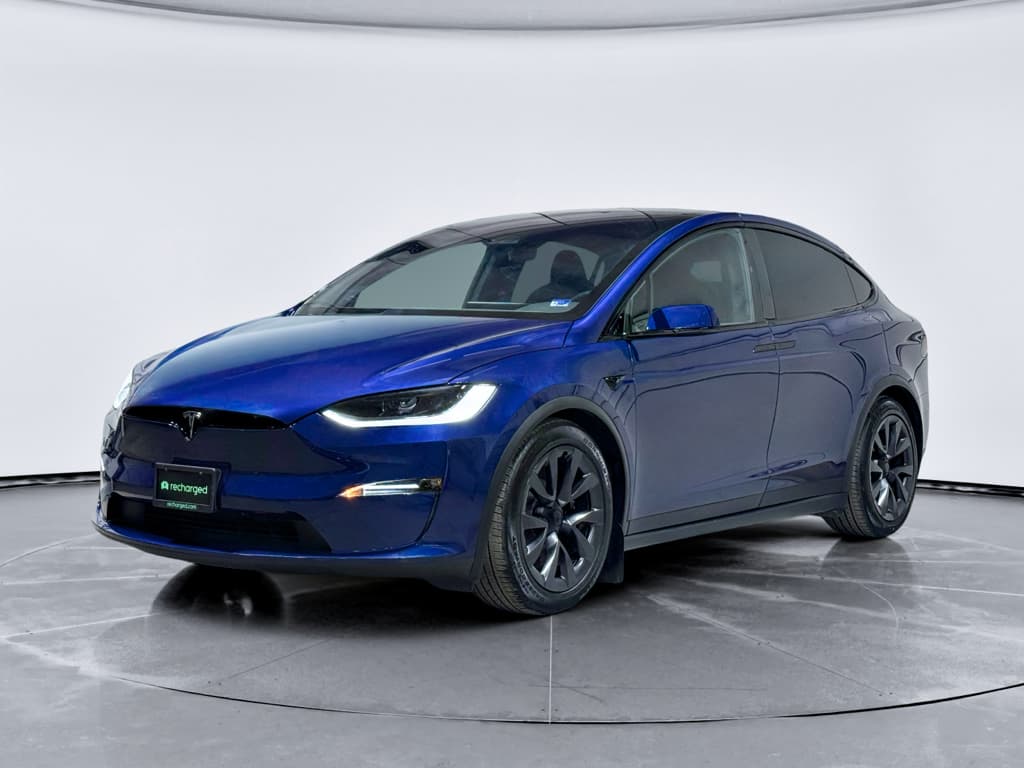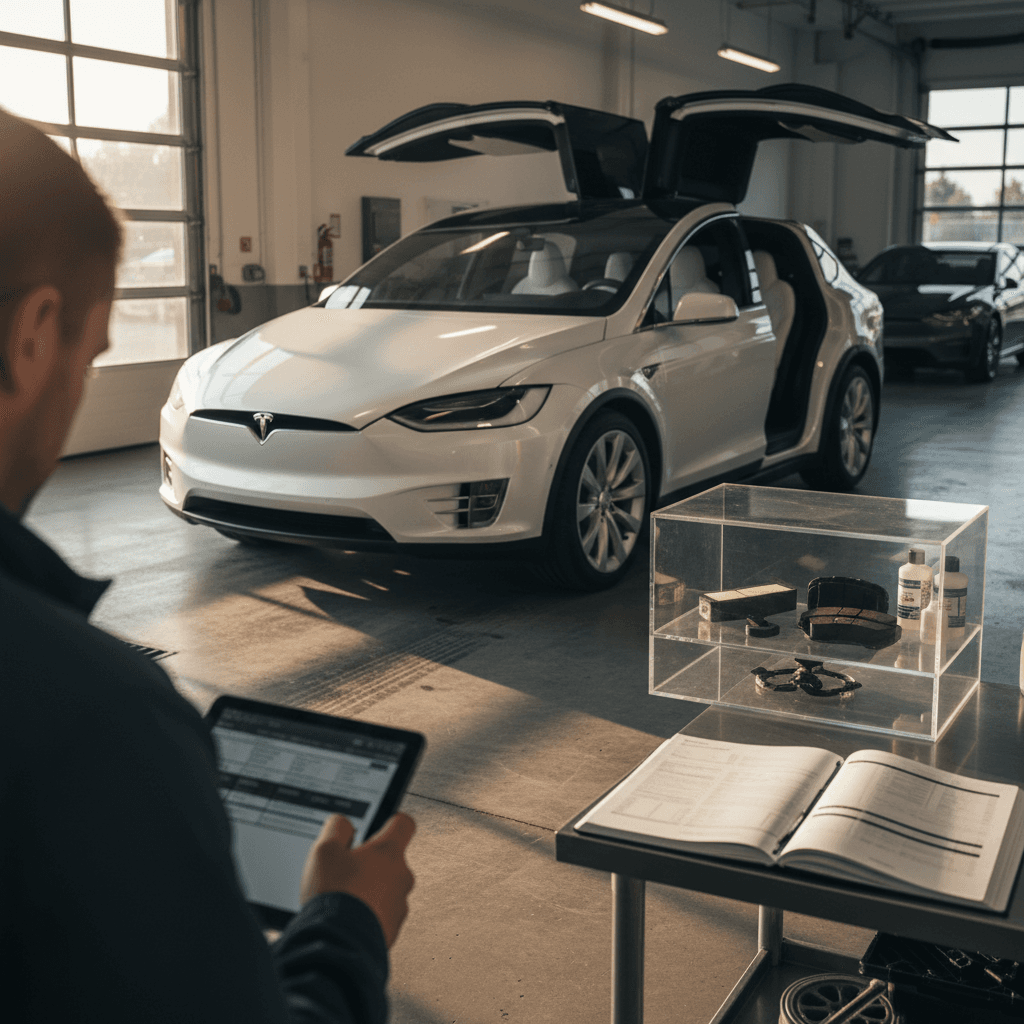
The Tesla Model X is an extrovert of an SUV: falcon-wing doors, panoramic glass, more torque than a commuter rail. Yet when you dig into the numbers, the annual maintenance cost is surprisingly sober. For most U.S. owners in 2025–2026, you should expect a typical Tesla Model X annual maintenance cost of about $650–$750 per year over the first 5–6 years, with some years higher when tires or bigger services hit.
Quick answer
Tesla Model X maintenance by the numbers (U.S., 2025–2026)
Model X annual maintenance cost at a glance
Tesla itself says a Model X owner should plan on an estimated annual maintenance cost of roughly the low-to-mid hundreds of dollars, varying by age and mileage. Independent cost-to-own tools and Recharged’s own analysis of 2024–2026 data cluster the Model X around $650–$750 per year in routine maintenance for the first five years. That number can creep up in later years as the odometer climbs and the car exits its basic warranty.
Estimated Tesla Model X annual maintenance cost
Ballpark ranges for a typical U.S. driver doing about 12,000–15,000 miles per year.
| Vehicle age | Mileage band | Typical yearly maintenance | What usually drives costs |
|---|---|---|---|
| Years 1–3 | 0–45,000 miles | $500–$650 | Cabin filters, tire rotations, brake checks, wiper blades, minor fixes |
| Years 4–6 | 45,000–90,000 miles | $650–$800 | Tires, alignment and suspension wear, brake service, small repairs |
| Years 7–10 | 90,000–150,000+ miles | $800–$1,200+ | Larger suspension work, HVAC, occasional door or electronics repairs |
| 10+ years | High mileage | Wild card | Budget extra for big-ticket items or consider extended coverage |
These are averages, not guarantees, your driving style, roads and luck with repairs still matter.
Don’t confuse maintenance with repairs
Why the Model X is cheap and expensive at the same time
Where the Model X is cheap
- No oil changes, spark plugs, timing belts, transmission services or emissions equipment.
- Regenerative braking means pads and rotors often last well beyond 100,000 miles if you drive gently.
- Maintenance schedule is mostly inspection-based: Tesla checks brake fluid and coolant health and replaces only if needed.
- Software fixes many annoyances without a trip to the service center.
Where the Model X can be expensive
- It’s the heaviest, most complex Tesla: air suspension, falcon-wing doors, big wheels and tires.
- Low-profile 20–22" tires on a 5,000+ lb SUV are expensive and wear faster than on a Model 3 or Y.
- Out-of-warranty repairs to doors, suspension or HVAC can run into the high hundreds or thousands.
- Luxury SUV parts and labor, Tesla or third-party, are priced accordingly.
Net effect
Tesla Model X maintenance schedule
Tesla moved away from old-school “annual service” visits years ago. Instead, the company publishes a short list of maintenance items and time/mileage intervals for the Model X. You can also see your specific car’s recommendations under Controls > Service > Maintenance on the touchscreen.
- Cabin air filter: typically every 2–3 years depending on build year and environment.
- HEPA / Bioweapon Defense Mode filter (if equipped): around every 3 years.
- Brake fluid health check: about every 2–4 years; replace only if tests show contamination.
- Air conditioning service / desiccant bag: usually around the 4–6 year mark, then as needed.
- Brake caliper cleaning and lubrication: roughly every 12 months in areas that use heavy road salt.
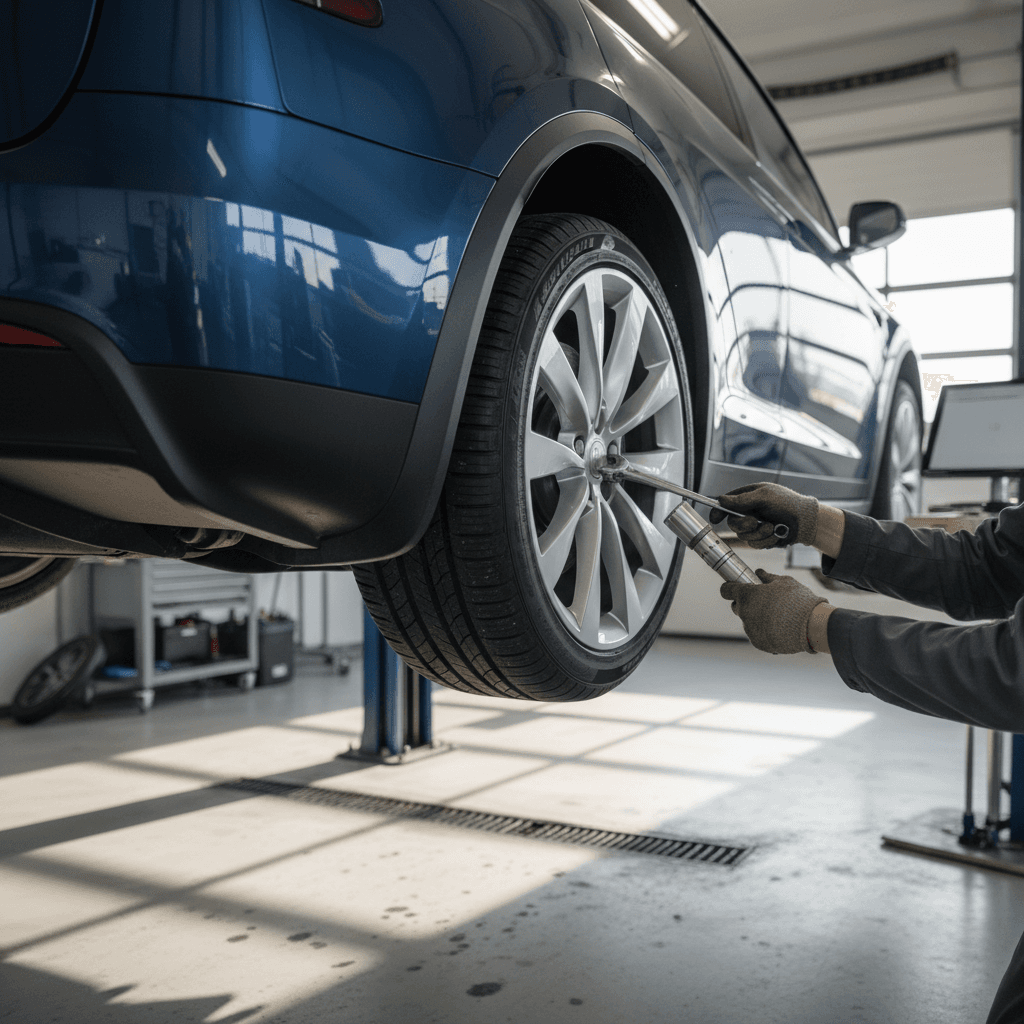
- Tire rotation, balance and alignment: rotation about every 6,000–7,500 miles; alignment as needed based on tire wear.
- High-voltage battery and drive unit: no scheduled maintenance; covered under long battery/drive-unit warranties in the early years.
Use the car’s maintenance screen
Line item: what actually drives your yearly costs
When owners ask about Tesla Model X annual maintenance cost, they’re really asking where the money goes. Here’s how the typical owner’s budget breaks down in 2025–2026 U.S. pricing, ignoring collision damage and DIY discounts.
Where your Model X maintenance dollars go
Approximate U.S. retail pricing for a newer Model X, Tesla service or equivalent independent shop.
Filters & fluids
- Cabin air filter service: $100–$250 every 2–3 years.
- HEPA filter (if equipped): $250–$400 every ~3 years.
- Brake fluid check/flush: often $150–$250 when needed.
Tires & alignment
- Full set of 20–22" tires: $1,000–$1,800 installed.
- Many owners see 25,000–30,000 miles per set.
- Annualized, that’s roughly $400–$600 per year for typical driving.
Brakes & suspension
- Salt-belt brake caliper service: $150–$300 every 1–2 winters.
- Suspension components (links, bushings, air struts) as they wear: can be $500–$2,000+ in a given year, but not every year.
Doors & hardware
- Falcon-wing and front door adjustments or latch work can add a few hundred dollars when needed.
- Not scheduled, but worth including in your long-term mental budget.
Glass & trim
- Rock chips, panoramic windshield, interior trim fixes: usually an insurance or one-off repair item rather than annual maintenance, but they do happen.
Things you <em>don’t</em> pay for
- No oil and filter changes.
- No spark plugs, exhaust, catalytic converters, or multi-speed transmission services.
- Battery coolant is generally a check-only item unless the system is opened.
Tires are the silent budget-killer
Real-world examples: new vs. older Model X
To make this less abstract, let’s walk through two simplified scenarios using typical 2025–2026 numbers: a newer Model X in its first five years, and an older, higher-mileage X that’s deep into its second act.
Example 1: Newish Model X (years 1–5)
You buy a 2024 Model X and drive 12,000 miles per year. Over the first 5 years, a realistic maintenance picture might look like:
- One cabin air filter service and maybe one HEPA service.
- Two full sets of tires (or 1.5 sets if you’re gentle).
- Periodic brake fluid and brake caliper checks.
- Tire rotations and at least one alignment.
- A couple of minor warranty fixes that don’t come out of your pocket.
All-in, you’re around $3,250–$3,750 in maintenance over 5 years, $650–$750 per year on average. Some years (new tires) might be $1,200+, others closer to $400.
Example 2: 7–10 year-old Model X
You pick up a 2018 Model X with 70,000 miles on it. The previous owner already burned through the first few sets of tires and much of the battery and drive-unit warranty.
- You’re now in the higher-risk zone for wear items, control arms, air suspension, door hardware, HVAC components.
- A single big repair could make your maintenance+repair total hit $1,500–$2,500 in a year.
- Across several years, your average might settle around $900–$1,100 per year, depending on how cleanly those big jobs land.
This is where having a pre-purchase inspection and a realistic reserve fund matters more than the advertised "cheap EV maintenance" talking point.
Smooth your budget with averages
Model X vs. gas SUV maintenance costs
If you’re cross-shopping an X against something like a Mercedes GLS, BMW X7 or Audi Q7, the fair question is whether the EV actually saves you money, or just moves the expenses around.
Maintenance cost: Tesla Model X vs. comparable gas luxury SUV
High-level, long-term ownership cost picture for maintenance and repairs, not counting fuel or electricity.
| Vehicle type | Typical yearly maintenance & repairs (first 5 years) | 10-year pattern |
|---|---|---|
| Tesla Model X | ≈ $650–$750 | Maintenance starts low, rises modestly with age; big repairs are rarer but can be pricey when they happen. |
| Gas luxury SUV (GLS/X7/Q7) | Often $900–$1,400 | More frequent services (oil, plugs, belts), plus complex engines and transmissions add repair risk over time. |
Real numbers will vary by brand, dealer rates, and how hard you drive, but the pattern is consistent.
Across multiple independent studies, battery-electric vehicles tend to run roughly 40–50% lower in maintenance and repair cost per mile than comparable gas vehicles. The Model X follows the trend, just remember that you bought the complicated one, so you don’t get the same rock-bottom running costs as a simple compact EV.
The quiet win
How buying a used Model X changes the math
A lot of the smartest Model X purchases right now are used. Depreciation has already done the ugly part; you just have to be honest about maintenance and repair risk. This is exactly where Recharged focuses: making used EV ownership less of a blind date and more of a background-checked relationship.
Used Model X: what to look at for maintenance risk
These factors matter more than the model year printed on the tailgate.
Mileage & usage pattern
- Highway commuter miles are easier on the car than pothole-riddled city life.
- Look for consistent service history and tire replacements at logical intervals.
Climate & road salt
- Cold, salty winters can accelerate brake and suspension corrosion.
- Budget more for caliper service and underbody work if the car is from a snow-belt state.
Suspension & steering condition
- Listen for clunks over bumps, feel for looseness in the wheel.
- Worn control arms or air struts can turn into four-figure repair tickets.
Doors, seals & glass
- Falcon-wing doors should move cleanly and seal without wind noise.
- Misalignment now is usually a negotiation point, and a future service visit.
How Recharged helps on used Model X
How to keep Model X maintenance costs down
7 ways to keep your Model X maintenance budget under control
1. Choose wheels and tires wisely
If you’re ordering or shopping used, understand that <strong>22" wheels look incredible and cost accordingly</strong>. A Model X on 20s will generally go farther on each set of tires and ride better, too.
2. Don’t skip alignments
If you see inner or outer-edge tire wear, get an alignment before you vaporize a $1,200 tire set. A <strong>$200 alignment</strong> that doubles tire life is the cheapest maintenance you’ll ever do.
3. Use regen to your advantage
Maximize regenerative braking in daily driving. It’s not just efficient, it <strong>extends brake life dramatically</strong>, pushing pad and rotor replacements much farther out.
4. Stay on top of filters and HVAC service
Stale cabin filters and neglected A/C desiccant bags can eventually turn into bigger HVAC headaches. Follow Tesla’s intervals or slightly better, and don’t ignore persistent odors from the vents.
5. Treat doors and seals gently
The falcon-wing doors are marvels of over-engineering. Let them finish their dance before you yank on anything, keep seals clean, and address weird noises early before they snowball.
6. Budget for the long term
Even if your first couple of years are unusually cheap, keep contributing to a maintenance/repair fund. Luxury SUVs rarely stay cheap forever, no matter the drivetrain.
7. Get a pre-purchase inspection on used
If you’re buying outside of Recharged, pay a shop that understands Teslas to check suspension, brakes, tires and door operation. The <strong>$250 you spend today</strong> can save you thousands on a bad example.
Leverage financing to smooth ownership costs
Is the Tesla Model X worth it long-term?
The Tesla Model X is not a Camry-in-disguise, and its annual maintenance cost reflects that. In the early years, you’re likely looking at $650–$750 per year in scheduled maintenance and wear items, with occasional spikes for tires. That compares favorably to gas luxury SUVs, which often need more frequent, more invasive trips to the shop just to keep their engines happy.
Where the X demands respect is in the long game: suspension pieces, big glass, heroic doors and the sheer weight of the thing. A sensible tire and wheel choice, regular alignments and a realistic repair reserve go a long way toward keeping the drama on the autopilot screen and off your credit card statement.
If you want a clearer picture before you buy, start with a used Model X on Recharged. Every vehicle includes a Recharged Score battery-health report, transparent pricing, and EV‑savvy guidance on what to expect for maintenance in the next few years. That way, the only surprises your Model X delivers are the good kind, the ones that happen when you floor it onto a freeway on-ramp.