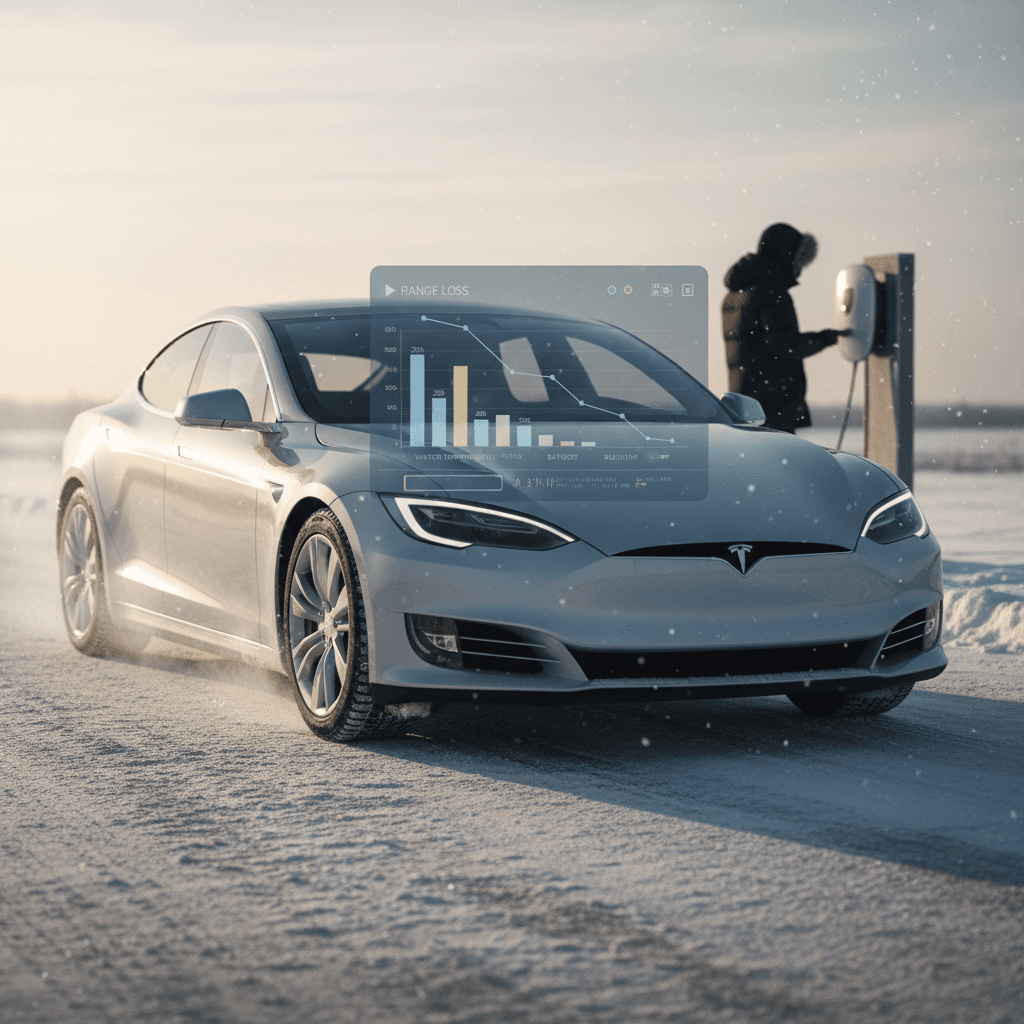
If you’ve watched your Tesla Model S winter range loss go from confident to queasy the moment temperatures dip, you’re not imagining it. Cold weather is the natural enemy of lithium‑ion chemistry. The good news: the Model S is one of the best winter performers in the EV world, and there’s a big difference between “normal seasonal drop” and “time-to-worry battery problem.”
Quick takeaway
Why the Tesla Model S Loses Range in Winter
Range loss in winter is not some Tesla‑specific moral failing; it’s physics. Three forces gang up on your Model S the minute the weather turns ugly: colder battery chemistry, energy‑hungry heaters, and tougher rolling conditions. Understanding these helps you separate normal cold‑weather behavior from real battery issues.
- Battery chemistry slows down. In the cold, ions inside the battery move more slowly. The pack’s effective capacity shrinks and internal resistance rises, so you get less usable energy from the same state of charge.
- The car burns energy to warm itself. Your Model S wants its battery around the human‑body comfort zone, roughly 50–90°F. When it’s parked outside in 20°F weather, the car spends a surprising amount of energy heating the pack before and during driving.
- Cabin heat is expensive. Unlike a gas car that uses waste engine heat, an EV has to generate every BTU from the battery. Even with heat‑pump cars, a toasty 72°F cabin on a long highway slog can pull several kilowatts continuously.
- Road and weather drag increase. Wet snow, slush, winter tires, headwinds, and higher air density at low temperatures all nudge consumption up. It’s death by a thousand inefficiencies.
Don’t confuse winter loss with permanent degradation
How Much Winter Range Loss Is Normal for a Model S?
Typical Tesla Model S Winter Range Loss
Large, real‑world data sets from companies like Recurrent show that modern Teslas with heat pumps, including recent Model S variants, retain roughly 88% of their rated range in freezing conditions on average. In other words, a 400‑mile rated car might realistically give you about 350 miles at typical winter highway speeds when driven thoughtfully.
How Model S compares to other EVs
Model S Generations, Heat Pumps, and Winter Range
Not all Model S cars are created equal in the snow. How your car behaves on a January morning depends heavily on its model year and hardware, especially whether it uses a traditional resistive heater or Tesla’s newer heat‑pump thermal system.
Tesla Model S Winter Range Behavior by Era
Approximate, real‑world behavior for common U.S. winter conditions with mixed driving and some preconditioning.
| Model year | Thermal system | Typical winter loss (freezing temps) | Winter character |
|---|---|---|---|
| 2012–2016 (pre-facelift) | Resistive heat | 20–30% | Strong range but cabin heat is energy‑hungry; older packs may show more absolute loss. |
| 2016–2020 (facelift, pre-refresh) | Resistive heat | 18–28% | Better efficiency; still sensitive to cabin‑heat usage on highway trips. |
| 2021+ (refresh, Long Range / Plaid) | Heat pump + Octovalve | 10–22% | Best winter performer; thermal system scavenges waste heat very effectively. |
Use this as a directional guide, not a laboratory guarantee. Driving style, routes, and climate matter.
Shopping used? Ask about the heat pump
Real-World Examples: EPA vs Winter Range
The EPA window sticker is like a Tinder profile photo: flattering, lit just so, and taken on the best day of the car’s life. Your winter reality will be more down‑to‑earth. It helps to translate those glossy rated numbers into something closer to what you’ll actually see in the cold.
Model S Range: Paper vs Pavement in Winter
A few ballpark scenarios to recalibrate your expectations.
Example 1: Older 85 kWh
Rated range: ~265 miles (when new)
Healthy winter target: ~200–215 miles at freezing temps with preconditioning.
Red flag: Under 150 miles on a full charge in mild winter may signal significant degradation or a battery issue.
Example 2: Long Range (EPA ~405 mi)
Cool fall day: 340–360 real‑world miles is reasonable.
Freezing highway trip: 300–330 miles if you precondition and keep speeds sane.
Deep cold & fast: Think more like 250–280 miles.
Example 3: Plaid Winter Road Trip
Independent tests have seen Plaid variants deliver around 80% of EPA range even at brisk 70–75 mph. Layer winter temps on top and 70–80% of rated range is a realistic planning number for long, cold‑weather legs.
Why short trips look so bad
10 Ways to Cut Tesla Model S Winter Range Loss
Practical Ways to Preserve Model S Range in the Cold
1. Always precondition while plugged in
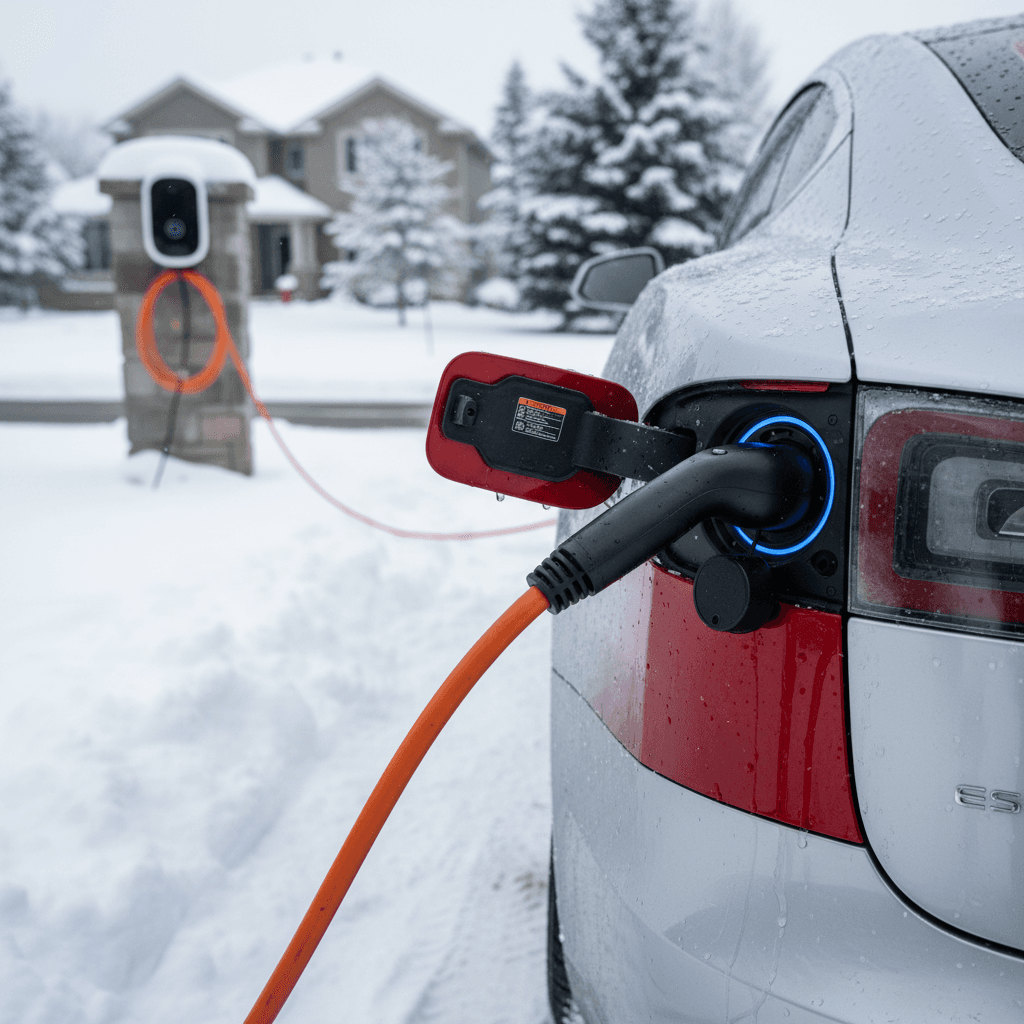
Use the Tesla app to warm the cabin and battery before you leave, <strong>while the car is still on shore power</strong>. This lets the grid pay the thermal penalty instead of your battery, giving you a warmer pack and more range as soon as you shift into Drive.
2. Plan Supercharger stops in advance
Set a Supercharger as your destination before you arrive. The car will preheat the pack en route, which reduces charging time and wasted energy, especially in deep cold.
3. Use seat and wheel heaters first
Seat and steering‑wheel heaters sip energy compared with cranking the HVAC. Run them on low and drop the cabin temperature a couple of degrees; you’ll feel just as warm while using noticeably less range.
4. Avoid “remote defrost marathons”
Running the defrost for 20–30 minutes in the driveway every morning eats range. Use shorter preheat sessions and clear the glass manually when you can, or schedule climate for just before departure.
5. Bundle short trips together
If possible, do your winter errands in one longer loop instead of multiple cold starts. A warm battery is a happy, efficient battery; stop‑and‑go from a cold soak is the worst case for range.
6. Check tire pressure regularly
Cold air saps a few PSI from your tires. Under‑inflation increases rolling resistance and range loss. Keep pressures at Tesla’s recommended levels, especially when temperatures swing quickly.
7. Use Chill mode in bad weather
Chill mode softens throttle response and makes it easier to drive smoothly. Fewer traction‑control interventions and less wheelspin on snow mean less wasted energy and a calmer drive.
8. Dial back your speed
At 75 mph in winter air, aerodynamic drag is the Big Bad. Dropping to 65 mph can claw back dozens of miles of range over a long stint, especially into a headwind.
9. Don’t obsess over 100% charges
For daily winter driving, you don’t need to baby the battery at 50–60% state of charge. Keeping the car somewhere between about 20–80% for routine use strikes a good balance between convenience and long‑term health.
10. Use scheduled departure smartly
Tesla’s scheduled departure feature can time preconditioning so the cabin and battery are ready right as you leave. That’s free efficiency and comfort you should absolutely use in winter.
What “good” winter efficiency looks like
Protecting Model S Battery Health in Cold Weather
Winter takes a temporary bite out of range, but you still want to think about the long game: making sure your Model S battery ages gracefully year over year. Cold actually slows long‑term chemical wear, but certain winter habits can still be rough on the pack if you’re not mindful.
Cold-weather habits that help
- Parking indoors where possible: A garage, even unheated, slows temperature swings and reduces how hard the car has to work to warm the pack.
- Moderate, not extreme, state of charge: Living between about 20–80% for daily use is easier on the cells than frequent 0%–100% swings.
- Gentle driving on a cold pack: Until the battery icon snowflake disappears and regen returns, avoid full‑throttle heroics.
- Regular DC fast charging only for trips: In winter, it’s tempting to supercharge constantly. Try to reserve frequent high‑power DC charging for road trips, not daily commuting.
Cold-weather habits that hurt
- Letting the car sit empty in the cold: Deeply discharged packs dislike long, freezing storage. Avoid leaving the car below about 10% for extended periods.
- Repeated full‑power launches on a cold battery: You bought a Model S; of course you want to feel the torque. Just wait until the car says it’s ready.
- Skipping software updates: Tesla frequently tweaks thermal management and charging algorithms. Don’t leave free efficiency on the table.
- Ignoring warnings or sudden range changes: A dramatic change that doesn’t track with weather, say, a 20% loss overnight in mild conditions, is worth investigating.
When winter loss might signal a real problem
Is a Used Tesla Model S a Good Winter EV?
From a pure winter‑range perspective, the answer is yes, often emphatically so. The Model S pairs a big battery with efficient aerodynamics and one of the smarter thermal systems on the road. In large‑sample winter testing, it routinely ranks near the top for cold‑weather range retention, especially in heat‑pump‑equipped cars.
Used Model S in Winter: Pros and Watchouts
What you should weigh before buying, especially if you live in the snow belt.
Why it’s great in the cold
- Large battery options: Even with 15–25% winter loss, you often have more usable range than many brand‑new EVs.
- Strong thermal management: Later cars with heat pumps are standouts for winter efficiency.
- Mature Supercharger network: Long winter road trips are straightforward compared with juggling third‑party networks.
- OTA improvements: Tesla has spent years refining cold‑weather behavior via software updates.
What you need to check first
- Actual battery health, not just rated range: Two identical Model S cars can differ significantly based on prior fast‑charging and storage habits.
- Winter tire setup: A proper set of winters helps both safety and efficiency. Oversized wheels with sticky summer rubber are not your friend in the snow.
- Heat‑pump vs resistive heater: Earlier cars are a bit thirstier in deep cold; factor that into your range expectations.
- Charging access at home: Relying solely on public fast charging in winter is possible but not exactly relaxing.
How Recharged can de-risk a used Model S
FAQ: Tesla Model S Winter Range Loss
Frequently Asked Questions
Bottom Line: Winter Range and the Model S
Winter will always nibble at your range, but in the grand EV food chain, the Tesla Model S sits near the top for cold‑weather competence. If you understand what’s normal, use the tools Tesla gives you, preconditioning, scheduled departure, smart navigation, and keep an eye on tire pressures and driving style, you can treat winter range loss as a seasonal tax, not a crisis.
And if you’re weighing a used Model S as your year‑round family hauler, don’t guess. A data‑driven battery health report, like the Recharged Score that comes standard on every car sold through Recharged, turns vague winter anxiety into concrete numbers. Then the question stops being, “Will winter ruin my range?” and becomes, “How far do I actually need to go on the coldest day of the year?”