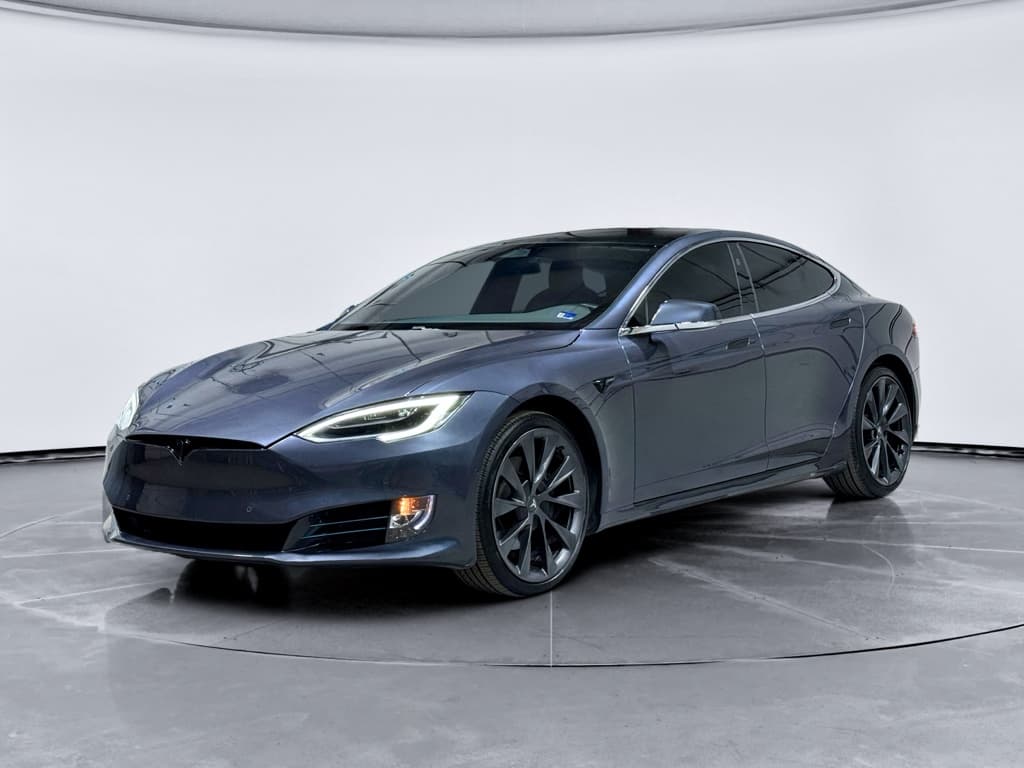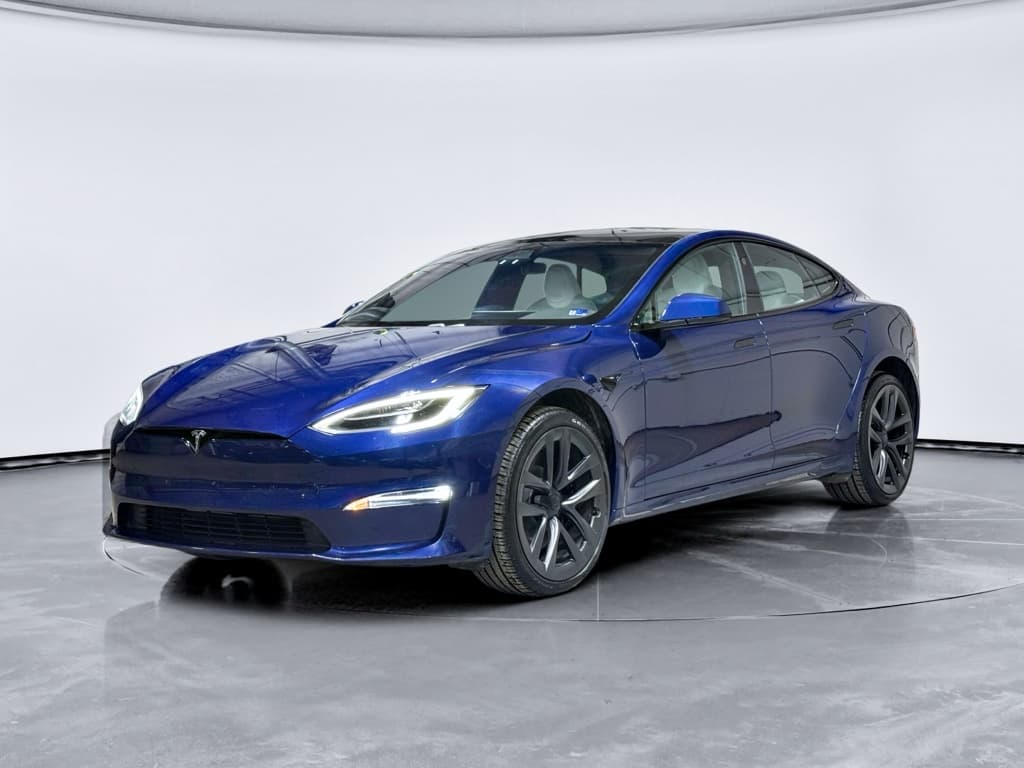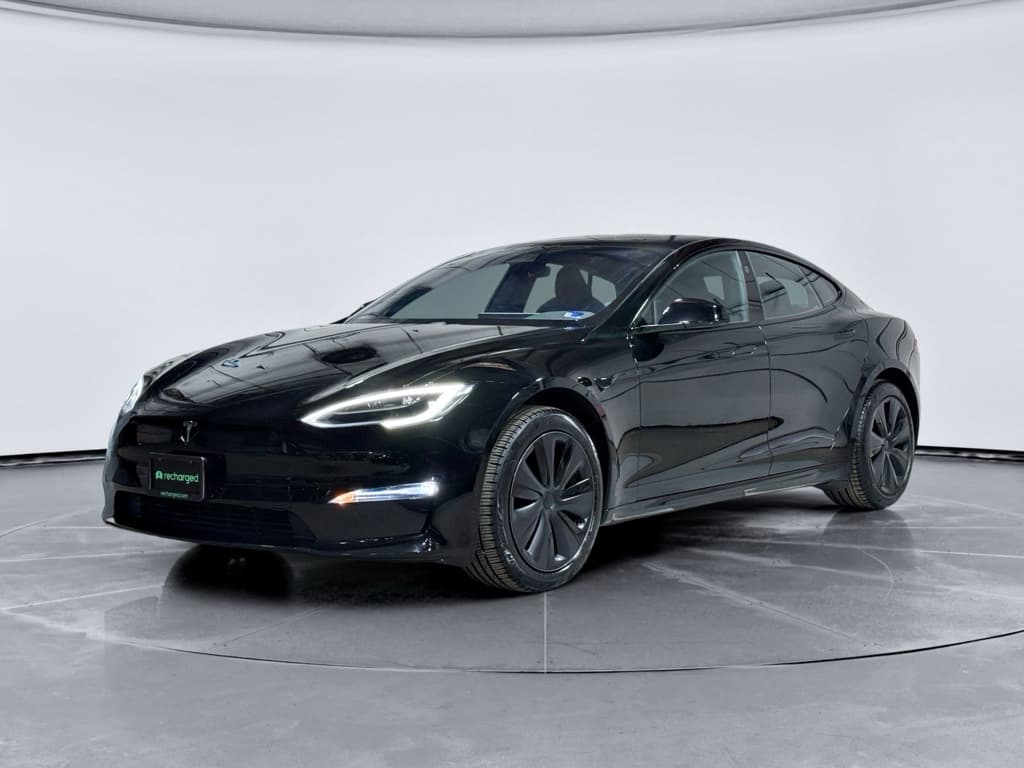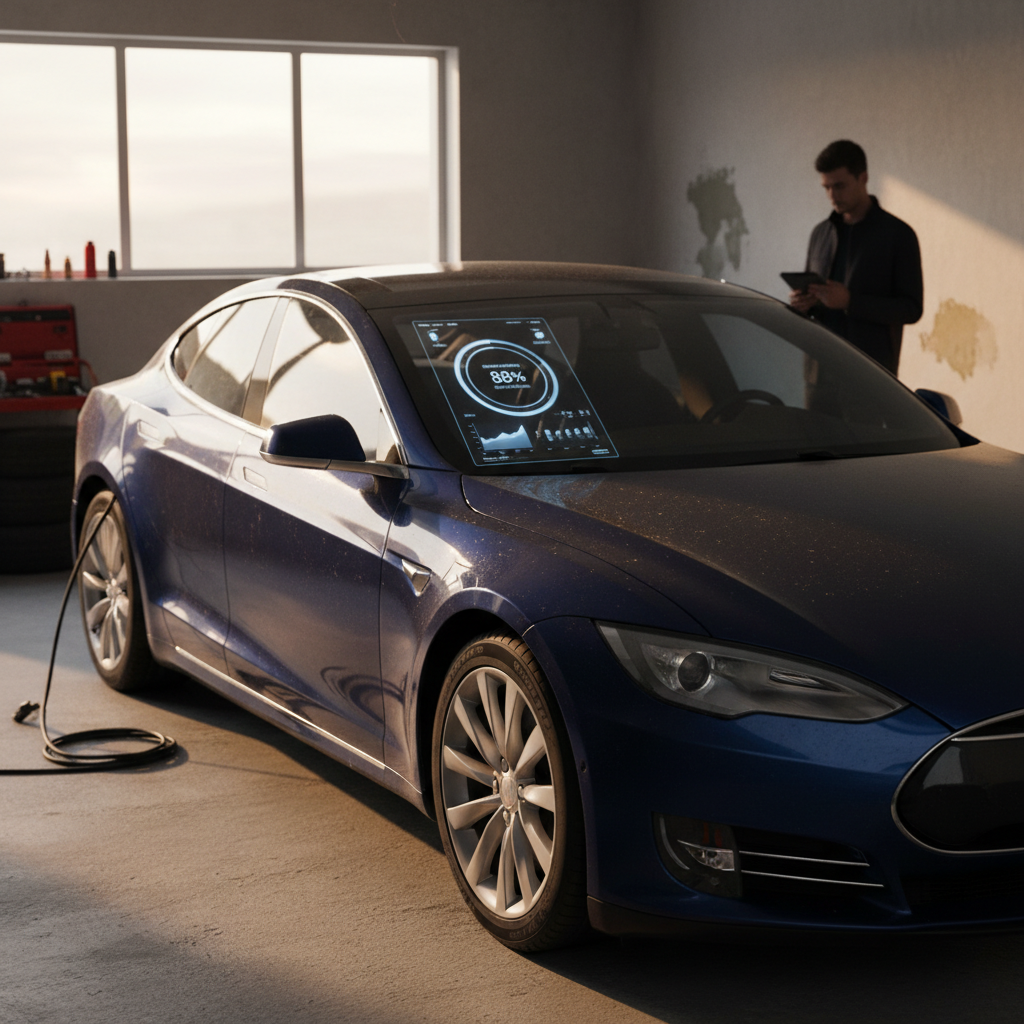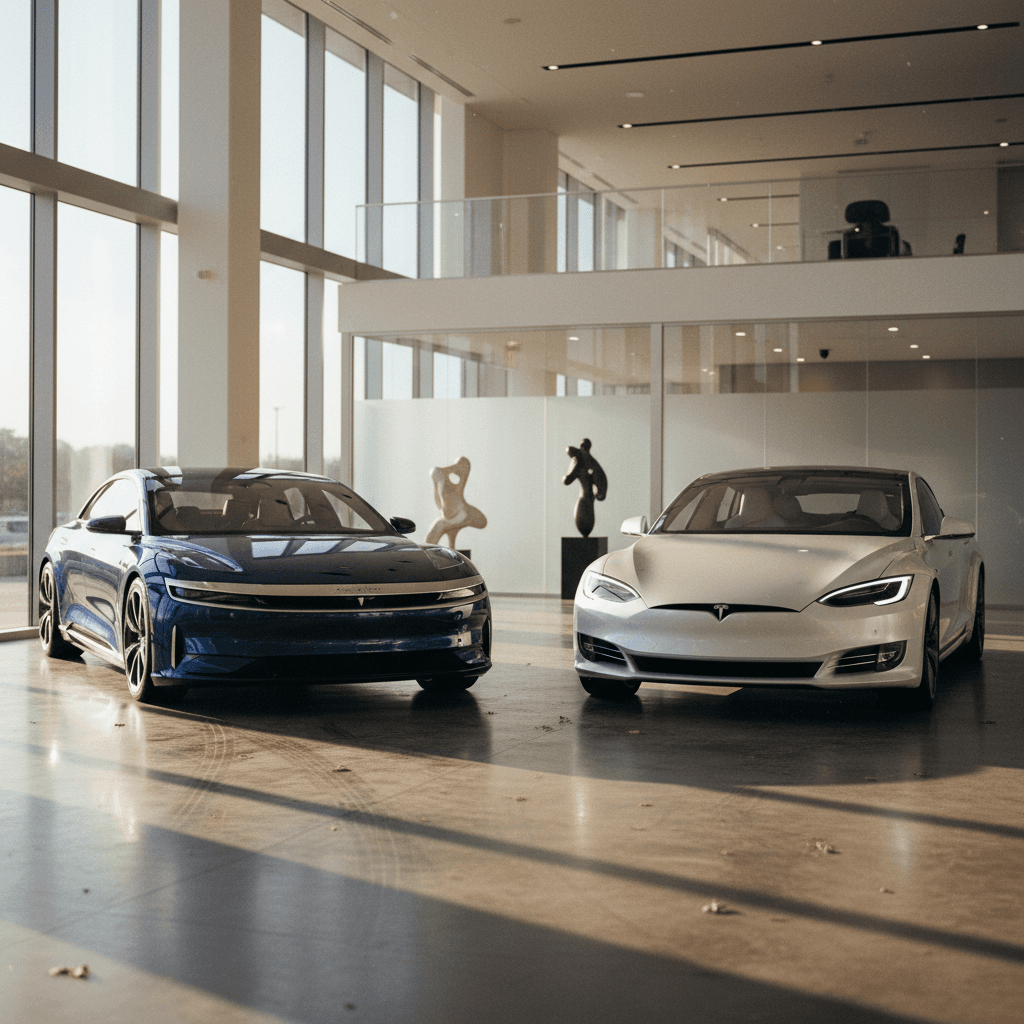
You’re cross-shopping the Tesla Model S vs Mercedes EQS, which means you’re not just buying an electric car, you’re choosing what kind of luxury experience you want to live with every day. One is a tech-forward, efficiency-obsessed fastback that helped define modern EVs. The other is a cocooned, S-Class-inspired electric limo built to make every mile feel first class. Let’s break down how they really compare in 2026 so you can match the right car to the way you drive and spend.
Big Picture
Tesla Model S vs Mercedes EQS: Who Each Car Is For
Tesla Model S: Best If You Prioritize
- Max range and efficiency for long commutes and road trips.
- Brutal straight-line performance (especially in Plaid trim).
- Tesla’s vast Supercharger network and simple charging experience.
- A minimalist, tech-heavy cabin with constant over-the-air software updates.
- Strong availability and pricing on the used market.
Mercedes EQS: Best If You Prioritize
- Ultimate ride comfort and quiet, S-Class-style isolation.
- A richly finished interior with traditional luxury cues.
- Advanced driver aids and the stunning MBUX Hyperscreen interface on many trims.
- A brand and dealership experience that feel familiar if you’ve owned German luxury sedans.
- Deals on lightly used or discounted new EQS as Mercedes adjusts pricing in a competitive EV market.
Start With Your Use Case
Pricing and Value: Sticker Shock vs Long-Term Cost
New pricing moves around quickly, but as of early 2026 the Tesla Model S sits in the mid-$80,000s for the dual-motor car and around six figures for the Plaid after recent price bumps. The Mercedes EQS started well above that at launch, but Mercedes has been trimming prices and simplifying trims as it works to keep the EQ lineup competitive. For U.S. buyers, real-world transaction prices on an EQS sedan can undercut its original MSRP by a meaningful margin, especially on remaining 2024–2025 inventory on dealer lots.
Approximate New Pricing (U.S., Early 2026)
Ballpark MSRPs before destination and options; actual dealer or online pricing may be lower, especially on EQS.
| Model | Approx. Base New Price | Positioning |
|---|---|---|
| Tesla Model S Dual Motor | ~$85,000 | Long-range performance sedan |
| Tesla Model S Plaid | ~$100,000 | Supercar-quick halo model |
| Mercedes EQS 450+ RWD | Low–mid $100,000s (often discounted) | Range-focused luxury flagship |
| Mercedes EQS 580 4Matic | Mid–high $100,000s | High-power dual-motor luxury |
| AMG EQS | Well into six figures | Performance variant, still comfort-biased |
Always check current offers, luxury EV incentives and discounts change quickly.
Don’t Shop on MSRP Alone
Range, Battery, and Efficiency
Headline Range and Battery Numbers
Tesla has built its reputation on efficient powertrains, and it shows. The current Model S Long Range uses roughly a 99 kWh battery and is rated at about 405 miles of range, with the Plaid variant just shy of 400 miles while adding huge power. The Mercedes EQS relies on a larger battery, around 108 kWh usable in earlier years and up to roughly 118 kWh in more recent updates, yet typically delivers EPA range figures in the 340–390 mile band depending on trim and wheels.
- If you care about maximum efficiency per kWh, the Model S wins. It goes farther on a smaller pack.
- If you care about quiet, effortless cruising and don’t mind a slightly shorter range, the EQS is more than adequate for most driving patterns.
- Both are long-range EVs; this is more about margins and how often you want to see a charger on distance runs.
Real-World Range vs EPA
Performance and Driving Feel
How They Drive: Numbers and Feel
Both are quick; the question is what kind of quick you want.
Straight-Line Speed
Model S: even the dual-motor car is legitimately fast. The Plaid is supercar-grade, with sub‑2‑second 0–60 mph capability under ideal conditions.
EQS: brisk in 450+ form and properly quick as an EQS 580 or AMG, but its mission is smooth thrust, not roller-coaster launches.
Handling & Ride
Model S: lighter and more agile, especially on smaller wheels. Firm but not punishing, tuned more like a sporty grand tourer.
EQS: air suspension and rear‑axle steering deliver an ultra‑plush ride and surprising maneuverability, but you always feel the weight and length.
Steering & Feedback
Model S: quick steering ratio, some owners find it a bit numb but responsive. Recent cars ship with a conventional steering wheel; the yoke is optional.
EQS: lighter steering effort, very relaxed. It’s more about serenity than road feel.
Enthusiast Verdict
Comfort, Interior, and In-Car Tech
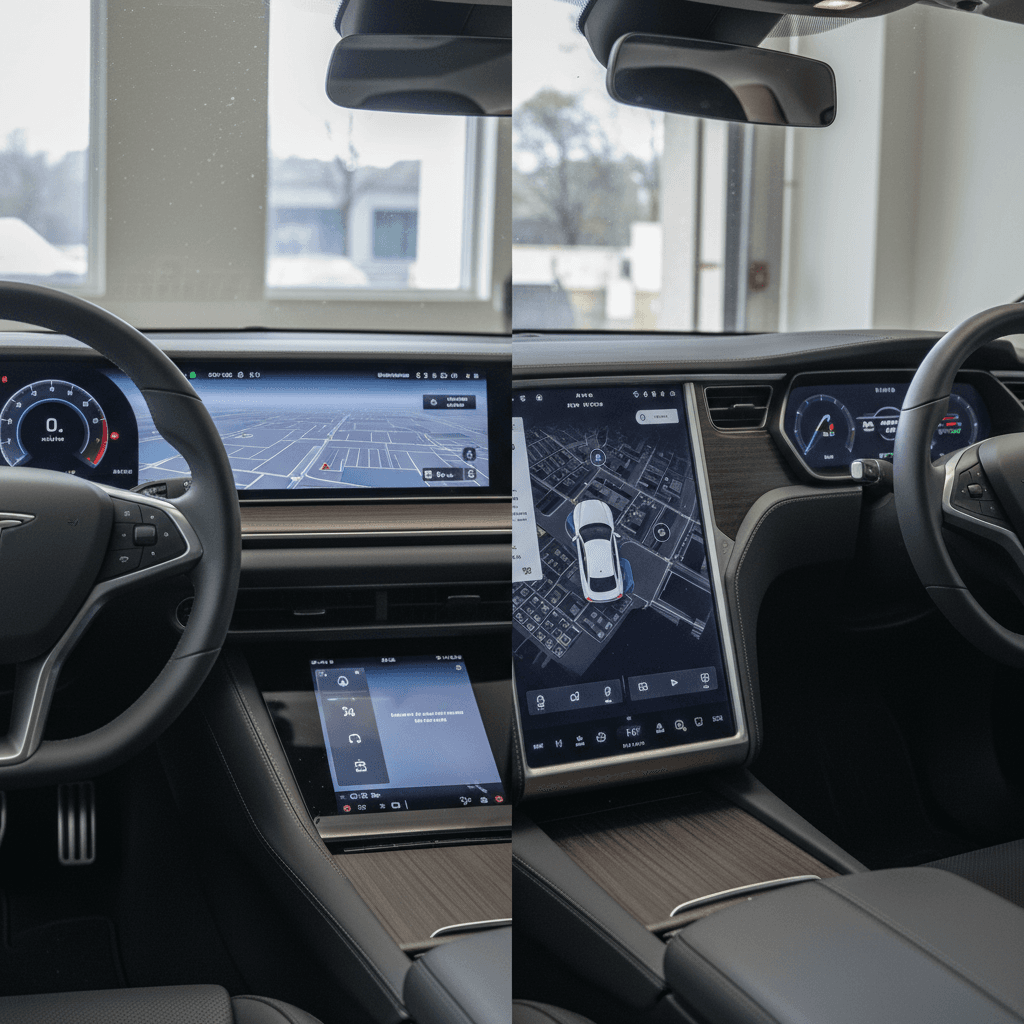
Interior Design & Materials
- Tesla Model S: Clean, almost Scandinavian feel with a big central touchscreen and very few buttons. Materials have improved over time, but some shoppers still find them closer to premium than ultra‑luxury.
- Mercedes EQS: Sculpted dash, ambient lighting everywhere, and rich leather/wood/metal options. The available MBUX Hyperscreen spans the whole dash and looks appropriately futuristic in a six‑figure flagship.
Seat Comfort & Space
- Front seats: Both offer strong support, but Mercedes tends to win on long‑distance seat comfort, especially with available massage and multi‑contour functions.
- Rear seat: The EQS feels more like an S‑Class limo with a truly relaxing back seat. The Model S has decent room but its fastback roofline and seat design feel more like a sporty sedan than a chauffeured car.
Tech is a closer call. Tesla’s interface is simple, intuitive, and updated frequently over the air, but you give up Apple CarPlay and Android Auto. Mercedes’ MBUX system offers those, plus a more traditional menu structure and physical controls sprinkled where you need them. The Hyperscreen is undeniably a conversation piece, but it can feel visually busy until you learn your way around.
Test the Interface You’ll Live With
Charging Experience and Road-Trip Ability
On paper, the Model S and EQS are fairly close for DC fast charging. The Tesla can pull up to around 250 kW on a V3 Supercharger, while the EQS tops out around 200 kW on a compatible DC fast charger. In practice, the network you use often matters more than peak charging power.
Charging: Beyond the Spec Sheet
Think about where and how you actually charge, not just the kW rating.
Tesla Model S Charging Experience
- Access to Tesla’s Supercharger network, still the gold standard for ease of use.
- Plug in, charge starts automatically, payment handled in Tesla account, no cards or apps to juggle.
- Increasing compatibility for other EVs doesn’t hurt Tesla owners; it simply means more locations get built and maintained.
Mercedes EQS Charging Experience
- 200 kW DC fast-charging capability; 10–80% typically takes just over 30 minutes in good conditions.
- Uses CCS fast charging and J1772/Type 2 for AC, so you’ll mainly rely on networks like Electrify America, EVgo, and regional players.
- Mercedes supports Plug & Charge at compatible stations, making the experience smoother than older third‑party networks you may have tried.
Home Charging Considerations for Both
1. Confirm Your Electrical Panel Capacity
Both cars benefit from a 240‑volt Level 2 charger at home. Have a licensed electrician confirm your panel can support a 40–60 amp circuit before you order hardware.
2. Pick the Right Wall Unit
Tesla owners often choose the Tesla Wall Connector, while EQS owners might prefer a universal Level 2 unit. Either way, look for at least 9.6 kW output for healthy overnight charging speeds.
3. Use Scheduled Charging
Both cars let you schedule charging to take advantage of off‑peak electricity rates. Set your departure times and daily charge limits in the car or app to protect the battery and lower your bill.
Public Network Reality Check
Ownership Costs, Reliability, and Depreciation
Electric powertrains trim routine maintenance, no oil changes, fewer moving parts, but that doesn’t mean ownership costs are identical. Insurance, depreciation, and out‑of‑warranty repairs can swamp the money you save on fuel if you’re not careful.
Cost of Owning: Model S vs EQS
What matters after the honeymoon period is over.
Depreciation
Model S used to be a resale king, but aggressive new‑car price swings and more EV competition have pushed values down. That’s tough on first owners, but a big win for used buyers.
EQS started high and has seen sizeable real‑world discounts. As a result, many EQS sedans depreciate quickly from their original MSRPs, again creating good opportunities if you’re shopping used.
Maintenance & Repairs
Both cars should cost less to maintain than equivalent gas V8 luxury sedans. But when things do go wrong, out‑of‑warranty repairs can be expensive on either.
Tesla leans heavily on mobile service and over‑the‑air fixes. Mercedes offers a traditional dealer network with loaner cars and familiar processes if you’ve owned the brand before.
Warranty & Battery Confidence
Both manufacturers back their batteries and drive units for around 8 years and roughly 150,000 miles (or more), which covers most first owners.
Battery degradation on both has generally been modest in real‑world use, but condition varies car‑to‑car, especially on earlier build years and high‑mileage fleet vehicles.
Where Recharged Fits In
Buying Used: Model S vs EQS on the Secondhand Market
On the used market, both cars can look like screaming deals compared with their original window stickers, but for different reasons. Tesla’s shifting new‑car prices pulled used Model S values down, while EQS sedans have seen heavy first‑owner depreciation as Mercedes chases volume and adjusts to new EV demand realities.
Used Market Snapshot: What to Watch For
Key issues to evaluate when you’re shopping a pre-owned Model S or EQS.
| Area | Used Tesla Model S | Used Mercedes EQS |
|---|---|---|
| Battery Health | Earlier high‑mileage cars (and former fleet vehicles) can show more degradation; later cars generally hold up well. A professional battery test is highly recommended. | Larger pack means plenty of range even with some degradation, but the car’s weight makes healthy cells important. Look closely at real‑world range vs original rating. |
| Software & Features | Frequent updates add features, but some owners bought paid options (like certain driver‑assist features) that stay with the car and add value. | Feature sets can depend heavily on original spec and option packages. Confirm you’re getting the driver‑assist and comfort features you expect. |
| Repair History | Check for suspension wear, door handle repairs on older cars, and any collision repairs affecting Autopilot hardware. | Watch for wheel and tire damage (big wheels, heavy car), air‑suspension work, and any high‑voltage system repairs that might hint at prior issues. |
Battery condition and software history matter more than leather condition or wheel size on a used EV.
Used Luxury EV Shopping Checklist
1. Get Objective Battery Health Data
Range is your new "engine compression test." Ask for a recent battery diagnostic rather than relying on the dashboard estimate alone. Recharged’s <strong>Score Report</strong> was built to answer exactly this question.
2. Match Trim to Your Needs
A Plaid Model S or AMG EQS is impressive on paper, but you may be happier (and spend less) with a long‑range, comfort‑oriented trim that better fits your driving.
3. Think About Warranty Timing
If you’re buying near the end of the 8‑year battery/drive‑unit coverage, factor extended coverage or a lower purchase price into your decision to offset potential future repairs.
4. Look Beyond the Badge
At this level, condition, prior use, and how the car was charged and stored matter as much as whether there’s a Tesla or Mercedes star on the nose.
Which Luxury EV Should You Choose?
Quick Match: Pairing the Right Car to Your Priorities
Choose the Tesla Model S If…
You drive long distances frequently and want the <strong>most efficient, longest‑range</strong> option you can get.
You care about <strong>charging simplicity</strong> and trust Tesla’s Supercharger network more than a patchwork of third‑party stations.
You value minimalist design and prefer a car that feels more like a rolling smartphone than a rolling lounge.
You’re a performance enthusiast and like the idea of Plaid‑level acceleration, even if you’ll rarely use all of it.
You’re shopping used and want a wide selection of cars, trims, and prices to pick from.
Choose the Mercedes EQS If…
You care more about <strong>ride comfort, quiet, and craftsmanship</strong> than lap times.
You’re coming from an S‑Class, 7 Series, or A8 and want your first EV to feel at least as plush as the gas car you’re leaving.
Rear‑seat comfort matters, for clients, kids, or just your own sense of space and relaxation.
You want <strong>CarPlay/Android Auto</strong> and an interior that looks and feels like a traditional luxury flagship.
You’re value‑hunting: a used EQS or a discounted new one can deliver huge luxury per dollar.
There’s no wrong answer in a Tesla Model S vs Mercedes EQS showdown, only the wrong answer for the way you actually live. If you’re a road‑trip regular who loves cutting‑edge tech and brutal acceleration, the Model S will feel like the future parked in your driveway. If you want to glide through traffic in a serene, beautifully finished cabin that happens to be electric, the EQS will feel like a natural evolution of classic Mercedes luxury. And if you’d like help comparing specific used examples, Recharged can put real numbers behind the emotion with verified battery health, fair pricing, and EV‑savvy guidance from your first search to final delivery.