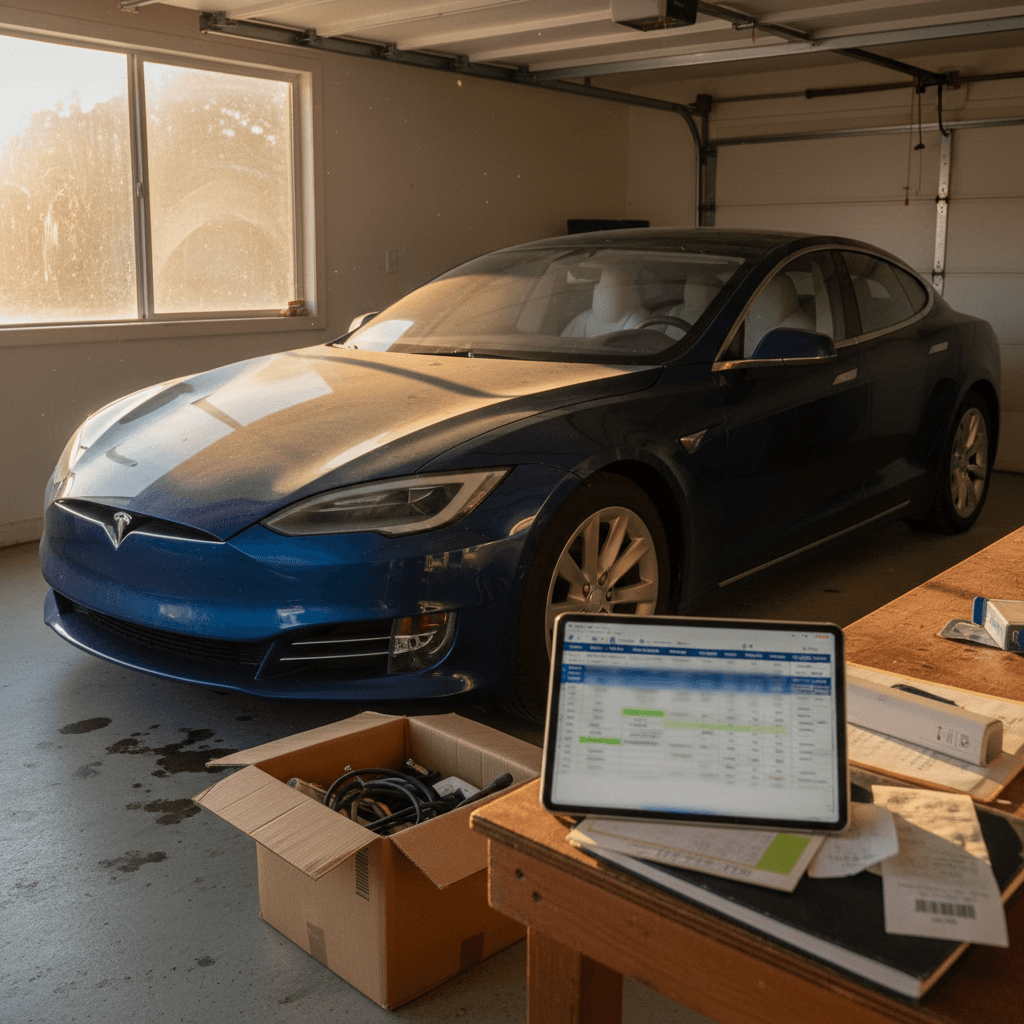
When you look past the sleek design and 0–60 numbers, the real question is simple: **what is the Tesla Model S true cost of ownership over 5 years?** Between depreciation, charging, insurance, and the realities of owning a high-end EV, the total can surprise people in both directions. Let’s break it down in plain English, using realistic numbers, and then look at how choosing a used Model S can dramatically improve the math.
New vs used Model S: why it matters
Why the 5-year Tesla Model S ownership cost really matters
EVs flipped the old rule of thumb about car ownership. With gas cars, operating costs (fuel + maintenance) often dominate over time; with a **Tesla Model S**, the biggest lever is usually **what you pay up front and how fast it depreciates**. That’s why serious buyers don’t just ask “what’s the price?”, they ask about **total cost of ownership (TCO)** over a realistic 5-year window.
Five years is a useful timeframe because it usually spans the bulk of a financing term, a typical ownership cycle, and a meaningful chunk of battery life. It’s long enough for small differences in insurance, energy prices, and maintenance to add up into five-figure gaps, especially on a premium EV like the Model S.
Key assumptions for our 5-year Model S calculations
To keep this grounded, we’ll use two example scenarios: one **new** and one **used**. The numbers are directional, not promises, but they’re in line with real-world US costs as of 2025–2026.
Baseline assumptions for 5-year Tesla Model S cost
These assumptions let you compare new vs used Model S ownership on an apples-to-apples basis.
| Factor | New Model S Scenario | Used Model S Scenario |
|---|---|---|
| Purchase price | $90,000 (new, well-optioned) | $45,000 (5-year-old used) |
| Annual mileage | 12,000 miles | 12,000 miles |
| Ownership period | 5 years | 5 years |
| Electricity price | $0.15/kWh (home weighted) | $0.15/kWh (home weighted) |
| Energy efficiency | 300 Wh/mile (~3.3 mi/kWh) | 300 Wh/mile (~3.3 mi/kWh) |
| Insurance (year 1) | $2,800/year | $2,300/year |
| Financing | 10% down, 5.5% APR, 72 months | 10% down, 7.0% APR, 60 months |
You can adjust these assumptions to fit your own mileage, electricity rates, and financing terms.
Your costs will vary
Tesla Model S 5-year cost of ownership: quick summary
Estimated 5-year Tesla Model S ownership cost (US average conditions)
Viewed purely as dollars per mile, a new Model S behaves like what it is: a flagship luxury sedan with a big depreciation curve. A **carefully chosen used Model S**, on the other hand, can deliver most of the same experience at a cost-per-mile that starts to look competitive with a new mid-range gas sedan, especially if you drive more than 12,000 miles a year.
Depreciation: the Model S’s biggest hidden cost
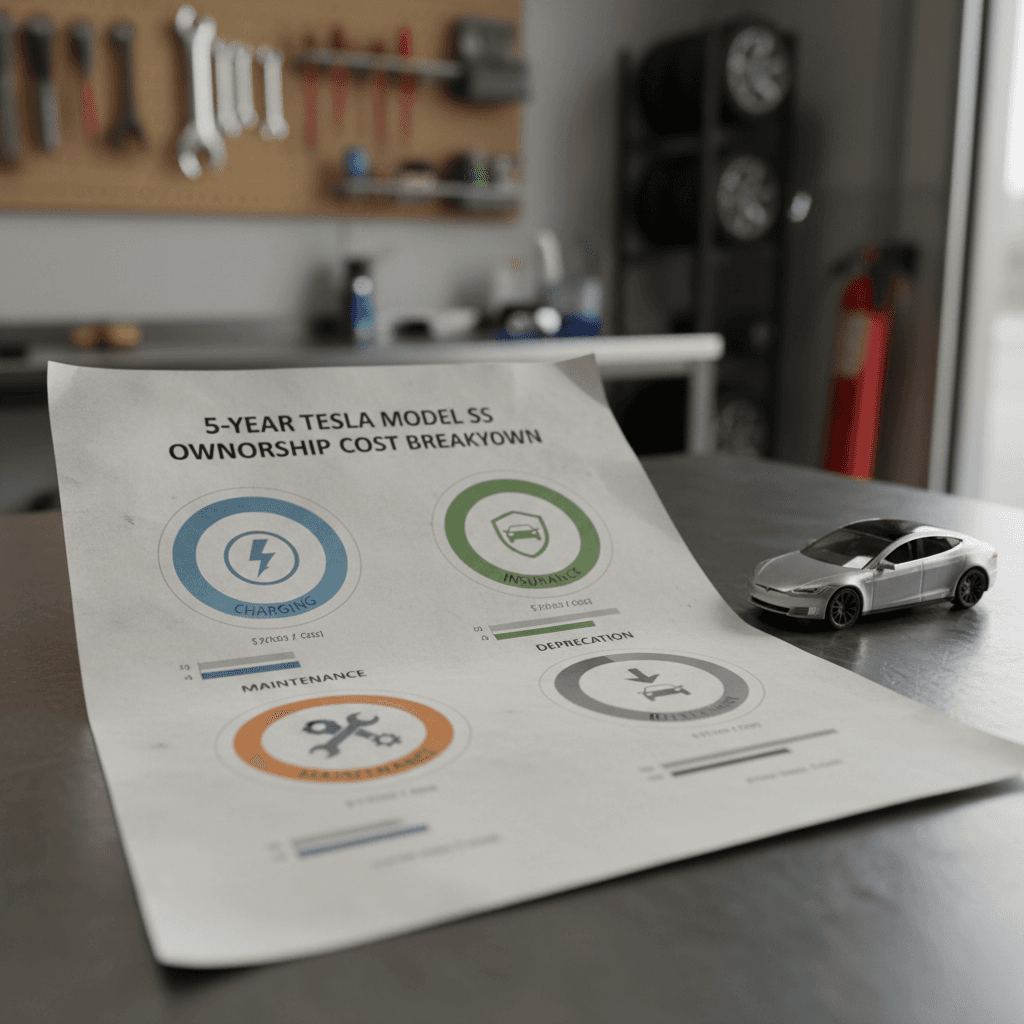
Depreciation is simply **what the car is worth when you sell it minus what you paid**. For EVs, and especially premium ones like the Model S, this is usually the largest single cost over 5 years.
New Tesla Model S depreciation (5 years)
- Purchase price: $90,000
- Likely 5-year value: around $40,000–$45,000 depending on mileage and condition
- Estimated depreciation hit: about $45,000–$50,000
Even if operating costs are low, you’ve probably burned through roughly half of the car’s value in 5 years.
Used Tesla Model S depreciation (5 years)
- Purchase price: $45,000 for a ~5-year-old car
- Likely 10-year-old value: around $20,000–$25,000
- Estimated depreciation hit: about $20,000–$25,000
By letting the first owner absorb the steep early-years drop, you’re often cutting your 5-year depreciation bill roughly in half.
How to sanity-check Model S depreciation
Energy costs: charging a Model S vs buying gas
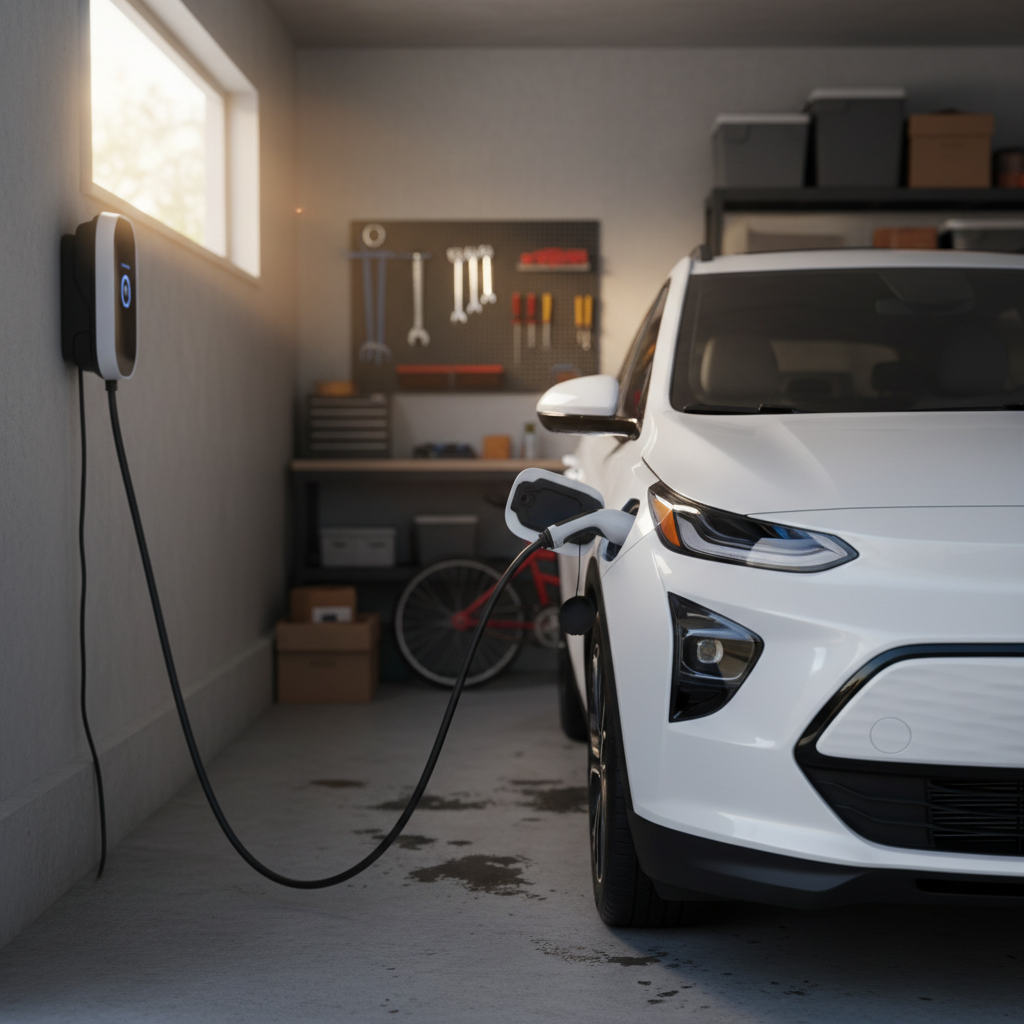
The good news is that **electricity is usually much cheaper per mile than gasoline**, especially if you can charge at home. For a Model S averaging about 300 Wh/mile (0.30 kWh/mile), here’s what that looks like over 5 years and 60,000 miles.
5-year Tesla Model S charging costs vs gas sedan
Comparison of charging a Model S primarily at home versus fueling a comparable gas luxury sedan.
| Scenario | Assumptions | 5-year energy cost |
|---|---|---|
| Model S, mostly home charging | 0.30 kWh/mile, 60,000 miles, $0.15/kWh | ~$2,700 |
| Model S, heavy fast-charging use | 50% fast charging effectively $0.30/kWh blended | ~$5,400 |
| Gas luxury sedan | 25 mpg, 60,000 miles, $3.75/gal average | ~$9,000 |
Even with some road-trip fast charging, electricity usually undercuts gasoline by thousands of dollars over a 5-year span.
Even in a fairly aggressive **road-trip-heavy** scenario, you’re still likely saving **$3,000+ on energy** over 5 years versus a comparable gas sedan. In a mostly-home-charging life, those savings can climb toward **$6,000+**. That doesn’t erase depreciation, but it does help offset higher insurance and purchase price.
Real-world charging mix
Insurance, registration, and taxes
Insurance is where the Model S reminds you it’s a six-figure luxury car, even if you bought it used. High parts costs, advanced sensors, and strong performance all raise insurer risk models.
How ownership age affects your annual insurance spend
Illustrative US averages for a clean-driving, 35–45-year-old owner in a typical suburb.
New Model S
~$2,500–$3,000 per year
Highest premiums thanks to vehicle value and expensive body/paint repairs.
3–7-year-old Model S
~$2,000–$2,600 per year
Value has fallen, but parts and labor costs haven’t. Savings are real but modest.
Registration & taxes
Varies widely by state.
Expect higher first-year registration and possibly EV fees, then a gradual decline as the car depreciates.
Across 5 years, you might spend **$13,000–$15,000 insuring a new Model S**, vs **$10,000–$13,000** for a used one. Where you live, your driving record, and your chosen coverage levels can swing these numbers dramatically, so it’s worth getting real quotes before you buy.
Don’t forget comprehensive and collision
Maintenance, repairs, and tires
Tesla’s marketing pitch about EVs needing “almost no maintenance” contains a grain of truth, but it’s not the full story. You’ll skip oil changes, transmission services, and many traditional wear items, yet you still face **tires, brakes, suspension, HVAC, and electronics** like any vehicle.
- Routine items: cabin air filters, brake fluid inspections, wiper blades, key fob batteries.
- Tires: Performance EVs are heavy and powerful; expect to replace tires roughly every 25,000–35,000 miles depending on driving style.
- Brakes: Regenerative braking means pads and rotors can last much longer than on a gas sedan, especially for highway-heavy drivers.
- Repairs: Out-of-warranty electronics, suspension components, or MCU/screen issues can run into four figures per event. They don’t happen to everyone, but you should budget for the possibility.
Estimated 5-year Tesla Model S maintenance & repair budget
High-level view of what you might reasonably set aside for upkeep.
| Scenario | What’s included | 5-year estimate |
|---|---|---|
| New Model S, under warranty | Tires x2 sets, basic service items | $4,000–$6,000 |
| Used Model S, partial or no warranty | Tires x2 sets, basic service, plus $2,000–$4,000 repair reserve | $6,000–$10,000 |
These are budgeting numbers, not guaranteed expenses, some owners spend less, some more.
Battery and drive unit repairs are rare but expensive
Financing payments and how buying used changes the math
Most Model S buyers finance at least part of the purchase. That spreads costs out but also adds **interest**. Because the Model S is expensive, small changes in loan terms and down payment can easily move your monthly outlay by hundreds of dollars.
New Model S – 72-month loan
- Price: $90,000
- Down payment: 10% ($9,000)
- Amount financed: $81,000 at 5.5% APR, 72 months
- Estimated payment: around $1,320/month
- 5-year principal + interest outlay: roughly $79,000–$81,000 paid over 60 months
You still owe money after 5 years, and your remaining loan balance needs to be compared against the car’s resale value.
Used Model S – 60-month loan
- Price: $45,000
- Down payment: 10% ($4,500)
- Amount financed: $40,500 at 7.0% APR, 60 months
- Estimated payment: around $800/month
- 5-year principal + interest outlay: you’re largely or completely paid off by year 5
Your monthly cash flow is materially lower, and by the end of year 5 you may own the car outright while it’s still worth $20,000+.
How Recharged can help on financing
Battery health and long-term value
The heart of the Model S value proposition is its **battery pack**. Most owners see some degradation in usable range over time, often in the ballpark of 10–20% by 8–10 years, depending on use patterns, climate, and charging habits. The good news is that the majority of packs age gradually, not catastrophically, but that doesn’t mean you should ignore battery health when you’re projecting 5-year costs.
- Range loss: A car that started life at 370 miles of EPA-rated range might realistically deliver 300–330 miles on a full charge after many years. That’s still plenty for most people, but it matters if your use case pushes the limits.
- Resale value: Buyers increasingly ask about objective battery health, not just odometer miles. A pack that tests strong compared to peers can translate into a higher resale price or a faster sale.
- Charging behavior: Frequent high-power DC fast charging and regularly charging to 100% can accelerate degradation compared to mostly home-charging and stopping around 70–80%.
Why a battery health report matters for 5-year cost
How a used Model S from Recharged can lower your 5-year cost
Buying used isn’t just about a lower sticker price, it reshapes the entire 5-year ownership equation. When you start from $40,000–$50,000 instead of $90,000+, you not only shrink depreciation but also reduce **taxes, insurance, financing costs, and opportunity cost**.
Ways Recharged helps de-risk 5-year Model S ownership
Lower upfront cost is just the starting point.
Recharged Score battery health report
Every vehicle comes with a Recharged Score Report that includes verified battery health metrics.
You’re not guessing whether the pack has been abused; you’re buying with data.
Fair market pricing on used Model S
Pricing is benchmarked to the market with EV-specific considerations like battery condition and equipment.
That transparency is key when depreciations swings are measured in tens of thousands of dollars.
Digital purchase & nationwide delivery
Shop, finance, trade in, and arrange nationwide delivery entirely online, or visit our Experience Center in Richmond, VA.
Less time at dealerships, more time understanding the economics.
Ready to find your next EV?
Browse VehiclesRun your own 5-year scenarios
FAQ: Tesla Model S 5-year cost of ownership
Frequently asked questions about 5-year Tesla Model S costs
Bottom line: is a Tesla Model S worth it over 5 years?
Over a 5-year window, a **new Tesla Model S** behaves exactly like what it is: a premium, high-performance flagship with luxury-level depreciation and insurance, offset by low energy and maintenance costs. A **thoughtfully selected used Model S**, by contrast, can deliver nearly the same experience at a much lower total cost of ownership, especially if you prioritize home charging and drive enough miles to fully benefit from cheap electricity.
If you’re serious about understanding the Tesla Model S true cost of ownership over 5 years, don’t stop at the monthly payment. Model out depreciation, charging, insurance, and a realistic repair reserve. Then compare that to your gas alternatives, and to a similar used Model S from a seller who can prove the battery’s health. That’s exactly what Recharged is built for: **transparent pricing, verified battery diagnostics, EV-focused financing, and expert guidance** so your dream car doesn’t become a 5-year financial surprise.