If you’re eyeing a Tesla Model S in 2026, you’re probably torn between its wild performance and a nagging question: is the Tesla Model S actually reliable long‑term? The answer depends heavily on which years you’re looking at, how comfortable you are with high-tech quirks, and how smart you are about battery health when buying used.
Big picture on 2026 Model S reliability
Tesla Model S reliability in 2026 at a glance
Model S reliability snapshot for 2026 shoppers
The Model S is a bit of a paradox. The core EV bits, battery and drive unit, are generally robust. The pain lives in the orbiting hardware and software: touchscreens, suspension, door handles, trim. In 2026, you’re not asking, “Will it move?” as much as, “What will it annoy me with, and what will it cost when it does?”
How reliable is the Tesla Model S compared with other luxury EVs?
Reliability for the Model S has followed the classic tech‑startup curve: big promises, early drama, then gradual stabilization. In broad strokes, here’s where things stand in 2026:
Where Model S sits in today’s reliability landscape
Think of it as a maturing gadget more than an old‑school Mercedes.
Newer Teslas are improving
Older Teslas drag down used scores
Compared with other luxury EVs
How to interpret the reliability noise
Reliability by Model S generation and model year
To make sense of Model S reliability, split the lineup into three rough eras. The problems evolve as the car does:
Tesla Model S reliability by era
Use this as a sanity check when someone online says “all Model S cars are unreliable.” They’re often talking about a very specific era.
| Era | Approx. years | Reliability character | What to watch for |
|---|---|---|---|
| Early adopters | 2012–2016 | Most experimental and trouble‑prone, but some high‑milers are still running strong. | MCU1 failures, early drive units, door handles, pano roof leaks, early air‑suspension components. |
| Mid‑cycle refresh | 2017–2020 | Improving but still inconsistent; more recalls and software updates. | MCU/eMMC wear (later addressed), suspension links/bushings, door handles, interior wear. |
| “Palladium” redesign & beyond | 2021–2026 | Mechanically more sorted, software‑centric issues remain; still a complex luxury EV. | New infotainment hardware, yoke/steering controls, intermittent rattles, occasional suspension and trim complaints. |
Always confirm exact build date and hardware; changes don’t always line up perfectly with model years.
Why old doesn’t automatically mean “bad”
Battery and drive-unit longevity: the good news
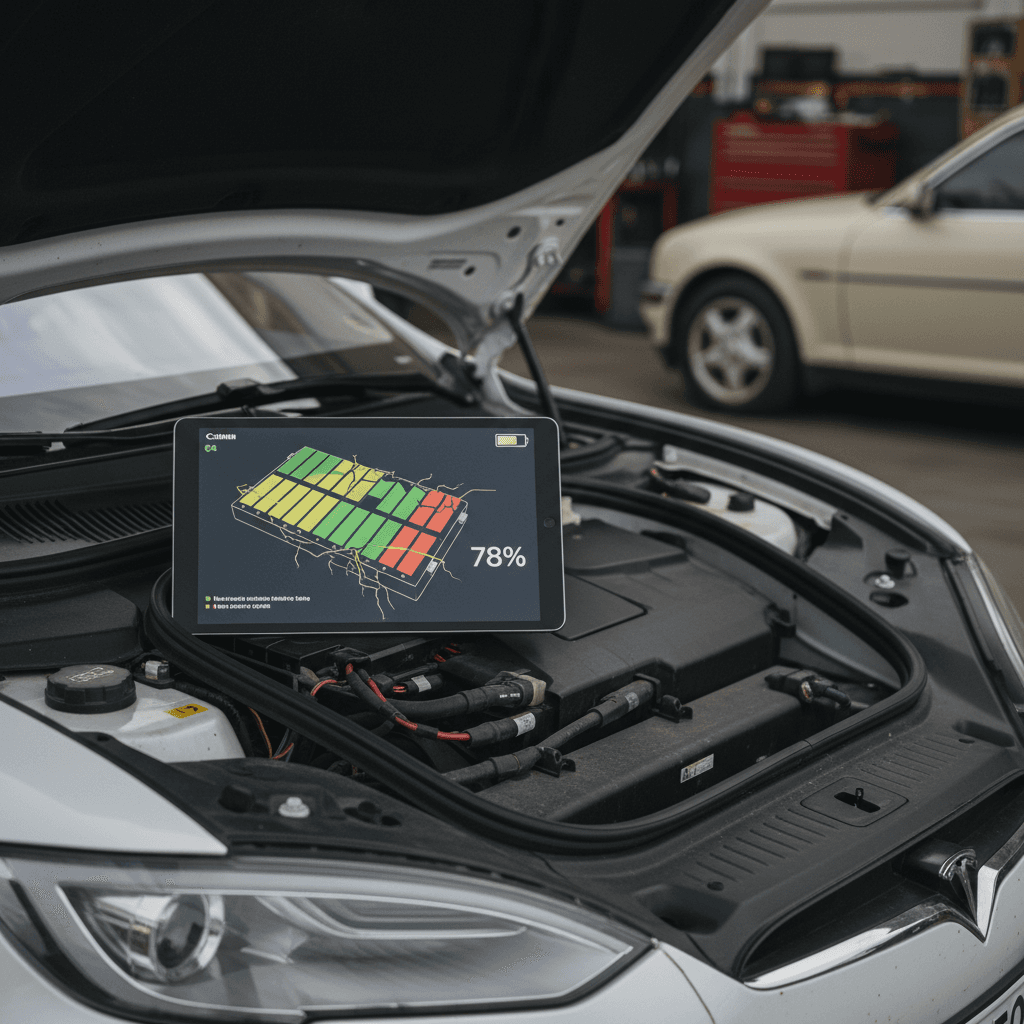
Let’s start with the part that scares people the most and, ironically, is often the least of your worries: the battery pack. Real‑world data and high‑mileage owner groups show that Model S packs generally age gracefully when not abused.
- Many Model S cars report roughly 5–10% range loss in the first 50,000–75,000 miles, then a slower fade after that, assuming normal charging habits.
- High‑mileage examples, well over 150,000 miles, often still retain 80%+ of their original capacity when mostly charged at home on AC power.
- Tesla’s battery and drive‑unit warranty on many Model S trims is 8 years / 150,000 miles (check your VIN and paperwork), with a promise of at least 70% capacity during that period.
- Failures do happen, contactors, individual modules, coolant leaks, but compared with many ICE luxury sedans, catastrophic powertrain failures are not the norm.
Why the EV core can outlast the cosmetics
Where owners get into trouble is abusing fast charging and heat. Lots of DC fast charging, frequent 100% charges, and baking the pack in hot climates will accelerate degradation. When you’re buying used, you want evidence of mostly home Level 2 charging and sane charge limits (typically 80–90% for daily use).
Common Tesla Model S problems in 2026
Every car has a greatest‑hits album of failures. For the Model S, especially early and mid‑years, the track list looks like this:
Most common Model S trouble spots
Not every car will have these, but you should budget as if a few will show up.
MCU (center screen) failures
Air suspension and front control arms
Retracting door handles
Sensors, trim and squeaks
Why “cheap” early Model S cars can get expensive
What does it cost to keep a Model S on the road?
There’s no oil to change and no timing belt to snap, but the Model S is still a six‑figure luxury car at heart. Parts prices and labor times reflect that. You’ll often save on routine running costs versus a gas S‑Class, then give some of it back in repairs when complex parts age.
Typical Model S ownership costs out of warranty
Big‑ticket repair risk
Individual jobs like an MCU replacement, multiple air suspension components, or failing door handles can run <strong>$1,000–$4,000</strong> at a Tesla Service Center. Independent EV shops can sometimes cut that substantially.
Routine maintenance is light
No oil changes, spark plugs, or exhaust work. You’re mostly dealing with tires, cabin filters, brake fluid changes, and the occasional alignment. If you commute a lot, you’ll burn through high‑performance tires faster than you expect.
Brake wear is usually low
Thanks to strong regenerative braking, many Model S owners report <strong>very slow pad and rotor wear</strong>. Rust or lack of use (in salty regions) can be a bigger enemy than mileage.
Insurance can surprise you
Claim costs and repair complexity mean <strong>insurance can be higher</strong> than an equivalent gas sedan. Smart shopping, higher deductibles, and strong driver records help.
Software and connectivity costs
Premium Connectivity and big software options (like advanced driver assistance packages) are subscription or one‑time charges that don’t show up in “maintenance” but matter to your real‑world cost picture.
Independent vs. Tesla service
By 2026, more independent EV‑specialist shops can handle out‑of‑warranty repairs at lower labor rates. That’s where a marketplace like <strong>Recharged</strong> can help, connecting you with trustworthy EV pros instead of guessing on Google Maps.
How to budget realistically
Recalls, software updates, and over-the-air “fixes”
One of Tesla’s signature tricks is pushing over‑the‑air (OTA) updates that add features or tweak behavior without a service visit. That’s a blessing for usability and sometimes a mixed bag for owners who wake up to a different car than the one they parked.
- The Model S has accumulated a healthy list of recalls over its life, from infotainment screens to suspension components and safety‑critical items like hood‑latch warning systems.
- OTA updates can patch bugs or change how systems behave, but hardware issues, like physical suspension wear or a failing MCU chip, still require parts and labor.
- When you’re shopping, ask the seller for a recall completion printout or app screenshots showing that outstanding campaigns have been taken care of.
- OTA updates also mean reliability isn’t frozen in time: a car may behave better, or occasionally worse, than the review you read from two years ago. Build date and current software version both matter.
Good habit: check VIN for recalls
Shopping for a used Tesla Model S in 2026
A used Model S can be either the deal of the decade or an ongoing experiment in applied capitalism. The difference is preparation. In 2026, you have better tools than early buyers ever did.
1. Start with the right years and trims
For many shoppers, the sweet spot is a later, post‑MCU‑recall car with documented service history, often 2017+ for value buys, 2022+ if you want the latest "Palladium" hardware. Plaid models add extreme performance, but also more expensive consumables.
Skip anything with vague accident histories, flood exposure, or incomplete paperwork. If the seller can’t explain the car, the car will explain itself later, expensively.
2. Make battery health non‑negotiable
The battery is the heart of the car and the number one fear point for first‑time EV buyers. You want real data, not vibes. Tools like the Recharged Score read battery health, usage patterns, and charge behavior so you’re not guessing based on a range bar.
A clean battery report with moderate degradation is worth more than new floor mats and a fresh detail job.
Used Model S reliability checklist for 2026 buyers
Verify MCU history
Ask whether the main center screen has ever been replaced and whether the car was covered by the eMMC recall. On a test drive, watch for lag, random reboots, or blank screens.
Listen to the suspension
Drive over bumpy roads and at low speeds in parking lots. Clunks, creaks, or knocking from the front end can mean worn control arms, bushings, or struts, common on higher‑mileage cars.
Test every door handle
Lock, unlock, and open each door multiple times. Handles should extend smoothly and retract reliably. Any hesitation or failure is leverage for negotiation, or a reason to walk.
Scan for warning lights
From the driver display to the center screen, check for errors related to airbags, Autopilot cameras, tire pressure, or battery/drive unit. Take screenshots or photos if something looks off.
Check charging behavior
Plug into both AC (Level 2) and, if possible, a DC fast charger. Confirm it starts charging consistently and hits expected speeds for that station and battery state of charge.
Get an independent EV inspection
A Model S is not a car you want inspected by someone who’s never worked on one. Use an EV‑specialist shop, or buy through a marketplace like <strong>Recharged</strong> where battery diagnostics and health reporting are baked into the process.
Where Recharged fits in
Ready to find your next EV?
Browse VehiclesWhen Model S reliability makes sense, and when it doesn’t
The Model S in 2026 is not the right answer for everyone. It’s a phenomenal grand‑touring EV with supercar thrust and a minimalist cabin that still feels ahead of its time. It’s also a dense lattice of electronics and air lines and motors that all want to be understood, and occasionally fixed.
Is a Tesla Model S a good reliability fit for you?
Be honest about your appetite for complexity and surprise costs.
A good fit if…
- You do high mileage and want the long‑term savings of an EV powertrain.
- You’re comfortable budgeting for occasional $1,000+ repairs and prefer performance over absolute predictability.
- You’re willing to chase down rattles and squeaks if the rest of the car is spectacular.
- You plan to keep the car for many years and will actually use its range and performance.
Maybe not the best choice if…
- You want Camry‑level reliability with luxury‑car speed and feel.
- Unexpected repair bills would seriously hurt your finances.
- You don’t have access to a trusted EV‑savvy mechanic or a marketplace that vets cars deeply.
- You’re rarely driving long distances and could be just as happy in a simpler, smaller EV.
In 2026, “Tesla Model S reliability” is no longer the horror story it once was, but it’s still not “set it and forget it” like a basic hybrid. If you pick the right years, demand real battery‑health data, and go in with eyes open about suspension, electronics, and repair costs, the Model S can be a deeply satisfying long‑term companion instead of an unreliable fling. The key is to shop it like what it is: a high‑performance luxury EV that rewards informed, careful owners. That’s where tools like the Recharged Score Report and EV‑specialist guidance turn a risky bet into a calculated decision.