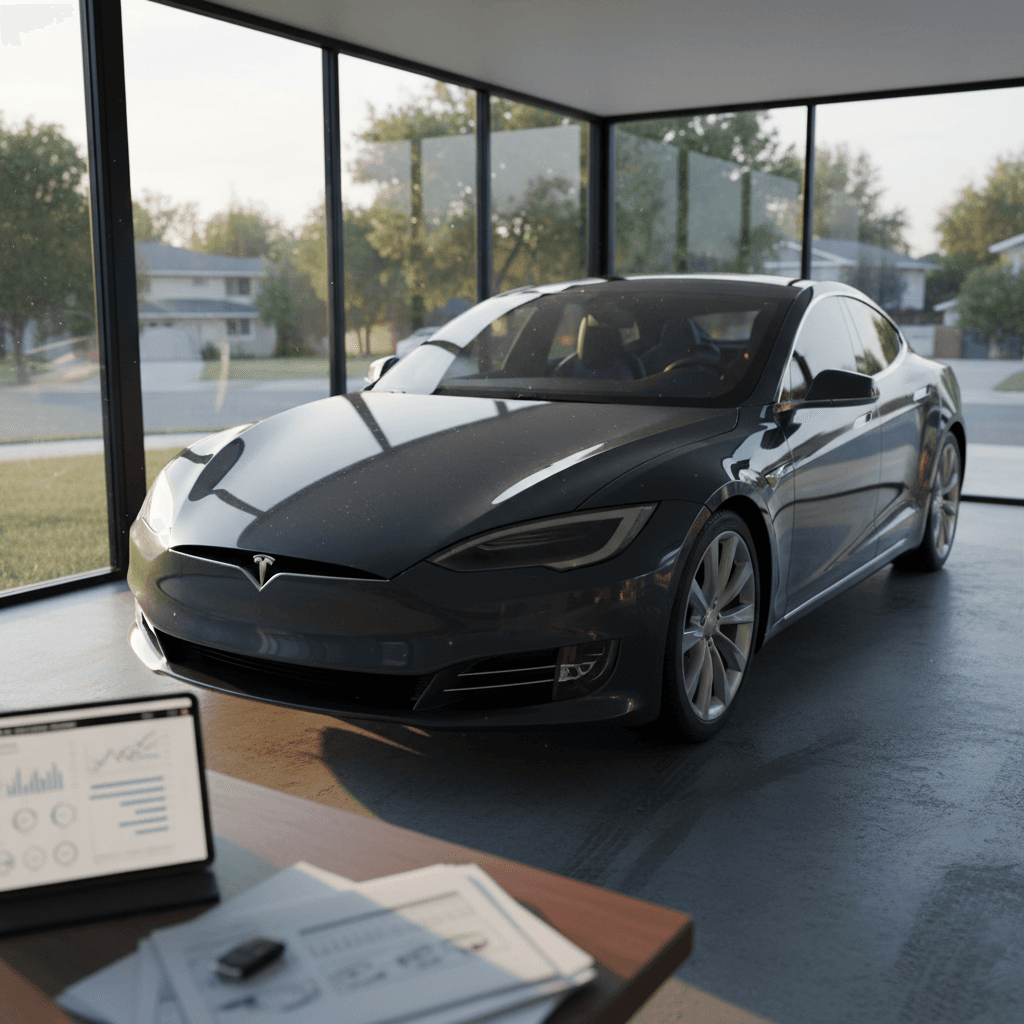
If you’re eyeing a Tesla Model S, you already know it’s not a cheap car. What surprises many shoppers is just how high Tesla Model S insurance costs can be compared with the average gas car. The good news: if you understand what’s driving those premiums, there are practical ways to bring the bill back down, especially if you’re buying a used Model S from a transparent marketplace like Recharged.
Key takeaway
Tesla Model S insurance at a glance
Tesla Model S insurance cost snapshot (2026, U.S.)
Perspective on the numbers
How much does Tesla Model S insurance cost?
Let’s start with the big question: what will you actually pay to insure a Model S in 2026? Recent national quote analyses from major insurance comparison platforms show an average Tesla Model S premium of around $300 per month for full coverage, roughly $3,600 per year for a typical driver profile. Some reports put the average slightly higher when they focus on newer performance trims or pricier states, but $3,000–$4,000 is a realistic national middle ground for many owners.
Contrast that with the average U.S. full‑coverage policy, which has hovered around $2,100–$2,500 per year in the 2024–2026 window. In other words, a Model S often costs $1,000+ more per year to insure than a typical mainstream car, even before you add performance packages.
- Budget buyers in low‑cost states, driving older Model S trims with clean records, sometimes land closer to $2,000–$2,500 per year.
- Drivers in high‑cost states (California, Florida, New York, Louisiana, Texas) can easily see $4,500–$6,500 per year, especially on newer Performance or Plaid models.
- Young drivers, accidents, tickets, or high annual mileage can push rates even higher, regardless of where you live.
Reality check before you buy
Why is Tesla Model S insurance so expensive?
From an insurer’s point of view, the Model S is a high‑value, high‑performance luxury EV with expensive parts and complex technology. That combination drives up the potential size of every claim, even when collision rates are similar to other cars. Here are the main reasons Tesla Model S insurance costs more than many vehicles.
6 factors that push Model S insurance up
Understanding these levers helps you figure out where you can save.
High vehicle value
Expensive tech and repairs
Performance capability
Mixed safety/claim data
EV‑specific risk
Rising costs overall
EVs vs. gas cars on insurance
Insurance costs by model year, trim, and location
Not all Model S drivers pay the same price. In fact, three things can move your premium hundreds or even thousands of dollars per year: model year, trim/performance level, and where you live.
How Tesla Model S insurance varies
Illustrative ranges for full‑coverage premiums on a clean‑record driver, assuming average U.S. rates. Your quote may fall outside these bands.
| Scenario | Example vehicle | Typical annual premium range | What’s driving the difference |
|---|---|---|---|
| Older used Model S in low‑cost state | 2016–2019 Model S 75D in Virginia or Ohio | $2,000–$3,000 | Lower vehicle value, more time for rates to normalize, cheaper state insurance markets. |
| Recent used Model S in average‑cost state | 2020–2022 Long Range in Illinois or Georgia | $2,800–$3,800 | Newer tech and higher replacement cost, but not top‑tier performance; mid‑pack state rates. |
| New Model S in average‑cost state | 2024–2025 Dual Motor in Arizona or Pennsylvania | $3,500–$4,500 | High MSRP, up‑to‑date tech, and continuing inflation in parts and labor costs. |
| Model S Plaid in high‑cost state | 2022–2025 Plaid in California, Texas, or Florida | $4,800–$6,500+ | Very high purchase price and extreme performance in states that already have elevated auto insurance rates. |
Newer, higher‑performance trims in high‑cost states command the highest insurance prices.
High‑cost states are a double whammy
How used vs. new changes your insurance bill
If you’re comparing a new Model S at the Tesla store with a used Model S from a marketplace like Recharged, insurance is one of the big swing factors in your total cost of ownership. In broad strokes, newer Model S vehicles cost more to insure than older ones because the insurer is on the hook for a larger payout if the car is totaled.
Insuring a new Model S
- Highest premiums because the replacement value is highest.
- Performance variants and pricey options raise the ceiling even more.
- Lenders usually require full coverage with low deductibles, which costs more.
- New parts and advanced sensors make repairs especially expensive in the early years.
Insuring a used Model S
- As the car depreciates, collision and comprehensive rates often come down.
- You may choose higher deductibles once you’re comfortable with the car.
- Shopping used can let you step down a trim level (from Plaid to Long Range) and cut premiums without giving up too much performance.
- Buying from a marketplace like Recharged gives you battery transparency via the Recharged Score, making it easier to match coverage to the car’s true condition.
Look at 5‑year cost, not just this year
7 ways to lower Tesla Model S insurance costs
You can’t change the fact that the Model S is a premium EV, but you do have more control over your rate than many owners realize. Use these strategies to chip away at your quote without sacrificing coverage you actually need.
Practical steps to reduce your Model S premium
1. Shop quotes before you buy the car
Before you sign for a Model S, new or used, get at least <strong>3–5 quotes</strong> using the exact VIN or at least the correct model year and trim. You may find hundreds or even thousands of dollars’ difference between companies for the same coverage.
2. Consider a slightly older or non‑Plaid trim
Dropping from a brand‑new Plaid to a 2–3‑year‑old Long Range can still deliver the Tesla experience while <strong>cutting both purchase price and insurance</strong>. On Recharged you can compare multiple model years and trims side‑by‑side with transparent pricing.
3. Adjust deductibles thoughtfully
Raising your collision and comprehensive deductibles from, say, $500 to $1,000 can lower premiums. Just make sure you keep enough cash on hand to comfortably cover that higher out‑of‑pocket amount if you have a claim.
4. Optimize coverage for how you use the car
If your Model S is a weekend car, you may not need the same mileage rating as someone who commutes 18,000 miles a year. Be honest about your usage and verify that you’re not over‑insuring a low‑mileage, garage‑kept vehicle.
5. Stack EV and multi‑policy discounts
Many insurers now offer <strong>EV‑specific discounts</strong>, telematics programs, safe‑driver rewards, and savings for bundling home or renters insurance. Ask explicitly about every discount category when you quote.
6. Use Tesla safety features to your advantage
Automatic emergency braking, lane‑keeping, and other driver‑assist systems can qualify you for discounts with some carriers. Enrolling in a safe‑driving program (from Tesla Insurance or a traditional carrier) can further reward consistent good behavior behind the wheel.
7. Keep your credit and record clean
In most states, credit‑based insurance scores and recent violations are huge pricing factors. Paying bills on time, avoiding speeding tickets, and steering clear of at‑fault accidents are still the <strong>highest‑impact ways to protect your rate</strong> over time.
Where Recharged fits in
Ready to find your next EV?
Browse VehiclesHow Tesla Insurance compares to traditional carriers
In some states, you’ll have the option to buy coverage directly from Tesla Insurance. In others, you’ll be using mainstream carriers like GEICO, Progressive, State Farm, or regional insurers. Understanding how Tesla’s own program stacks up against traditional companies can help you decide where to start your quote shopping.
Potential advantages of Tesla Insurance
- Deep vehicle data: Tesla can use in‑car telemetry to price based on your real‑world driving (hard braking, aggressive cornering, etc.). Safe drivers may benefit.
- Simplified claims: Integration with Tesla service centers can streamline repairs and parts sourcing.
- Model‑specific pricing: Underwriting is tailored to Tesla vehicles instead of generic EV assumptions.
Availability, pricing, and features vary by state. Always compare with at least one traditional carrier.
Potential downsides vs. traditional carriers
- Limited availability: Tesla Insurance still isn’t offered in every state, which limits your options.
- Telematics isn’t for everyone: Not every driver wants their day‑to‑day behavior scored and monitored.
- May not be cheapest: In some markets, traditional insurers still beat Tesla’s own program, especially if you’re bundling home or other vehicles.
How to compare fairly
Insurance and the true cost of owning a Model S
Insurance is just one line item in Model S ownership, but it’s one that hits your budget every single month. Industry cost‑of‑ownership studies peg the annual expense of running a new vehicle, fuel or electricity, insurance, maintenance, taxes, and depreciation, well into the five figures. EVs often save you on fuel and routine maintenance yet give some of that back through higher insurance and registration fees.
Where insurance fits into your total Model S budget
A simplified view of annual ownership costs for many Model S drivers.
Insurance
Charging & energy
Depreciation & finance
When you buy through Recharged, you get a detailed Recharged Score Report that explains the car’s battery health, usage history, and fair‑market pricing. That makes it far easier to decide whether a particular Model S justifies the higher insurance bill, or whether a slightly different year or trim could put you in a better long‑term position.
FAQ: Tesla Model S insurance costs
Frequently asked questions about Tesla Model S insurance
Bottom line: Tesla Model S insurance cost is higher than average, but it doesn’t have to be a deal‑breaker. By choosing the right model year and trim, shopping multiple quotes, and taking advantage of the car’s safety tech and available discounts, you can bring premiums into a range that matches your budget. If you’re leaning toward a used Model S, Recharged’s battery‑health reporting, fair‑market pricing, and EV‑specialist support make it far easier to understand the true long‑term cost before you ever click “buy.”