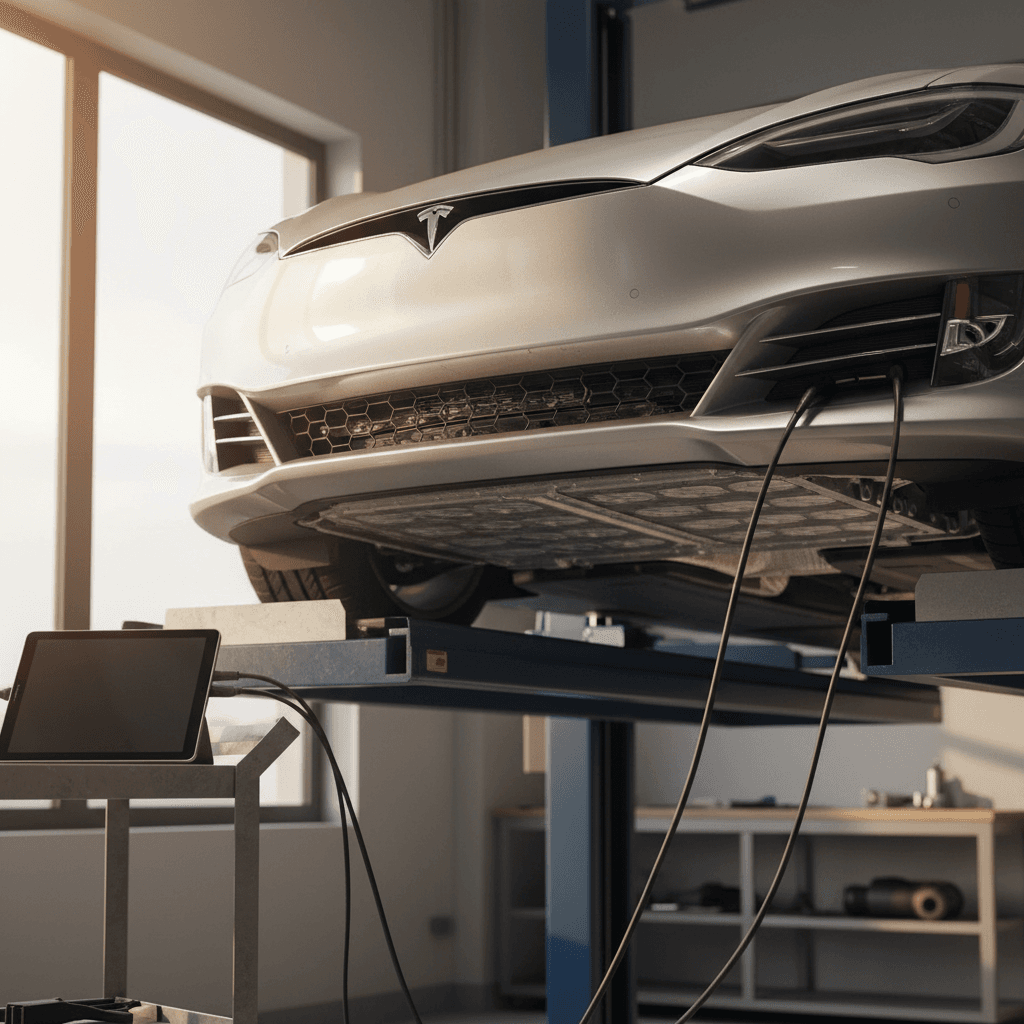
If you own or are considering a Tesla Model S, the single most important coverage on the car is the Battery & Drive Unit Limited Warranty. Understanding exactly what the Tesla Model S battery warranty covers, and what it doesn’t, can be the difference between confident ownership and a five‑figure surprise repair bill.
Quick takeaway
Why the Model S battery warranty matters
On a Model S, the high‑voltage battery pack and electric drive units are by far the most expensive components. Replacement costs can easily run into the tens of thousands of dollars. That’s why Tesla carved out a dedicated Battery & Drive Unit warranty separate from the basic 4‑year/50,000‑mile New Vehicle Limited Warranty. If you’re shopping used, you need to know how much of that protection is left, and what kinds of battery issues it actually addresses.
Tesla Model S battery warranty snapshot (U.S., 2026)
Tesla Model S battery warranty at a glance
Model S Battery & Drive Unit warranty by era (U.S.)
High‑level overview of how the Model S battery warranty has evolved. Always confirm the exact terms for the specific VIN in your Tesla app or warranty booklet.
| Model year range | Typical mileage limit | Capacity retention language | What this usually means |
|---|---|---|---|
| 2012–early 2015 | Often unlimited miles | No explicit % retention | Covers failures, not a specific degradation threshold. |
| Mid‑2015–2019 | Commonly 8 yrs / 150,000 mi | Little or no % language in early docs | Still focused on failures; degradation claims handled case‑by‑case. |
| ~2020–2023 | 8 yrs / 150,000 mi (most packs) | 70% capacity retention over warranty period | Tesla must address capacity dropping below ~70% while in term. |
| 2024+ (current policy trend) | 8 yrs / 150,000 mi (check exact VIN) | 70% capacity retention explicitly stated in online warranty | Clearer degradation protection plus failure coverage. |
Exact terms can vary by build date, battery size, and region, so treat this as a directional guide, not a legal document.
Always confirm your own car’s terms
How the Model S Battery & Drive Unit warranty works
1. It’s separate from the basic warranty
Every new Tesla gets a New Vehicle Limited Warranty that covers most components for 4 years or 50,000 miles. The Battery & Drive Unit warranty sits on top of that as a longer, powertrain‑focused policy, typically 8 years with a higher mileage cap.
2. It’s time + mileage, whichever comes first
Coverage ends when you hit either the time limit (8 years from the original in‑service date) or the mileage limit (for example, 150,000 miles), whichever comes first. You don’t get 8 years and 150,000 miles, you get one or the other.
Within that period, Tesla agrees to repair, replace, or refurbish the high‑voltage battery or drive unit if they experience a defect in materials or workmanship. On more recent Model S warranties, Tesla also backs a minimum battery capacity, usually stated as no less than around 70% of the original capacity over the warranty term.
Included components
What the Model S battery warranty actually covers
Core protections in the Model S Battery & Drive Unit warranty
What Tesla generally agrees to fix during the warranty period
Defects & failures
Coverage applies to defects in materials or workmanship, not wear‑and‑tear. If a battery module, contactor, or internal electronics fail prematurely, Tesla will typically repair or replace the pack or affected components.
Severe capacity loss (newer cars)
Newer Model S cars include language guaranteeing a minimum battery capacity (around 70%) over the warranty period. If your pack falls below that while in term, Tesla should address it, assuming no excluded misuse.
Drive unit failures
The same warranty usually covers the front and rear drive units. If you experience drive unit failure, grinding, inverter faults, or a unit that won’t move the car, Tesla will typically repair or replace it under this policy while in term.
- Internal battery cell or module failures that meaningfully impact range or safety.
- High‑voltage isolation faults inside the pack not caused by damage or unauthorized repairs.
- Drive unit failures caused by internal defects (for example, certain inverter or rotor issues).
- Battery pack replacements or major repairs when Tesla determines that’s the appropriate remedy.
What a successful claim looks like
What the Model S battery warranty does NOT cover
Just as important as what’s covered is what isn’t. Tesla draws clear lines around normal aging, misuse, and external damage. If your situation falls into one of these buckets, you’re likely on your own financially.
Common exclusions in the Model S battery warranty
Issues that typically won’t be paid for under Tesla’s Battery & Drive Unit coverage
Normal degradation (older cars)
Early Model S warranty documents explicitly state that loss of battery energy or power over time is expected and not covered, as long as it’s within Tesla’s “normal” range. Only more recent cars tie coverage to a specific capacity percentage.
Accident or impact damage
Physical damage to the pack from a collision, road debris, curb, or improper lifting is almost never covered. Those cases fall under collision/comprehensive insurance or out‑of‑pocket repair.
Unauthorized repairs or modifications
If the battery or drive unit has been opened, serviced, or modified by non‑Tesla personnel (including aftermarket “battery upgrades”), Tesla can deny related warranty claims.
- Degradation that stays above the stated capacity threshold (for example, 75–80% capacity on a pack warranted to 70%).
- Damage from flooding, submersion, or other environmental exposure beyond Tesla’s specifications.
- Damage linked to using non‑approved coolants, fluids, or improper storage conditions.
- Any indirect costs, rental cars, towing beyond Tesla’s policy limits, lost time, or reduced resale value.
Abuse can void coverage
Capacity retention & degradation: when can you claim?
Battery degradation is where most Model S owners get tripped up. All lithium‑ion packs lose capacity over time; the question is when that loss crosses from “normal aging” into a warrantable defect.
Newer Model S: 70% capacity guarantee
On recent Model S warranties, Tesla promises that the pack will retain at least about 70% of its original capacity over the 8‑year warranty period. If your usable capacity drops below that threshold while under the mileage and time limits, you have a strong case for a warranty repair or replacement.
Older Model S: degradation is “expected”
Earlier Model S documents often say that loss of battery energy or power over time is not covered. In those cars, Tesla will typically only step in if there’s evidence of a specific defect, like a failing module, not simply because your range has drifted down from its original rating.
How to talk about degradation with Tesla
New vs. used Tesla Model S battery warranty
If you’re buying a Model S new from Tesla, the math is simple: your Battery & Drive Unit warranty begins on the original in‑service date (the day Tesla first delivered the car) and runs for the full term. When you buy used, you inherit whatever is left of that coverage, and possibly an additional pre‑owned warranty if you buy directly from Tesla.
New vs. used Tesla Model S battery coverage
How the Battery & Drive Unit warranty behaves depending on how you acquire the car.
| Purchase scenario | What you get | Key details |
|---|---|---|
| Brand‑new Model S from Tesla | Full 8‑year Battery & Drive Unit term | Starts on original delivery date; ends at time or mileage limit, whichever comes first. |
| Used Model S from private party | Remainder of original 8‑year term | Coverage transfers automatically with the car once Tesla updates ownership in its system. |
| Pre‑owned Model S from Tesla | Remainder of original term + Pre‑Owned Limited Warranty | Tesla often adds a separate pre‑owned vehicle warranty while preserving the original battery coverage. |
| Used Model S from independent dealer | Remainder of original term | Battery warranty still follows the VIN; any third‑party warranty is separate and does not extend Tesla’s coverage. |
In all cases, the Battery & Drive Unit warranty follows the car, not the owner.
Battery warranty is transferable
Real-world examples: covered vs. not covered
Likely covered scenarios
- Drive unit failure at 90,000 miles and 6 years: Car suddenly shows “Car needs service, unable to drive” and won’t move. Within the 8‑year/150k‑mile window, this is typically covered.
- Battery isolation fault not caused by damage: The car throws repeated high‑voltage isolation errors and Tesla confirms an internal pack fault. Again, usually covered.
- Capacity under 70% on a newer VIN: Verified via Tesla diagnostics that your newer‑warranty Model S has dropped to, say, 65% original capacity within term and mileage. That’s squarely within the retention guarantee.
Unlikely to be covered
- Range feels low on a road trip: Running 85–90 mph into a headwind in cold weather and seeing poor range is expected behavior, not a defect.
- Cosmetic damage to the pack shield: Scrapes or dents to the underbody from curbs or debris are physical damage, not a warranty issue.
- Degradation in line with Tesla’s “normal” range: For older Model S warranties without a 70% promise, Tesla may consider 20–30% loss over many years part of normal aging.
How to check your Model S battery warranty status
Step-by-step: verify your Model S battery warranty
1. Find the original in‑service date
In the Tesla app or on your account page, look for the vehicle’s delivery or in‑service date. That’s the starting point for both the basic and Battery & Drive Unit warranties.
2. Note the current odometer reading
Take a clear photo of your current mileage. Remember, coverage ends when you hit the earlier of the time limit or the mileage cap listed for your VIN.
3. Open the warranty documents in the Tesla app
Under your vehicle details in the app, tap the warranty section and open the attached PDF. This is the definitive contract for your specific car and region.
4. Confirm your mileage cap and capacity language
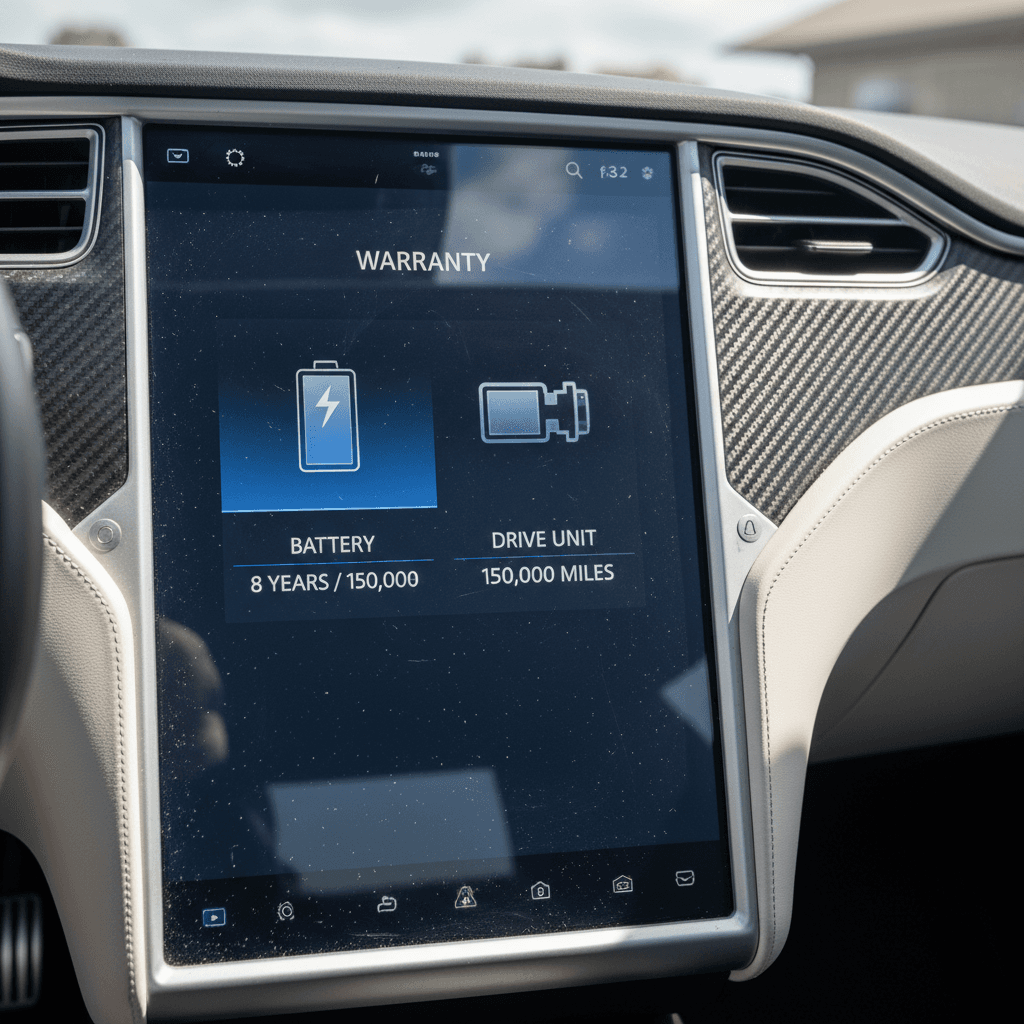
In the Battery & Drive Unit section, look for the <strong>years / miles</strong> line and any text about minimum battery capacity or retention. That tells you whether you have an explicit degradation guarantee.
5. Store a copy for your records
Download or screenshot the warranty PDF and keep it with your service records. If there’s ever a dispute about coverage, you’ll want your own copy of the exact language.
Tips to protect your battery (and your warranty)
A warranty is a safety net, not a maintenance plan. The way you use and charge your Model S has a huge effect on both real‑world range and how Tesla views potential claims. Fortunately, the habits that extend battery life are simple.
Smart charging & usage habits for Model S owners
Good for your range today, and your warranty position tomorrow
Stay between ~10% and 90%
For daily driving, avoid running the battery to 0% or charging to 100% every night. Set your charge limit in the app to something like 80–90% except before road trips.
Be kind in extreme temps
In very hot or cold weather, let the car manage its thermal systems. Pre‑condition while plugged in and don’t leave the car sitting for days at very high or very low states of charge.
Watch repeated hard use
Launching the car hard and fast charging constantly at high SOCs won’t instantly kill the pack, but doing it all the time accelerates wear. Mix in gentler use where you can.
Document your care
Buying a used Model S? How Recharged helps
When you’re evaluating a used Model S, you’re not just buying a car, you’re buying whatever is left of that 8‑year Battery & Drive Unit warranty and the underlying health of the pack itself. That’s where a little structure and data go a long way.
See real battery health, not just a warranty date
Every EV sold through Recharged comes with a Recharged Score Report that includes verified battery diagnostics, so you can see how the pack is performing today, not just how long the warranty lasts on paper. That’s especially valuable on older Model S cars whose warranties don’t spell out a precise degradation threshold.
End‑to‑end used EV guidance
Recharged combines expert EV specialists, transparent pricing, nationwide delivery, and flexible options like financing, trade‑in, instant offer, or consignment. If you’re comparing multiple Model S cars, our team can help you weigh battery health, remaining warranty, and long‑term ownership costs, all in one place.
And because the entire experience is digital, with an Experience Center in Richmond, VA if you prefer to see cars in person, you can shop used EVs the way they should be: simple, data‑driven, and transparent.
Tesla Model S battery warranty FAQ
Frequently asked questions about the Model S battery warranty
Bottom line on the Model S battery warranty
The Tesla Model S Battery & Drive Unit Limited Warranty is generous by internal‑combustion standards: 8 years of coverage for the most expensive components in the car, and on newer vehicles, a clear promise that usable capacity won’t plunge below roughly 70% during that time. But it’s not a blanket guarantee against every drop in range or every kind of damage, and the fine print has changed as the Model S has matured.
If you already own a Model S, your best moves are simple: pull your exact warranty document, adopt charging habits that are kind to the pack, and keep good records. If you’re shopping used, don’t stop at asking, “Is the battery still under warranty?”, ask, “How healthy is this battery today, and what does my specific warranty language say?” Tools like the Recharged Score Report exist to make those answers clear, so you can enjoy Model S ownership with your eyes open and your risk under control.