If you own, or are thinking about buying, a Tesla Model S, the question of Tesla Model S battery replacement cost eventually comes up. The battery pack is the single most expensive component in the car, and understanding what it costs to replace (or repair) in 2026 can help you plan, budget, and shop smarter, especially in the used market.
Quick snapshot: Model S battery costs in 2026
How much does a Tesla Model S battery replacement cost?
Exact numbers vary by model year, pack size, and who does the work, but based on 2024–2026 service invoices and EV repair shop data, you can think of Model S battery replacement cost in four broad buckets.
Typical Tesla Model S battery replacement price ranges (U.S., 2026)
These are ballpark totals including parts and labor for out-of-warranty cars. Actual quotes can be higher or lower depending on Tesla pricing, local labor rates, and whether a remanufactured pack is used.
| Model S generation / pack | Typical total at Tesla | Typical total at independent EV shop | Notes |
|---|---|---|---|
| 2012–2015 (60/70/85 kWh) | $11,000–$16,000 | $9,000–$14,000 | Often remanufactured packs; some shops can repair instead of replace |
| 2016–2019 (75D/90D/100D, P100D) | $13,000–$18,000 | $10,000–$16,000 | Larger packs, higher parts cost |
| 2020–2021 Long Range / Performance | $15,000–$20,000+ | $12,000–$18,000 | Newer packs, limited used/remanufactured supply |
| 2021+ Refresh Long Range / Plaid | $18,000–$22,000+ | $14,000–$20,000+ | High-voltage architecture; pricing still evolving |
Use these numbers as planning guides, not hard quotes. Always get a current estimate from a Tesla Service Center or qualified independent EV shop.
Prices move, sometimes quickly
Not every high-voltage issue requires a full pack. In many real-world cases, owners who initially feared a $15,000 bill ended up with module-level repairs or contactor replacements in the $2,000–$6,000 range. The key is a proper diagnosis before you assume worst-case costs.
Why Model S battery costs vary so much
If you’ve searched forums or talked to Tesla owners, you’ve probably seen wildly different numbers for Model S battery work. That’s not an illusion, there are several legitimate reasons why one owner might pay $4,000 while another faces a $20,000 estimate.
Key factors that drive Model S battery replacement cost
Understanding these variables helps you make sense of the quotes you see, and the one you’ll get.
Model year & pack type
Early 60/70/85 kWh packs are simpler and more plentiful on the used/reman market. Newer Long Range and Plaid packs are larger, more complex, and cost more to replace.
Repair vs full replacement
Sometimes a failing contactors, fuses, or a few modules can be repaired. Other times the safest option is a whole-pack swap. Labor hours and parts prices differ dramatically.
Tesla vs independent shop
Tesla Service Centers usually install new or remanufactured OEM packs. Independent EV specialists may offer used packs or deeper component-level repairs at a lower hourly rate.
Other variables that impact your final bill
Two Model S sedans with the same failure can still see different totals.
Location & labor rates
Shop rates in major metros or coastal states tend to be higher than in smaller markets. That difference adds up quickly on a 10–15 hour job.
Warranty status
If your Model S is still under Tesla’s battery and drive unit warranty, many high-voltage failures are covered at no cost to you.
New vs reman vs used
A brand-new pack is typically the most expensive option. Remanufactured or used packs can shave thousands off the bill, but availability and warranty terms vary.
Battery cost vs vehicle value
Battery replacement vs. repair: what are your options?
Before you assume you’re on the hook for a complete pack, it helps to know the spectrum of repair options that Tesla and independent shops actually use.
1. Software or low-voltage issues
Sometimes what feels like a “battery failure” is really a 12V/low-voltage system problem, a firmware bug, or a failed sensor. These jobs can land in the hundreds of dollars, not thousands.
- 12V battery replacement
- Firmware updates or resets
- HV battery isolation fault diagnosis
If your car is still drivable and Supercharging normally, there’s a good chance you’re not in full-pack territory yet.
2. Component-level HV battery repair
When issues are contained to specific modules, contactors, fuses, or the BMS, some shops can repair the pack instead of replacing it.
- Typical costs: roughly $2,000–$6,000
- More common on out-of-warranty, older Model S cars
- Often performed by independent EV specialists rather than Tesla
This middle ground can dramatically extend pack life without the cost of a full replacement.
3. Remanufactured or used pack swap
Tesla and some third-party shops use remanufactured or carefully tested used packs.
- Cheaper than brand-new but still a major expense
- Warranty coverage may range from 1–4 years depending on the source
- Availability varies by region and pack type
This is currently the most common path when a pack is truly at end of life.
4. Brand-new replacement pack
This is the nuclear option, and the priciest.
- Most predictable long-term reliability
- Highest parts cost and usually higher labor, too
- May not make financial sense on older, high-mileage cars
Before approving a brand-new pack, it’s worth considering the vehicle’s current market value and your long-term plans.
Always get a second opinion
Tesla Model S battery warranty coverage
How much you’ll pay for a Model S battery problem depends heavily on whether your car is still under Tesla’s battery and drive unit warranty. Tesla has tweaked warranty terms over the years, but the broad outlines are similar across Model S generations.
Tesla Model S battery & drive unit warranty overview
High-level look at typical warranty terms for U.S.-market Model S vehicles. Always confirm exact coverage in your own paperwork or Tesla account.
| Model S era | Typical warranty term | Mileage limit | Degradation guarantee |
|---|---|---|---|
| 2012–2014 (60/85 kWh) | 8 years | 125,000 mi (60 kWh) / unlimited (85 kWh) | Coverage for defects; no explicit capacity percentage published on early cars |
| 2015–2019 (70/75/90/100 kWh) | 8 years | 150,000 mi (varies by configuration) | Warranty typically applies if capacity drops below around 70% while under coverage |
| 2020+ Long Range / Plaid | 8 years | 150,000 mi (varies slightly by trim) | Generally covers defects and excessive capacity loss; see your Tesla warranty booklet for the exact threshold |
Warranty details can vary by year and market; treat this as a general guide.
Don’t assume your battery is out of warranty
If you’re looking at a used Model S, the remaining battery warranty is a critical part of the value equation. A car with two or three years of coverage left may be worth a meaningful premium over an identical car that has just timed out.
Signs your Model S battery might need attention
Most Model S drivers will never see a sudden, catastrophic battery failure. Instead, evolving behavior from the pack, and messages from the car, tell you it’s time to pay attention long before the car stops.
Common warning signs of Model S battery issues
Noticeably reduced range at the same SOC
If you’re seeing 30–40% less real-world range on the same route and conditions, that may be more than normal degradation. Compare your current 100% range to what other similar Model S owners report.
Rapid drops in state of charge
If your car falls from, say, 40% to 5% in a few miles without a clear reason, the BMS may be struggling to read the pack accurately, or individual modules could be weak.
Supercharging much slower than before
Some slowdown comes from software and temperature, but an unusually slow curve or inability to fast charge may indicate pack health or HV system issues.
HV or BMS error messages
Yellow or red warnings related to the high-voltage system, battery, or BMS should never be ignored. Capture a photo of the screen and schedule service as soon as you can.
Car refusing to charge or start
If the car won’t accept a charge or won’t go into drive, it could be low-voltage, a charger issue, or the HV pack itself. You’ll need a proper diagnosis either way.
Act early, pay less
How long do Tesla Model S batteries typically last?
The other side of the cost question is longevity. Fortunately, real-world data from high‑mileage Model S owners has generally been encouraging. Many early cars built between 2012 and 2015 are still on their original packs with 150,000–250,000 miles or more.
What owner data suggests about Model S battery life
Battery life is driven less by the calendar and more by a combination of mileage, temperature, charging habits, and pack chemistry. Regularly charging to 100% and fast‑charging exclusively can accelerate wear, while keeping daily charging between roughly 20–80% and using Level 2 at home tends to be gentler.
Climate matters
Ways to reduce your Model S battery replacement cost
You can’t control everything, but there are practical steps you can take, both as an owner and as a used‑EV shopper, to lower the odds of facing a major out‑of‑pocket battery bill.
Practical strategies to keep Model S battery costs down
Use home Level 2 charging when possible
Routine Level 2 charging at moderate rates is easier on the pack than exclusive use of DC fast chargers. Supercharging is fine for trips, just avoid treating it as your only fuel source.
Avoid daily 100% charges
For daily driving, charging to 70–90% and rarely going below 10–15% is easier on the battery than full swings between 0% and 100%.
Keep the car out of temperature extremes
Whenever possible, park in a garage or shade, and use preconditioning. High heat is especially hard on lithium‑ion packs.
Stay on top of software and alerts
Install updates, read alerts, and address issues early. Ignoring warnings can shrink your repair options and increase costs.
Get a detailed battery health check before you buy used
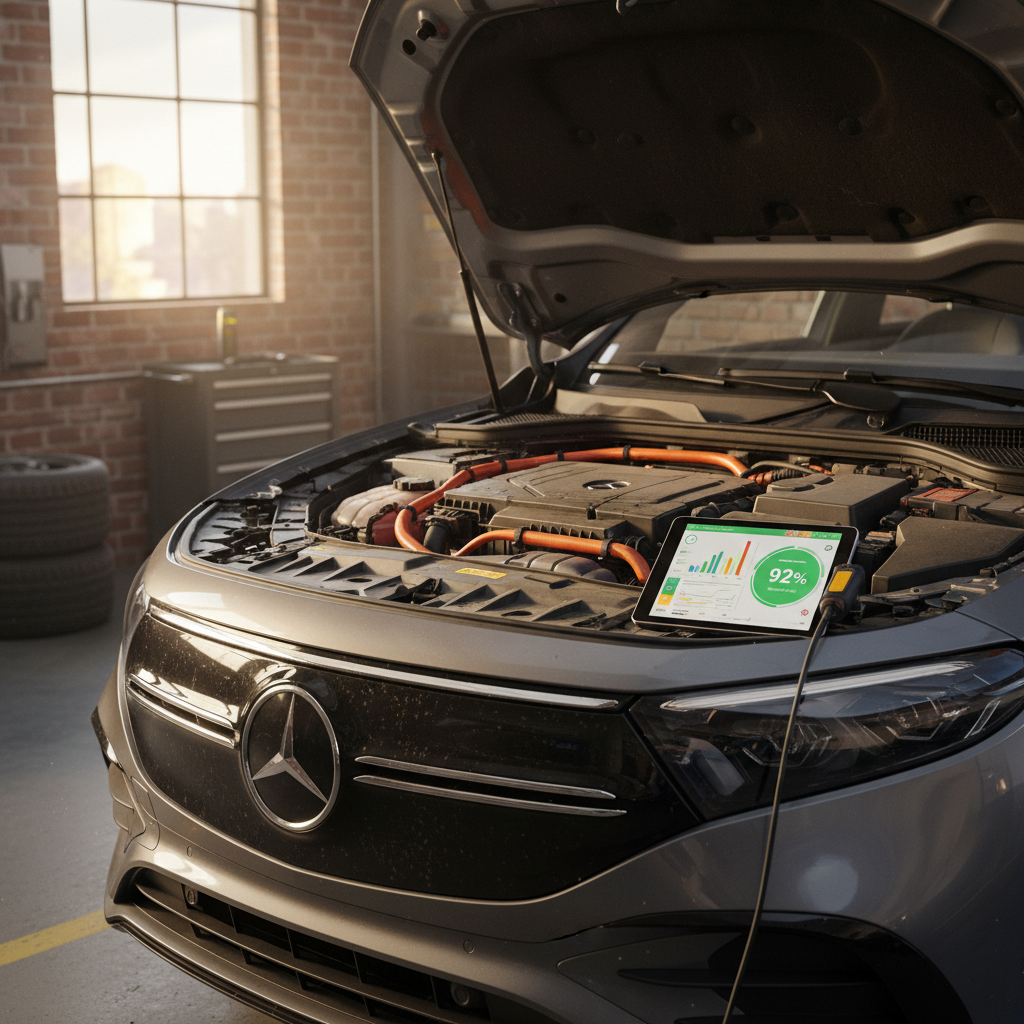
If you’re shopping used, look for a <strong>third‑party battery health report</strong>, like the Recharged Score, so you’re not gambling on a pack you know nothing about.
Good ownership habits really do pay off
Buying a used Tesla Model S: why battery health matters
For used‑EV shoppers, the Model S is attractive: luxury feel, strong performance, and access to Tesla’s charging ecosystem. But the pack is central to the car’s value. Two nearly identical cars on a listing page can have very different long‑term cost profiles depending on how their batteries have aged.
Scenario A: Healthy pack, clear history
Think of a 2018 Model S with 90,000 miles, a battery that still shows strong capacity, and a clean service history.
- Plenty of real‑world range left
- Less risk of a near‑term pack issue
- Higher resale value down the road
This car justifies a higher asking price because the battery is still doing its job.
Scenario B: Tired pack, unknown story
Now imagine the same model year and mileage, but with noticeably reduced range and limited documentation.
- Greater risk of facing a repair or replacement
- Harder to value accurately
- Potentially thousands in hidden future costs
This car should either be discounted accordingly or avoided altogether.
How Recharged helps de‑risk used EVs
Frequently asked questions about Tesla Model S battery costs
Tesla Model S battery replacement cost FAQs
Bottom line on Tesla Model S battery replacement
A Tesla Model S battery replacement is one of the biggest single expenses you can face as an EV owner, but it’s also less common than many shoppers fear. Understanding the real‑world cost ranges, the difference between repairs and full pack swaps, and how Tesla’s warranty works gives you leverage when you’re making decisions, whether that’s approving a repair or negotiating on a used car.
If you already own a Model S, thoughtful charging habits and prompt attention to warning signs can help keep your battery healthy for many years. If you’re shopping used, prioritize cars with documented battery health and remaining warranty whenever you can. At Recharged, every used EV, including Tesla Model S listings, comes with a Recharged Score Report that details battery condition, market‑correct pricing, and expert guidance so you can enjoy the benefits of electric ownership without guessing about the most expensive part of the car.