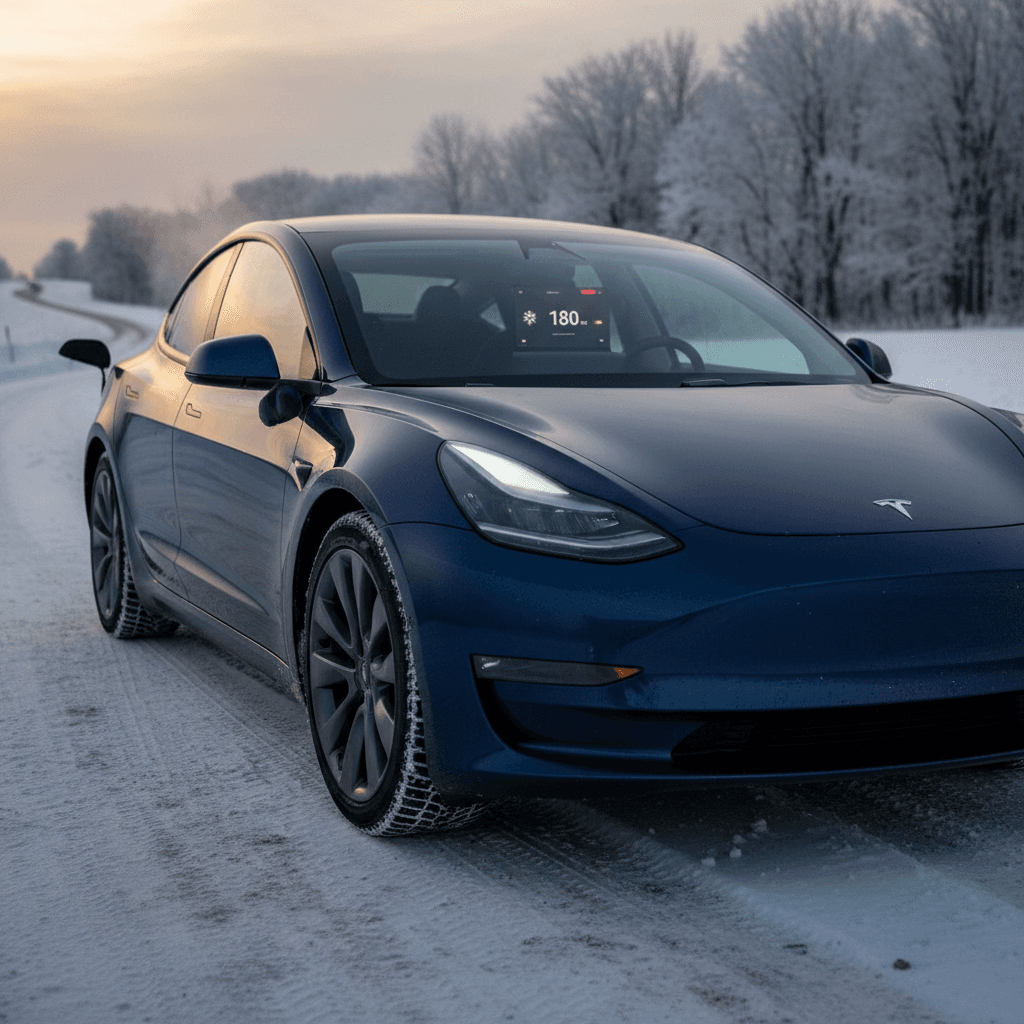
If you’ve watched your Tesla Model 3 winter range loss jump 20–30% the moment temperatures drop, you’re not imagining it. Every EV loses range in the cold, and the Model 3 is no exception, though it’s still among the better performers when set up correctly.
Short answer
How much winter range loss is normal in a Model 3?
Typical Tesla Model 3 winter range loss
Real‑world data sets from owner fleets and winter test programs generally show Teslas retaining roughly 80–90% of their warm‑weather range around freezing, and closer to 60–70% in very cold conditions. For the Model 3 specifically, several data analyses built around telematics and owner logs put a heat‑pump Model 3 at about 87% of its warm‑weather range at 32°F, versus the high‑70% range for earlier non‑heat‑pump cars.
That means if your Model 3 Long Range is rated for around 330 miles in ideal conditions, seeing 230–260 miles of usable winter range on a full charge in typical U.S. winters is normal. In harsher climates like Minnesota or upstate New York in January, drivers routinely report 30% drops on highway runs at 70 mph when it’s in the teens or single digits.
When to worry
Why your Tesla Model 3 loses range in the cold
Three main reasons winter slashes EV range
The physics is the same for every EV, but how your Model 3 manages it makes a big difference.
1. Colder battery chemistry
2. Battery heating
3. Cabin heating & defrost
Put those together and the math adds up quickly: a modest 10–15% hit from battery chemistry, another 10–20% from battery warming, and 5–15% from cabin heat. That’s how you get to 20–40% winter range loss without anything being "wrong" with the car.
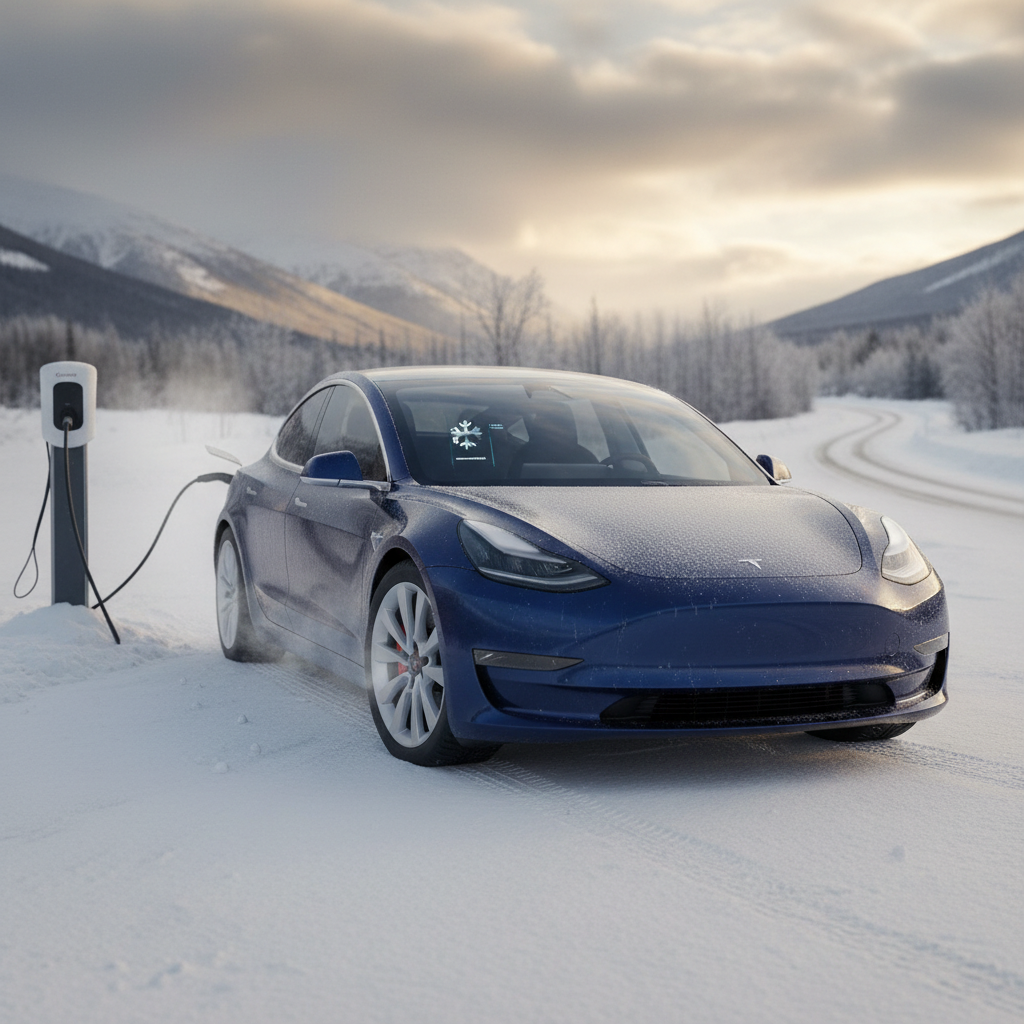
About the blue snowflake icon
Real-world winter range examples for Model 3 trims
EPA ratings and WLTP numbers are helpful for comparisons, but what you care about is, "How far can I really go when it’s 25°F and snowing?" Below are illustrative, real‑world scenarios for common Model 3 variants in U.S.‑style winters. Your exact results will vary with speed, elevation, wind, and how aggressively you heat the cabin.
Illustrative Tesla Model 3 winter range scenarios
Approximate usable winter range on a full charge for common Model 3 trims, assuming typical mixed driving and some cabin heat.
| Trim & context | Rated / warm‑weather range | Typical winter temp | Estimated usable winter range | Approximate loss |
|---|---|---|---|---|
| Model 3 RWD (newer heat pump), city + highway | ~272 mi | 32°F (0°C) | 215–235 mi | ~15–20% |
| Model 3 Long Range (heat pump), mostly highway at 70 mph | ~330 mi | 25°F (-4°C) | 220–250 mi | ~25–30% |
| Model 3 RWD (older, no heat pump), short 8–10 mi commutes | ~250–260 mi (as‑driven real‑world) | 20°F (-7°C) | 150–175 mi | ~30–35% |
| Model 3 Long Range (any), harsh cold, parked outside, mixed driving | ~330 mi | 0°F (-18°C) | 185–215 mi | ~35–45% |
These are ballpark planning numbers, not guarantees, plan extra buffer for headwinds, hills, and heavy snow.
Use percent, not miles, in winter
Model 3 with and without heat pump: what’s the difference?
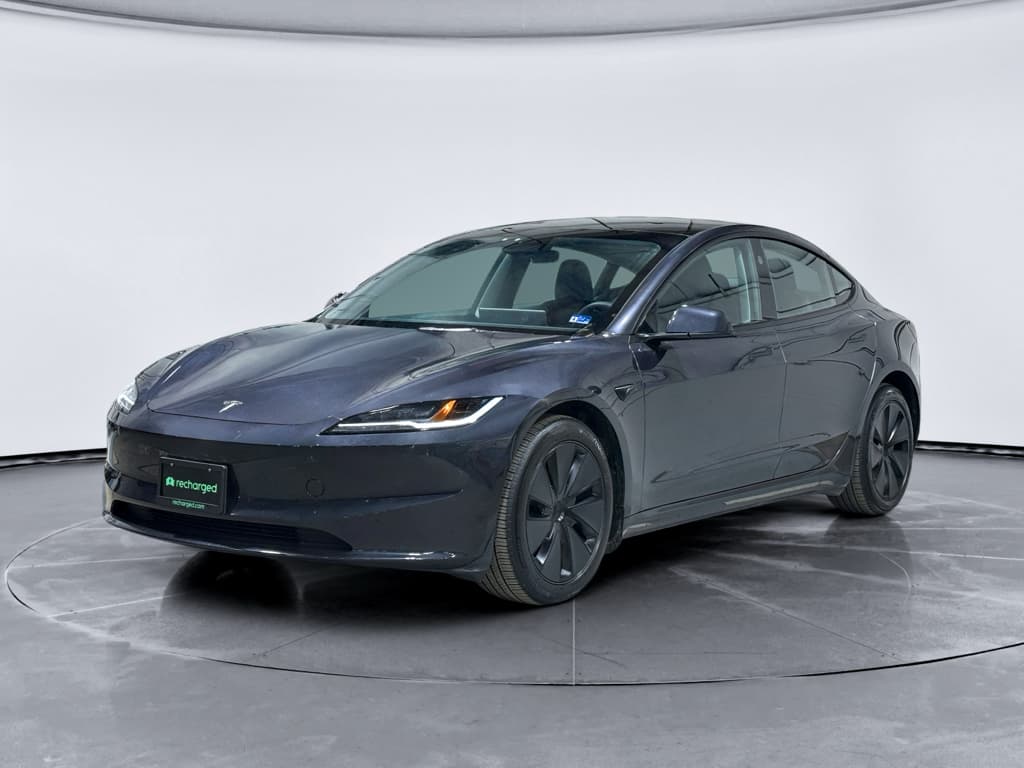
Tesla gradually rolled heat pumps across the lineup starting in 2020; newer Model 3s (“Highland” refresh and recent Long Range/RWD trims) use a heat‑pump‑based HVAC system that’s far more efficient in winter than older resistive heaters.
Model 3 with heat pump
- Found on newer Model 3 variants (including recent Long Range and Highland refresh).
- Independent testing shows heat‑pump Model 3s retaining around 87% of warm‑weather range at freezing.
- Less energy wasted on raw heat, more on propulsion.
- Better for short‑trip, stop‑and‑go winter driving where cabin preheat matters most.
Older Model 3 without heat pump
- Early Model 3s relied primarily on resistive heating.
- Data sets put them closer to ~79% of warm‑weather range at freezing when driven in real‑world conditions.
- They can feel noticeably less efficient on cold mornings, especially on sub‑10‑mile trips.
- Good software and preconditioning still help, but you’ll see a bit more winter loss vs. a heat‑pump car.
The upside for used‑car shoppers
Ready to find your next EV?
Browse Vehicles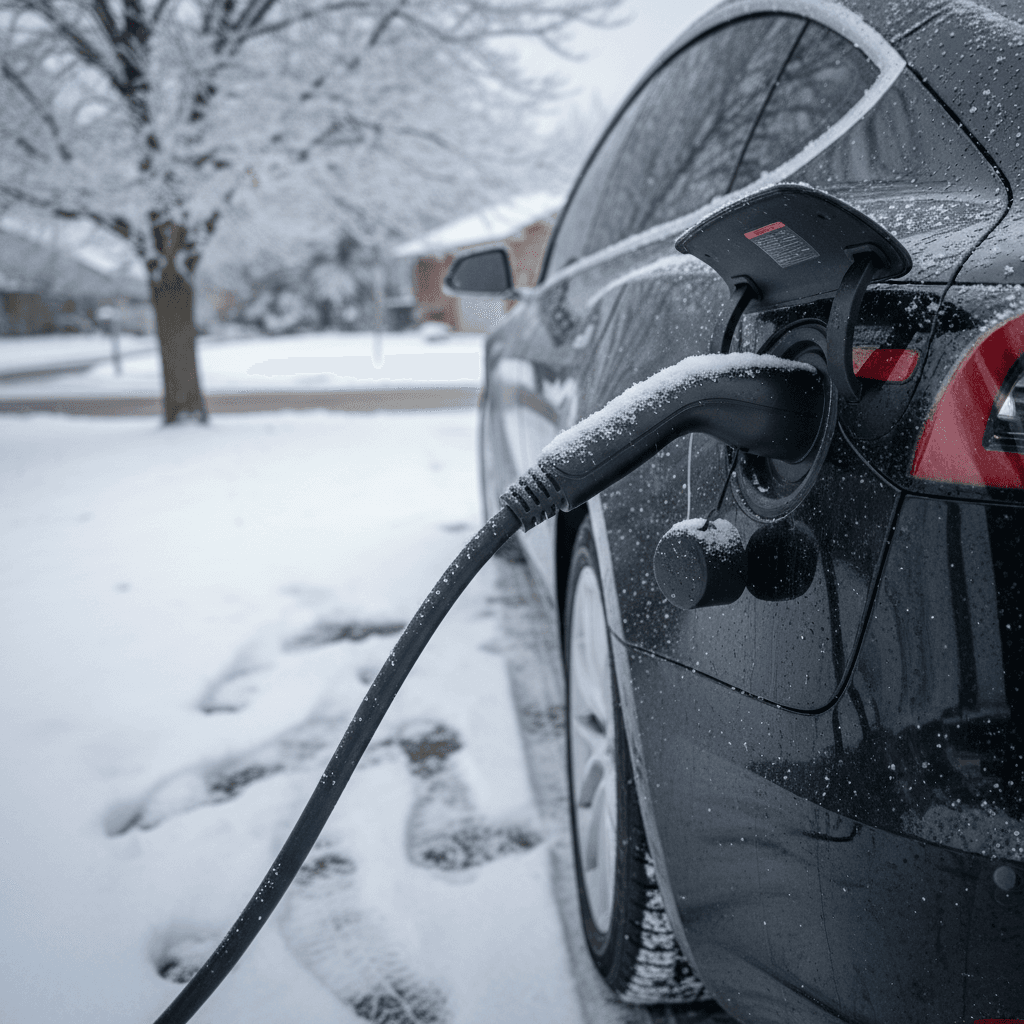
How to cut Tesla Model 3 winter range loss
You can’t change physics, but you can decide how much of your battery’s energy goes to heat instead of miles. These changes easily claw back 5–15 percentage points of winter range in everyday driving.
Practical steps to improve Model 3 winter range
1. Precondition while plugged in
Use the Tesla app to warm the cabin and battery <strong>before you leave</strong> while the car is still charging. This shifts the heaviest heating load to the grid instead of your battery and restores regen more quickly.
2. Use seat and wheel heaters first
Cabin air heating is power‑hungry. Set the climate a few degrees cooler and rely on <strong>seat and steering‑wheel heaters</strong> for comfort; they use far less energy for the same perceived warmth.
3. Park indoors or at least out of the wind
A basic garage, carport, or even a wind‑sheltered spot keeps the pack warmer overnight. Starting from 30°F instead of 10°F can noticeably reduce the morning range hit and shorten the time the snowflake icon is on.
4. Check tire pressure often
Cold air drops tire pressure. Underinflated tires increase rolling resistance and kill efficiency. Keep tires at the recommended PSI, especially if you’ve switched to winter tires, which often run different pressures.
5. Avoid lots of short, back‑to‑back trips
A 4‑mile drive, park outside for an hour, then another 4‑mile drive keeps the battery cold and <strong>wastes energy re‑heating over and over</strong>. Group errands into fewer, longer trips when you can.
6. Drive a bit slower in deep cold
Above ~65–70 mph, air resistance dominates. Dropping from 75 to 65 mph in very cold weather can recover a surprising amount of range without adding much time to most trips.
What not to do
Winter road trips in a Model 3: planning and charging
A Tesla Model 3 is absolutely road‑trip capable in winter, you just can’t plan using the same numbers you see on the window sticker. You’ll want extra buffer, more frequent charging stops, and a bit of discipline with speed and heat.
Planning your winter route
- Assume 25–35% less range than your summer norm when plotting legs between Superchargers.
- Use the built‑in Trip Planner or third‑party apps to anchor legs at 50–80% of rated range, not 100%.
- Watch elevation and headwinds, climbs and strong gusts can push winter loss even higher.
- Plan extra time for potential reduced Supercharger speeds if the battery arrives cold.
Charging strategy in the cold
- Set the nav to a Supercharger early; the car will preheat the battery on the way to improve charging speeds.
- On multi‑stop legs, aim to charge from about 10–15% back up to 60–80%; the top of the pack fills slower and is less efficient time‑wise.
- Take advantage of destination charging (Level 2 at hotels, ski resorts, etc.) overnight rather than arriving with a low battery.
- Keep your charge port and cable clear of snow/ice; don’t yank on a frozen cable, use the defrost feature to warm it gently.
Road‑tripping a used Model 3
Is winter range loss bad for your battery?
The good news: most of what you experience as "range loss" in winter is temporary. It’s primarily the battery behaving conservatively and energy being diverted to heat, not permanent degradation.
- Cold temperatures actually slow long‑term degradation compared with constant high‑heat exposure.
- Temporary loss of available energy (and reduced regen) is a protection strategy, not damage.
- Once temperatures warm up, your usable range should come back to its normal baseline.
What can hurt long‑term health is the combination of extremes: very cold packs, very high charging power, frequent 0–100% swings, and holding the battery at 100% for long periods. If you avoid those edge cases, winter driving is generally neutral or even mildly positive for battery life compared with scorching summers.
Check actual battery health, not just winter behavior
Buying a used Tesla Model 3 for cold climates
If you live in the Upper Midwest, Northeast, Rockies, or Canada‑border states, factoring winter performance into a used Model 3 purchase is smart. Two cars with the same odometer reading can feel very different at 15°F.
Key winter questions to ask about a used Model 3
These points matter more in Minneapolis than in Miami.
Battery health & history
Climate & storage
Equipment & software
At Recharged, every used Tesla Model 3 listing includes a Recharged Score battery and range report, fair‑market pricing, and the option for nationwide delivery. If you’re buying from a warmer state but plan to daily‑drive in snow country, that extra transparency helps you budget for realistic winter range right up front.
Tesla Model 3 winter range FAQ
Common questions about Tesla Model 3 winter range loss
Key takeaways on Tesla Model 3 winter range loss
Winter doesn’t have to turn your Tesla Model 3 into a short‑range city car. Expect 15–30% loss in typical U.S. winter weather and up to 40% in deep cold, especially on short, heater‑heavy trips. That’s normal EV behavior, not a failing battery.
What matters is how you respond: precondition while plugged in, lean on seat heaters, keep tires properly inflated, plan conservative legs on winter road trips, and avoid abusing fast charging on an ice‑cold pack. Combine those habits with a clear view of battery health, whether through Tesla’s own tools or a third‑party report like the Recharged Score, and your Model 3 will stay a confident all‑weather daily driver for years to come.