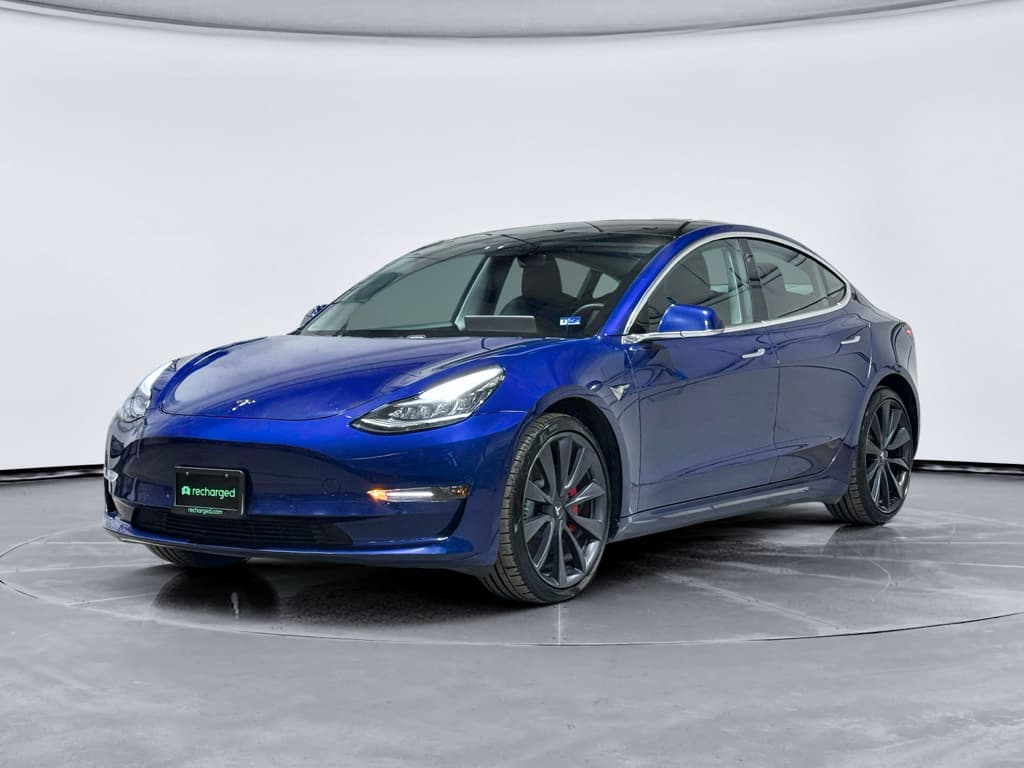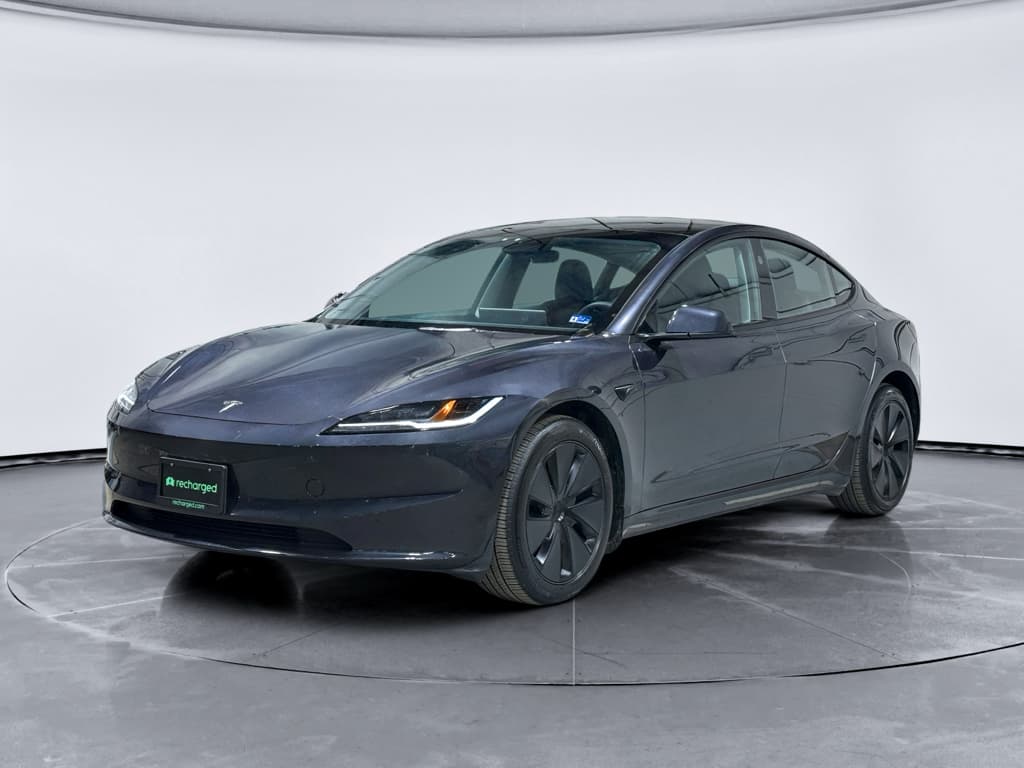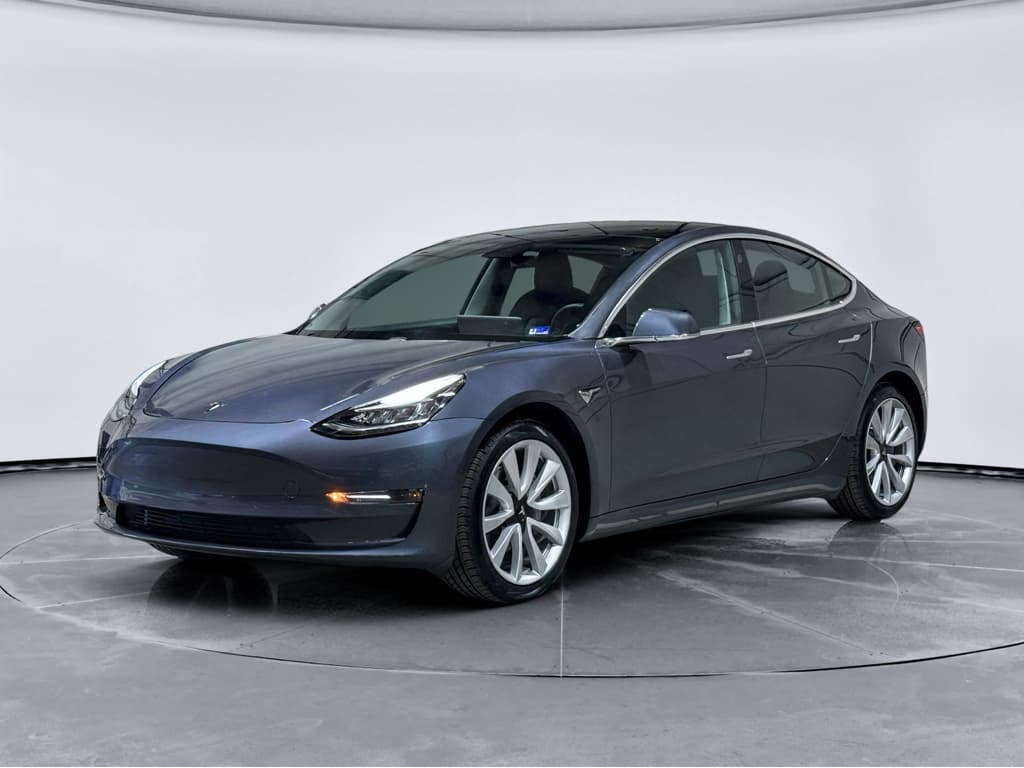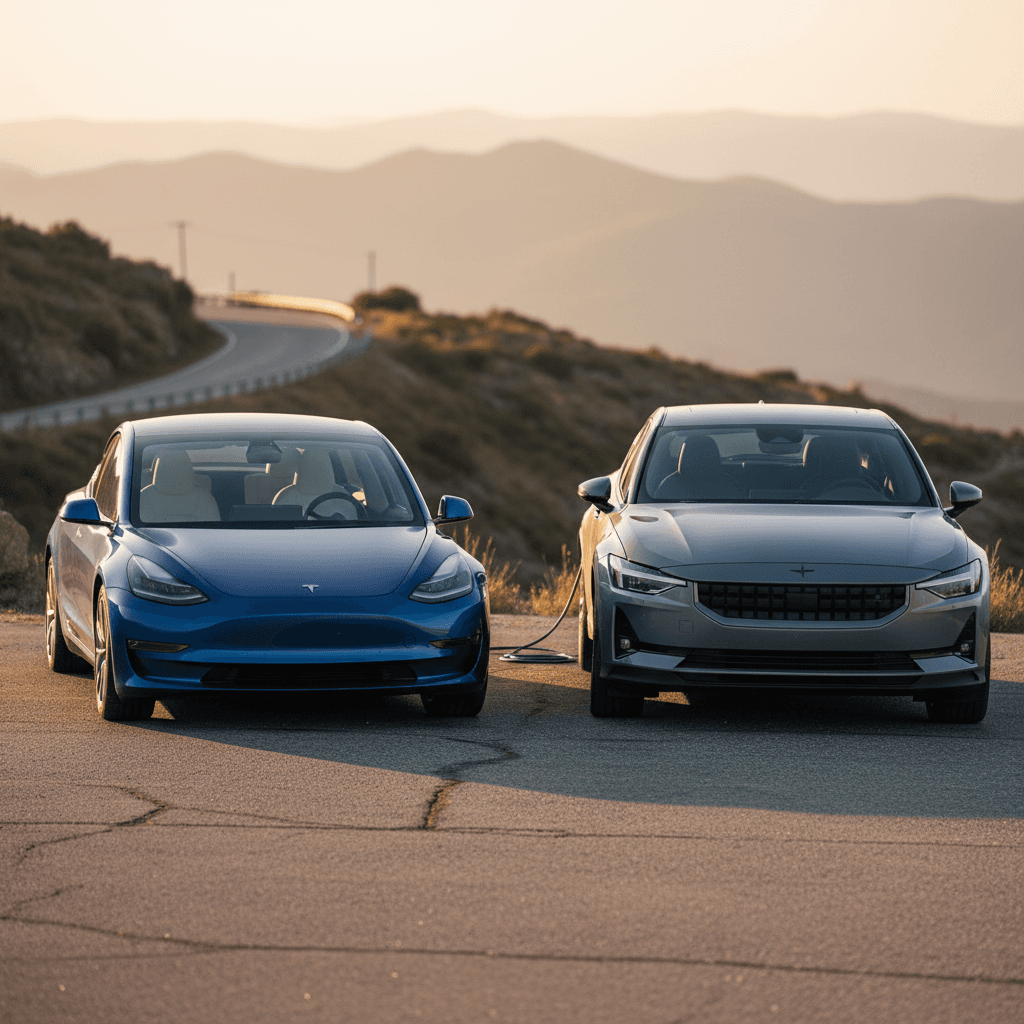
You’re not choosing between good and bad here. You’re choosing between **very good and intriguingly different**. When shoppers search “Tesla Model 3 vs Polestar 2 which is better,” what they’re really asking is: which one fits *my* life, *my* taste, and *my* risk tolerance, especially on the used market.
The short version
Overview: Tesla Model 3 vs Polestar 2 in 2025
By early 2025, both cars are mature products. The refreshed “Highland” Tesla Model 3 has sharpened its looks and refinement, while the updated Polestar 2 has added range, power, and rear‑wheel drive for single‑motor models. On the used side, inventory is dominated by **2018–2023 Model 3s** and **2021–2024 Polestar 2s**, which is exactly what many buyers will be cross‑shopping.
Recharged sits right in the middle of that Venn diagram. We see thousands of battery reports, real‑world efficiency numbers, and owner pain points. This comparison leans into what actually matters when you’re putting your own money down, **range you can trust, tech that won’t annoy you, and long‑term ownership costs**.
Model 3 vs Polestar 2: Fast Facts
Key Specs at a Glance
Tesla Model 3 vs Polestar 2: Core Specs (Recent Model Years)
Approximate specs for 2023–2024 Model 3 and 2024–2025 Polestar 2 trims commonly seen on the U.S. used market. Always check the exact year and configuration of the car you’re considering.
| Model | Drivetrain options | Battery (approx. gross) | EPA range (best trim) | 0–60 mph (quickest trim) | Max DC fast charge |
|---|---|---|---|---|---|
| Tesla Model 3 | RWD, Dual‑motor AWD, Performance AWD | ~60–82 kWh | Up to ~342 mi (Long Range) | ~3.1–3.3 sec (Performance) | ~170–250 kW (Supercharger) |
| Polestar 2 | Single‑motor RWD, Dual‑motor AWD, Dual‑motor Performance | ~78–82 kWh | Up to ~320 mi (Long Range Single Motor) | ~3.7–4.3 sec (Performance Pack) | Up to ~205 kW (larger battery) |
These are headline numbers; real‑world range and performance depend heavily on weather, wheels, and driving style.
Spec sheet trap
Range and Efficiency: Which EV Goes Farther?
The Tesla Model 3 is the reigning lightweight champion of **range per kWh**. Tesla’s motor and inverter efficiency, low drag, and obsessive weight control add up. On highway road trips, a Long Range Model 3 will generally travel farther per minute of charging than a comparable Polestar 2.
Tesla Model 3
- Strength: Class‑leading efficiency and excellent EPA range, especially on Long Range trims.
- Even older 2018–2020 cars often retain very usable range if the battery has been cared for.
- Software‑managed thermal systems keep charging speeds strong in cold or hot weather when preconditioned.
Polestar 2
- Strength: Later Long Range Single Motor cars offer up to about 320 miles of EPA range when configured with smaller wheels and efficiency‑minded tires.
- Dual‑motor versions trade some range for punch; Performance Pack trims can dip noticeably lower in real‑world highway use.
- Some owners report excellent real‑world efficiency; others note more variation with climate and speed than in a Model 3.
Real‑world range rule of thumb
If your driving life is lots of highway, long distances, and winter weather, the **Model 3 has the clearer edge**. If you mainly commute in mixed city/highway and can charge at home, a Long Range Single Motor Polestar 2 will feel plenty generous on range, and the difference becomes more academic.
Performance and Driving Experience
On paper, both cars can be as quick as you like. In practice, they have very different personalities.
How They Drive: Character, Not Just Numbers
Two fast electric sedans, two very different attitudes.
Tesla Model 3: The Quiet Assassin
The Model 3 is light on its feet, ultra‑responsive, and feels almost digitally precise. Steering is quick, body motions are tightly controlled, and the low seating position reinforces the sports‑sedan vibe.
- Pros: Sharper turn‑in, playful balance in Dual‑motor and Performance trims, brutally fast straight‑line pace.
- Cons: Ride can be busy on rough pavement; cabin noise and harshness are better in the latest “Highland” cars but older ones can feel a bit tinny.
Polestar 2: Scandinavian Muscle Hatch
The Polestar 2 feels denser and more substantial, more like a tall, heavy, very quick Volvo hatchback. The steering is weighty, the car feels planted, and Performance Pack cars add serious hardware (Öhlins dampers, big brakes).
- Pros: Confident, solid feel; Performance Pack cars have a motorsport‑adjacent character you can sense in your spine.
- Cons: Heavier, less agile; dual‑motor performance is rapid but not as freakish as a Model 3 Performance.
Enthusiast’s pick
Interior, Comfort, and Design
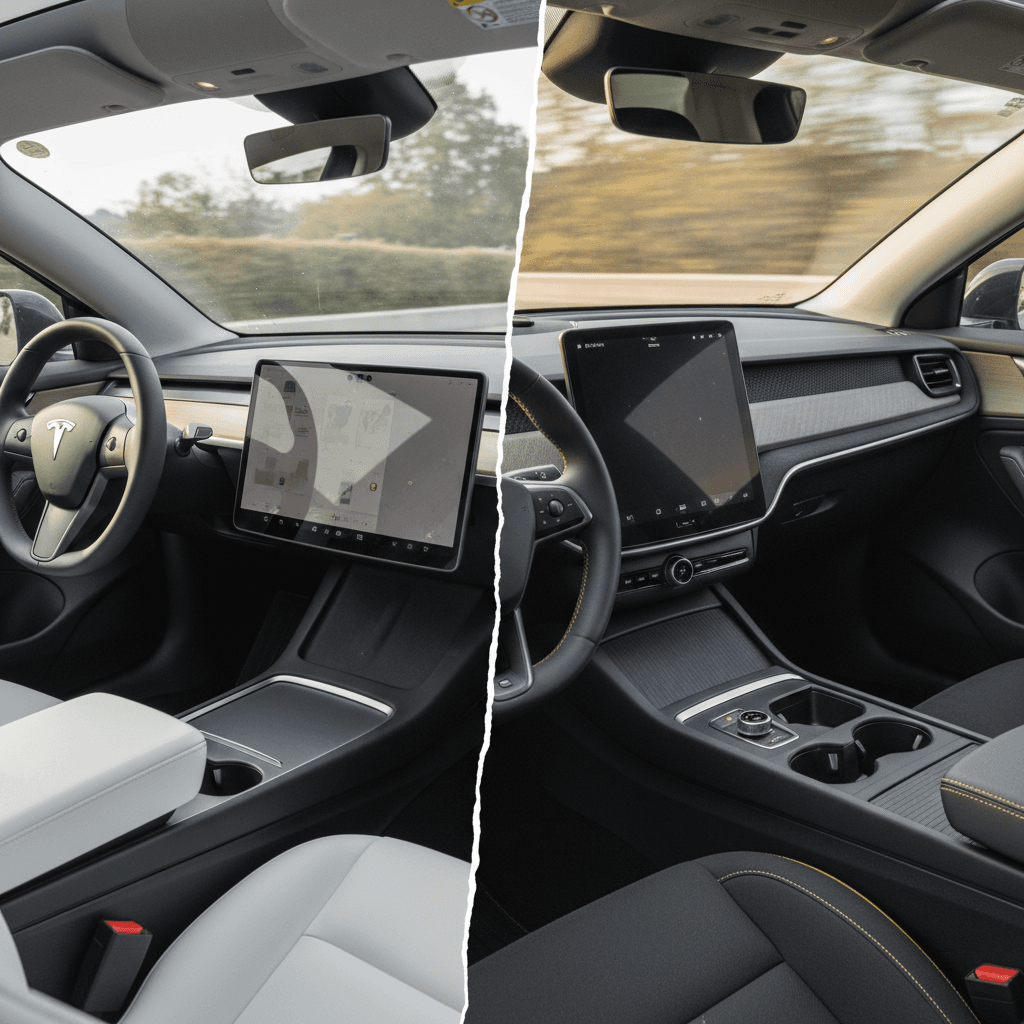
Sit in both cars back‑to‑back and you’ll feel the philosophical divide instantly. Tesla tore up the old car‑interior playbook; Polestar edited it.
Tesla Model 3 interior
- Minimalist to the point of monastic. Almost everything, including basic controls, lives in the center screen.
- Cabin feels airy; “Highland” refresh improved materials, sound insulation, and rear‑seat comfort.
- Storage is excellent and the trunk + frunk combo is very practical.
- Some drivers love the clean aesthetic; others miss real buttons, a gauge cluster, and physical stalks.
Polestar 2 interior
- Scandinavian living room. More traditional dash layout, with a driver display and a central portrait screen.
- Materials often feel richer than a same‑year Model 3, especially on higher trims.
- Seats are superbly shaped in the Volvo tradition; driving position feels natural and upright.
- Cabin is a bit tighter in back; cargo space is hatchback‑useful but there’s less frunk theater.
Test‑drive homework
Infotainment, Tech, and Driver Assistance
Here, Tesla plays home game. The Model 3’s software is deeply integrated, very fast, and updated constantly. The Polestar 2 counters with **Google built‑in** (Android Automotive), which feels familiar and has excellent native Google Maps, but it can be less cohesive than Tesla’s single‑minded UI.
Tech Showdown
Two different philosophies of software and driver assistance.
Tesla Model 3 tech
- Infotainment: Huge landscape touch screen, snappy performance, integrated navigation with battery‑aware routing, games, streaming apps.
- Driver assist: Autopilot standard; optional more advanced features on some used cars (names and behavior have changed over time).
- Updates: Frequent over‑the‑air updates that can meaningfully change features, efficiency, and UI design.
Polestar 2 tech
- Infotainment: Android Automotive with Google Maps, Assistant, and Play Store support. Feels like a giant, well‑behaved Android tablet built into the car.
- Driver assist: Volvo‑inspired Pilot Assist and safety features; conservative and confidence‑inspiring rather than flashy.
- Updates: Over‑the‑air updates exist but are less dramatic than Tesla’s; evolution is more subtle.
Who wins on tech?
Charging and Road-Trip Ability
Range is only half the story. The other half is how fast you can replace it, and where. On that front, Tesla’s Supercharger network is still the gold standard, and the Model 3 is its native speaker.
- Most Model 3s can DC fast‑charge from roughly 10–80% in around 25–35 minutes on a properly powerful Supercharger, depending on pack and conditions.
- The car and the network speak the same language: automatic plug‑and‑charge, smart routing, preconditioning the battery before a stop.
- As more non‑Tesla EVs adopt the NACS connector and gain Supercharger access, congestion patterns will evolve, but for now, the Model 3 still enjoys a smoother experience than almost any rival.
The Polestar 2, by contrast, is a **public‑network nomad**. Later cars can charge at up to about 155–205 kW DC depending on the battery, which is competitive, but your experience depends heavily on the station brand and location.
Public‑network reality check
If your life is mostly **home charging plus occasional trips**, the Polestar 2 is totally workable. If you envision **frequent multi‑state road trips**, the **Model 3’s built‑in Supercharger advantage** remains a trump card.
Ownership Costs, Reliability, and Depreciation
Running costs for both are far lower than comparable gas cars, no oil changes, no exhaust, no transmission servicing. But there are meaningful differences in **maintenance economics, service access, and long‑term value**.
Ownership Snapshot
What it feels like (and costs) to live with each car.
Tesla Model 3
- Maintenance: Very low routine costs, tire rotations, cabin filters, brake fluid checks, wiper blades. Independent shops that understand Teslas are increasingly common.
- Reliability: Early Model 3s had fit‑and‑finish quirks and some hardware gremlins, but the drivetrain and battery have generally proven robust when not abused.
- Depreciation: Huge used supply means you can get strong value as a buyer, but resale can be softer if you’re selling. The flip side: parts and knowledge are plentiful.
Polestar 2
- Maintenance: Similar low EV routine costs, but dealer networks and independent EV specialists for Polestar are thinner in many regions than for Tesla.
- Reliability: Benefiting from Volvo’s safety‑first engineering, but the brand is younger and has fewer long‑term, high‑mileage examples on the road.
- Depreciation: Smaller brand awareness and fewer buyers mean stronger discounts used, but also a shallower pool when you go to sell.
Where Recharged fits in
Used Market Reality: What You’ll Actually Find
On the ground, “Tesla Model 3 vs Polestar 2 which is better” usually translates to: **“Do I buy a slightly older, higher‑mileage Model 3, or a newer but less well‑known Polestar 2 for the same money?”**
What the Used Market Looks Like Today
Model years you’ll see most
Expect lots of 2018–2022 Tesla Model 3s in various trims, and 2021–2024 Polestar 2s, often better‑equipped but with fewer total units available.
Price vs. mileage trade‑off
For the same budget, a Model 3 will usually be older or higher‑mileage than a Polestar 2. Decide whether you value **brand ecosystem and network** (Tesla) or **newer hardware and interior** (Polestar).
Battery health is king
A 2019 Model 3 with a healthy pack can be a better buy than a newer Polestar 2 that’s been fast‑charged hard and stored hot. Insist on **independent battery diagnostics**, like the Recharged Score, for either car.
Options and packages matter
Tesla’s Autopilot/FSD history is messy, and Polestar 2’s Plus/Pilot/Performance packs radically change the experience. Read the window sticker equivalents carefully.
Local service and support
Check whether you’re near a Tesla Service Center, a Polestar Space/service point, and independent EV shops. An hour‑plus tow to the nearest service facility can sour ownership quickly.
Pro move for used shoppers
So…Tesla Model 3 vs Polestar 2: Which Is Better for You?
Declaring a single winner would be easy, and wrong. Instead, think in use‑cases.
Who Should Choose Which?
Match the car to the life you actually live, not the one in the commercial.
Choose Tesla Model 3 if…
- You road‑trip often and want seamless access to the Supercharger network.
- You prioritize **maximum range and efficiency** per dollar and per minute of charging.
- You like cutting‑edge software, frequent OTA updates, and don’t mind a very minimalist interior.
- You want the largest ecosystem of accessories, third‑party support, and online owner communities.
Choose Polestar 2 if…
- You want something **less common** with a more premium, Scandinavian‑chic interior.
- You value **Volvo‑inspired safety and ergonomics**, with a more traditional cockpit layout.
- Your driving is mostly commuting and regional trips where CCS fast‑charging is adequate.
- You prefer a car that feels like a handsome, well‑made hatchback rather than a spaceship.
If we’re forced to make the call for a typical U.S. buyer in 2025, the **Tesla Model 3 is the objectively safer choice**: more efficient, better fast‑charging infrastructure, deeper ecosystem, and a longer track record. But if you want something more distinctive and tactile, with a cabin that feels like a place, not a device, the **Polestar 2 is the connoisseur’s pick**, especially in well‑specced single‑motor or Performance trims.
How Recharged can help you decide
Ready to find your next EV?
Browse VehiclesQuick Checklist: How to Choose Between Model 3 and Polestar 2
5 Questions to Clarify Your Winner
1. How often do you road‑trip?
If the answer is “a lot,” tilt toward the **Model 3** for Supercharger access and better long‑distance efficiency. If it’s “a few times a year,” a **Polestar 2** can still be a great choice.
2. Do you love or hate screens for everything?
If you’re excited by a minimalist, screen‑driven cockpit, you’ll probably enjoy the Model 3. If you want a driver display and more physical controls, the Polestar 2 will keep your blood pressure lower.
3. What does charging look like at home?
If you have reliable Level 2 home charging, both cars are easy to live with. If you rely heavily on public DC fast charging, Tesla’s tighter hardware‑to‑network integration is a big plus.
4. How sensitive are you to brand ecosystem?
Tesla has the bigger ecosystem: accessories, forums, third‑party service, aftermarket upgrades. Polestar is smaller but growing. Decide whether you want to be in the mainstream or the interesting minority.
5. Are you buying new or used?
On the used market, let **battery health and trim** drive your decision. A healthy‑pack, well‑equipped Polestar 2 from Recharged could be a smarter buy than a neglected, high‑mileage Model 3, and vice versa.