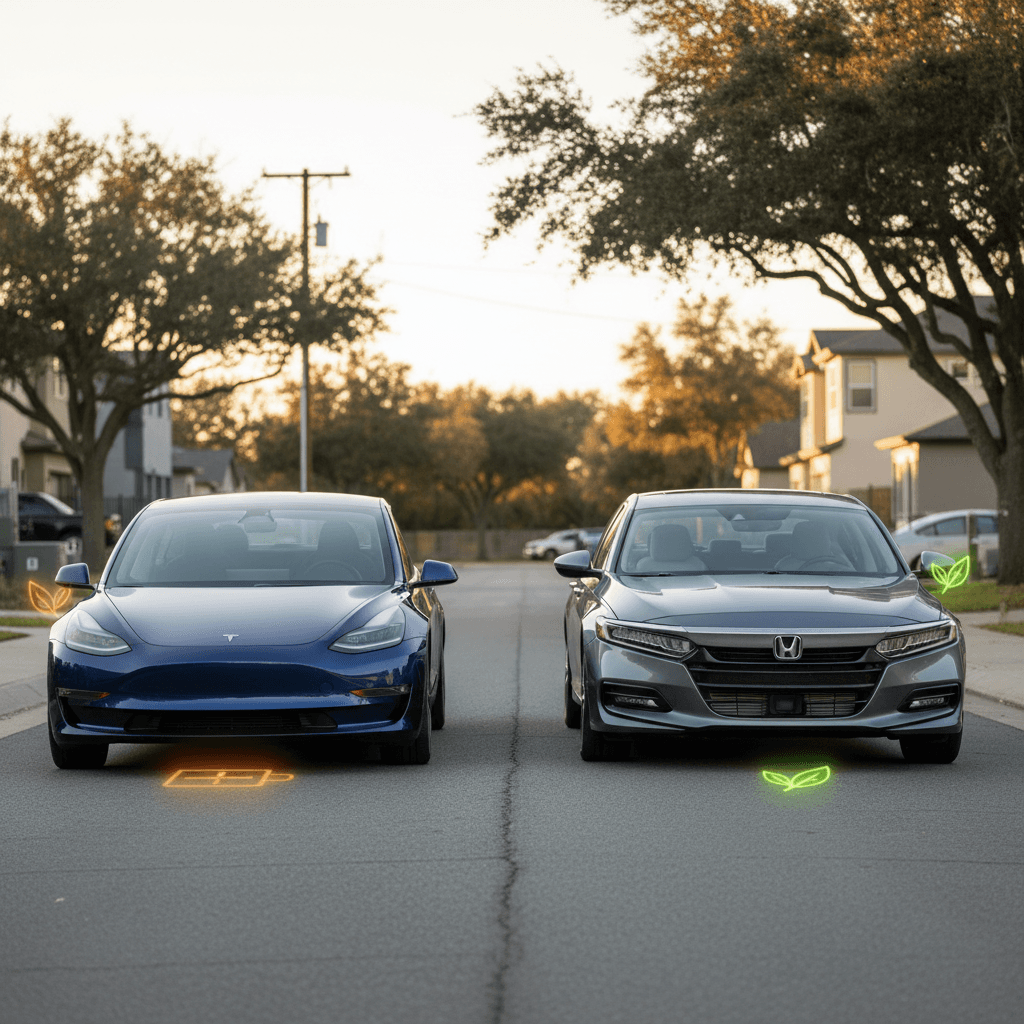
If you’re cross‑shopping a Tesla Model 3 and a Honda Accord, you’re not comparing apples to apples, you’re comparing the past and future of the midsize sedan. The question isn’t just “Tesla Model 3 vs Honda Accord, which should you buy?” It’s whether an all‑electric sedan’s lower running costs and tech outweigh the Accord’s proven reliability, simplicity, and nationwide service network.
What this comparison covers
Tesla Model 3 vs Honda Accord: Overview
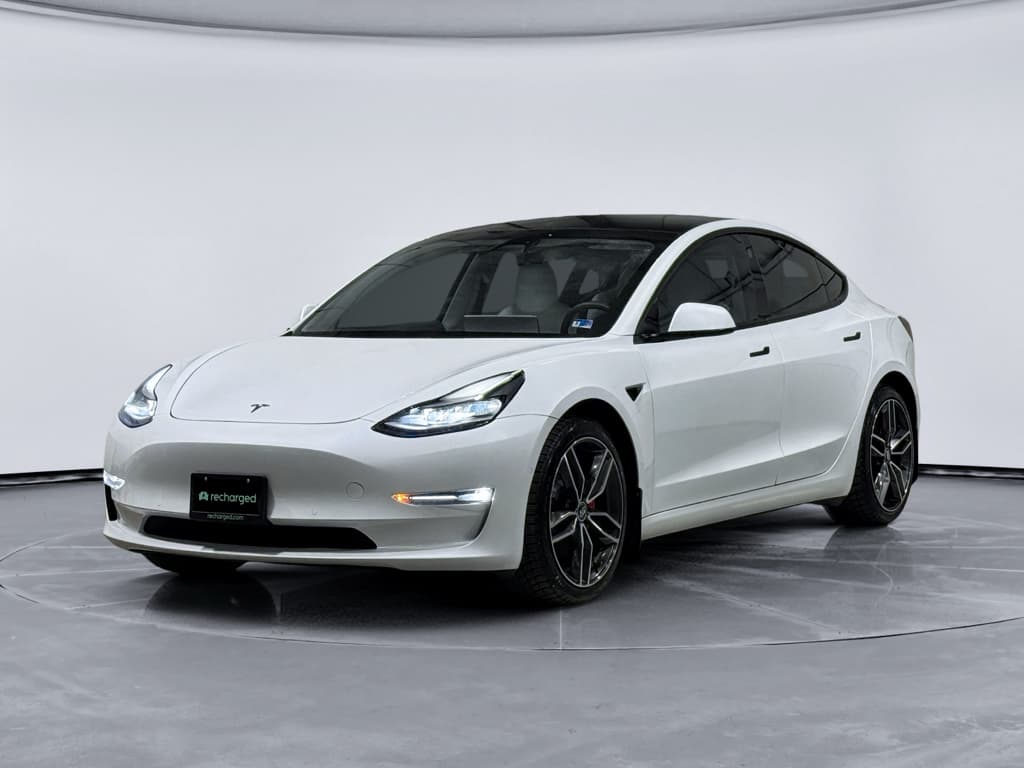
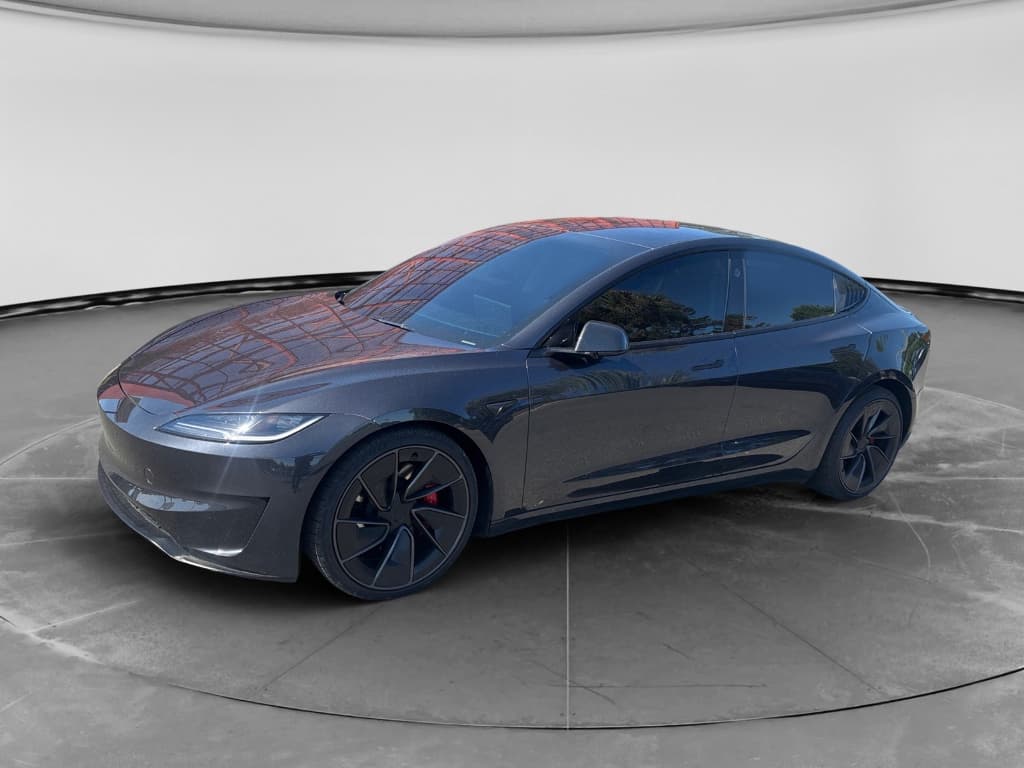
Tesla Model 3 (2023–2025)
- Compact electric sedan with ~270–360 miles of rated range depending on battery and trim.
- Known for instant torque, minimalist interior, big touchscreen, and access to Tesla’s Supercharger network.
- No gasoline, oil changes, or traditional transmission, most maintenance is tires, brakes, and cabin filters.
Honda Accord (2023–2025)
- Midsize gas and hybrid sedan with roomy rear seats and trunk.
- 1.5L turbo gas models average about 32 mpg combined; hybrids commonly reach mid‑40s mpg.
- Conventional controls, excellent visibility, and Honda’s long record of reliability and low running costs.
Think total cost, not just sticker
Price, Incentives and What You Actually Pay
Typical 2023–2025 Used Pricing (U.S., Early 2026)
Ballpark transaction prices for well‑equipped models with average mileage. Local markets will vary.
| Model / Powertrain | Typical Used Price Range | Powertrain Type | EPA Combined Economy* |
|---|---|---|---|
| Tesla Model 3 RWD / Long Range | $25,000–$35,000 | Battery‑electric | ~120 MPGe equivalent |
| Honda Accord 1.5T (gas) | $20,000–$28,000 | Gasoline | 32 mpg |
| Honda Accord Hybrid | $22,000–$32,000 | Hybrid gasoline-electric | 44–48 mpg |
Used pricing moves quickly, use this as a directional guide, not a quote.
Incentives still matter for used purchases
- Upfront cost winner: Honda Accord (especially non‑hybrid)
- Incentive winner: Tesla Model 3 (thanks to federal and state EV credits in many cases)
- Monthly payment reality: Once you factor in lower fuel and maintenance, the Model 3’s higher sticker can still produce a similar, or even lower, effective monthly cost for many commuters.
Fuel vs Electricity: What It Really Costs to Drive
Approximate Annual Energy Cost at 12,000 Miles/Year
Even against the very efficient Accord Hybrid, a Tesla Model 3 usually cuts your “fuel” bill by hundreds of dollars per year. Against a standard gas Accord, the gap is often $800–$1,200 per year at U.S. average electricity and fuel prices. Drive more than 12,000 miles per year, or live somewhere with high gas prices and reasonably cheap electricity, and the EV advantage gets bigger.
Watch your electricity rate plan
Range, Refueling and Day‑to‑Day Convenience
Living with a Tesla Model 3
- Most recent trims offer roughly 270–360 miles of rated range on a full charge, depending on battery and wheels.
- Home charging is the killer feature: plug in at night, wake up with a "full tank" almost every morning.
- Tesla’s Supercharger network still offers the most seamless fast‑charging experience for road trips compared with most third‑party networks.
Living with a Honda Accord
- Gas models typically go 450–550 miles on a tank; hybrids can stretch further with careful driving.
- Refueling is fast and familiar, 5 minutes at any gas station in America.
- No need to think about charging access, which is a big deal if you rent, live in a dense city, or share limited parking.
Match the car to your parking situation
Performance and Driving Experience
How They Feel From Behind the Wheel
Both are pleasant to drive, but for different reasons.
Acceleration
Tesla Model 3: Even base models feel quick, with 0–60 mph times often in the 5–6 second range and instant torque.
Accord: Gas and hybrid models are smooth but not sporty; 0–60 is more in the 7–8 second range.
Ride & Handling
Model 3: Feels planted and responsive, but ride can be firm on rough pavement.
Accord: Tuned for comfort with predictable, easy handling, less engaging, but very relaxing.
Noise & Refinement
Model 3: Near‑silent powertrain; some wind and road noise, especially on older tires.
Accord: More traditional engine and transmission sounds, but Honda has done a good job with cabin isolation.
“Coming from a Honda Accord, the difference is massive, instant torque, smooth and quiet ride, and one‑pedal driving that makes traffic easier.”
If you value a serene, futuristic feel and enjoy strong acceleration, the Model 3 is in a different league. If you prioritize a familiar, softly sprung commuter that never surprises you, the Accord’s more conventional character may be a better fit.
Reliability, Maintenance and Repairs
Ownership Experience: Reliability and Maintenance Snapshot
High level comparison of what tends to go wrong, and how much it costs when it does.
| Aspect | Tesla Model 3 | Honda Accord |
|---|---|---|
| Powertrain | Very few moving parts; motors and battery packs have generally been durable. | Well‑proven gas and hybrid powertrains with long track records. |
| Routine Maintenance | No oil changes; tire rotations and cabin filters dominate. | Oil changes, transmission fluid (gas), spark plugs and more traditional service. |
| Repairs | Body and electronics repairs can be pricey; some parts and service backlogs in certain regions. | Parts are inexpensive and every independent shop knows Accords. |
| Overall Reliability Trend | Early‑build issues have improved, but electronics and trim quality still vary by year. | Historically among the most reliable midsize sedans on the road. |
Exact reliability varies by year and build; always check a specific VIN’s history.
Recall note: Accord Hybrid owners
From a pure reliability‑score standpoint, the Accord still has an edge. It’s hard to beat a car that every mechanic in America understands. The Model 3 counters with fewer routine maintenance needs and no engine‑related failures, but when something does go wrong, especially out of warranty, diagnosing and fixing it can be more expensive and more geographically constrained.
Tech, Safety and Driver Assistance
Tesla Model 3 Tech Highlights
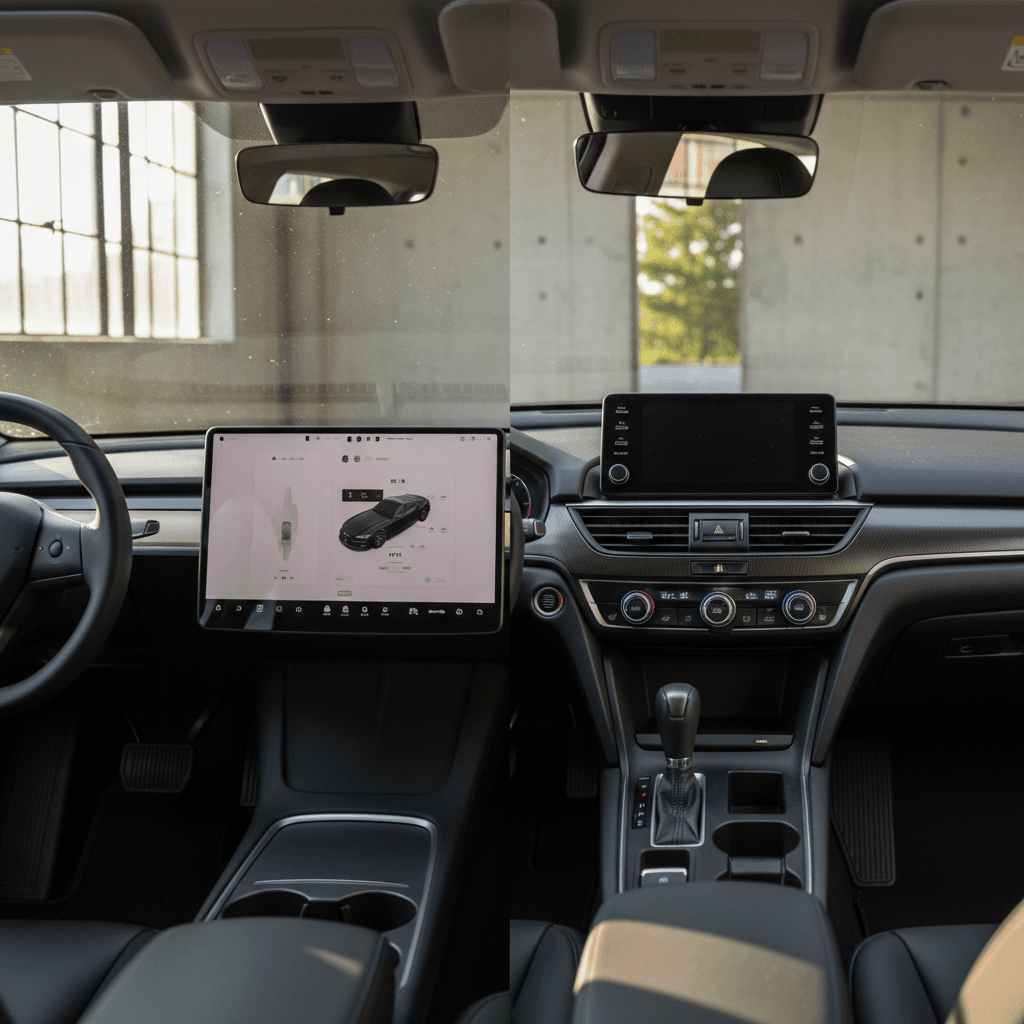
- Large central touchscreen controls nearly everything, from climate to navigation.
- Over‑the‑air software updates add features and improve efficiency over time.
- Standard advanced driver‑assist features like adaptive cruise and lane‑centering, branded as Autopilot.
- Optional software packages add more aggressive lane‑change automation and driver‑assist behavior.
Honda Accord Tech Highlights
- Traditional instrument cluster and physical controls with a central touchscreen, less flashy, more familiar.
- Honda Sensing suite (adaptive cruise, lane‑keeping, automatic emergency braking) standard on most trims.
- Wireless Apple CarPlay and Android Auto on many recent trims, making smartphone integration easy.
- Updates are more incremental; you’re basically “locking in” the tech at purchase.
Driver‑assist is not self‑driving
Used Market, Depreciation and Resale Value
Both cars are popular, but they behave differently in the used market. The Honda Accord’s resale story is boring, in a good way. Prices are predictable, depreciation is gradual, and supply is huge. The Tesla Model 3, by contrast, has seen bigger swings in value driven by Tesla’s frequent price changes, shifting tax‑credit rules, and rapid EV adoption.
How They Age in the Real World
Tesla Model 3 Depreciation
- Early years saw steep depreciation when Tesla cut new‑car prices.
- Battery health and access to fast charging are major value drivers.
- Well‑cared‑for cars with strong range numbers still command healthy prices.
Honda Accord Depreciation
- Historically one of the safest places to park money in a midsize car.
- Hybrids can hold value particularly well as fuel prices rise.
- Large used supply means you can shop around for the exact trim and condition you want.
Why battery health is the new odometer
Which Should You Buy? Recommendations by Driver Type
Match the Car to Your Life, Not the Other Way Around
High‑Mileage Commuter (12,000–20,000+ miles/year)
If you have home or reliable workplace charging, a Tesla Model 3 is usually the better economic bet over 5–8 years.
Energy savings can easily reach four figures per year compared with a gas Accord.
Factor in occasional Supercharger use for road trips, but most charging should be at home to keep costs down.
Apartment / Street Parking with No Charger
A Honda Accord, especially the Hybrid, is typically the lower‑stress option.
You avoid hunting for public charging and can refuel anywhere, anytime.
If you’re set on an EV, make sure your building or city has dependable public charging before committing.
Tech‑Forward Early Adopter
The Tesla Model 3 delivers the more futuristic, connected experience: OTA updates, app‑driven features, integrated route planning with charging stops.
You’ll tolerate some quirks around fit‑and‑finish or service in exchange for that software‑first feel.
If you’re sensitive to UI design, the Accord’s interface may feel dated by comparison.
Keep‑It‑Forever Owner (10+ years)
The Accord has the safer, more predictable long‑term reliability record and a huge repair ecosystem.
A well‑maintained Model 3 can absolutely run for many years, but long‑term battery replacement costs are still a big unknown for most buyers.
If you want minimal surprises deep into the car’s teens, the Accord is still the conservative choice.
Buying a Used Tesla Model 3 with Confidence
Key Checks Before You Buy a Used Model 3
1. Verify real‑world battery health
Don’t rely only on the original EPA range figure. Look at current usable range at 100% charge and, ideally, a professional battery‑health report like the Recharged Score so you know how much capacity the pack has retained.
2. Confirm charging options at home and work
Make sure you can at least use a 120‑volt outlet regularly, and ideally install a 240‑volt Level 2 charger. Recharged can help you estimate charging needs and costs if you’re new to EVs.
3. Review software and hardware generation
Model 3s have evolved quickly. Check which driver‑assist hardware version you’re getting, what software features are active, and whether any paid options (like advanced driver‑assist packages) transfer with the car.
4. Inspect tires, brakes and suspension carefully
EVs are heavier and quicker than gas sedans, which can wear tires and some suspension components faster. Budget for a high‑quality tire set if the current ones are near the end of their life.
5. Check accident, recall and service history
As with any used car, run a vehicle history report and confirm open recalls have been addressed. With Teslas, pay special attention to any repairs involving the high‑voltage system or structural components.
6. Buy from an EV‑savvy seller
Because EVs are different, having a seller who understands battery health, charging, and software matters. Every car Recharged sells includes a detailed Recharged Score Report, expert guidance, and transparent pricing so you’re not guessing about the important stuff.
FAQ: Tesla Model 3 vs Honda Accord
Frequently Asked Questions
Bottom Line: Tesla Model 3 vs Honda Accord
If you want the quiet, quick, low‑maintenance future of the midsize sedan and you have a reliable place to charge, the Tesla Model 3 is the more compelling long‑term choice for many American drivers. Its energy costs are lower, its performance is stronger, and its software‑driven experience will feel current for years.
If you’d rather stick with the known quantity that just works anywhere, the Honda Accord, especially the Hybrid, remains one of the smartest buys on the road. It’s easier to service, cheaper to repair, and its behavior in the used market is reassuringly boring.
Where Recharged fits in
Ready to find your next EV?
Browse Vehicles