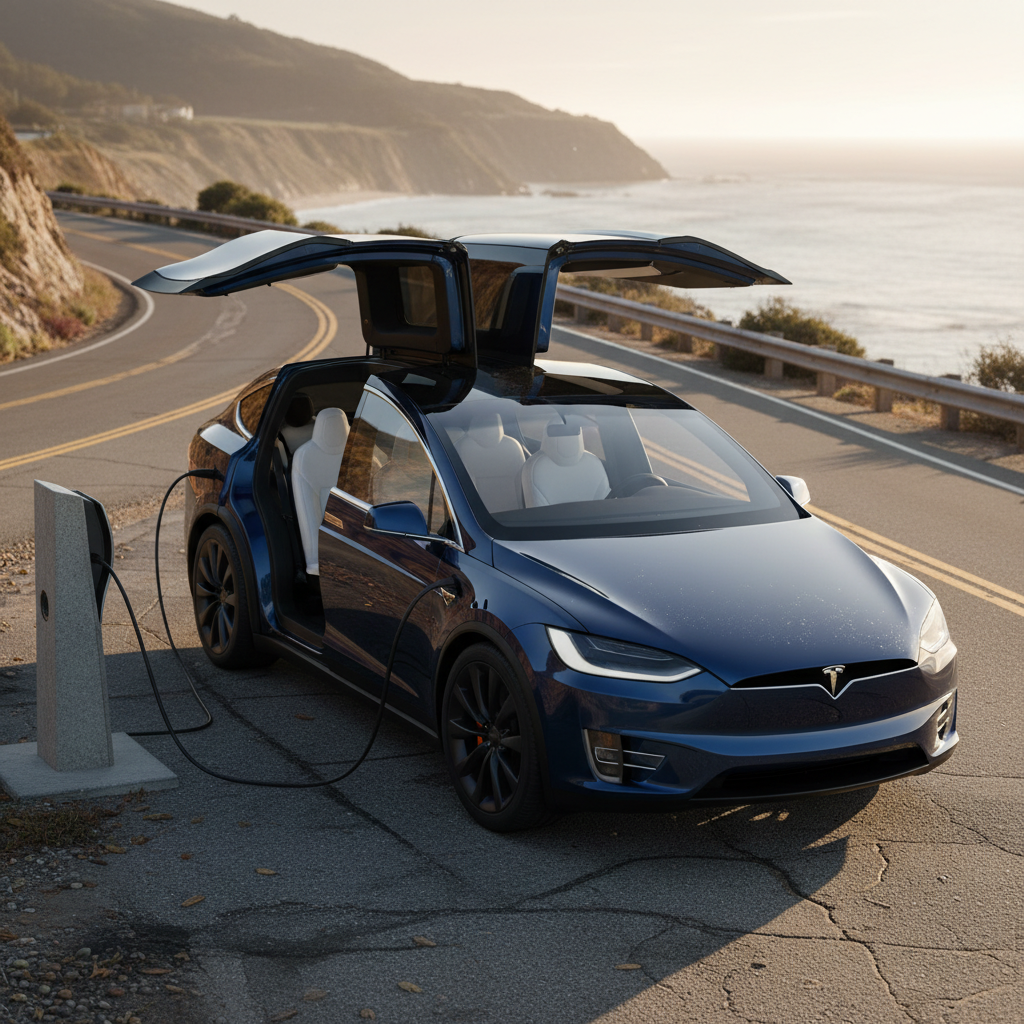
If you own a Tesla Model 3 in 2026, you’re sitting on one of the most common used EVs in America, and one of the most hotly debated when it comes to trade‑in value. Prices swung wildly in 2023–2025 as Tesla slashed new‑car MSRPs, and that turbulence is still echoing through dealer lots, auctions, and instant‑offer tools this year.
Quick takeaway
How much is my Tesla Model 3 worth in 2026?
There’s no single “Tesla Model 3 trade‑in value 2026” number. Instead, you’re looking at a band that moves with the market, your car’s history, and who you sell to. But we can frame the ballpark using recent data on Model 3 depreciation and live used‑market pricing.
Tesla Model 3 value snapshot in 2026
Those numbers translate to a wide but rational range. A six‑year‑old Model 3 that sold new around $50,000 could easily appraise in the high teens in 2026. A late‑model example that stickers north of $45,000 might still be well into the $30,000s if mileage is light and options are desirable. Trade‑in offers typically come in below those retail values, especially from traditional dealers that still treat EVs cautiously.
Why values feel “all over the place”
Typical 2026 trade‑in values by Model 3 year
Every car is different, but it helps to see rough 2026 value bands for common Model 3 vintages. These ranges assume U.S. vehicles with clean titles, average mileage for age, no major accidents on record, and healthy batteries. Trade‑in values will generally be lower than private‑party or retail by a few thousand dollars.
Illustrative 2026 Tesla Model 3 value bands
Approximate U.S. value ranges for typical examples; your actual trade‑in could land below or above these based on condition, battery health, and equipment.
| Model Year | Typical Miles (2026) | Retail Asking Range* | Likely Trade‑In Band* | Notes |
|---|---|---|---|---|
| 2017–2018 | 70k–120k+ | $15,000–$20,000 | $11,000–$16,000 | Early cars; battery health and repair history matter more than trim |
| 2019–2020 | 50k–100k | $18,000–$24,000 | $14,000–$19,000 | Sweet spot for value buyers; condition and options swing price |
| 2021–2022 | 30k–70k | $22,000–$28,000 | $18,000–$23,000 | Still modern; depreciation has already done a lot of the damage |
| 2023–2024 | 15k–45k | $28,000–$34,000 | $23,000–$28,000 | Feels nearly new; trade‑in numbers are sensitive to new‑car incentives |
| 2025–2026 | <25k | $34,000–$48,000+ | $28,000–$40,000 | Late‑model, especially Performance and high‑option cars, can still command strong money |
Use these as directional guardrails, not quotes. Real offers come from live market appraisals.
About these numbers

Factors that move your Model 3 trade‑in value up or down
On paper, two Model 3s can look identical, same year, trim, and mileage, but appraise thousands of dollars apart. Here’s what actually drives 2026 Tesla trade‑in values behind the scenes.
Major value drivers for 2026 Model 3 trade‑ins
These are the knobs buyers and algorithms are turning when they price your car.
Mileage & usage
EVs don’t follow gas‑car rules exactly, but mileage still matters.
- Lower miles nearly always help, especially under ~40,000.
- High‑mile rideshare or delivery usage can spook buyers.
- Highway‑heavy miles paired with careful charging are easier on the battery than short‑trip city abuse.
Battery health
The single most important value lever for a used EV.
- Strong battery health supports top‑quartile pricing.
- Visible range loss or a pending pack issue can knock $3,000–$8,000 off offers.
- Third‑party battery reports (like a Recharged Score) give buyers confidence.
Accident & title history
Model 3s are common in the salvage world.
- Clean Carfax/AutoCheck and no structural repairs preserve value.
- Branded or rebuilt titles slash trade‑in value; many dealers won’t touch them.
- Panel paintwork is less of a concern than frame or battery‑area repairs.
Trim & options
RWD vs Long Range vs Performance still matters in 2026.
- Long Range and Performance cars usually get meaningful premiums.
- Autopilot is now standard, but transferable FSD or rare colors can help.
- Heated seats, heat pump, and newer interiors all support higher numbers.
Charging & usage patterns
Buyers and algorithms are learning to read EV usage.
- Balanced home and DC fast charging is ideal.
- Heavy fast‑charging or constant 100% charges can raise concerns.
- Documented, “normal” usage reassures the next owner.
Local market & timing
Same Model 3, different ZIP code, different check.
- Some metro areas are flooded with used Teslas; others still under‑supplied.
- Tax‑credit rules and utility incentives shift demand.
- Spring selling season and pre‑winter months often see stronger EV interest.
Bring proof of battery health
Tesla trade‑in vs. dealer vs. selling through Recharged
Once you know roughly what your Model 3 is worth, the next question is where to sell it. In 2026, most owners follow one of three paths: trade it back to Tesla, trade or sell to a non‑Tesla dealer, or use a specialized used‑EV outlet like Recharged.
Tesla trade‑in
- Pros: Easiest way to roll equity (or negative equity) into a new Tesla; all‑digital process; they know the product well.
- Cons: Offers can be conservative, especially in markets saturated with Teslas; you can’t apply the offer to a non‑Tesla purchase.
- Best for: Drivers staying in the Tesla ecosystem who value convenience over squeezing every last dollar.
Traditional dealer or big online buyer
- Pros: Quick instant offers; easy if you’re already buying another brand; some will buy your Tesla outright.
- Cons: Many still discount EVs heavily for perceived risk; limited understanding of battery health can mean lowball bids.
- Best for: Swapping into a gas or non‑Tesla EV and you’re okay trading some value for speed.
Selling through Recharged
- Pros: EV‑only focus, Recharged Score battery diagnostics, and fair‑market pricing aimed at EV shoppers nationwide.
- Options: Request an instant offer or use consignment to capture closer‑to‑retail value while Recharged handles marketing and buyer vetting.
- Best for: Owners who want EV‑savvy pricing, battery‑health transparency, and guided support through the sale.
Where Recharged fits in
Ready to find your next EV?
Browse VehiclesHow to estimate your Tesla Model 3 trade‑in value
Before you walk into a showroom or click “accept” on any instant‑offer popup, it helps to arrive with your own number in mind. Here’s a simple way to build a realistic 2026 trade‑in estimate for your Model 3.
6‑step process to sanity‑check your Model 3 trade‑in value
1. Decode your exact spec
Write down your Model 3’s <strong>year, trim (RWD, Long Range, Performance)</strong>, major options (FSD, premium paint, upgraded wheels), and current odometer reading. Trade‑in algorithms start here.
2. Check current retail listings
Search used‑car sites and EV marketplaces for <strong>cars closely matching yours</strong>. Focus on asking prices, but remember those are retail, not trade‑in. Look for patterns, not the single cheapest or most expensive outlier.
3. Look up guide values, then reality‑check them
Plug your car into one or two valuation tools to get <strong>rough wholesale and trade‑in numbers</strong>. Treat these as starting points; they may lag fast‑moving EV markets or miss regional nuance.
4. Adjust for mileage and condition
If your car has <strong>meaningfully lower miles</strong> than similar listings and is very clean, aim toward the top of the trade‑in band. If it has high miles, worn tires, curb‑rashed wheels, or recent bodywork, shade your estimate downward.
5. Account for battery health and history
If you’ve had a recent battery‑health check, or you still get near‑original EPA range on a 100% charge, you can justify a <strong>value bump</strong>. Visible degradation, heavy DC fast‑charging, or a history of frequent 100% charges may warrant a discount.
6. Decide on a walk‑away number
Pick a <strong>reasonable low end</strong>, the number below which you’ll walk away or switch to selling privately or through Recharged. Knowing this number before offers arrive makes negotiations calmer and clearer.
Use multiple offers as data, not drama
Maximizing your Model 3’s value before you trade it in
You can’t control the entire used‑EV market, but you do control how your car shows up in it. A few hours of prep often returns hundreds, sometimes thousands, extra on your offer sheet.
Practical ways to add value in 2026
These are realistic, cost‑effective steps, no $5,000 wheel packages required.
Clean, de‑clutter, and de‑smell
- Get a basic detail or do it yourself: vacuum, wipe hard surfaces, clean glass.
- Remove personal items, stickers, and lingering odors (smoke is a big value‑killer).
- Presentation matters, appraisers are human.
Fix obvious, cheap issues
- Replace worn wiper blades, top off washer fluid, and clear any non‑serious dash warnings.
- Address visible, low‑cost repairs like missing trim pieces if they’re cheap to fix.
- Don’t overspend on bodywork that won’t move the trade‑in needle.
Organize service and tire records
- Show proof of regular maintenance, tire rotations, and any warranty work.
- Recent tire replacement is a plus, new rubber can cost $800+ on a Model 3.
- Digital records from Tesla or trusted shops help substantiate your story.
Charge smart before appraisal
- Arrive with a reasonable state of charge, around 60–80%, so range looks realistic, not artificially low.
- If your range at 100% is strong for the car’s age, having a battery report handy can justify stronger bids.
Leverage a professional battery report
When does it make sense to trade in a Model 3 in 2026?
Timing a trade‑in is part math, part life situation. Here’s how to think about whether 2026 is the right moment to let your Model 3 go, or keep driving it.
Trade now vs. hold longer: two owner paths
You’re leaning toward trading in 2026
You want newer safety tech, range, or a refreshed interior that your current car lacks.
Your loan balance is close to your car’s realistic trade‑in value, limiting negative equity risk.
You’re seeing attractive financing or lease terms on your next EV.
You’d rather capture today’s known value than gamble on future price cuts or policy changes.
You’re better off holding for a bit
Your Model 3 is paid off or nearly so, and you value <strong>low monthly costs</strong> more than new features.
Your battery health is strong, and you’re not bumping into range limitations day‑to‑day.
You’d be rolling significant negative equity into the next loan at current trade‑in numbers.
You’re waiting to see how next‑gen EVs or tax‑credit rules evolve over the next 12–24 months.
Think in total cost per mile, not just value today
Common pitfalls with EV trade‑ins
Selling or trading a used EV in 2026 isn’t quite the same as unloading a gas crossover. Here are missteps that cost Model 3 owners real money.
- Assuming Tesla’s offer is always best. It’s often convenient and sometimes competitive, but not always top of market, especially if you’re considering consignment or a private‑party sale.
- Letting a single low offer define your expectations. One underwhelming appraisal doesn’t mean every buyer sees your car the same way.
- Ignoring battery health. For EV buyers, a weak pack is like a blown engine. For a healthy car, not documenting battery condition leaves money on the table.
- Over‑spending on last‑minute repairs. Dropping $2,000 on cosmetic work that moves a trade‑in offer by $500 rarely pencils out.
- Rolling deep negative equity without a plan. If you’re underwater, blindly wrapping thousands into a longer loan can create problems when you’re ready to move on again.
Watch for “EV discounting” at gas‑focused stores
FAQ: Tesla Model 3 trade‑in value in 2026
Frequently asked questions
Bottom line on Tesla Model 3 trade‑ins in 2026
By 2026, the Tesla Model 3 is no longer a novelty on the used market, it’s a volume player. That cuts both ways. There’s strong demand for clean, well‑cared‑for cars, but there’s also plenty of supply, and buyers have learned to scrutinize battery health, history, and options rather than just the name on the badge.
If you take anything away from this guide, let it be this: your specific car matters more than the average chart. The same VIN can be worth several thousand dollars more or less depending on how and where you sell it, and how thoroughly you document its condition. Build your own estimate, prep the car, and collect a few offers before making a decision.
When you’re ready, Recharged can help you see where your Model 3 truly sits in today’s market, with verified Recharged Score battery diagnostics, EV‑savvy pricing, and expert support from appraisal to final paperwork. Whether you trade in, sell outright, or consign, the goal is the same: a transparent, data‑driven outcome that makes your next move in EV ownership feel like a step forward, not a compromise.