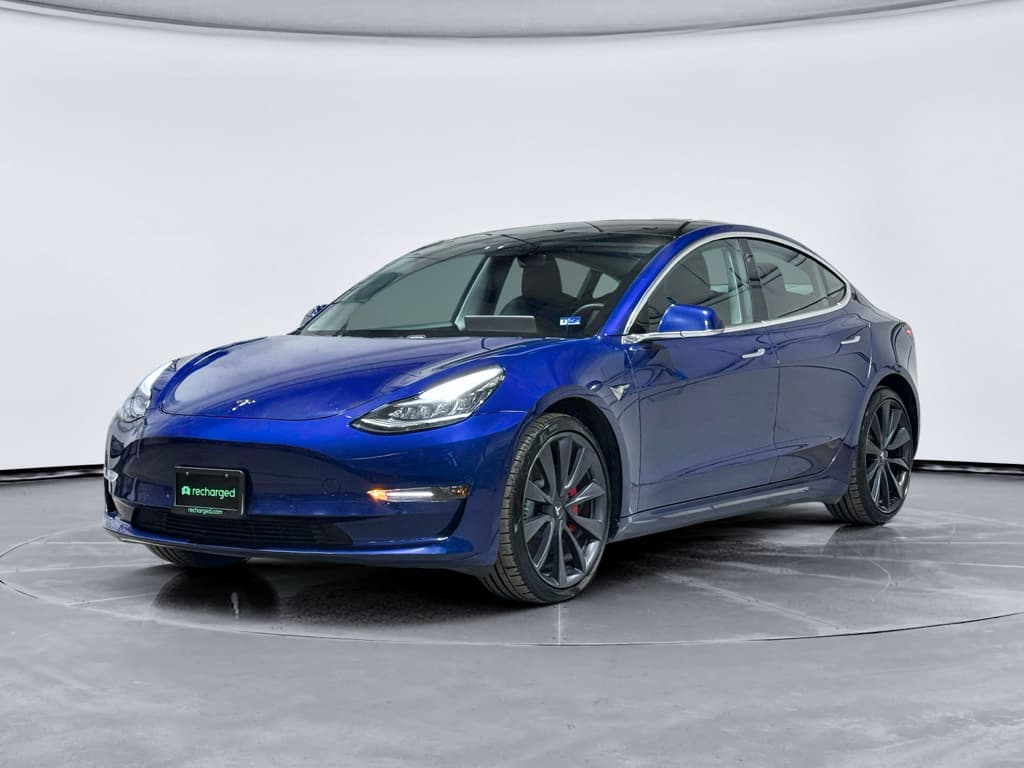
If you own a Tesla Model 3, you’re sitting on one of the most liquid assets in the EV world. But after years of price cuts, tax-credit changes, and a flood of used EVs, it’s hard to know what your Model 3 is actually worth in 2026, or how to keep from leaving thousands on the table when you sell or trade it.
Why 2026 is a turning point
Tesla Model 3 resale value in 2026: the short version
Tesla Model 3 resale value at a glance (2026)
The headline in 2026: the Tesla Model 3 still holds value better than most EVs, but the days of sky‑high resale are gone. Early depreciation is steep, especially for cars bought just before major Tesla price cuts, then it settles into a slower slide. Battery health and software condition are now just as important as mileage and tires.
Good news for owners
How Tesla Model 3 depreciation really works
EV depreciation looks chaotic from the outside, especially when Tesla changes prices overnight, but there’s a pattern underneath. For the Model 3, think in terms of three phases of value loss rather than a smooth curve.
Three phases of Model 3 depreciation
Understanding these phases tells you when selling or holding makes the most sense
Phase 1: Shock drop (0–24 months)
Historically, a new Model 3 tends to lose roughly 25–30% of its nominal value in the first year, sometimes more when Tesla cuts new-car prices or rolls out a major refresh.
Buyers who paid pre-cut prices in 2023–2024 felt this acutely: their cars’ book values fell even faster than mileage alone would suggest.
Phase 2: Stabilization (3–5 years)
Once the car is out of its initial "new" halo, depreciation slows. In normal market conditions, a Model 3 at 4–5 years often sits around 45–60% of its original MSRP, depending on mileage and condition.
This is where the Model 3’s strong brand, OTA updates, and charging access help it outperform most EV peers.
Phase 3: Slow glide (6–10+ years)
From about year six onward, the car behaves more like a conventional used vehicle. Value tracks miles, maintenance, and battery health far more than model year bragging rights.
Assuming the pack is healthy and the car hasn’t been crashed or neglected, the slide is slower and more predictable.
Why “original price” matters less than you think
The used Tesla Model 3 market in 2026
The backdrop for 2026 is unusual: federal EV tax credits for used vehicles have ended, new EV prices remain higher than comparable gas cars, and many non‑Tesla EVs are oversupplied. Yet used Tesla prices have recently ticked up a few percent while the rest of the used EV market has generally softened.
How the 2026 used EV market shapes Model 3 values
High-level trends that influence what your Model 3 is worth this year
| Trend (US, 2025–2026) | Impact on Model 3 | What it means for you |
|---|---|---|
| Used EV supply rising | More choices for buyers | You can’t count on 2021-style Tesla scarcity to float your price. |
| Used Teslas rebounding a few % | Model 3 values inching up from 2024–2025 lows | Well‑optioned, clean cars are fetching stronger offers than a year ago. |
| Used EV tax credit ended | No $4k federal coupon for buyers | Private buyers have less subsidy; condition and pricing discipline matter more. |
| Cheaper new Model 3 trims | New-car anchor price moved lower | Puts a ceiling over what older, higher‑priced builds can realistically fetch. |
Trends are directional and will vary by region, trim, and condition.
Local markets still rule
Battery health: the silent driver of resale value
Under the floor of your Model 3 is a lithium‑ion pack worth well into five figures if you had to replace it out of warranty. Naturally, buyers, and lenders, care a lot about how healthy that battery is. Real‑world data across Tesla fleets shows a consistent pattern: a quick 5–8% capacity dip in the first 50,000 miles, then a long, gentle fade when the car is treated decently.
- Around 50,000 miles, it’s common for a Model 3 to have lost only 5–8% of usable capacity if charged and stored reasonably.
- Over the first 8–10 years, many Teslas average roughly 2–2.5% capacity loss per year when you smooth out that early dip.
- Buyers don’t expect a 6‑year‑old Model 3 to be at 100%, but they do expect range to be broadly in line with those norms, not 20–30% down.
How Recharged measures battery health
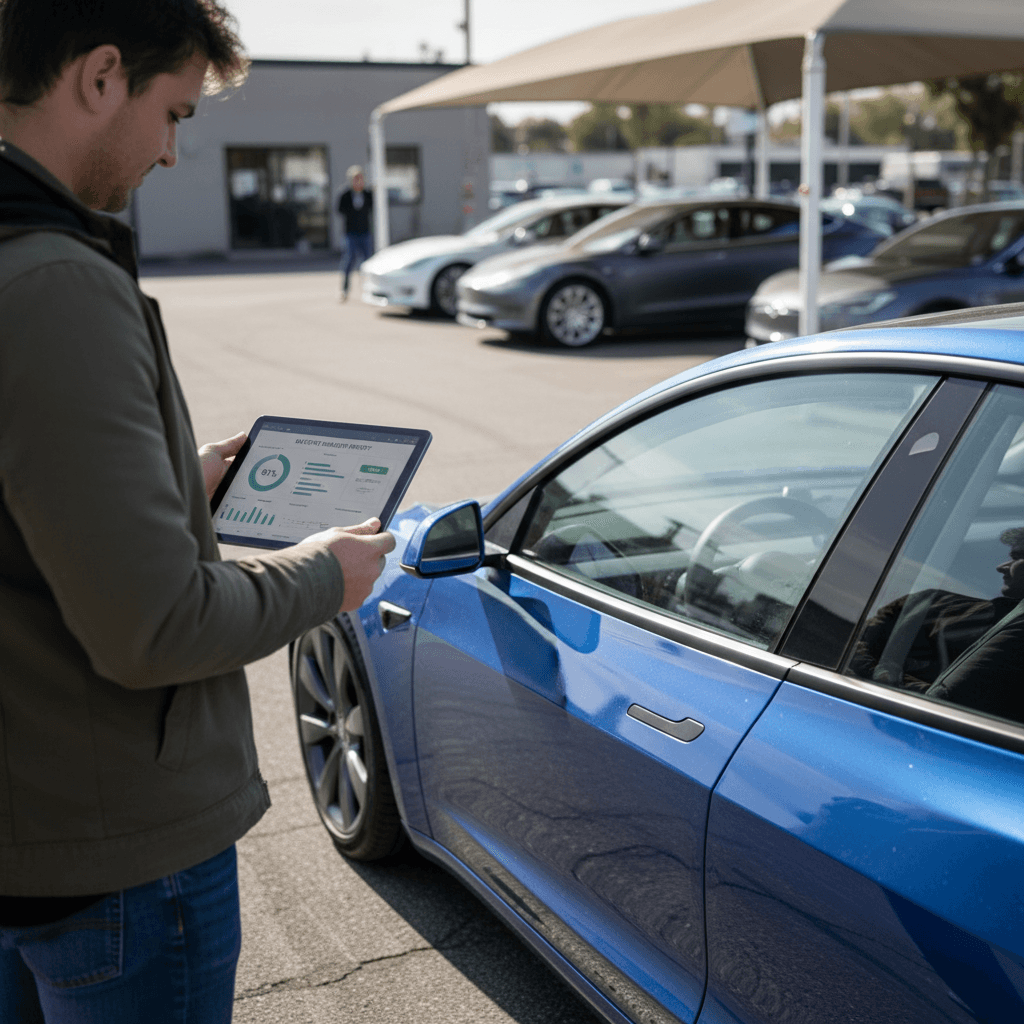
Habits that help your battery (and value)
- Keeping daily charge limits around 70–80% instead of 100%.
- Letting the pack cool after hard driving before fast charging when possible.
- Storing the car in moderate temperatures, especially in very hot climates.
- Using DC fast charging for trips, not every commute.
Habits that quietly hurt resale
- Living at 100% charge for long stretches “just in case.”
- Running the battery to 0% regularly.
- Relying on Superchargers for most charging instead of home Level 2.
- Ignoring range drops and never documenting battery health before selling.
Turn battery health into a negotiating asset
Other factors that move your Model 3’s number
Top non‑battery factors that affect Model 3 resale value
Mileage still matters, but it’s not the whole story
Mileage & use pattern
A 5‑year‑old Model 3 with 40,000 miles usually commands more than one with 90,000, assuming similar battery health.
But buyers increasingly prefer well‑driven, documented highway miles over an ultra‑low‑mileage car that’s sat unused and unmaintained.
Trim, features & Autopilot
Range and features still matter. Long Range and Performance cars, especially with premium interiors, tend to hold more value.
Transferable FSD or Enhanced Autopilot can add value if the buyer cares about it, but don’t assume every shopper will pay dollar‑for‑dollar what you paid Tesla for software.
Cosmetics & service history
Scrapes, curb‑rashed wheels, and cracked glass are more visible to buyers than a few thousand miles of extra use.
A folder (or digital trail) of documented service, tire rotations, and warranty work helps buyers, and online marketplaces, price your car at the top of its range.
Quick checklist: is your Model 3 likely to price high or low?
1. Clean title & no major accidents
Frame damage, airbag deployment, or salvage branding can knock thousands off a Model 3’s value, regardless of how nice it looks now.
2. Normal, not extreme, mileage
In 2026, a 2019–2021 Model 3 with ~10–15k miles per year is seen as healthy. Ultra‑high mileage or extremely low mileage both raise questions.
3. Solid tires and brakes
A car that needs four tires and brakes immediately represents $1,000–$2,000 of looming cost to a buyer. Fresh rubber and recent service support a higher asking price.
4. Up-to-date software
Cars that are several updates behind, or modified with unofficial software, worry buyers. Keep OTA updates current to signal a car that’s been actively used and cared for.
5. Interior condition
Stains, worn bolsters, and cracked trim don’t just look bad; they plant doubt about how you’ve treated the car overall. A deep, professional detail before selling more than pays for itself.
What your Tesla Model 3 is likely worth in 2026
No two cars are identical, but you can put most 2018–2024 Model 3s into broad value buckets. Think of these ranges as a starting point for 2026, not formal appraisals. Local market conditions, options, color, and battery health will move any individual car up or down.
Illustrative 2026 value ranges for common Model 3 vintages
Ballpark private-party ranges for clean, average‑mileage US cars in normal markets. Heavily optioned or unusually low‑mile examples may sit above these bands.
| Model year & trim (typical) | Mileage in 2026 | Rough private‑party band | Context |
|---|---|---|---|
| 2018–2019 RWD / Mid Range | 60k–90k mi | ~$18,000–$24,000 | Oldest cars on the road; battery health and cosmetic condition dominate value. |
| 2020–2021 Long Range / Performance | 40k–70k mi | ~$22,000–$30,000 | Sweet‑spot years with modern features and strong range; still plentiful in the used market. |
| 2022–2023 Model 3 | 25k–50k mi | ~$25,000–$33,000 | Heavier hit from Tesla’s new‑car price moves, but attractive to buyers who want newer hardware without paying new‑car money. |
| 2024 refresh and newer | Under 30k mi | Varies, often $30k+ | Recent design refresh and cheaper new trims act as both a value anchor and a selling point; expect faster early depreciation but strong demand. |
Always cross‑check against live listings and instant offers; these are directional, not guaranteed prices.
Why your personal number might be lower (or higher)
How to maximize your Model 3 resale value
You can’t control Tesla’s next price cut or Washington’s next policy shift. You can control how your car looks, drives, and is documented when a buyer or marketplace evaluates it. Here’s a practical, 2026‑specific playbook for squeezing the most value out of your Model 3.
7 concrete steps to boost your Model 3’s resale value
1. Fix the cheap stuff first
Address obvious, relatively low‑cost issues, curb‑rashed wheels, windshield chips, inexpensive trim pieces. A few hundred dollars in cosmetic work can preserve thousands of dollars in perceived value.
2. Get a professional detail
A thorough interior and exterior detail, including paint decontamination and light correction, makes the car photograph better and signals careful ownership. This is one of the highest‑ROI pre‑sale investments you can make.
3. Gather your digital paperwork
Export or print service records, tire and brake receipts, and any warranty work. Buyers of tech‑heavy EVs prefer cars with a clear paper trail, not just a clean Carfax.
4. Document battery health clearly
Whether through Recharged’s Score Report or a trusted third‑party scan, show your State of Health and charging history. Screenshots of daily range alone are not persuasive to serious buyers in 2026.
5. Time your sale thoughtfully
Listings often perform better in late spring and early fall than in the dead of winter, especially in cold‑weather regions where buyers are more concerned about winter range.
6. Prepare for remote buyers
By 2026, used Teslas often sell across state lines. Have high‑quality photos, a recent alignment report, and a transparent description ready so online shoppers are comfortable wiring money or arranging transport.
7. Price like a professional
Start by looking at <strong>actual transaction data</strong> and instant‑offer tools, not just high‑aspirational asking prices. In a data‑rich market, obviously mispriced cars simply sit while properly priced cars move quickly at strong numbers.
Use multiple reference points
Selling options in 2026 (and where Recharged fits)
1. Traditional trade‑in or wholesale
Fast and familiar: you drive to a dealer, they appraise the car, and roll it into your next purchase. But many dealers are still catching up on EV pricing, and they tend to price in a lot of risk around battery health and future EV demand.
Best when: You prioritize speed and convenience over squeezing every last dollar out of your Model 3.
2. Private sale or modern EV marketplaces
Listing yourself or using a specialist platform usually nets more than a trade‑in, but it adds complexity: tire‑kickers, paperwork, and buyer financing.
Where Recharged helps: Recharged can buy your Model 3 outright, help you sell it via consignment, or take it as a trade‑in toward another EV, backed by a Recharged Score battery report, EV‑savvy pricing, and nationwide buyers who actually understand Teslas.
Why EV‑specialist buyers often pay more
Ready to find your next EV?
Browse VehiclesCommon resale mistakes that cost Tesla owners money
- Waiting too long after a major price cut. When Tesla slashes new‑car prices, used values adjust quickly. If you’re already thinking about selling, waiting months after a big cut rarely helps.
- Ignoring minor battery issues. A warning that goes unaddressed, or a clear pattern of overly aggressive fast‑charging, will show up in data and spook savvy buyers.
- Assuming FSD is worth what you paid. Some buyers value it, others don’t. Pricing your car $10,000 higher because you bought FSD rarely works in 2026; treat it as a differentiator, not a full cost pass‑through.
- Listing with poor photos and no documentation. In an online‑first market, dark phone photos and vague descriptions scream "problem car" and invite only lowball offers.
- Taking the first offer without shopping it. In a market this dynamic, it’s worth getting at least two or three real offers, especially from EV‑focused buyers, before you decide.
The emotional anchor trap
Tesla Model 3 resale value 2026: FAQ
Frequently asked questions about Model 3 resale value in 2026
The bottom line for Tesla Model 3 resale value in 2026
In 2026, the Tesla Model 3 is no longer the untouchable resale champion it once appeared to be, but it’s still one of the least risky places to be in the used EV market. Values have settled after the price‑cut shock, and strong demand, dense charging infrastructure, and a massive installed base all continue to support prices.
What matters most now is not what you paid or what your neighbor got in 2021, but how your specific car presents on paper and on the street: battery health, maintenance, cosmetics, documentation, and realistic pricing. Get those right and your Model 3 should sell quickly and for a number that makes sense in today’s market.
If you want help turning that into reality, Recharged exists for exactly this moment in the EV transition. With expert EV specialists, a Recharged Score battery‑health report on every vehicle, fair‑market pricing tools, and options ranging from instant offers to consignment and trade‑in, we’re built to make selling, and replacing, your Model 3 in 2026 as transparent and financially rational as it should be.