If you’re trying to figure out **Tesla Model 3 charging cost per mile**, you’re really asking one thing: *how cheap is this car to live with every day?* The good news is that, even with higher electricity prices in 2025–2026, a Model 3 is still one of the least expensive vehicles to feed, especially if you can charge at home.
Quick answer
How much does a Tesla Model 3 cost per mile to charge?
Typical Tesla Model 3 charging cost per mile (2026)
Those ranges are wide on purpose. Your **cost per mile** depends on three big things: how efficient your specific Model 3 is, what you pay per kWh, and how/where you drive. Let’s unpack each piece and then walk through real example calculations you can copy for your own situation.
Key factors that control your cost per mile
What actually drives your Model 3 cost per mile
Four levers you can’t ignore
1. Your electricity rate
This is the **¢ per kWh** on your power bill or shown at the charger. In early 2026, the U.S. average residential rate is in the **mid‑ to high‑teens cents per kWh**, with some states under 13¢ and others well over 25¢.
2. Your efficiency (Wh/mi)
Efficiency tells you how many **watt‑hours per mile** the car uses. A lower Wh/mi number means fewer kWh for the same trip, so your cost per mile drops.
3. Where you charge
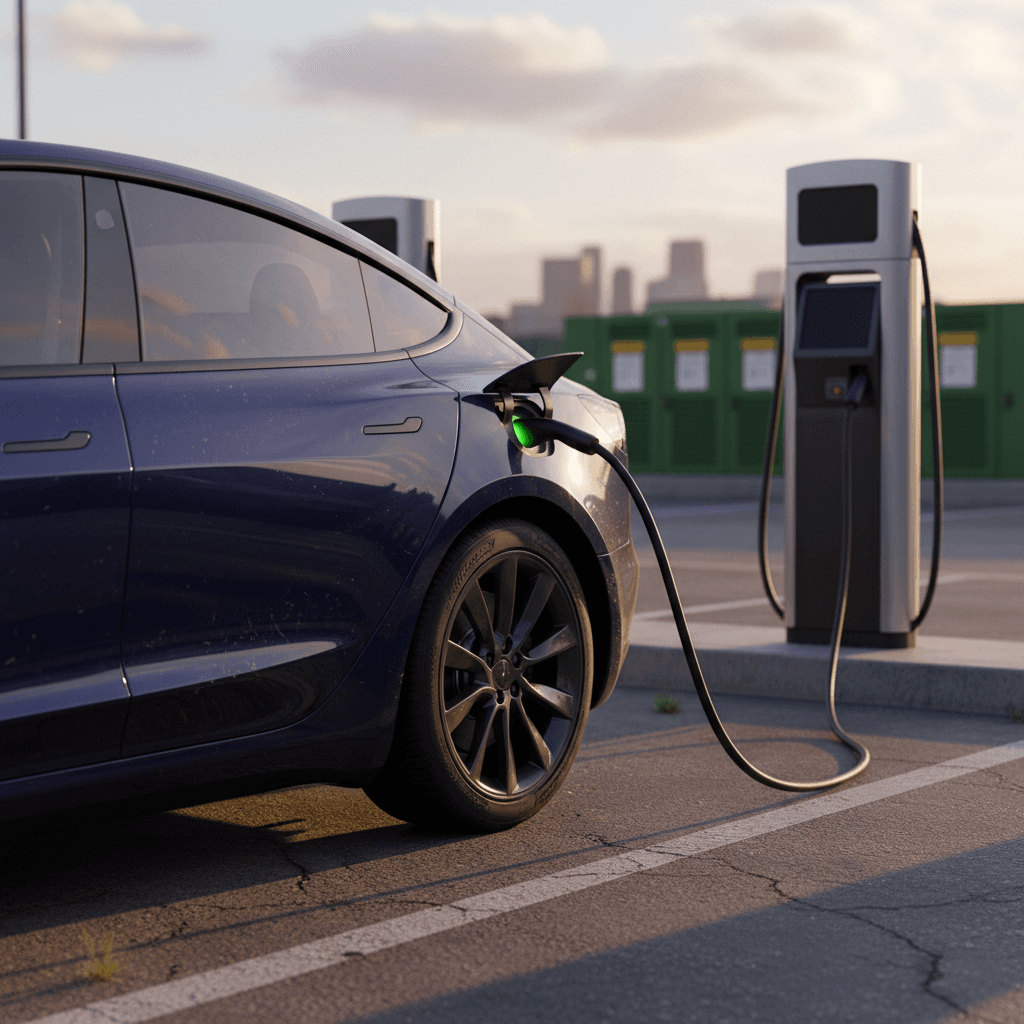
Home Level 2 charging is usually cheapest. **DC fast charging (Superchargers)** is faster but can cost 2–3× as much per kWh as your home rate.
4. Weather & driving style
Cold weather, high speeds, and aggressive acceleration all push your Wh/mi up. That doesn’t break the bank, but it *does* move your cost‑per‑mile needle.
Rule of thumb
Model 3 efficiency: what’s a realistic number?
Tesla’s official EPA numbers are a handy starting point, but what matters for your wallet is **real‑world efficiency**. Recent U.S. tests of the 2026 Model 3 Standard report about **23–24 kWh per 100 miles** in mixed driving, roughly **230–240 Wh/mi**, or about **4.2–4.4 miles per kWh** under reasonable conditions. Many owners see numbers in the **230–270 Wh/mi** band depending on climate, speed, and tire choice.
- **Recent RWD/Standard Range**: ~230–260 Wh/mi in mild weather, mixed driving
- **Long Range / Performance**: Typically a bit higher, ~250–290 Wh/mi
- **Cold-climate highway winters**: 300–350+ Wh/mi isn’t unusual on short trips
- **Warm highway cruising at 70–75 mph**: Often in the 250–280 Wh/mi range
Shortcut for this article
Example calculations: home charging vs Supercharging
Let’s plug in some real‑world numbers so you can see how the **Tesla Model 3 charging cost per mile** works out day to day. We’ll assume a Model 3 using **26 kWh/100 mi**, and we’ll run three common scenarios.
Model 3 cost per mile in three common scenarios
Assumes 26 kWh/100 miles (260 Wh/mi). Your numbers will shift slightly with your own efficiency.
| Scenario | Electricity price | Cost for 100 miles | Cost per mile |
|---|---|---|---|
| Home charging, average U.S. rate | $0.17/kWh | 26 kWh × $0.17 = $4.42 | ≈ **4.4¢/mi** |
| Home charging, low‑cost state | $0.13/kWh | 26 × $0.13 = $3.38 | ≈ **3.4¢/mi** |
| Home charging, high‑cost city | $0.25/kWh | 26 × $0.25 = $6.50 | ≈ **6.5¢/mi** |
| Typical Supercharger, off‑peak | $0.32/kWh | 26 × $0.32 = $8.32 | ≈ **8.3¢/mi** |
| Typical Supercharger, peak / pricey region | $0.45/kWh | 26 × $0.45 = $11.70 | ≈ **11.7¢/mi** |
Home charging almost always wins on cost per mile, but road‑trip fast charging is still competitive with many gas cars.
Supercharger pricing is dynamic
Simple formula to calc your own cost per mile
You don’t need to be an engineer to figure this out. If you know your **average Wh/mi** and your **electricity rate**, you can get your **Tesla Model 3 charging cost per mile** in a few seconds.
Step 1: Grab your Wh/mi number
Open your Tesla’s **Energy** app or trip display and look at your average **Wh/mi** over the last 1,000+ miles. That smooths out weather and one‑off trips.
If you don’t have long‑term data yet, use **260 Wh/mi** as a solid, middle‑of‑the‑road estimate for planning.
Step 2: Plug into this formula
Cost per mile = (Wh/mi ÷ 1,000) × electricity price per kWh
Example: 260 Wh/mi and $0.17/kWh:(260 ÷ 1,000) × 0.17 = 0.0442 → **4.4¢ per mile**.
Quick example calculations you can adapt
Low-rate home charging
You pay 13¢/kWh and average 250 Wh/mi. Cost per mile = (250 ÷ 1,000) × 0.13 ≈ **3.25¢/mi**.
Average-rate home charging
You pay 18¢/kWh and average 270 Wh/mi. Cost per mile = (270 ÷ 1,000) × 0.18 ≈ **4.9¢/mi**.
Supercharger road trip
The station posts 40¢/kWh and you’re running 280 Wh/mi at highway speeds. Cost per mile = (280 ÷ 1,000) × 0.40 ≈ **11.2¢/mi**.
Make it monthly
How your driving style and weather change the math
The Tesla Model 3 is extremely efficient, but it’s still a car pushing through air and rolling on rubber. A few habits and conditions have an outsized impact on your **kWh per 100 miles**, and therefore on your cost per mile.
What makes your Model 3 more or less expensive per mile
Same car, different habits, very different Wh/mi
High speed
65 vs 80 mph is a big deal. Aerodynamic drag rises faster than speed, so your Wh/mi climbs. That extra 20–30% energy use shows up directly in your cost per mile.
Cold weather
In winter, the car uses energy just to warm the cabin and battery. Short trips in particular can see **40–60% higher Wh/mi**, pushing your cost per mile up temporarily.
Smooth vs spirited
Hard launches and late braking don’t just annoy passengers; they waste energy your regen can’t fully recover. A smoother right foot keeps your efficiency in the sweet spot.
City vs highway
Unlike gas cars, EVs can be **more efficient in city driving** thanks to regen braking. It’s common to see lower Wh/mi around town than on long highway stints.
Tires & wheels
Sticky performance tires and big wheels look great, but they increase rolling resistance. Expect a higher Wh/mi and a few tenths of a cent more per mile.
Climate control habits
Preconditioning while plugged in, using seat heaters instead of cranking cabin heat, and not obsessing over 72°F perfection can shave a little off your cost per mile.
Don’t obsess over tiny swings
Tesla Model 3 cost per mile vs gas cars
To understand whether 4–6¢ per mile is “good,” you need a comparison. Let’s line a Model 3 up against a typical gasoline sedan.
Tesla Model 3 vs gas sedan: energy cost per mile
Approximate fuel costs for 100 miles, using realistic U.S. 2026 prices.
| Vehicle & scenario | Assumptions | Cost per 100 miles | Cost per mile |
|---|---|---|---|
| Tesla Model 3, home charging | 26 kWh/100 mi, $0.17/kWh | $4.42 | **4.4¢/mi** |
| Tesla Model 3, Supercharger | 26 kWh/100 mi, $0.40/kWh | $10.40 | **10.4¢/mi** |
| Gas sedan (30 mpg), $3.50/gal | 100 mi ÷ 30 mpg = 3.33 gal | 3.33 × $3.50 = $11.66 | **11.7¢/mi** |
| Gas sedan (30 mpg), $4.00/gal | 3.33 gal × $4.00 | $13.32 | **13.3¢/mi** |
Even when electricity isn’t cheap, the Model 3 usually wins on energy cost per mile, especially if you can plug in at home.
Big picture
Ways to lower your Tesla Model 3 charging cost per mile
You can’t control global energy markets, but you *can* nudge your personal cost per mile in the right direction. Here are practical steps that actually move the needle for Model 3 owners.
Practical ways to spend less per mile
Use home charging as your default
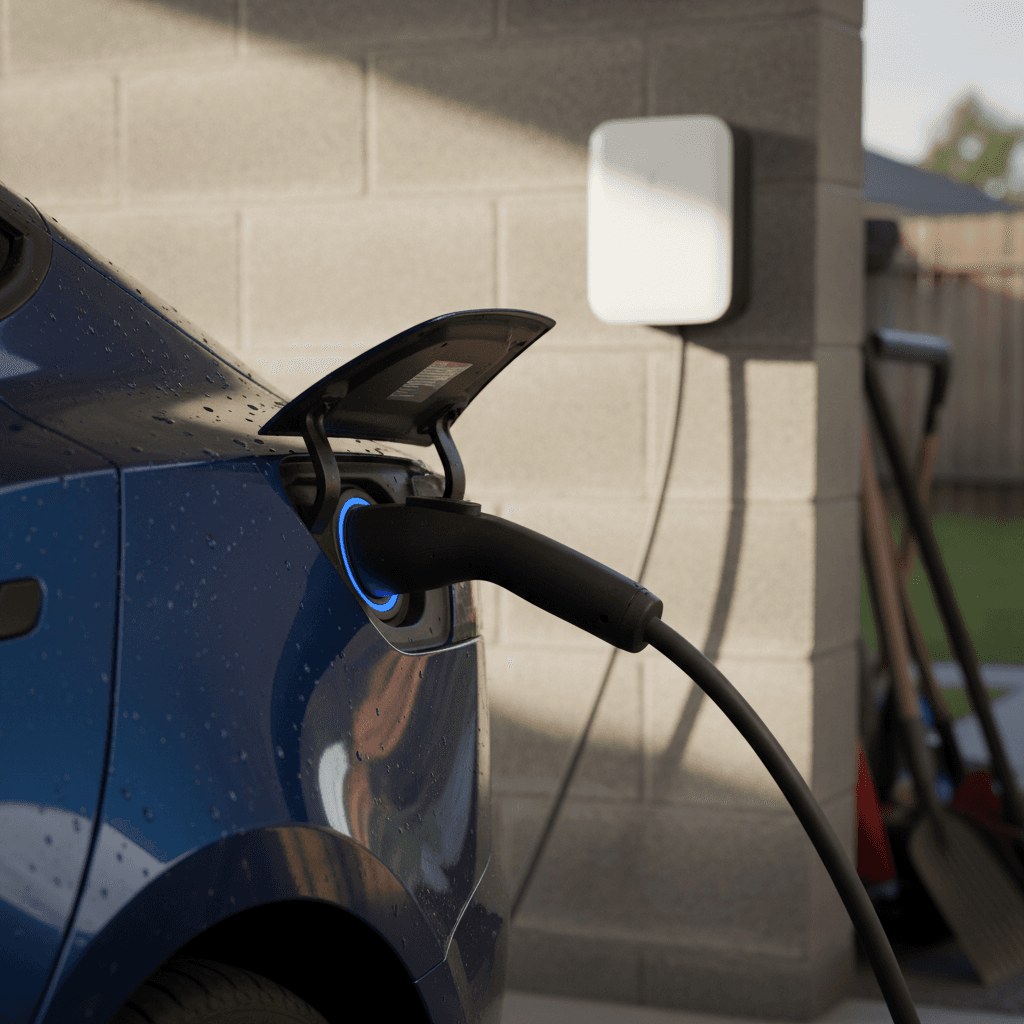
If you have access to a driveway or garage, install a Level 2 charger or a 240‑volt outlet. Even at the national average rate, home power is usually far cheaper than DC fast charging.
Take advantage of off‑peak rates
Many utilities offer **time‑of‑use (TOU)** plans that make overnight power significantly cheaper. Set your Model 3 to charge during off‑peak hours in the Charging menu.
Plan Supercharger stops smartly
On road trips, don’t always chase 100%. Charging from 10–60% is generally faster and can be more cost‑effective than sitting at a busy station nursing the last 20%.
Drive a little slower on the highway
Even dropping from 80 mph to 70 mph can save a noticeable chunk of energy. On a long trip, your arrival time often changes by minutes, not hours, but your cost per mile drops.
Keep tires properly inflated
Under‑inflated tires add rolling resistance, which quietly raises your Wh/mi and cost per mile. Check pressures monthly, especially heading into cold weather.
Use scheduled preconditioning
In winter, tell the car when you plan to leave while it’s still plugged in. That lets it warm the cabin and battery using grid power instead of your battery’s stored energy.
Think in cost‑per‑mile, not charging‑session price
Used Model 3 owners’ bonus: battery health and cost per mile
If you’re looking at a **used Tesla Model 3**, the cost‑per‑mile story gets another twist: **battery health**. A battery that’s been well cared for and hasn’t lost much usable capacity won’t suddenly make your electricity more expensive, but it *does* affect how far you can go on each kWh and on each full charge.
Why battery health matters
Over time, every EV battery loses some capacity. That doesn’t change **kWh per mile** much by itself, but it changes how often you need to charge and how useful your full range feels, especially on road trips.
Buying a used Model 3 with **verified, healthy battery capacity** means you’re getting the efficiency you paid for, plus more flexibility about when and where you plug in.
How Recharged helps with the math
Every EV sold through Recharged includes a detailed Recharged Score Report with independent battery health diagnostics and pricing aligned to that real condition.
If you’re curious how a specific used Model 3 will behave in your daily life, Recharged’s EV specialists can help you translate that report into **real‑world range and cost‑per‑mile expectations**, before you ever sign anything.
FAQ: Tesla Model 3 charging cost per mile
Frequently asked questions
Bottom line: is a Tesla Model 3 cheap to drive?
When you strip away the hype and run the numbers, a **Tesla Model 3 charging cost per mile** that lands around **4–6¢ at home** and **9–15¢ at Superchargers** is tough to beat. It’s not magic, it’s a very efficient car sipping relatively inexpensive energy, especially off‑peak grid power.
If you’re cross‑shopping gas sedans, remember that fuel is only part of the ownership story. But it’s a big part, and here the Model 3 shines. And if you’re stepping into the **used Model 3** world, a platform like Recharged, with verified battery health, transparent pricing, and EV‑savvy guidance, makes it far easier to understand what your real cost per mile will look like for years to come.