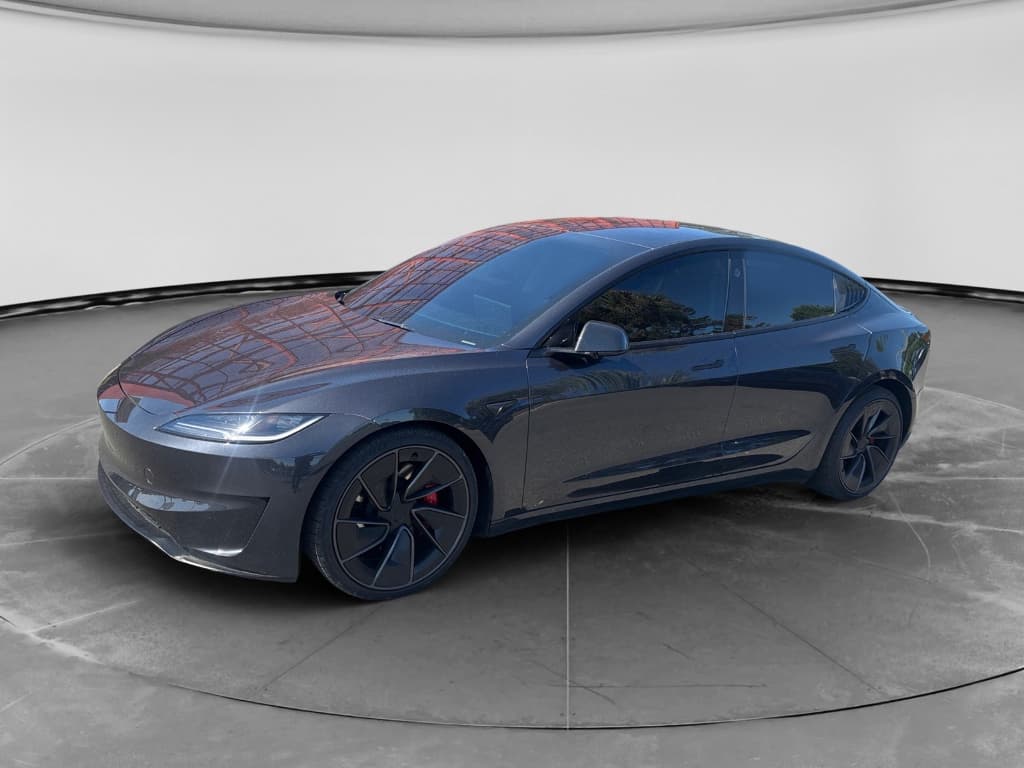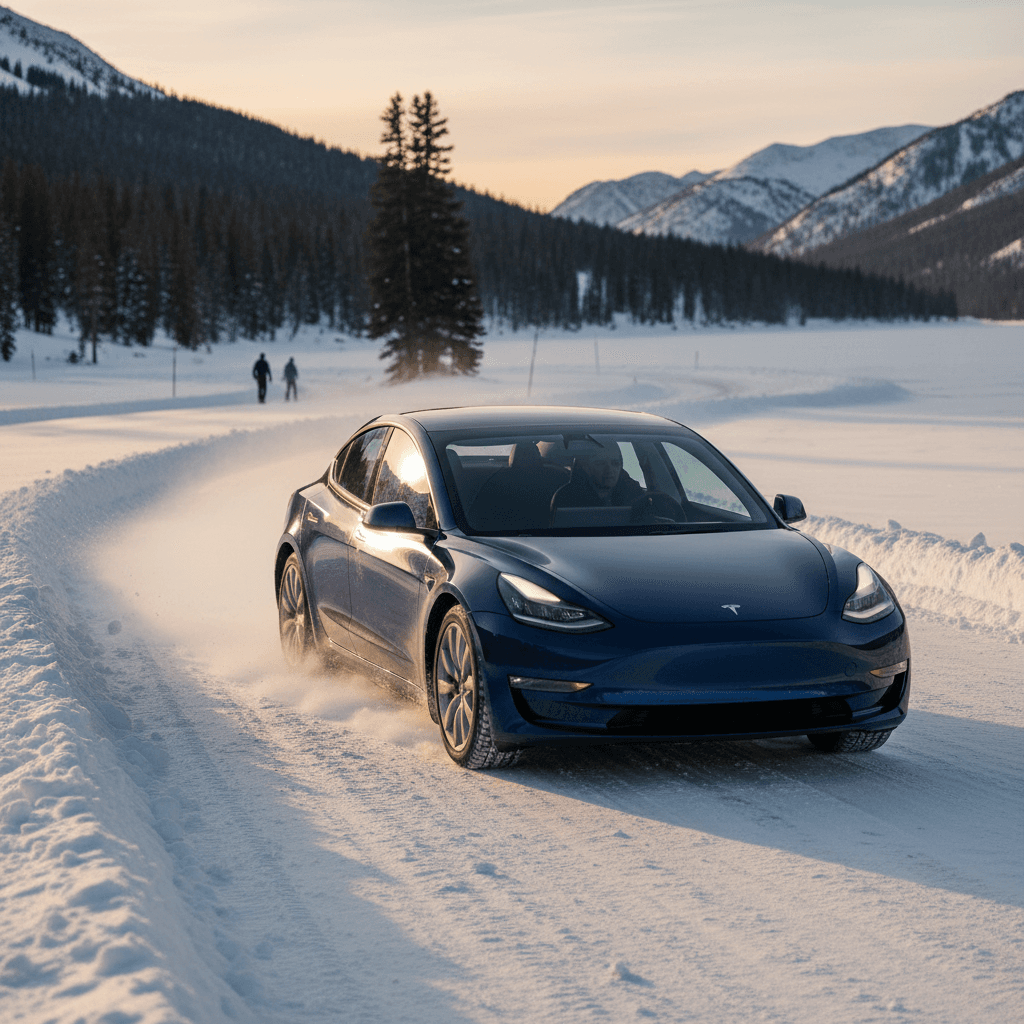
If you live where winter means plows, packed snow, and the occasional sheet of black ice, you’ve probably wondered whether a Tesla Model 3 is really best for snow and ice or if you’re better off with a traditional SUV. The honest answer: a Model 3 can be superb in winter, if you pick the right trim, tires, and settings and recognize its limits.
Key takeaway
Tesla Model 3 in snow and ice: the short answer
Where the Model 3 is excellent
- Instant traction control: Electric motors and fast software keep wheelspin in check far better than most gas cars.
- Low center of gravity: The battery pack sits in the floor, which makes the car very stable on slick roads.
- Predictable handling: Especially with AWD, the Model 3 tends to understeer first rather than snap into a spin.
- Heated everything: Seats, wheel (on many trims), and fast cabin heat make winter less punishing.
Where it’s merely OK, or bad
- Low ground clearance: Around 5.4–5.5 inches, which is less than many compact SUVs, limits performance in deep snow.
- Tire‑dependent: On the wrong tires (especially summer performance tires), even AWD models can feel scary on ice.
- Cold‑weather range loss: Expect noticeable range reduction in prolonged sub‑freezing temperatures.
Model 3 winter facts that actually matter
Where the Model 3 shines, and struggles, in winter
From a dynamics standpoint, the Model 3 starts with some big winter advantages. The heavy battery pack under the floor gives it a very low center of gravity and nearly ideal front‑to‑rear balance, which makes the car stable and predictable when the road is slick. Tesla’s traction and stability control systems are finely tuned; owners routinely comment that it’s “ridiculously good in slippery conditions” compared with their previous gas cars.
- Strengths: excellent traction control, stable handling, quick cabin and battery pre‑conditioning, fine control of power with your right foot.
- Weaknesses: low ride height, sensitive to tire choice, and meaningful cold‑weather range loss compared with mild‑weather driving.
Don’t let software fool you
Which Tesla Model 3 is best for snow and ice?
When people ask which Tesla Model 3 is best for snow and ice, they’re usually deciding between rear‑wheel drive (RWD) and all‑wheel drive (Dual Motor or Performance), and between different wheel/tire packages. Here’s how to think about it.
Model 3 trims ranked for winter duty
Assuming all are on proper winter tires
1. Dual Motor / Long Range AWD
Best all‑around for snow and ice. Sends power to both axles, so it pulls away more cleanly on slick hills and has more margin when you misjudge traction.
Pairing AWD with 18" or 19" wheels and winter tires makes the Model 3 feel more like a rally car than a commuter when the roads are messy.
2. RWD (Standard / Highland RWD)
Surprisingly capable with good snow tires. Modern traction control plus the rear weight bias make RWD acceptable for many climates, but you pay more attention on hills and in heavy snow.
If you live somewhere with plowed but frequently slick roads (Midwest suburbs, Northeast cities), RWD + true winters can be enough.
3. Performance (with summer tires)
Worst in winter on stock rubber. Performance trims often ship with low‑profile summer tires that turn into hockey pucks below about 40°F.
Swap to a dedicated winter wheel/tire setup and it instantly becomes one of the most capable versions thanks to its dual‑motor AWD and upgraded brakes.
Wheel size matters too
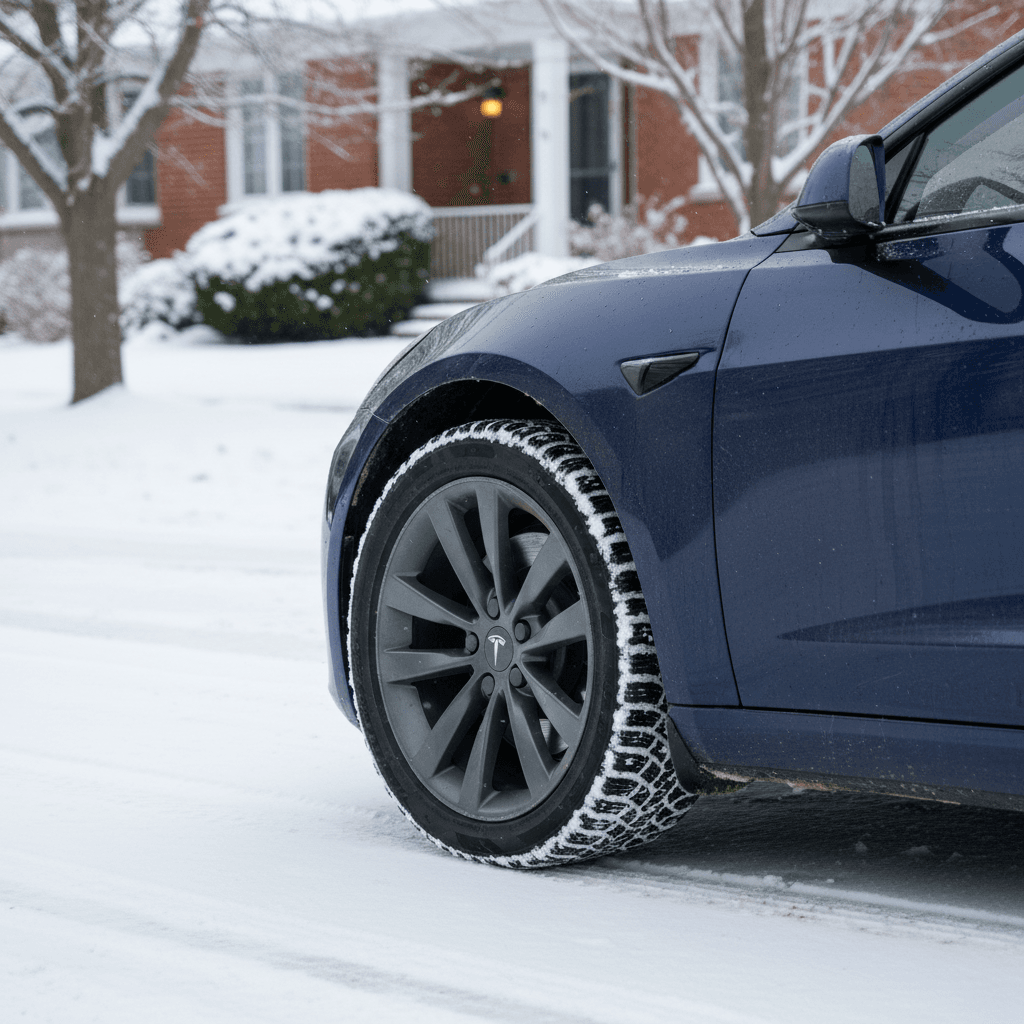
The single biggest upgrade: winter tires and wheels
If you remember one thing from this guide, make it this: tires matter more than drivetrain for winter traction. A RWD Model 3 on quality winter tires will usually out‑perform an AWD Model 3 on worn all‑seasons or summers in snow and ice.
Tire choices for Tesla Model 3 winter driving
How different tire types change your Model 3’s personality in snow and on ice.
| Tire type | Best for | Snow traction | Ice traction | Ride & noise | Notes |
|---|---|---|---|---|---|
| Dedicated winter (3PMSF) | Regions with real winter (regular snow/ice) | Excellent | Good–Excellent | Softer, a bit noisier | Look for models like Michelin X‑Ice Snow, Nokian Hakkapeliitta, Falken Winterpeak and similar. |
| All‑weather (3PMSF) | Mixed climates, light snow | Good | Fair–Good | Balanced | Better than standard all‑season in cold; not as strong as a true winter tire on ice. |
| All‑season (M+S only) | Mild climates, rare snow | Fair at best | Poor | Quiet, efficient | Acceptable for slush and light snow if you drive carefully; weak on ice and in prolonged cold. |
| Summer / performance | Dry and wet above ~45°F | Terrible | Terrible | Sporty, quiet in summer | Not winter‑safe. Rubber compound hardens in the cold and traction falls off a cliff. Replace or store them for winter. |
When in doubt, choose a dedicated winter set on separate wheels and swap them seasonally.
Never “just try it” on summer tires
Checklist for choosing winter tires for your Model 3
1. Look for the 3PMSF symbol
The Three‑Peak Mountain Snowflake symbol on the sidewall tells you the tire meets a tested winter‑traction standard. Don’t rely on “M+S” alone if you see regular snow or ice.
2. Prioritize narrower sizes
Within what’s approved for your wheel, a slightly narrower tire can cut through snow more effectively than a very wide one. Many owners downsize width for their winter setup.
3. Decide on studded vs. studless
In most U.S. regions, <strong>studless winters</strong> (like Michelin X‑Ice Snow or Nokian Hakkapeliitta R) are the best balance of grip, comfort, and noise. Studded tires help on glare ice but are often restricted and noisy.
4. Consider a dedicated wheel set
A second set of wheels with mounted winter tires makes seasonal changes quick and protects your factory wheels from road salt and potholes. Tesla sells winter packages; so do many tire shops.
5. Check load and speed ratings
Make sure the new tires meet or exceed the Model 3’s load index and speed rating. Your installer or an EV‑savvy retailer can confirm fitment.
Ground clearance and deep snow limits
Tesla lists Model 3 ground clearance at roughly 5.4–5.5 inches, depending on year and trim. That’s lower than most compact crossovers and a world away from a pickup or dedicated off‑road SUV. In practice, that means the Model 3 is excellent on plowed but messy roads, and out of its element as an unplowed snow‑machine.
- Plowed city streets and highways with 1–3 inches of loose snow: usually fine on winter tires.
- Rutted neighborhood streets with 4–6 inches of heavy snow: possible, but you risk high‑centering and packing snow into the front bumper and underbody.
- Unplowed roads, deep drifts, or icy two‑track lanes: this is where a higher‑riding SUV or truck genuinely has an advantage.
Watch for the “hidden plow” effect
Tesla features that help in snow and on ice
Tesla quietly bakes a lot of winter capability into the Model 3. Some of it is obvious, heated seats, fast defrost. Some of it lives in menus, and many owners never fully exploit it. If you’re trying to make your Model 3 the best it can be in snow and ice, you should know about these features.
Built‑in tools that make winter easier
Use the software as well as the hardware
Preconditioning & defrost
Using the app to preheat the cabin also warms the battery. That improves traction and reduces how much regen braking is limited when you first drive off in the cold.
Use the dedicated defrost mode before scraping; it melts ice on the windshield and softens snow on the wipers and cowl.
Drive modes & regen
Chill mode softens throttle response, which makes it easier to roll on power smoothly on slick surfaces.
If the car allows, reducing regen or using “Low” regen can prevent abrupt weight transfer when you lift off the accelerator on ice.
Traction control & Slip Start
The Model 3’s default traction control works in the background, braking individual wheels and dialing back torque when they slip.
Slip Start lets the wheels spin more than normal to help you rock out of deep snow or get moving on an icy incline. Turn it off again once you’re unstuck.
Heat pump & seat heaters
Later Model 3s use a heat pump to warm the cabin more efficiently in winter, which helps range. Regardless of year, use seat and wheel heaters first to stay comfortable with a slightly lower cabin setpoint.
Use software to avoid the worst of winter
How to drive your Model 3 on snow and ice
Even the best hardware and tires can’t fully compensate for poor technique. The good news is that the Model 3’s smooth, instant torque and one‑pedal driving can actually make winter driving easier, if you adapt a bit.
Practical driving tips for snow and ice
1. Slow your inputs way down
Steering, throttle, and braking should all be smoother and earlier than in dry conditions. Use the Model 3’s precise pedal feel to your advantage, roll into power and ease off slowly rather than jabbing at controls.
2. Increase following distance
Give yourself much more space than usual, especially behind taller vehicles that can hide ice patches and slush ridges. Remember: the car can accelerate impressively in the snow, but stopping distances are still limited by friction.
3. Use Chill mode in bad conditions
Chill mode reduces how sharply power comes in when you press the accelerator, making it easier to avoid accidentally overwhelming available grip on takeoff or during a pass.
4. Be gentle with regen on ice
If your car allows it, use lower regenerative braking in very slick conditions. Sudden, strong regen can unsettle the car just like slamming the brake pedal. If you feel the rear start to step out when you lift, back off the regen setting.
5. Reserve Slip Start for getting unstuck
Slip Start is designed for moments when you’re bogged down, not for normal driving. Turn it on to rock out of a parking spot or up a slick driveway, then turn it off once you’re moving steadily.
6. Know when to park it
If local authorities are warning about blizzard conditions or you can’t see pavement anywhere on your route, no software update makes a low‑slung sedan the right tool. Sometimes the best winter driving decision is to stay home or borrow something taller.
Shopping for a used Model 3 for winter driving
If you’re considering a used Tesla Model 3 specifically for winter duty, you’ll want to look beyond paint color and Autopilot packages. The right combination of drivetrain, wheels, and battery health will make far more difference in January than a perfectly optioned interior.
Winter‑focused used Model 3 checklist
What to prioritize when you live with real winters
1. Prioritize AWD if budget allows
Dual Motor or Long Range AWD trims provide more traction margin and confidence on hills and unplowed ramps. If you regularly drive in heavy snow regions or mountainous areas, it’s worth the price premium over RWD.
2. Ask about wheel and tire packages
Many owners keep a dedicated winter wheel/tire set. If you can buy the car with those included, you save hundreds of dollars and start winter‑ready from day one.
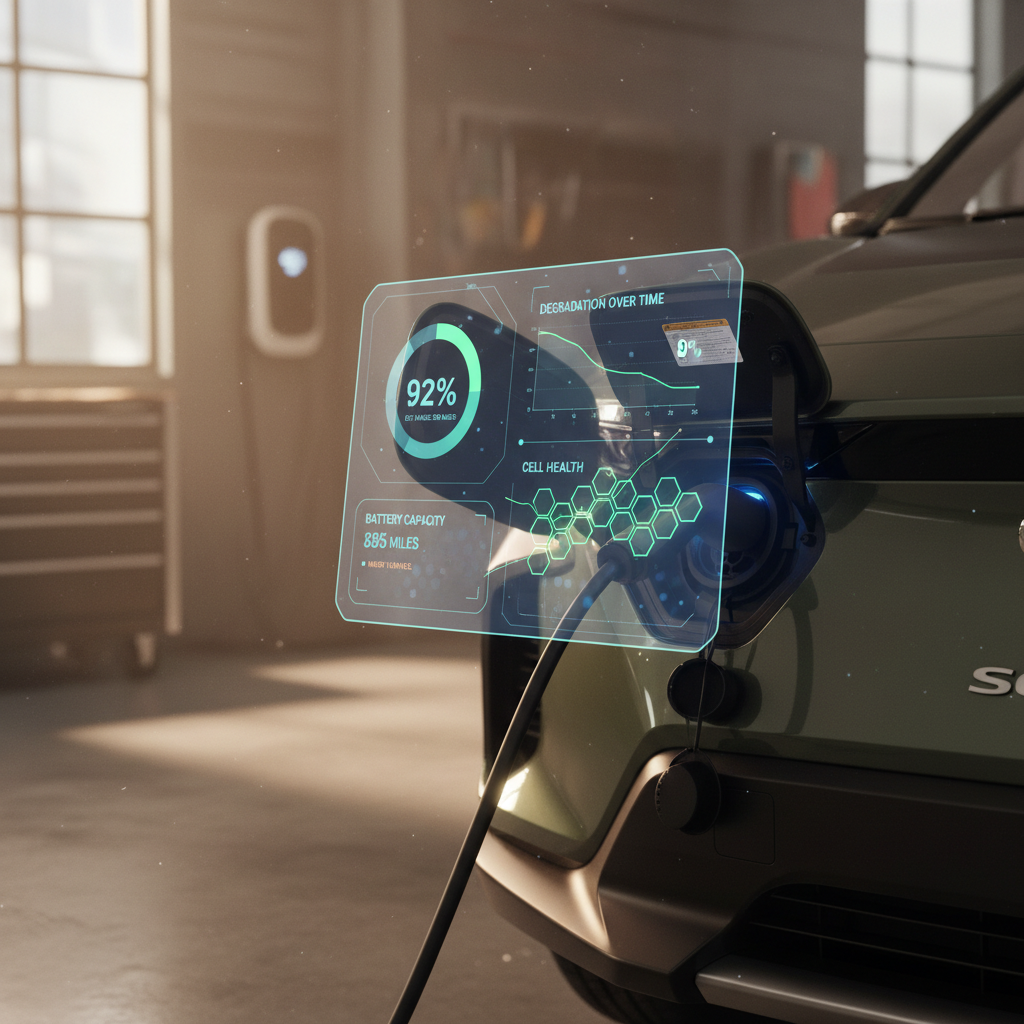
3. Check battery health and cold behavior
Cold weather exposes weak batteries, range drops faster and fast‑charging slows down. A Recharged Score battery health report can tell you how the pack is holding up before you commit, and our specialists can explain what that means for winter use.
How Recharged can help
Ready to find your next EV?
Browse VehiclesIf you’re trading out of a gas SUV or sedan, Recharged can also provide an instant offer or consignment options for your current vehicle, making it easier to switch into a winter‑ready Model 3 before the next storm cycle hits.
Tesla Model 3 winter FAQ
Frequently asked questions about the Model 3 in snow and ice
Bottom line: can a Model 3 be a true winter car?
Set up properly, a Tesla Model 3 can absolutely be a true winter car. Its low center of gravity, quick traction control, and precise throttle response make it an unexpectedly competent snow tool, especially in Dual Motor form. But it’s not magic: low ground clearance and the wrong tires can still turn it into a snowplow or a curling stone.
If your winters look like slushy commutes on plowed roads with the occasional storm, a Model 3 with AWD and real winter tires will likely impress you more than many traditional sedans and crossovers. If your reality is unplowed mountain passes and foot‑deep drifts, you may want the extra clearance of something taller. Either way, if you’re considering a used EV, Recharged can help you match the right Model 3, or another EV entirely, to the winters you actually drive through, not the one in the brochure.