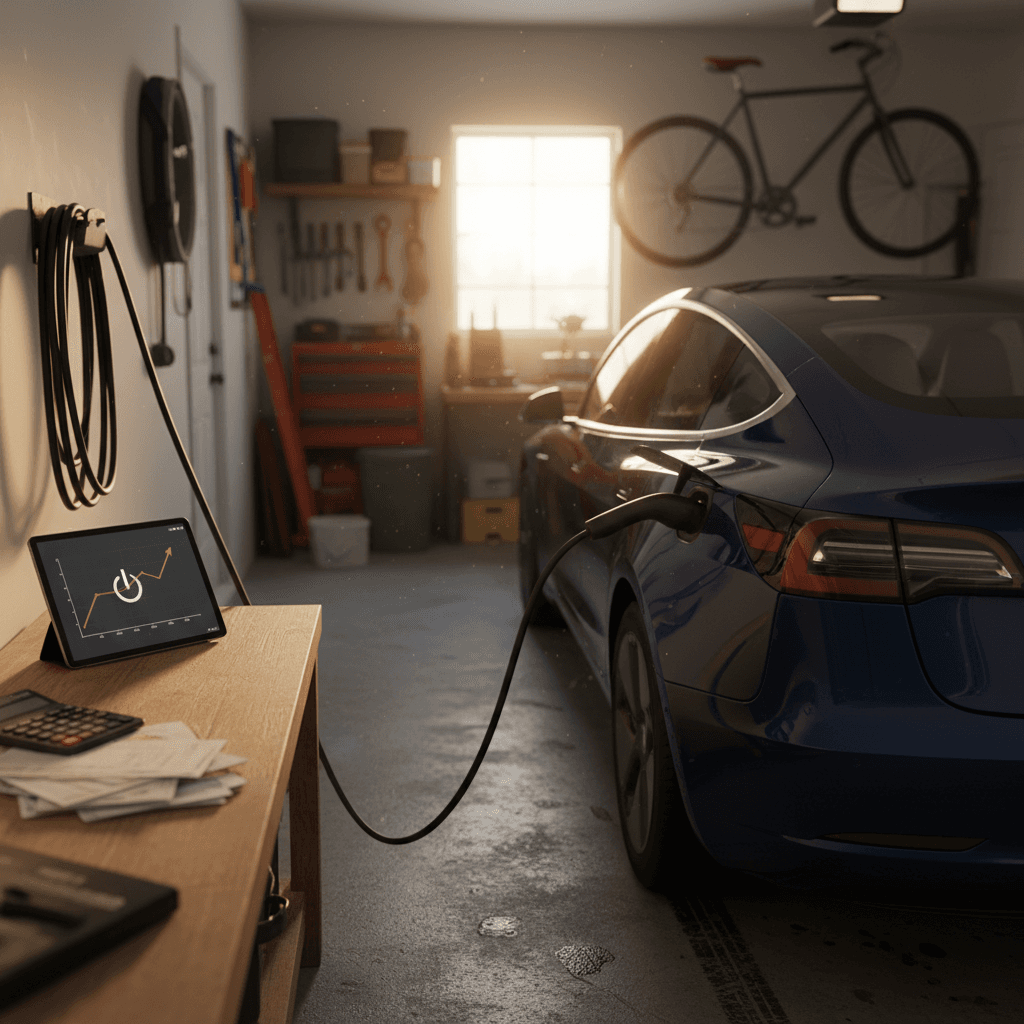
When you ask, “How much does it cost to own a Tesla Model 3 per year?” you’re really asking about far more than just charging. To get a realistic answer, you have to add up insurance, maintenance, registration, taxes, depreciation, and, if you finance, the cost of money. This guide walks through each piece so you can estimate your own yearly cost with confidence.
At-a-glance answer
Why Tesla Model 3 ownership costs matter
Sticker price is only one part of what you’ll pay for a Tesla Model 3. Over several years, fuel savings, low maintenance, and resale value can make a Model 3 cheaper to own than a comparable gas car, even if the upfront price is higher. Understanding yearly costs helps you decide whether a new or used Model 3 fits your budget and how long you should plan to keep it.
The 6 main pieces of Tesla Model 3 yearly cost
You need all six to see the full picture
1. Depreciation
2. Charging
3. Insurance
4. Maintenance & repairs
5. Taxes & fees
6. Financing costs
Quick answer: How much does it cost per year?
Typical yearly Tesla Model 3 cost ranges (U.S.)
Those ranges bundle **every major cost**: depreciation, energy, insurance, maintenance, fees, and financing. Your number may sit below or above them depending on where you live, how you drive, and whether you buy new or used, but they’re a solid starting point for planning.
Important context
Key variables that change your annual cost
- Miles driven per year (a 20,000‑mile commuter will spend much more on charging and depreciation than a 6,000‑mile driver).
- Your electricity rate and how often you use DC fast charging or Superchargers instead of cheap home charging.
- Insurance factors like your driving record, credit, age, and ZIP code.
- Whether you buy new or used, and what you pay versus market value.
- How long you keep the car (spreading depreciation and one‑time fees over more years lowers annual cost).
- Whether you pay cash, finance, or lease, and at what interest rate.
Pro tip for accurate budgeting
Charging cost per year vs gas
For many owners, fuel savings are the biggest reason a Tesla Model 3 is cheaper to own than a comparable gas sedan. Let’s walk through simple, realistic math you can adapt to your situation.
Example: Annual charging cost for 12,000 miles
Assumes a Model 3 averaging 4 miles per kWh over a year.
| Scenario | Miles/year | Efficiency | kWh needed | Price/kWh | Annual energy cost |
|---|---|---|---|---|---|
| Home charging, typical U.S. rate | 12,000 | 4 mi/kWh | 3,000 | $0.15 | $450 |
| Home charging, higher‑cost market | 12,000 | 4 mi/kWh | 3,000 | $0.25 | $750 |
| Mix of home + some Supercharging | 12,000 | 3.6 mi/kWh | 3,333 | Blended ~$0.20 | ~$670 |
Your actual numbers will vary with driving style, climate, and electricity prices, but the structure stays the same.
For comparison, a gas sedan getting 30 mpg driving 12,000 miles at $3.50 per gallon burns 400 gallons per year, **about $1,400 in fuel**. In that scenario, a Model 3 might save you roughly **$700–$950 per year** in energy alone.
Public charging caveat
Tesla Model 3 insurance cost per year
Insurance is one of the most variable costs in Model 3 ownership. In many U.S. markets, drivers see **annual premiums in roughly the $1,200–$2,000 range**. Younger drivers, urban areas, and states with high medical or litigation costs can easily push above that band.
What pushes insurance higher
- Being under 25 or having limited driving history.
- Accidents, tickets, or claims on your record.
- Living in dense urban areas with more theft or collisions.
- Opting for low deductibles and high coverage limits.
- Choosing newer, higher‑value Performance or Long Range trims.
What can lower your premium
- Clean driving record and good credit (in states where allowed).
- Higher deductibles if you have emergency savings.
- Shopping multiple carriers, including EV‑friendly insurers.
- Using telematics or "safe driver" programs when available.
- Owning instead of leasing (some insurers price these differently).
Shop insurance before you buy
Maintenance and repairs per year
One of the Model 3’s biggest advantages over gas cars is low routine maintenance. There’s no engine oil, timing belt, spark plugs, or exhaust system to service. Still, you should budget for **tires, brake fluid, cabin filters, and the occasional repair**.
Typical Tesla Model 3 maintenance items
Approximate ranges for planning; local pricing will vary.
| Item | Typical interval | Approx. cost | Average per year |
|---|---|---|---|
| Tires (set of 4) | 30k–40k miles | $800–$1,200 | $200–$300 |
| Cabin air filter | 2 years | $75–$150 | $40–$75 |
| Brake fluid check / service | 2–3 years | $100–$200 | $40–$80 |
| Wiper blades, washer fluid | As needed | $40–$80 | $20–$40 |
| Unexpected repairs | Varies | Highly variable | Plan $200–$400 |
Spread across years, these translate into a few hundred dollars per year for many owners.
Add that up and a reasonable planning number for a **well‑cared‑for Model 3** is often around **$400–$800 per year** for maintenance and small repairs, averaged over several years. In years when you buy tires, you’ll be at the high end of that range; other years will be much lower.
Good news vs gas cars
Registration, taxes, and EV fees
Your state decides how painful this category feels. Some states charge **standard registration fees**; others add **EV‑specific surcharges** to make up for lost gas‑tax revenue. A few also assess **annual personal property tax** on vehicles based on value.
- Standard registration: commonly $100–$300 per year depending on state and vehicle value.
- EV surcharge: some states add $100–$250 per year for battery‑electric vehicles.
- Property tax (select states): may run a few hundred dollars per year on a newer Model 3; much less on older, lower‑value cars.
Don’t forget one‑time sales tax
Depreciation: how much value you lose each year
Depreciation, how much your Model 3 drops in value over time, is usually the **single biggest cost of ownership**, especially for the first owner of a new car. The Tesla market has been volatile in recent years, but some patterns are clear.
Typical Tesla Model 3 depreciation patterns
Broad examples to help you budget, not precise forecasts
New Model 3, first 3–4 years
Used Model 3, years 4–8
Why does this matter for yearly cost? If you buy a $40,000 new Model 3 and it’s worth $24,000 five years later, you’ve “spent” $16,000 in depreciation, **about $3,200 per year**, even if your loan is paid on time. With a $27,000 used Model 3 that’s worth $15,000 five years later, you’ve spent $12,000, or **$2,400 per year**.
Use used‑car pricing as your guide
Financing payments and interest
If you pay cash, financing costs are simple: $0. If you finance, interest adds a real, but often misunderstood, layer to your yearly cost.
Example: Simple financing scenarios
Approximate numbers for illustration; your actual offer will depend on credit, income, and lender.
| Scenario | Purchase price | Down payment | APR | Term | Monthly payment (approx.) | Interest paid over term |
|---|---|---|---|---|---|---|
| New Model 3, moderate down | $40,000 | $4,000 (10%) | 6% | 72 months | ~$580 | ~$6,800 |
| Used Model 3, similar total | $28,000 | $3,000 (~11%) | 7% | 72 months | ~$410 | ~$5,000 |
Principal is part of your payment but not a "cost" long‑term, because it becomes equity in the car.
Spread those interest totals over six years and you’re looking at roughly **$800–$1,100 per year** in financing cost for many buyers, on top of principal. Shorter terms or lower rates reduce that number; longer terms or higher rates increase it.
Where Recharged can help
Real‑world example scenarios
Let’s put everything together. These examples use ballpark numbers meant to help you reason about cost; plug in your own details for a personalized estimate.
Scenario A vs Scenario B
Scenario A: New Model 3, typical buyer
• Purchase price: $40,000 • Down payment: $4,000, 6‑year loan at 6% • Miles per year: 12,000 • Mostly home charging at $0.15/kWh Approximate yearly cost: - Depreciation: ~$3,000–$3,500 - Charging: ~$450–$700 - Insurance: ~$1,500–$2,000 - Maintenance/repairs: ~$500–$800 - Registration/taxes/fees (amortized): ~$700–$1,000 - Financing interest: ~$1,000–$1,200 <strong>Total estimated yearly cost: roughly $7,000–$9,200.</strong>
Scenario B: 4‑year‑old used Model 3
• Purchase price: $27,000 • Down payment: $3,000, 6‑year loan at 7% • Miles per year: 12,000 • Same charging assumptions as Scenario A Approximate yearly cost: - Depreciation: ~$2,200–$2,600 - Charging: ~$450–$700 - Insurance: ~$1,300–$1,800 - Maintenance/repairs: ~$600–$900 (older tires, etc.) - Registration/taxes/fees: ~$500–$800 - Financing interest: ~$800–$1,000 <strong>Total estimated yearly cost: roughly $5,800–$7,800.</strong>
Why many shoppers choose used
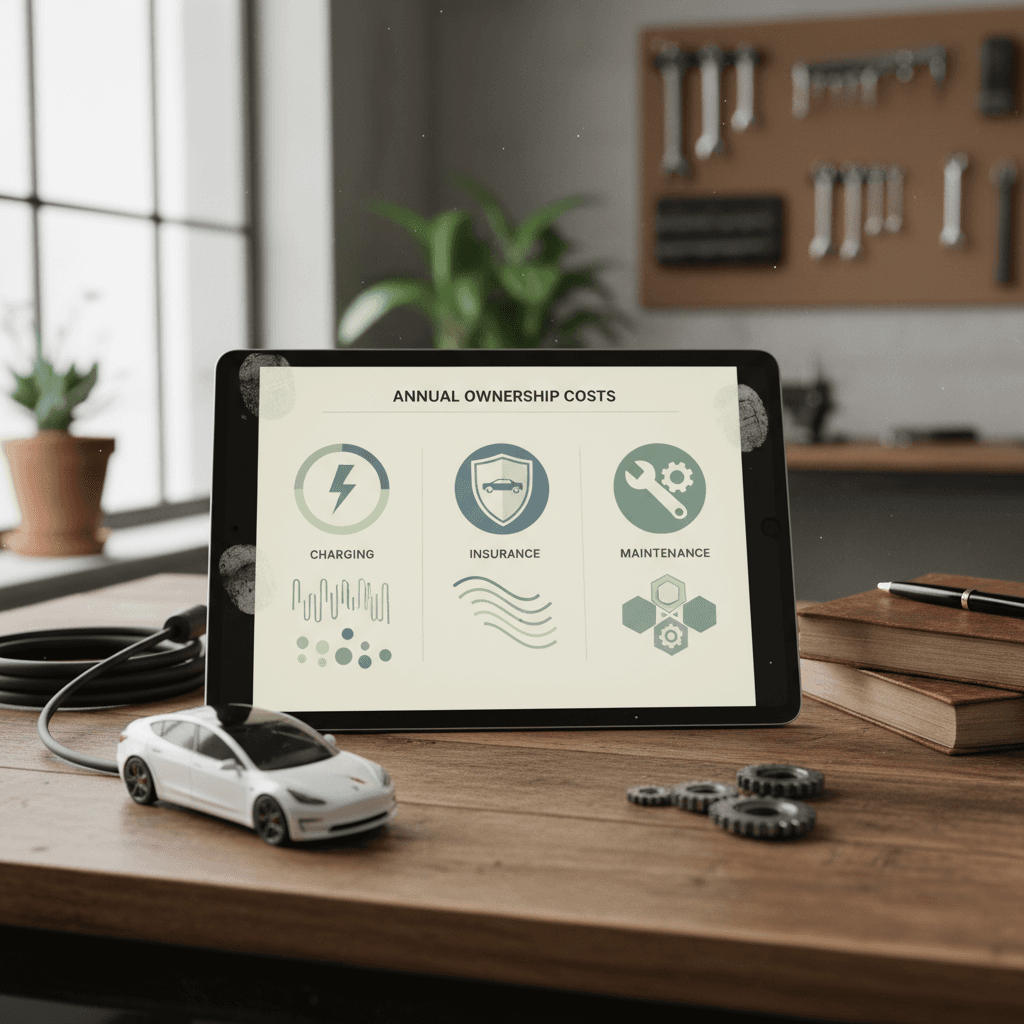
How buying a used Model 3 changes your yearly cost
Buying used deserves its own look because it changes several parts of the annual‑cost equation at once, mostly in your favor.
Advantages of a used Model 3
- Lower depreciation: The steepest drop has already happened, so your yearly value loss is gentler.
- Smaller loan: Lower purchase price means lower principal and often lower interest cost per year.
- Lower taxes and fees: Sales tax and some registration fees are tied to vehicle value.
- Similar driving experience: Even older Model 3s still deliver strong performance and modern tech.
Trade‑offs to consider
- Battery and range: You’ll want objective data on battery health and real‑world range.
- Warranty coverage: Factory coverage may be shorter or expired, especially for bumper‑to‑bumper items.
- Wear items: Tires, suspension, and interior show more use; budget a bit more for maintenance.
How Recharged can derisk a used Tesla
Ways to lower your Tesla Model 3 annual ownership cost
Practical levers to reduce yearly cost
Small decisions can add up to thousands over time
Maximize home charging
Right‑size the loan
Buy condition, not just mileage
Shop insurance smartly
Stay ahead on maintenance
Plan road trips efficiently
FAQ: Tesla Model 3 annual ownership cost
Frequently asked questions
Bottom line: Is a Tesla Model 3 worth it for you?
When you add everything up, **owning a Tesla Model 3 typically costs less per year than owning a similarly quick, similarly priced gas sedan**, especially if you drive average or above‑average miles and can charge at home. The key is buying at the right price, understanding your financing, and having realistic expectations about insurance and fees.
If you want the benefits of an EV without absorbing the steepest early‑year depreciation, a **well‑chosen used Model 3** can be a particularly smart play. That’s where a marketplace built specifically for used EVs, like Recharged, can make a real difference, giving you verified battery health, fair‑market pricing, and expert guidance from search to delivery so your yearly cost looks as good on paper as the car does in your driveway.