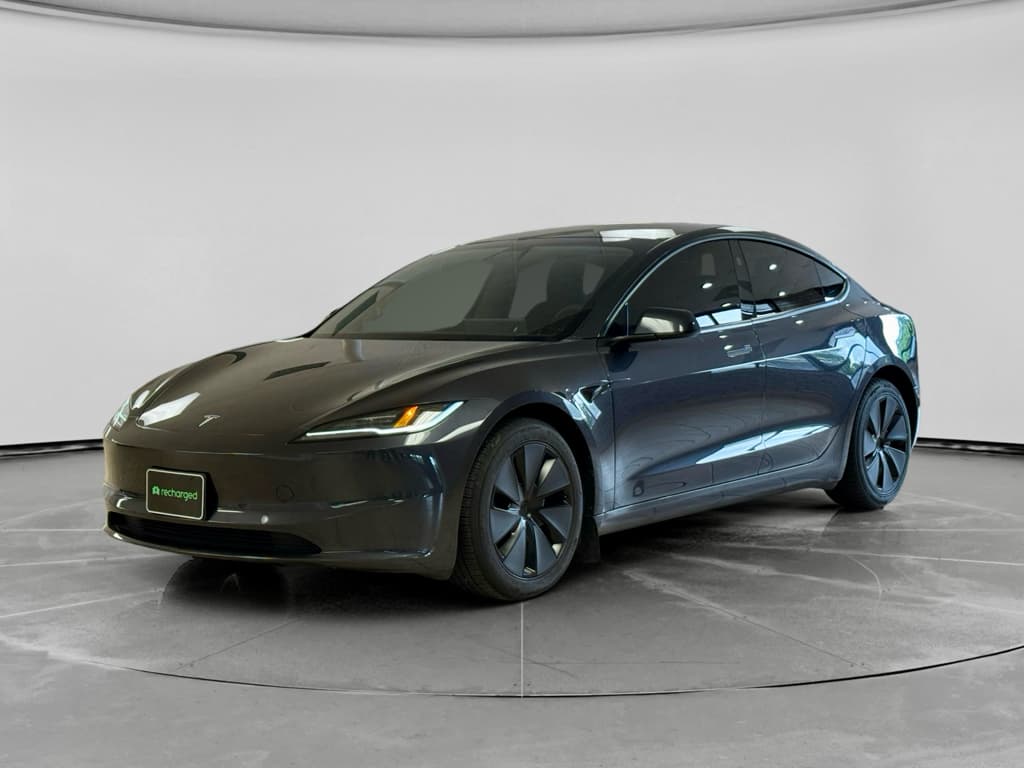
If you’re shopping used, the phrase “Tesla Model 3 100,000 mile review” is really a single question in disguise: did this thing age like a MacBook…or a Galaxy Note left in the sun? At six figures on the odometer, the Model 3 finally has enough miles to answer the EV skeptic’s favorite fear, battery death, surprise repair bills, and that creeping sense you just bought someone else’s science experiment.
The short version
Why a 100,000-Mile Tesla Model 3 Matters
In EV years, 100,000 miles used to sound like the cliff edge. Early shoppers worried that, at this mileage, the battery would be a withered husk destined for a five‑figure replacement. Real‑world data from Tesla and third‑party trackers tells a different story: modern Tesla packs are engineered to last well past 200,000 miles, with many Model 3s retaining around 88–92% of original capacity at 100,000 miles and roughly 85–90% at 200,000 miles.
Tesla Model 3 at 100,000 Miles: By the Numbers
So the 100,000‑mile Model 3 is a kind of stress test for EV adulthood. If the car still drives tightly, the screens all light up, and the battery is behaving, you’re looking at one of the most abuse‑resistant commuter appliances of the last decade. If it doesn’t, you’ve just found out why a given car is thousands cheaper than the others.
Tesla Model 3 at 100,000 Miles: What Owners Report
Common 100,000-Mile Owner Themes
Patterns that show up again and again in long-term reports
The drivetrain just works
Suspension gets tired first
Software keeps it modern
Anecdotal reports cluster around the same story: the Model 3 ages more like consumer electronics than like a German sport sedan. The drivetrain and battery mostly hum along in the background; the big variables are how hard the owner has been on tires, suspension, and that delicate ballet between fast‑charging convenience and long‑term battery health.
High-mileage doesn’t mean high drama
Battery Health & Range at 100,000 Miles
Let’s start with the fear that keeps people up at night. Real‑world data sets from Tesla‑focused analysts and owner communities show the Model 3 typically loses around 8–12% of its usable capacity by 100,000 miles. That means a Long Range car that was rated around 358 miles new often displays somewhere in the neighborhood of 315–330 miles at a 100% charge once it’s crossed into six‑figure mileage.
Approximate Model 3 Range vs. Mileage
Typical real‑world pattern for a Long Range Model 3 with reasonable charging habits.
| Odometer | Estimated Capacity Left | Typical 100% Rated Range (LR) | Owner Experience |
|---|---|---|---|
| New | 100% | ~350–360 mi | Advertised range on showroom day. |
| 50,000 miles | ~92–95% | ~330–340 mi | Early drop has mostly happened; curve flattens. |
| 100,000 miles | ~88–92% | ~315–330 mi | Still strong enough for most road trips with one extra stop. |
| 200,000 miles | ~85–90% | ~305–322 mi | Many taxis and high‑milers operate in this band without pack replacement. |
Actual range will vary with climate, driving style, software version, and wheel/tire choice.
Of course, the internet is full of outliers. Some owners see only 6–8% loss at 100k. Others, who fast‑charge constantly or live in desert heat, report 12% or a bit more. What matters when you’re shopping is not the average curve; it’s this specific car’s spot on the graph.
Three battery red flags at 100k
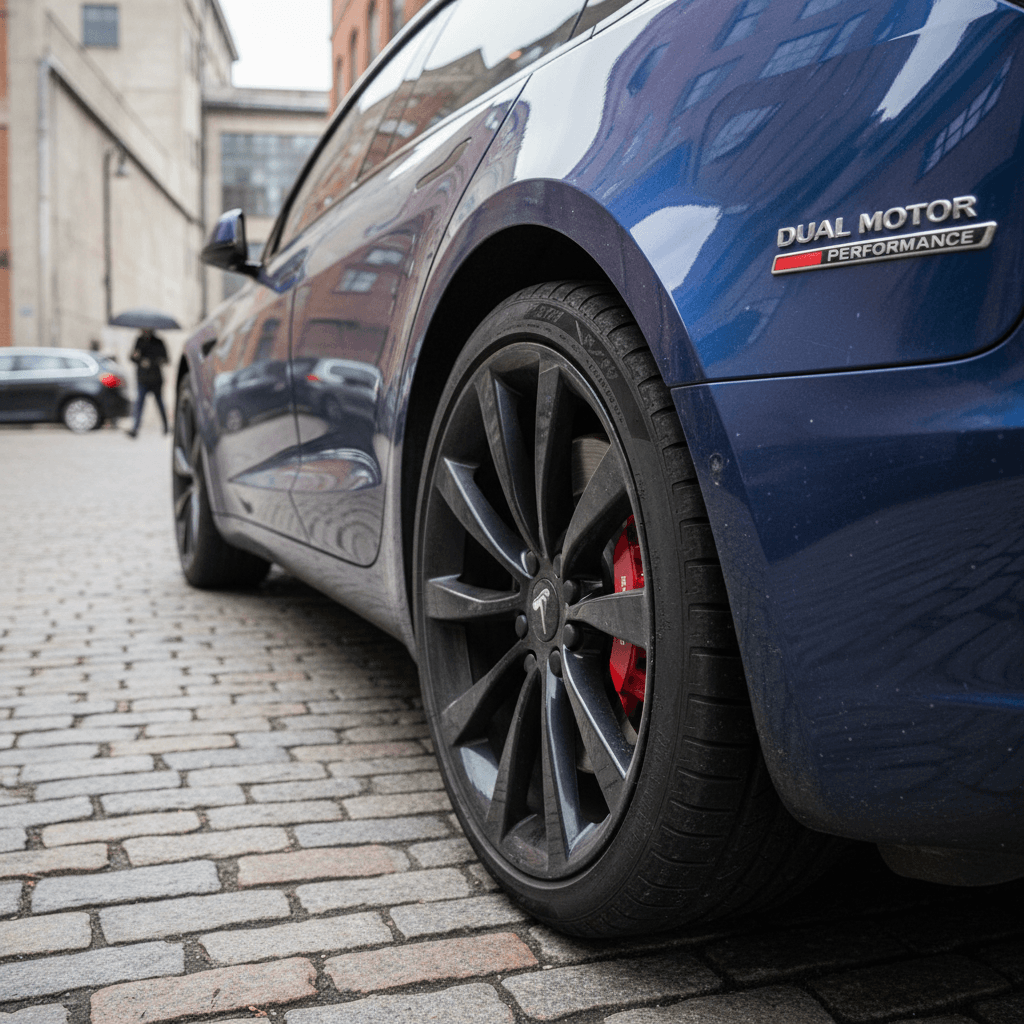
Running Costs & Maintenance Through 100,000 Miles
Here’s where the Model 3 quietly destroys the old‑school sports sedan. There’s no oil to change, no transmission to service, no timing chain to stretch itself into a $3,000 headache. Routine costs are shockingly ordinary: tires, cabin filters, brake fluid, and the occasional suspension bit when the roads have been particularly…American.
What 100,000 Miles Typically Costs
Typical Maintenance Items by 100k
- Tires: Every 20–30k miles if rotated; Performance models can eat them faster.
- Cabin air filters: Tesla recommends every 2 years; many owners stretch to 3–4.
- Brake fluid check/flush: Periodic checks; pads can last well past 100k thanks to regen.
- Wiper blades, washer fluid, key fob batteries: The boring, cheap stuff.
Possible Extra Costs
- Suspension work: Front control arms or bushings if you hear clunks or feel looseness.
- MCU/screen issues: Rare on Model 3 vs early Model S/X, but worth testing.
- Glass & trim: Rock chips, wind noise, or squeaks are usage‑dependent, not endemic.
- Out‑of‑warranty fixes: Once you’re past the 4‑year/50k basic warranty, budget a cushion.
Use the odometer, not the calendar
What Actually Breaks by 100,000 Miles
The Model 3’s party trick is what doesn’t break, no head gaskets, no turbochargers, no eight‑speed automatics hunting for a gear. But it isn’t invincible. At 100k, the weak links usually live at the corners of the car and in the small hardware rather than the sexy stuff under the floor.
Common 100k-Mile Wear Points
Not guaranteed failures, but frequent flyers
Control arms & bushings
Charge port & seals
12V/low-voltage battery
Walk away from these signs
How a 100k-Mile Model 3 Drives and Feels
The most surprising thing about a well‑kept 100,000‑mile Model 3 is how un‑dramatic it is. The instant torque is still there; the steering is still sharp, lightly weighted, and just a bit video‑gamey; the cabin is still a Scandinavian Airbnb with seatbelts. You’re far more likely to notice small things, some wind noise that wasn’t there new, a door seal that’s relaxed, a bit of play in the suspension, than any loss of personality.
- Road noise will usually be higher than new, especially if it’s on cheaper replacement tires.
- The suspension may feel a touch floaty on rebound; that’s your clue to look closely at shocks and bushings.
- Interior wear tends to concentrate on driver’s seat bolsters, steering wheel finish, and center console trim.
- The big center screen should be responsive, bright, and free of ghosting or image retention.
“The best compliment I can give the Model 3 at 100,000 miles is that it still feels like a modern car, not a relic. Software did as much heavy lifting as hardware.”
Is a High-Mileage Tesla Model 3 Worth Buying?
The used market has finally filled with former lease cars, ride‑share workhorses, and ex‑commuter Model 3s. As of 2025, U.S. pricing for earlier‑build Model 3s often starts under $20,000 for higher‑mile examples, slotting them into the same price band as tired German sedans with twice the appetite for repairs.
High-Mile Model 3 vs. Comparable Gas Sedan
Broad-strokes comparison for someone cross‑shopping a 100k‑mile Tesla vs. a 100k‑mile BMW 3 Series or Audi A4.
| Factor | 100k-Mile Tesla Model 3 | 100k-Mile German Sport Sedan |
|---|---|---|
| Fuel/energy costs (next 50k mi) | Much lower; home charging can cut energy spend by thousands | High, especially if premium fuel required |
| Routine maintenance | Low; mostly tires, filters, occasional suspension work | Moderate to high; fluids, belts, more complex powertrain |
| Major powertrain risk | Battery pack expensive but statistically robust at this mileage | Turbo, transmission, emissions bits all expensive and failure‑prone |
| Software/tech age | Still modern via updates; UI feels current | Infotainment often feels dated, limited updates |
| Resale outlook | Demand for used EVs is growing; depreciation has already done its worst | Depreciation curve flattens but tech feels old fast |
Numbers are directional, not quotes, always get real offers and service estimates for your situation.
Who a 100k Model 3 is perfect for
How to Inspect a 100,000-Mile Model 3
100,000-Mile Model 3 Buying Checklist
1. Pull a real battery health report
Do not rely on the little range estimate alone. Ask for a third‑party battery test or a detailed report like the <strong>Recharged Score</strong>, which reads pack health and charging history far beyond what’s visible on the dash.
2. Check charging history & habits
Ask where and how it was charged. A life on home Level 2 at ~70–80% is ideal. A car that lived on Superchargers at 100% deserves a discount and a tougher inspection.
3. Listen for suspension clunks
On the test drive, find a rough road and listen carefully over bumps and at low speeds. Knocking or looseness is your hint that control arms or bushings are ready for retirement.
4. Inspect tires evenly
Uneven wear can signal alignment issues or a history of curb hits. On a powerful rear‑drive or Performance model, bald rear tires aren’t character; they’re a bill coming due.
5. Test every door, window, and trunk
High‑mile cars show their age in the small hardware. Make sure the power trunk, door handles, windows, and charge port all operate smoothly and consistently.
6. Scan for error messages
Before and after the test drive, look for warnings related to battery, drive unit, or high‑voltage systems. Anything persistent here warrants a professional EV mechanic’s opinion.
Bring a specialist, not just a flashlight
Recharged Score: Why Battery Diagnostics Matter
On a gasoline car, 100,000 miles mostly raises questions about mechanical wear. On a Tesla Model 3, the decisive question is simpler and more expensive: how healthy is the high‑voltage battery? Replace that pack out of warranty and you’re staring at a bill somewhere in the mid‑four to low‑five figures, depending on parts pricing at the time. That’s exactly why Recharged builds battery health into the shopping experience instead of leaving it up to guesswork.
What the Recharged Score Tells You on a High-Mile Model 3
More than a Carfax, less than a voltmeter in your hand all day
Verified pack health
Charging behavior history
Fair pricing vs. battery state
Ready to find your next EV?
Browse VehiclesBecause every Recharged vehicle comes with this kind of transparency, plus expert EV support, financing options, trade‑in or consignment, and nationwide delivery, you’re not rolling the dice on the single most expensive component in the car. You’re making an informed bet.
FAQ: Tesla Model 3 100,000-Mile Ownership
Common Questions About 100k-Mile Model 3s
Verdict: Should You Bet on a 100k-Mile Model 3?
A 100,000‑mile Tesla Model 3 is not a ticking time bomb; it’s a litmus test. It tells you how the previous owner treated their battery, whether they believed in tire rotations, and how many of their problems they solved with a Supercharger instead of a Level 2 in the garage. Get a car with honest, well‑documented history and a strong battery report and you’re looking at a remarkably modern, efficient commuter with the running costs of an economy car and the acceleration of a junior sports sedan.
If, on the other hand, the seller can’t explain the service history, the battery numbers don’t add up, and the suspension sounds like a drum circle over every pothole, keep walking. The used EV market is finally broad enough that you can afford to be picky. And if you’d rather skip the detective work entirely, buy through a platform like Recharged, where every used EV, including high‑mile Model 3s, comes with a Recharged Score battery health report, fair‑market pricing, expert EV guidance, and the option to finance, trade‑in, or have your car delivered to your driveway.