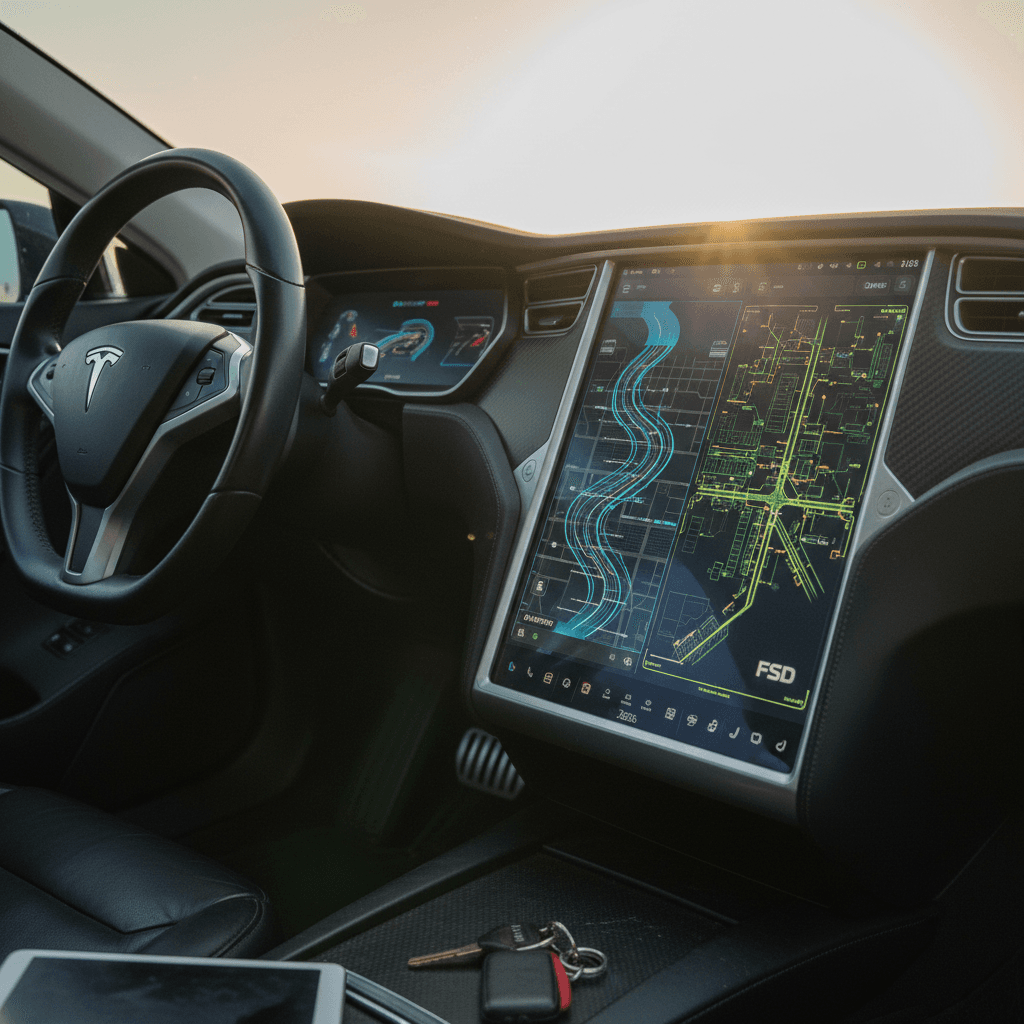
If you’ve spent any time shopping for a Tesla, especially a used one, you’ve seen a blizzard of terms: Autopilot, Enhanced Autopilot, Full Self‑Driving (FSD)FSD (Supervised). The differences between Tesla FSD vs Autopilot have always been a little murky, and 2026 brought another big twist: new Teslas in North America no longer include traditional Autopilot at all, only basic cruise control with following distance.
One important note before we dive in
Why Tesla FSD vs Autopilot Is So Confusing in 2026
Part of the confusion is history. Since 2014, Tesla has regularly shuffled its driver‑assist packages, adding features, renaming them, and moving them between tiers. What was included in “Autopilot” on a 2018 Model S is not the same as a 2022 Model 3, and it’s different again for a 2024 or 2026 car. On top of that, Tesla is mid‑pivot from selling features outright to a software‑subscription model, which matters a lot if you’re shopping used.
So when you’re comparing Tesla FSD vs Autopilot, you really need to answer three questions: what features are included, how you pay for them, and what hardware is on the car. We’ll tackle each of those in turn, and then translate it into clear advice for used‑Tesla buyers.
Tesla driver-assist by the numbers (context for 2026)
Quick Overview: Tesla Driver-Assist Options at a Glance
To keep the alphabet soup straight, here’s how Tesla’s main driver‑assist options line up conceptually. The details have changed over the years, but the basic ladder looks like this:
Tesla’s three main driver-assist tiers
Exact names and availability vary by model year, but the roles are consistent.
1. Basic Autopilot / TACC
What it usually includes:
- Traffic‑Aware Cruise Control (TACC) – maintains speed and following distance
- Sometimes basic Autosteer lane‑keeping on highways (older cars)
Think of this as smart cruise control with gentle lane centering.
2. Enhanced Autopilot (EAP)
Builds on Autopilot with:
- Navigate on Autopilot (highway on‑ramp to off‑ramp guidance)
- Automatic lane changes
- Autopark (parallel and perpendicular)
- Summon / Smart Summon in parking lots
Highway‑focused convenience, plus parking tricks.
3. Full Self‑Driving (FSD / FSD Supervised)
Everything in EAP, plus:
- Autosteer on city streets
- Traffic light and stop sign control
- More aggressive path planning in complex environments
Ambitious, but still requires your hands on the wheel and eyes on the road.
Model-year clue
Feature Breakdown: FSD vs Autopilot vs Enhanced Autopilot
Let’s zoom in on the real‑world difference between these packages. This table focuses on North American cars, where Tesla has offered the broadest feature set.
Tesla Autopilot vs Enhanced Autopilot vs FSD (typical feature set)
Details can vary by software version and region, but this captures how most U.S. owners experience each tier.
| Feature / Capability | Basic Autopilot or TACC | Enhanced Autopilot (EAP) | Full Self-Driving (FSD / FSD Supervised) |
|---|---|---|---|
| Traffic‑Aware Cruise Control (speed + distance) | Yes | Yes | Yes |
| Autosteer (lane keeping on marked roads) | Often included; removed from most new 2026 cars | Yes | Yes |
| Navigate on Autopilot (highway on‑ramp to off‑ramp) | No | Yes | Yes |
| Automatic lane changes (driver-initiated) | No | Yes | Yes |
| Autopark (parallel & perpendicular) | No | Yes | Yes |
| Summon / Smart Summon in parking lots | No | Yes | Yes |
| Traffic light & stop sign control | No | No | Yes |
| Autosteer on city streets | No | No | Yes |
| Most advanced path planning and neural‑net updates | No | Limited | Yes (priority) |
Check the specific vehicle’s software menu to confirm what’s active, especially on used Teslas.
Names have changed, features have moved
Pricing in 2026: How Much FSD and Autopilot Really Cost
Tesla’s pricing has bounced around more than a test mule on a Belgian cobblestone road, but as of early 2026 the structure is actually simpler, at least on paper.
Key Tesla pricing facts for FSD vs Autopilot (U.S., early 2026)
1. No more standalone Autopilot on new cars
For new Tesla orders in the U.S. and Canada, Basic Autopilot (with Autosteer) has been discontinued. New cars now ship with Traffic‑Aware Cruise Control as standard, and lane‑centering is locked behind FSD (Supervised).
2. FSD (Supervised) as a subscription
Tesla’s Full Self‑Driving (Supervised) package is shifting to <strong>subscription‑only</strong>. The typical U.S. price is around <strong>$99 per month</strong> for most owners, with discounted pricing (around $49/month) for some drivers who previously purchased Enhanced Autopilot.
3. End of the one-time FSD purchase
Tesla has announced that the option to buy FSD outright, historically anywhere from $5,000 to $15,000, and most recently around $8,000 in the U.S., is ending for new buyers after mid‑February 2026.
4. Hardware requirements still matter
Your Tesla usually needs the FSD Computer (HW3 or newer) to run the latest FSD (Supervised) builds. Older hardware can sometimes be upgraded, but not always for free.
Subscription vs. purchase on used Teslas
What Changed in 2026: No More Basic Autopilot on New Teslas
Here’s the plot twist that throws a wrench into simple FSD vs Autopilot comparisons: in January 2026, Tesla began shipping many new Model 3 and Model Y vehicles in North America with only Traffic‑Aware Cruise Control as standard. The familiar Autosteer lane‑keeping that used to be part of “Basic Autopilot” is gone unless you pay for FSD (Supervised).
Why Tesla did it
- Push more owners toward the FSD subscription.
- Turn lane‑keeping, a feature now common on mainstream cars, into a paid upgrade.
- Boost recurring software revenue instead of one‑time options.
What it means for you
- A brand‑new entry‑level Tesla may actually have fewer driver‑assist features than a well‑equipped used one.
- If you want lane‑centering on a 2026 Tesla, plan on adding an FSD subscription.
- Used Teslas with Autopilot or EAP included become more attractive.
Silver lining for used shoppers
Safety and Limitations: All of This Is Still Level 2
It’s tempting to hear “Full Self‑Driving” and imagine you can kick back and watch a movie while the car chauffeurs you across state lines. That’s not where Tesla, or any automaker, is today. Regardless of branding, Tesla’s systems are classified as SAE Level 2 driver assistance. That means the car can control steering and speed, but you are responsible for monitoring the road and being ready to take over at any moment.
- Hands on the wheel: Tesla monitors steering‑wheel input or driver‑monitoring signals and will nag, or eventually stop assisting, if it thinks you’re disengaged.
- Eyes on the road: Autopilot and FSD can still miss construction zones, emergency vehicles, or odd debris in the road.
- Liability stays with the driver: You’re legally operating the vehicle, even when assistance is active.
- Some regions have additional restrictions: What’s available in North America may be limited or disabled in other countries.
Do not treat FSD as autonomous
Used Teslas: What You Need to Check Before You Buy
If you’re hunting for a used Tesla, the FSD vs Autopilot question becomes practical: what’s actually on this car, and is it worth paying for? Here’s how to get clarity before you sign anything.
Checklist: Understanding Autopilot and FSD on a used Tesla
1. Confirm the hardware generation
Ask which Autopilot/FSD computer the car has (HW2, HW2.5, HW3, HW4, etc.). HW3 is the minimum for the latest FSD (Supervised) builds; older hardware may not qualify or may need a paid upgrade.
2. Verify which software packages are active
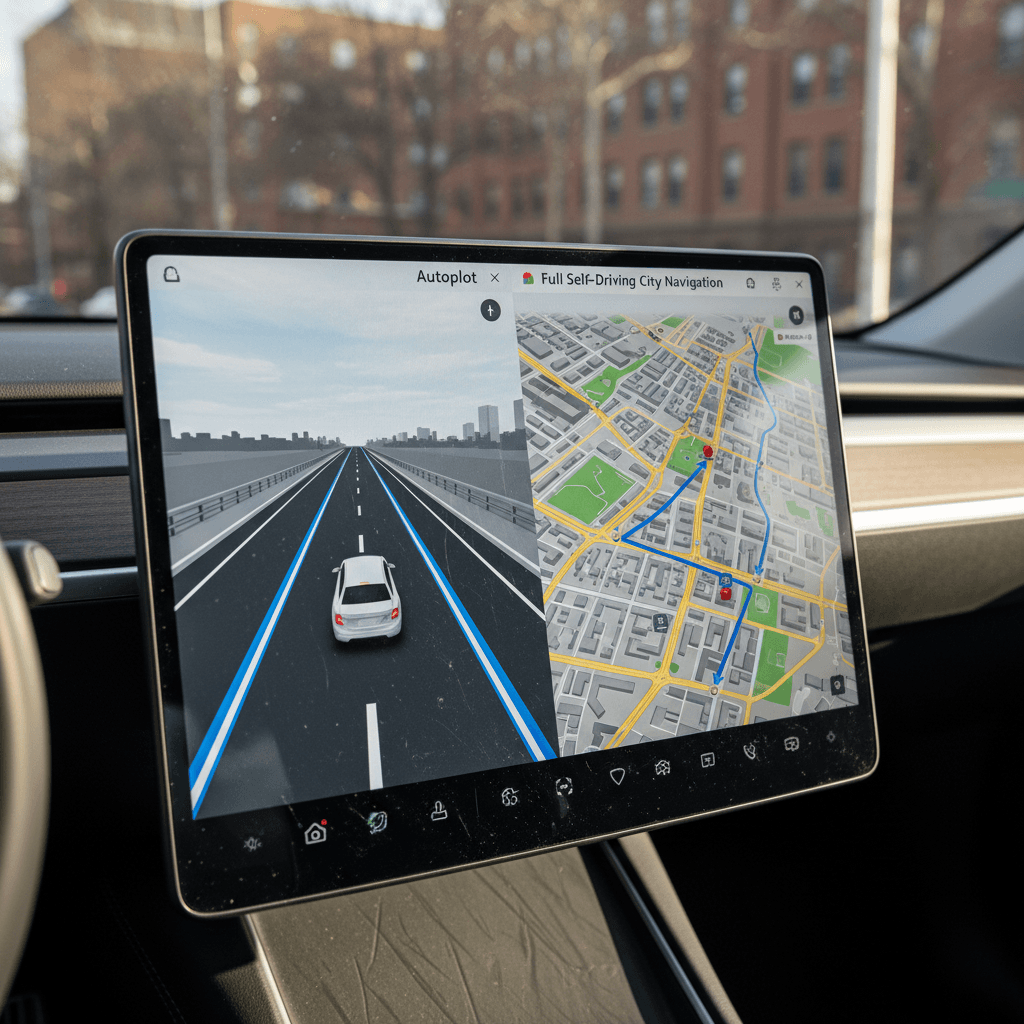
Have the seller share photos of the vehicle’s <strong>Autopilot</strong> menu on the center screen. That’s the best way to confirm if Autopilot, Enhanced Autopilot, or FSD is truly active, not just listed in an ad.
3. Ask whether FSD was purchased or subscribed
A one‑time FSD purchase usually stays with the car. A subscription does not; you’ll have to start your own if you want FSD. That difference can be worth thousands of dollars over a few years.
4. Check for region‑specific limitations
If the car was imported or relocated across borders, some features may behave differently or be unavailable. Make sure the current region supports the features you care about.
5. Factor software into total cost of ownership
Treat FSD or EAP like any other monthly cost. Add the subscription to your payment, insurance, energy costs, and maintenance when you decide what you can comfortably afford.
Is FSD Worth It? Common Real-World Scenarios
Whether Full Self‑Driving is “worth it” comes down to how and where you drive, and how much you value cutting‑edge tech vs. cold, hard dollars. Here are some real‑world scenarios to help you decide.
Who actually benefits from FSD vs Autopilot?
Match your driving pattern to the right tech (or decide you don’t need it at all).
Daily freeway commuter
Best fit: Enhanced Autopilot or basic Autopilot
If most of your miles are on well‑marked highways, Autosteer plus Navigate on Autopilot and automatic lane changes already do the heavy lifting. You’ll feel most of the benefit without paying for full FSD.
Urban stop-and-go driver
Best fit: FSD (Supervised), if you’re tech‑curious
City‑street Autosteer and traffic light/stop‑sign control shine in dense traffic. Just remember you’re still supervising constantly, and software behavior may be more unpredictable than on freeways.
Budget-conscious buyer
Best fit: A used Tesla with Autopilot included
If you want a safe, modern EV without subscription creep, a used Tesla with basic Autopilot or EAP included can hit the sweet spot: strong resale, plenty of assistance, no monthly software bill.
Do the math on subscription
How Recharged Evaluates Tesla FSD and Autopilot on Used EVs
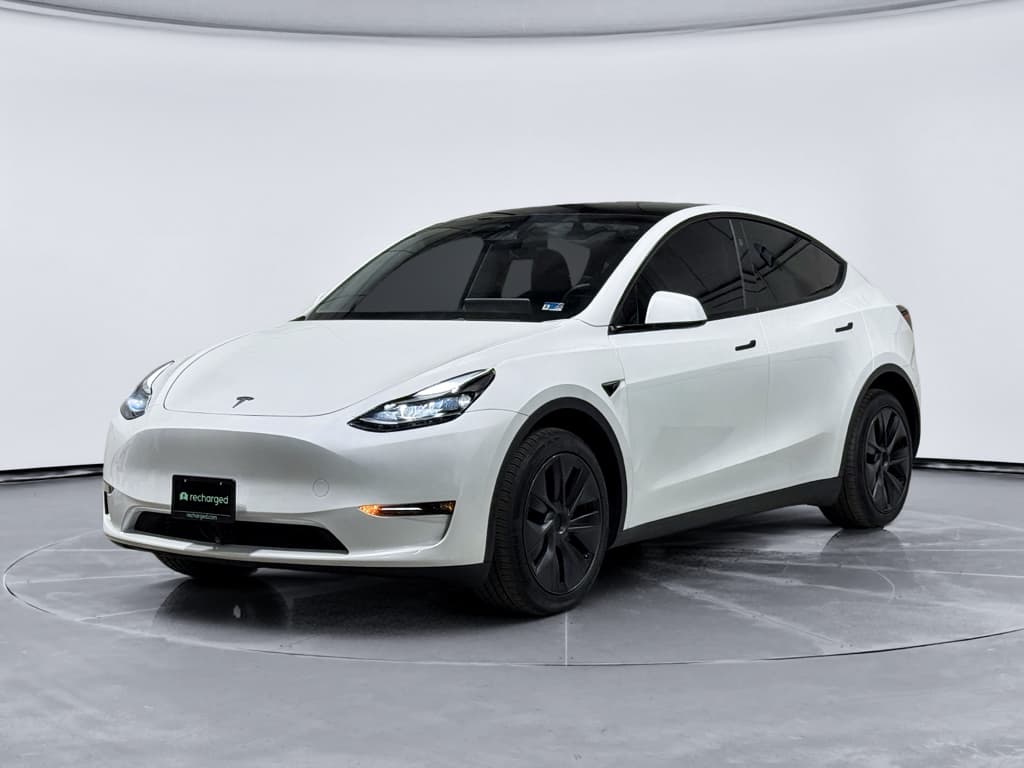
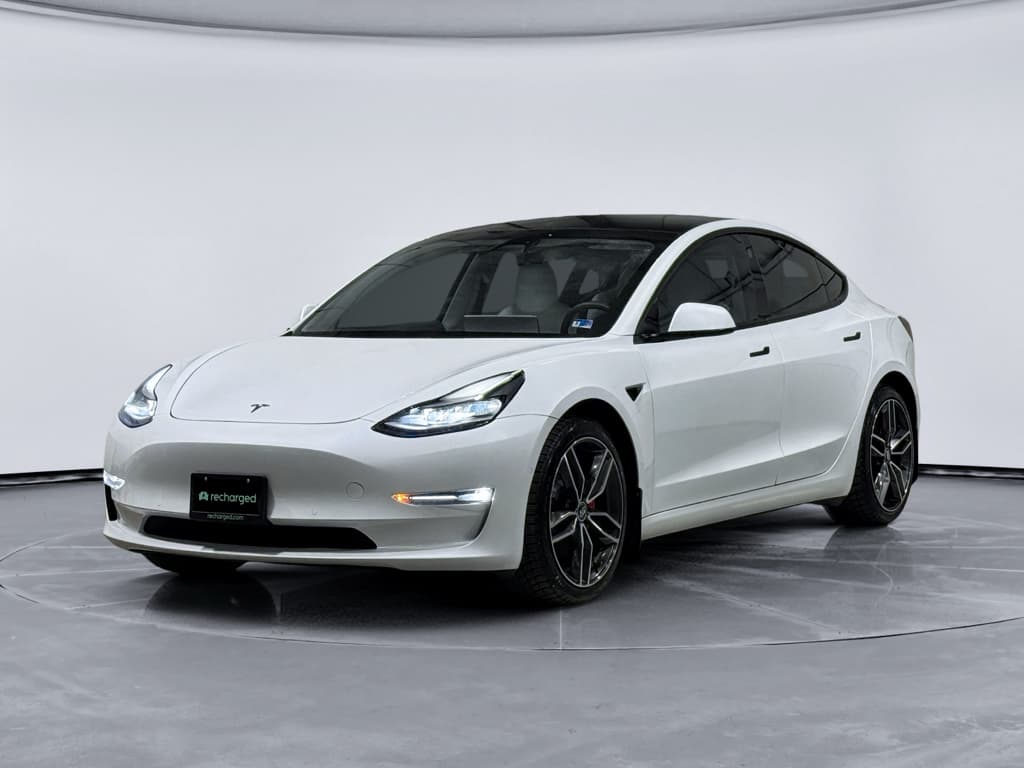
When you’re staring at a listing photo of a glossy Model 3 or Model Y, it’s easy to get hypnotized by the glass roof and the giant center screen. At Recharged, we pull the camera back and look at what actually matters over years of ownership, including driver‑assist tech and long‑term costs.
What goes into a Recharged Score for Teslas
- Battery health diagnostics using our Recharged Score to show real usable capacity, not just an estimate.
- Hardware and software audit to confirm which Autopilot/FSD computer the car has and which driver‑assist features are actually enabled.
- Fair market pricing that accounts for valuable software like FSD or EAP already tied to the vehicle.
- Ownership costs including likely subscription spend if you choose to add FSD later.
How we help you shop smarter
- EV‑specialist advisors who can talk you through the trade‑offs between Autopilot, EAP, and FSD based on your commute.
- Fully digital buying plus nationwide delivery, so you can compare Teslas from your couch instead of bouncing between lots.
- Flexible financing and trade‑in options to help you decide whether paying extra for FSD up front actually makes sense.
Whether you’re FSD‑curious or just want a great‑driving EV with solid basics, Recharged helps you focus on the car that fits your life, not just its software badge.
Tip for financing shoppers
Ready to find your next EV?
Browse VehiclesFAQ: Tesla FSD vs Autopilot Differences
Frequently asked questions about Tesla FSD vs Autopilot
Bottom Line: Which Tesla Driver-Assist Package Should You Aim For?
If you strip away the buzzwords, the Tesla FSD vs Autopilot decision is less about science fiction and more about matching technology to your actual life. Autopilot and Enhanced Autopilot turn long highway slogs into something calmer and more controlled, while FSD (Supervised) pushes into city‑street automation that’s exciting, sometimes dazzling, and still very much a work in progress.
For most buyers, especially in the used market, the sweet spot is a Tesla with solid Autopilot hardware, a healthy battery, and at least basic Autopilot or Enhanced Autopilot included. If you decide later that you want to experiment with FSD (Supervised), you can subscribe for a few months and see if it earns its keep on your commute.
That’s where shopping with Recharged helps. Every used Tesla we list comes with a Recharged Score that shows verified battery health, a clear breakdown of which driver‑assist features are active, and pricing that reflects the true value of any software already on the car. Add expert EV guidance, financing, trade‑in options, and nationwide delivery, and you can take your time deciding whether you want Autopilot, FSD, or just a great electric car that makes every drive better, no matter who’s steering.