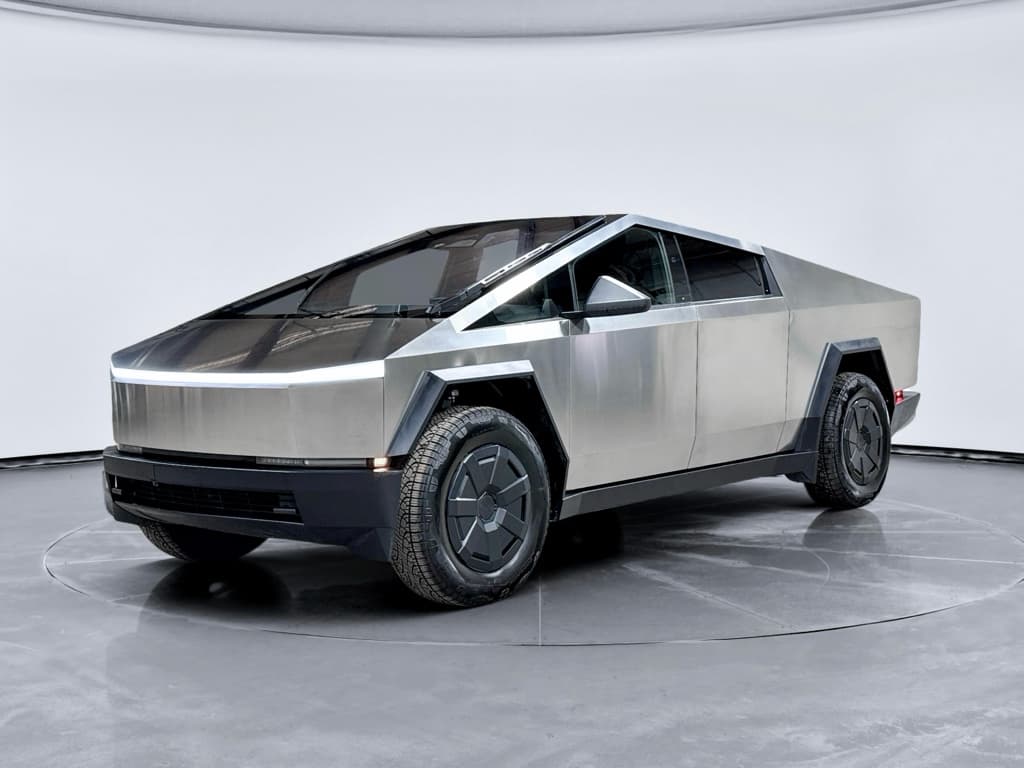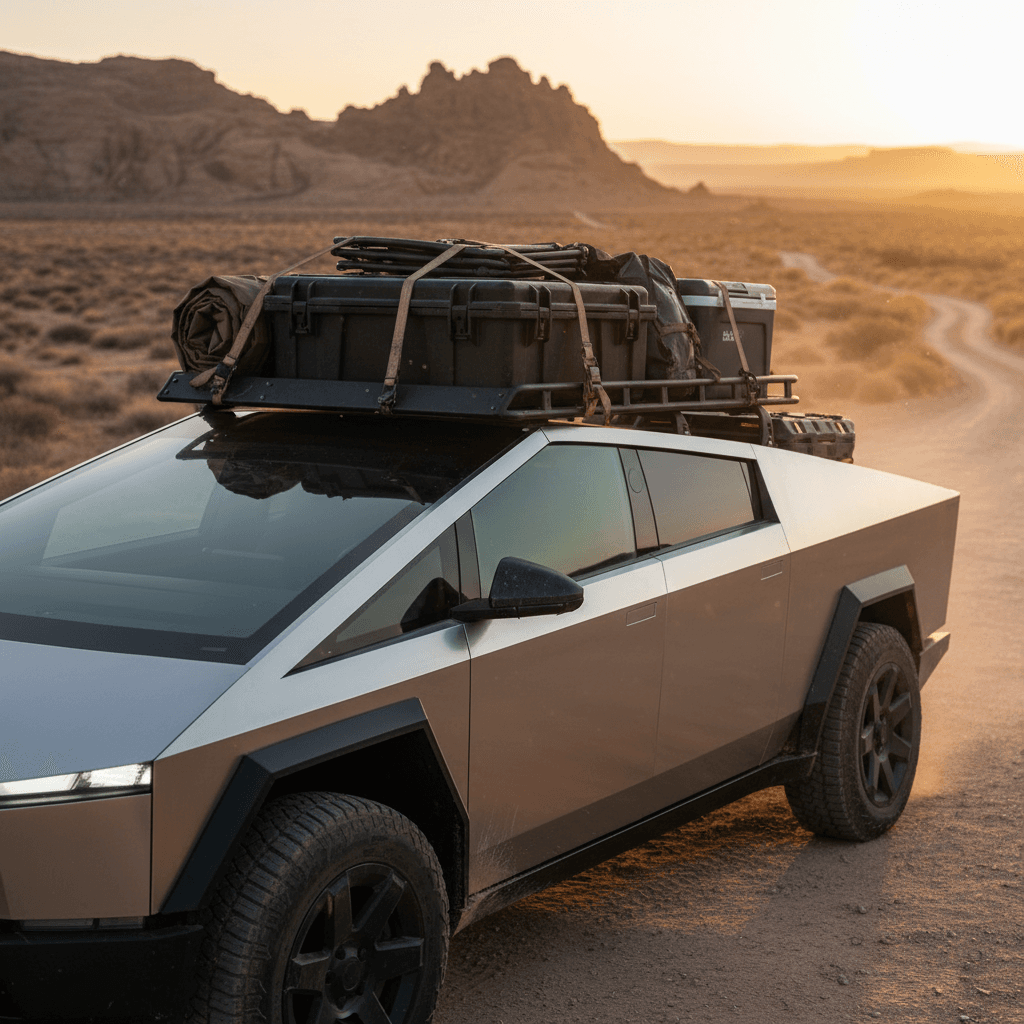
The Tesla Cybertruck roof rack weight limit is a bit of a riddle: big, brutalist pickup, relatively modest numbers. If you’re thinking bikes, kayaks, a cargo box, or even a rooftop tent, you need to know where the real limits are, not just what the accessory brands print on the box.
Official numbers, right up front
Cybertruck roof rack weight limit: the short answer
Per Tesla, the maximum load on Cybertruck roof racks is 220 lb (100 kg) per 2‑crossbar set. A pair of factory‑mount crossbars over the cab can support up to 220 lb, and a separate pair over the bed can also support up to 220 lb, as long as you still respect the truck’s overall GVWR and axle ratings.
- One 2‑bar set (roof or bed) → up to 220 lb total on that set.
- Two separate 2‑bar sets (roof + bed) → up to 220 lb on each, assuming you’re not overloading the truck itself.
Don’t stack ratings
How Tesla’s 220 lb per crossbar set limit actually works
Tesla’s language, “maximum load on roof racks: 220 lb (100 kg) per 2‑crossbar set”, sounds simple until you start planning a real trip. The key detail is that the rating applies to each distinct 2‑bar group: one pair on the roof, another pair over the bed, each with its own 220 lb limit.
- Per‑set limit, not whole‑truck: You don’t get some giant shared roof number; each 2‑bar set has its own 220 lb cap.
- Includes rack weight: Crossbars, towers/feet, fairings, cargo box or bike racks, plus the gear itself all count toward the 220 lb.
- Vehicle weight still matters: Even if you’re under 220 lb on the rack, you can’t exceed the truck’s Gross Vehicle Weight Rating (GVWR) or axle ratings.
Where this gets interesting is the Cybertruck’s split personality: it’s a pickup with a long wheelbase and stainless‑steel exoskeleton, but the roof sheet metal and mounting points still have to deal with dynamic loads, wind, and emergency maneuvers. That’s what the 220 lb number is really about, keeping the center of gravity and structural loads in a safe, predictable range while you’re actually driving.
Dynamic vs static weight on a Cybertruck roof rack
Most enthusiasts immediately ask: is that 220 lb dynamic or static? Tesla doesn’t explicitly spell it out for Cybertruck the way some brands do, but in practice you should treat the 220 lb as a conservative, on‑the‑move (dynamic) limit, the scenario where you swerve, brake hard, or hit a pothole at 75 mph.
Dynamic load (while driving)
This is the weight limit that really matters for a Cybertruck roof rack. Dynamic load is the total weight the rack and roof can handle while you’re in motion, wind load, cornering, emergency maneuvers, all of it.
- Assume Tesla’s 220 lb per 2‑bar set is a dynamic limit.
- This is the number you use when planning what you can carry at highway speed.
- Crossbars or racks with a higher published rating don’t override Tesla’s limit.
Static load (parked)
Static load is what the rack can support when the truck is not moving. Many aftermarket brands quote big static ratings because the structure can handle more when it isn’t dealing with motion or wind.
- For rooftop tents, static limits can be 2–3x dynamic on other trucks.
- Tesla hasn’t given a separate static rating for Cybertruck roof racks.
- The safe move: size your tent and sleeping setup using the same 220 lb per set as a cap, unless the rack maker and Tesla both say otherwise.
Why pushing the limit is a bad idea
Real‑world examples: what you can safely carry
Numbers are abstract; stuff is real. Here’s how the Cybertruck roof rack weight limit plays out with actual gear. All of these examples use 220 lb per 2‑bar set and assume reasonably light, modern accessories.
Sample Cybertruck roof rack loads (per 2‑bar set)
Approximate weights to show how quickly 220 lb goes when you add mounts and accessories. Always check the exact specs for your gear.
| Use case | Typical setup | Approx. total weight | Within Tesla’s 220 lb limit? |
|---|---|---|---|
| Two bikes on the roof | Crossbars (~20 lb) + 2 upright bike racks (~30 lb) + 2 mountain bikes (~70 lb) | ~120 lb | Comfortably under |
| Family cargo box | Crossbars (~20 lb) + large 16 cu ft box (~45 lb) + luggage/camping gear (~120 lb) | ~185 lb | OK, but not much headroom |
| Four kayaks | Crossbars (~20 lb) + 4 kayak saddles (~30 lb) + 4 sit‑on‑top kayaks (~180 lb) | ~230 lb | Over the limit, drop a boat or move some to the bed |
| Lightweight RTT on roof | Crossbars (~20 lb) + small soft‑shell tent (~120 lb) + bedding/ladder (~40 lb) | ~180 lb | Technically under, but close for something that tall |
| Heavy RTT on full rack | Crossbars + big hardshell tent + full bedding & gear | 240–280+ lb | Too heavy for a single 2‑bar set on the roof |
Remember: rack + mounts + accessories + cargo must add up to 220 lb or less per 2‑bar set.
Spread the load front‑to‑back
Roof vs bed crossbars: which should carry what?
Cybertruck can run racks over the cab and over the bed using factory mounting points. Tesla rates them the same, 220 lb per 2‑bar set, but that doesn’t mean they’re equal in how the truck feels or how you should use them.
Best uses for Cybertruck roof vs bed crossbars
Same weight rating, very different feel on the road.
Over‑cab crossbars (roof)
- Best for: lighter, bulkier stuff, skis, bikes, surfboards, modest cargo boxes.
- Downsides: raises center of gravity; can add wind noise and range penalty.
- Tips: keep heavy objects as low and centered as possible, avoid maxing out 220 lb with tall cargo.
Bed crossbars & racks
- Best for: heavier gear, RTTs, recovery boards, spare wheels, lumber, contractor gear.
- Upside: weight sits lower and closer to the rear axle, usually feels more natural.
- Tips: if you have the choice, put the heaviest gear over the bed, not the cab.
Can you run a rooftop tent on a Cybertruck roof rack?
Short answer: yes, but shop carefully, and treat Tesla’s 220 lb per 2‑bar set as your primary design constraint, especially if you’re mounting over the cab rather than the bed.
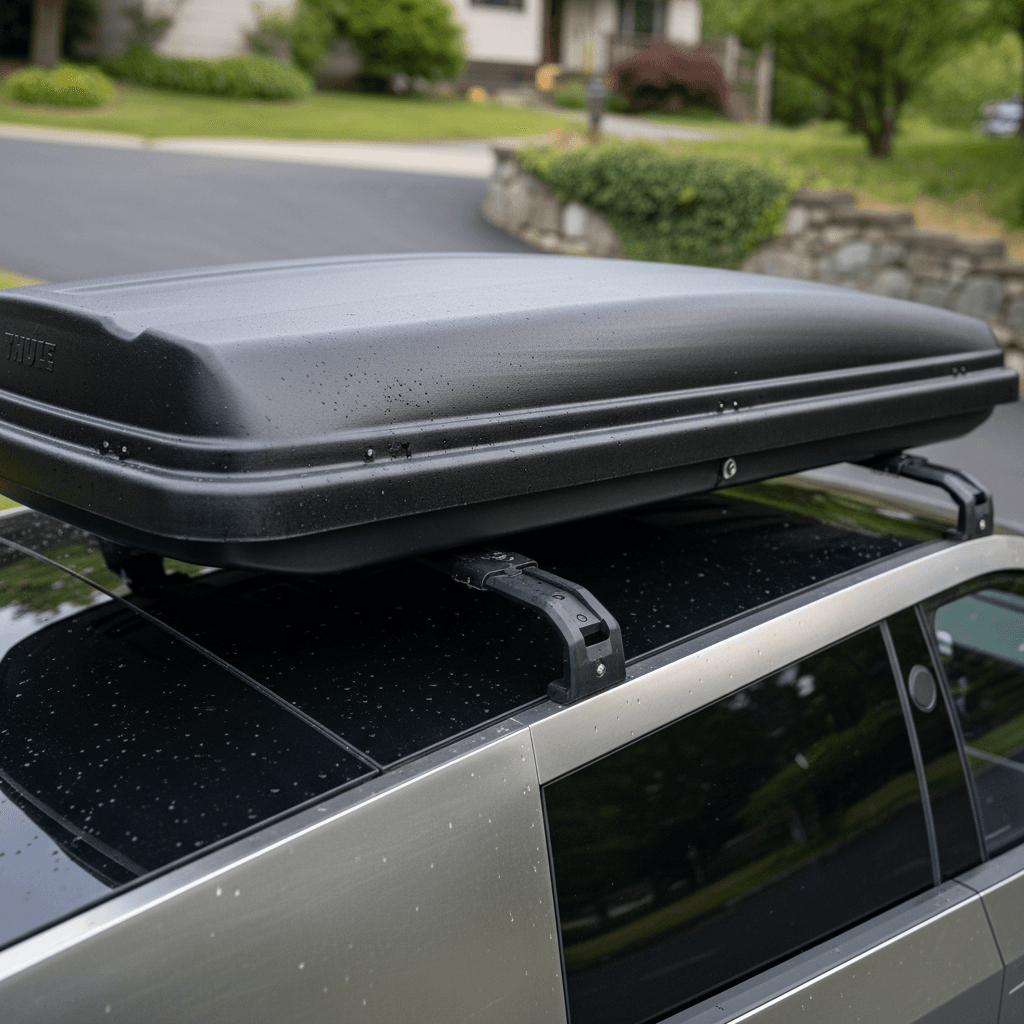
- Most hardshell RTTs weigh 150–200 lb before you add bedding, ladders, and mounts. By the time you bolt everything on, you can easily blow past 220 lb on a single 2‑bar set.
- Lightweight soft‑shell tents in the 100–130 lb range are a much better match. Add crossbars and bedding and you’re still under the Tesla limit.
- If you want a heavier tent, consider a full bed rack system that uses multiple mounting points and spreads the load, and still keep your total mass sensible.
Think people weight, not just tent weight
Aftermarket Cybertruck racks and confusing load ratings
Because the Cybertruck is catnip for overlanders and weekend warriors, the aftermarket responded fast. You’ll see crossbar kits and expedition racks claiming numbers like 110 lb dynamic per bar or 165 lb per bar, with static ratings that soar into the hundreds.
Those numbers can be real for the rack itself, but here’s the catch: the truck always wins the argument. Even if a third‑party system claims 600 lb of static capacity, your practical limit for a single 2‑bar mounting pattern on a Cybertruck is still defined by Tesla’s 220 lb per set and the truck’s GVWR and axle ratings.
Three ratings you must respect
- Vehicle rating: Tesla’s 220 lb per 2‑bar set, plus GVWR and axle limits. This is your non‑negotiable ceiling.
- Rack rating: What the aftermarket crossbars or rack structure can survive. This can be higher than the vehicle rating, but doesn’t override it.
- Accessory rating: Cargo box, bike rack, or tent capacity. You still have to stay inside the lower of the first two numbers.
How to calculate your safe Cybertruck roof rack load
If you only memorize one thing from this article, make it this process. Any time you bolt something to the roof or bed crossbars of your Cybertruck, run this quick calculation before you hit the road.
Step‑by‑step roof rack load calculation
1. Confirm Tesla’s limit for your mount
For a Cybertruck using Tesla‑approved mounting points, assume <strong>220 lb (100 kg) per 2‑crossbar set</strong>, whether it’s on the roof or over the bed.
2. Add up rack + mounts
Check the specs: crossbars, feet/towers, wind deflector, and any rails or platforms. It’s common for the hardware alone to be 20–40 lb per set.
3. Add the accessories
Now factor in the cargo box, bike racks, kayak saddles, or tent base. This can easily match or exceed the weight of the gear itself.
4. Add the actual gear
Weigh (or realistically estimate) bikes, boards, skis, totes, or camping gear. Don’t forget water cans, recovery boards, or tools you’ve strapped to the rack.
5. Compare to 220 lb per 2‑bar set
Total everything in steps 2–4. If the number is <strong>over</strong> 220 lb, something has to move: reduce gear, choose a lighter accessory, or relocate weight to the bed.
6. Sanity‑check GVWR and axle ratings
Finally, look at the sticker in the driver’s door jamb and your owner’s manual. Make sure passengers, bed cargo, and roof load combined don’t push you past GVWR or axle limits.
A simple rule of thumb
Handling, range, and safety with a loaded Cybertruck roof
The Cybertruck is already a heavy, high‑waisted machine. Bolting 200 lb of gear on top doesn’t just stress the mounting points; it noticeably changes how the truck drives, and how far it goes on a charge.
What happens when you load up the roof?
You feel it in the steering, the brakes, and the battery meter.
Higher center of gravity
More aerodynamic drag
Longer stopping distances
Drive the load, not the brochure
FAQ: Tesla Cybertruck roof rack weight limit
Frequently asked questions about Cybertruck roof rack limits
Why roof rack capacity matters when you buy a used Cybertruck
If you’re considering a used Cybertruck, the roof rack weight limit isn’t just trivia, it’s a window into how the truck may have been used. A life of rooftop tents and over‑the‑limit loads can show up later as squeaks, rattles, or stress at the mounting points.
At Recharged, every used EV we list, including trucks like Cybertruck, is evaluated with that history in mind. The Recharged Score Report doesn’t just look at battery health and fair pricing; our EV‑specialist team also pays attention to how the vehicle’s been outfitted and used, so you’re not inheriting someone else’s overlanding experiments gone wrong.
Plan the build before you buy
Ready to find your next EV?
Browse VehiclesThe Tesla Cybertruck’s roof rack story is simple once you strip away the hype: 220 lb per 2‑crossbar set, no matter how tough the rack looks or how wild the marketing photos are. Work inside that envelope, favor the bed for heavier gear, and leave yourself a margin, and the truck will do what it does best, haul you, your people, and your gear into the future without drama. When you’re ready to find a Cybertruck or another used EV that can handle the way you actually live, Recharged is built to make that search transparent, data‑driven, and refreshingly sane.