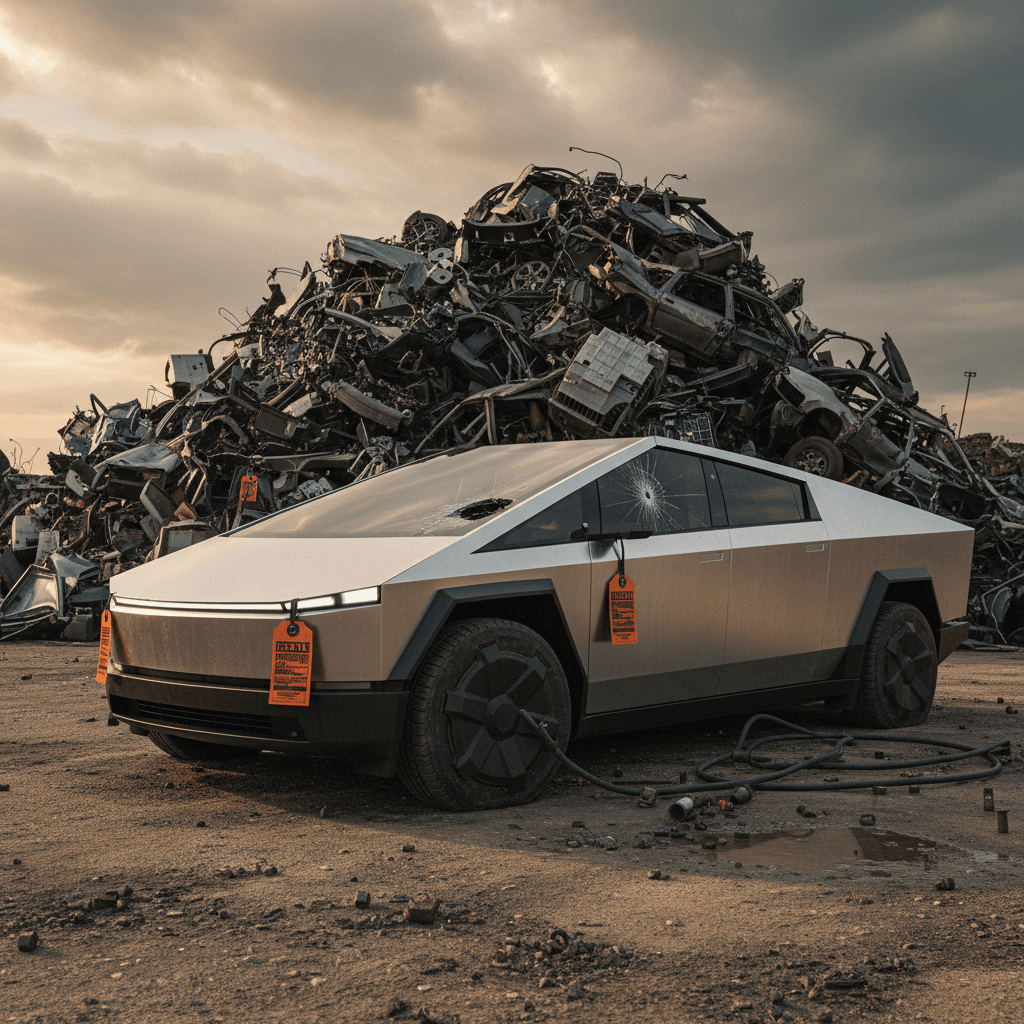
If you’re wondering about Tesla Cybertruck reliability in 2026, you’re not alone. The truck has dominated headlines, some for its wild styling and some for recalls, panel gaps, and viral service stories. What’s harder to find is a clear, level‑headed picture of what ownership actually looks like now that thousands of trucks are on the road.
Where today’s data comes from
The big picture on Cybertruck reliability in 2026
Let’s start with the question you actually care about: Is the Tesla Cybertruck a reliable vehicle in 2026? The honest answer is: it’s complicated. The Cybertruck has racked up an unusually high number of recalls and build‑quality complaints for such a new model, but its battery and motors are not the weak link. Most of the headaches are around trim, fit and finish, software behavior, and a few specific components rather than catastrophic powertrain failures.
2026 Cybertruck reliability snapshot
If you’re cross‑shopping a Cybertruck with something like an F‑150 or Silverado, the patterns will feel familiar: brand‑new platform, heavy software integration, and lots of early teething issues. The difference is that Tesla tends to ship fast, fix in the field, and lean hard on over‑the‑air updates. That can be great if you enjoy being on the cutting edge, and frustrating if you prefer a truck that just quietly works the same way every morning.
Who’s a good fit for early‑generation Cybertrucks?
Cybertruck recalls so far: what they actually mean
Search for “Cybertruck reliability 2026” and you’ll bump into recall headlines in about three seconds. Recalls matter, but they’re often misunderstood. A recall doesn’t always mean your truck will break tomorrow; it means regulators or Tesla found a safety or compliance issue that needs a fix.
Major Cybertruck recall themes through early 2026
These categories summarize the kinds of issues that have sent Cybertrucks back to service, not every single campaign.
| Recall type | Model years affected* | What’s going wrong | Typical fix |
|---|---|---|---|
| Trim / exterior attachment | 2024–2025 | Certain stainless trim pieces (like cantrails) may detach or fail durability tests. | Replace trim assemblies with updated parts. |
| Drive inverter / power electronics | 2024 | Potential internal fault that could cut propulsion under specific conditions. | Replace or repair drive inverter hardware. |
| Lighting / visibility | 2024–2026 | Headlamps or marker lights not meeting brightness or aiming requirements. | Reprogram lighting, replace hardware if needed. |
| Labeling / software behavior | 2024–2025 | Warning labels or software‑controlled functions not matching regulatory text. | Over‑the‑air software updates or new labels. |
| Controls / user interface | 2024–2025 | Certain controls or telltales not behaving exactly as required by regulation. | Software updates or minor hardware revisions. |
Always check your VIN with Tesla or NHTSA for the latest recall status on an individual truck.
Recall reality check
When you evaluate a specific Cybertruck, new or used, don’t just ask, “Has this truck been recalled?” Ask, “Which recalls applied, and have they been completed?” A truck that’s had its cantrail trim and inverter addressed, and is fully up to date on software, is a very different ownership prospect from one that’s still waiting on multiple campaigns.
Common Cybertruck problems owners report
Strip away the internet drama and owner reports settle into a consistent pattern. The Cybertruck’s most common issues in 2024–2026 are less about breaking down on the side of the road and more about living with a very complex, very novel truck every day.
Typical Cybertruck trouble spots
The patterns that show up again and again in early owner feedback
Panel gaps & trim alignment
Wind noise & rattles
Glitches in the UI
Ride & steering oddities
Charging quirks
Weather‑related issues
How serious are these problems?
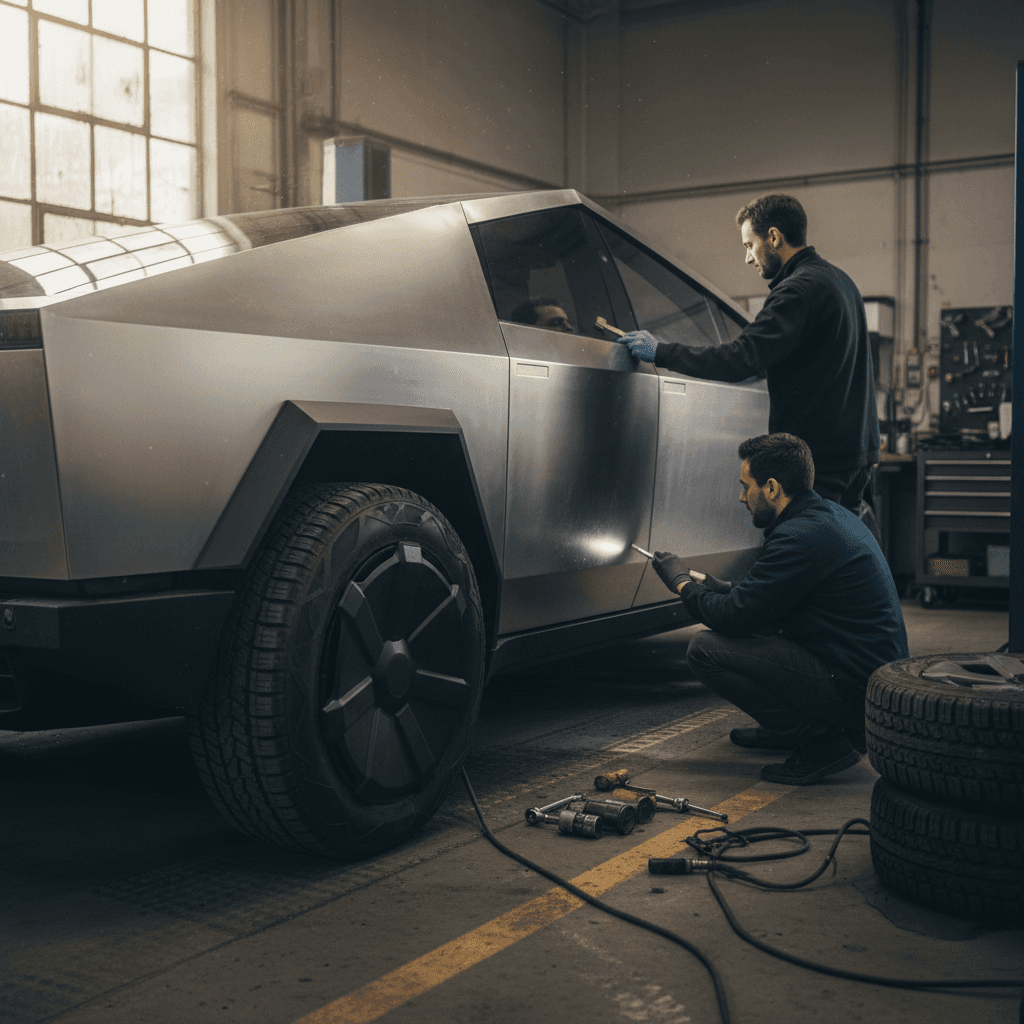
Battery, motors, and high-voltage reliability
So far, the good news is that Cybertruck powertrains look more like Tesla’s proven Model 3/Y setups than some wild science experiment. Under the stainless skin are familiar building blocks: permanent‑magnet motors, Tesla’s in‑house inverters, and a large structural battery pack that borrows heavily from what the company already knows.
- Few verified high‑voltage battery pack failures relative to the number of trucks on the road.
- Isolated reports of inverters or drive units being replaced under warranty, some of which triggered formal recall campaigns.
- The usual EV learning curve for new owners: rapid charging in cold weather, frequent 0–100% swings, and long‑term storage all have an impact on perceived range and battery health.
Where the Cybertruck is quietly strong
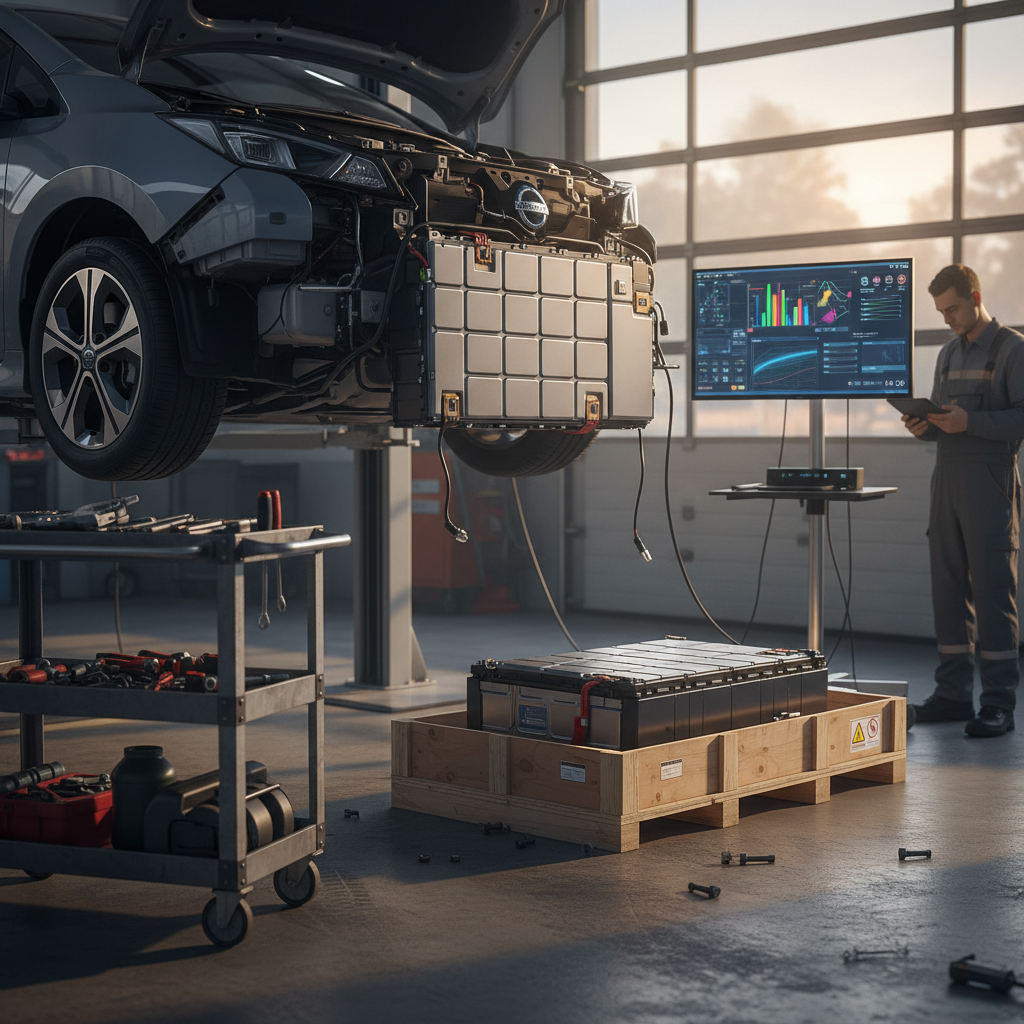
If you’re buying a used Cybertruck, you’ll want independent confirmation that the high‑voltage system is healthy. A Recharged Score report includes battery health diagnostics, charging history patterns, and an inspection of warning lights and error codes so you’re not guessing how the previous owner treated their truck.
Software updates: fixes, surprises, and new gremlins
Owning a Cybertruck in 2026 means living with a vehicle that behaves a lot like a rolling beta test. Over‑the‑air updates can improve range, adjust ride height behavior, change interface layouts, and even tweak acceleration or steering feel. That’s fun, until an update introduces a new annoyance.
The upside of OTA updates
- Faster fixes: Many software‑driven recalls and bugs are resolved without a service visit.
- New features: Owners get fresh driver‑assist functions, UI redesigns, or efficiency tweaks over time.
- Resale boost: A truck kept current with updates looks better on the used market than one that’s been neglected.
The downside of OTA dependence
- New bugs: A fresh update can change behaviors you rely on, charging, cameras, even door logic.
- Inconsistent experience: Two Cybertrucks built the same week can feel different if they’re on different software.
- Diagnostic complexity: When something goes wrong, you need to know which update was installed and when.
Smart way to live with Cybertruck updates
Safety concerns and design quirks to understand
Reliability isn’t just about whether the truck starts every morning. It’s also about whether the design itself introduces safety or usability concerns. The Cybertruck breaks a lot of pickup‑truck norms, and some of those choices carry tradeoffs you should understand before you buy.
Cybertruck quirks that matter for everyday safety
Not all are deal‑breakers, but all are worth learning before you sign
Stainless steel body
Flush, electronic door handles
Visibility & size
Teach every passenger how to get out
Cybertruck reliability vs traditional gas trucks
Comparing a Cybertruck to a half‑ton gas pickup is a bit like comparing a smartphone to a flip phone. The basics are the same, hauling stuff, carrying people, but the way things fail, and how often, can look very different.
Where the Cybertruck has an edge
- Fewer moving parts: No engine oil changes, spark plugs, or complex multi‑gear transmissions to service.
- Brake wear: Strong regenerative braking generally means longer pad and rotor life.
- Cold‑start drama: No cranking, no warm‑up, if the battery is happy, it just goes.
Where traditional trucks still win
- Early‑generation polish: A 10‑year‑old F‑150 platform will usually have fewer squeaks and oddities than a first‑gen Cybertruck.
- Dealer network: Conventional pickups benefit from dense dealer networks and decades of parts stocking.
- Towing predictability: Gas trucks still offer more familiar behavior on long‑distance heavy towing routes with limited fast charging.
Think in terms of “types” of problems
Shopping for a used Cybertruck in 2026
If you’re looking at a used Tesla Cybertruck in 2026, you’re probably hoping somebody else already absorbed the worst of the early bugs and depreciation. That can absolutely be true, but only if you choose carefully. Build variance is high, and some trucks have had far more service history than others.
This is where buying through a specialist marketplace like Recharged can save you from expensive surprises. Every Cybertruck we list comes with a Recharged Score battery and health report, verified recall completion, and expert‑guided support so you understand not just which issues exist in theory, but what’s actually going on with the truck in front of you.
What Recharged checks on a Cybertruck
Ready to find your next EV?
Browse VehiclesPre‑purchase inspection checklist for a Cybertruck
10 key things to check before you buy a Cybertruck
1. Recall & software status
Run the VIN through Tesla and NHTSA recall tools and confirm all applicable campaigns are completed. Then check that the truck is on a current, stable software version rather than something several releases behind.
2. Panel gaps & stainless trim
Walk the entire truck in good daylight. Look for inconsistent gaps, misaligned cant rail trim, doors or tailgate that sit proud, and any sign of prior bodywork. Stainless shows flaws differently than paint, so take your time.
3. Wind noise and rattles
On the test drive, hit 65–75 mph on a smooth road with the radio off. Listen for excessive wind hiss around the windshield and mirrors, buzzing trim, or bed‑area rattles, all common owner complaints.
4. Door handles and window operation
Cycle every door handle and window multiple times, including from inside and outside. Make sure electronic releases work consistently and that passengers understand where the manual releases are.
5. Suspension, steering, and tires
Check for uneven tire wear, clunks over low‑speed bumps, or wandering at highway speeds. Air‑suspension trucks should raise and lower smoothly without error messages.
6. Charging behavior
If possible, plug into both AC (Level 2) and a DC fast charger. Watch for error messages, repeated charge stops, or DC speeds that are dramatically lower than expected for the state of charge and temperature.
7. Battery health
Compare displayed range at 100% (or a known state of charge) against original specifications and ask for any available battery health documentation. A Recharged Score report can quantify this for you.
8. Interior wear and electronics
Check screens for dead pixels or burn‑in, confirm all cameras display clearly, and test HVAC, seats, and steering‑wheel controls. Early trucks sometimes show more wear than their odometer would suggest.
9. Bed, vault cover, and tailgate
Operate the tonneau (vault) cover several times and watch for binding or odd noises. Confirm the tailgate opens and closes smoothly and that the bed lighting and outlets work as advertised.
10. Service and accident history
Ask for a full service record and any insurance or collision reports. Repeated visits for the same problem, or significant structural repairs, are reasons to walk or negotiate hard.
When a Cybertruck makes sense, and when it doesn’t
By 2026, the Cybertruck is no longer a unicorn; it’s a real truck with a real track record, warts and all. The question isn’t whether it’s perfect (it’s not). The question is whether its particular blend of strengths and weaknesses matches what you need from a truck.
Is a Cybertruck the right call for you?
You’re a good Cybertruck candidate if…
You value cutting‑edge tech, over‑the‑air updates, and wild design as much as you value quiet, traditional refinement.
You’re comfortable documenting issues and scheduling service when something doesn’t feel quite right.
Your daily driving fits within its range, and you have reliable home or workplace charging.
You plan to keep the truck long enough that early depreciation and kinks feel worthwhile.
You may want to look elsewhere if…
You prioritize rock‑solid, drama‑free reliability over bleeding‑edge features.
Your towing or road‑trip needs depend on predictable fast‑charging on routes that are still sparse.
You live far from a Tesla service center and don’t want to be your own service coordinator.
You need a truck that blends into tight parking garages and old‑school neighborhoods without drawing attention.
In other words, Tesla Cybertruck reliability in 2026 is less about whether the truck can survive and more about whether you’re the right kind of owner for a first‑generation, software‑heavy EV pickup. Go in with clear eyes, a thorough inspection, and solid charging and service plans, and a well‑chosen Cybertruck can be a fascinating, useful tool. Go in blind, and you may find yourself starring in the kind of viral service story you were trying to avoid.
If you’re leaning toward a used Cybertruck, consider starting your search with Recharged. Our EV‑specialist team, Recharged Score battery diagnostics, and transparent pricing are built to separate solid trucks from science projects, so you can enjoy the future‑truck experience without gambling on the basics.