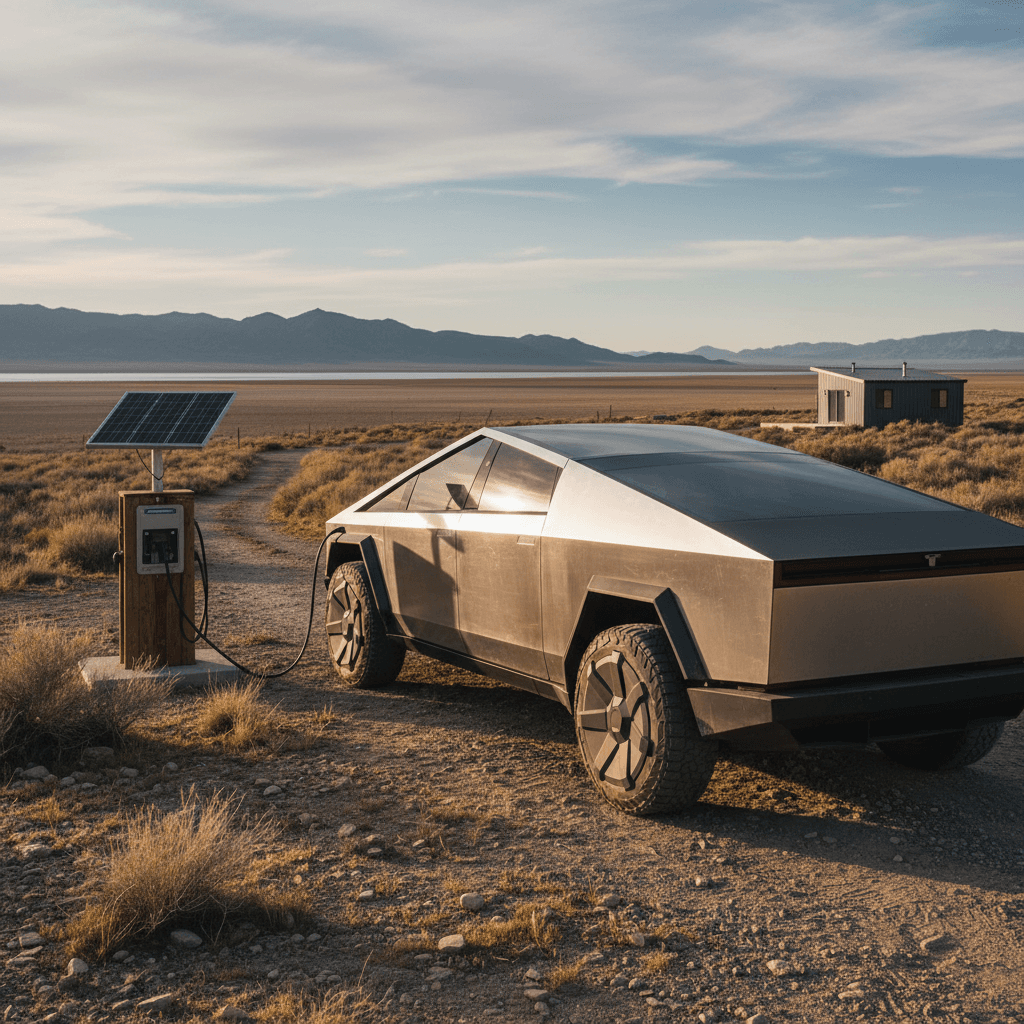
When the Tesla Cybertruck finally hit U.S. roads in late 2023, it looked less like a pickup and more like a movie prop that escaped the studio lot. Two model years and tens of thousands of miles later, we finally have enough data for a **Tesla Cybertruck long term review for 2026**, not a launch-day hot take, but a sober look at how this stainless-steel wedge actually works as a truck, a family vehicle, and, increasingly, a used EV purchase.
What this long-term review covers
Why a long-term Cybertruck review matters in 2026
By spring 2026, a healthy number of early 2024–2025 Cybertrucks have racked up 10,000–30,000 miles. Some have lived easy lives as suburban commuter toys. Others have towed boats cross-country or slogged through winter in the upper Midwest. That means long-term patterns are emerging, and they don’t always match the original marketing.
Tesla Cybertruck ownership snapshot in 2026
None of this automatically makes the Cybertruck a bad truck, or a great deal. It just means you need to separate memes from math before you put one in your driveway, especially if you’re shopping used in 2026, when **prices and expectations have finally come back to earth**.
Specs and versions: what Cybertruck you’re actually seeing on the road
Most of the Cybertrucks with real miles on them today are **2024 and early‑2025 models**, often the early "Foundation" builds of the All‑Wheel Drive (AWD) and top‑dog Cyberbeast. A smaller number of buyers grabbed the briefly offered Rear‑Wheel Drive (RWD) model before Tesla quietly pulled it from the configurator after just a few months, following slow demand and internal price reshuffles.
Current Cybertruck flavors you’ll see used in 2026
Trim matters for performance, range, and value
All-Wheel Drive (AWD)
The volume model. Dual‑motor, strong straight‑line performance, and EPA ratings in the low‑to‑mid‑300‑mile range under ideal conditions. In the real world, think of it as a ~250‑mile truck at typical highway speeds.
Cyberbeast
The halo truck. Triple‑motor power, supercar‑quick 0–60 mph times, and a price tag that led many early adopters to pay well into six figures. Most fun to launch, but also the most expensive to buy, and to watch depreciate.
Rear-Wheel Drive (RWD)
The short‑lived entry model. Less power, fewer goodies, and a lower price that still wasn’t low enough to move the needle. If you see one used, know you’re looking at a rare configuration, not necessarily the sweet spot.
Trim choice and the used market
Daily driving and comfort: living with the “future truck”
What owners tend to love
- Presence and visibility. You sit high, with a big windshield and that submarine‑window profile. In traffic, it feels like you’re driving a concept car that somehow snuck onto public roads.
- Instant torque. Even the “slow” Cybertruck has the kind of off‑the‑line punch that makes stop‑and‑go driving oddly entertaining.
- Quiet, smooth powertrain. No idling, no shifting, no exhaust drone. Around town, the powertrain fades into the background.
- Cabin space. The interior is minimalist but roomy, with plenty of stretch‑out space for front‑seat riders and decent room in back.
What can wear on you
- Ride and refinement. Owners who came from luxury SUVs or full‑size pickups with adaptive suspensions often describe the Cybertruck as busy or stiff over broken pavement.
- Noise from mirrors and tires. At highway speeds, aero and tire noise are more noticeable than in a Model X or a high‑end F‑150.
- Packaging quirks. No physical stalks, nearly everything routed through the center screen, and limited small‑item storage mean a learning curve.
- Parking and visibility. The wedge shape and thick pillars can make close‑quarters maneuvering feel bigger and blinder than the tape measure suggests.
Test-drive tip
Real-world range and efficiency: the numbers owners are seeing
On paper, Cybertruck range looks competitive with other all‑electric pickups. In practice, owners’ long‑term logs paint a more nuanced picture, especially at interstate speeds and in cold weather. Efficiency numbers in the low‑400s Wh/mile on the highway are common in fair conditions, while winter or big roof racks can push that much higher.
Real‑world Cybertruck range patterns (AWD & Cyberbeast)
Approximate ranges based on owner reports and long-trip logs in 2024–2026.
| Use case | Conditions | Typical efficiency | Approx. usable range |
|---|---|---|---|
| Mixed driving, mild temps | City + highway, 60–65 mph, 60–75°F | ~380–420 Wh/mi | 260–290 mi |
| Highway cruise | 70–75 mph, 60–75°F | ~420–480 Wh/mi | 220–260 mi |
| Cold-weather highway | Below freezing, 70 mph, heater on | 500+ Wh/mi | 180–220 mi |
| Stop‑and‑go city | Low speeds, mild temps | <350 Wh/mi | 300+ mi (if started full) |
Your results will vary by terrain, speed, temperature, and wheel/tire choice.
Why EPA ratings and reality don’t match
The bottom line: if you plan a 250‑mile family road‑trip leg at 75 mph in winter, don’t assume the Cybertruck, or any EV truck, will deliver its brochure range. Build in padding, use the onboard trip planner, and think of the EPA number as a best‑case scenario under gentle conditions.
Towing and hauling: where the Cybertruck shines, and where it doesn’t
When it comes to tow ratings and spec‑sheet bravado, the Cybertruck can absolutely run with the other half‑tons. Real owners have towed boats, enclosed trailers, and campers, and they generally agree on two things: the truck feels stout and stable under load, and the **range falls off a cliff** if you push speed, distance, or both.
What long-term owners have learned about towing
1. Expect to lose roughly half your range
Hook up a 4,000–6,000‑lb boat or camper, head onto the interstate at 65–70 mph, and the range meter drops fast. Many owners report using 2–3 times the usual energy per mile while towing, especially with boxy trailers.
2. The chassis feels solid and confident
Owners who tow regularly praise the Cybertruck’s planted feel, instant torque for merging, and stable regenerative braking down grades. The limiting factor is usually electrons, not hardware strength.
3. Plan around charging locations with trailer access
Pull‑through Supercharger stalls are still rare, so many owners end up dropping trailers to charge or seeking out larger lots. If you tow often, map your routes around stations that are easy to access with a trailer.
4. Stay conservative on trailer size and profile
A big, tall toy hauler is an aero brick. A lower‑slung car hauler or boat will still cut range heavily but tends to be less punishing than a giant rolling billboard.
5. Watch axle weights and payload
Like most EV pickups, the Cybertruck carries a heavy battery and isn’t a payload king. Load up passengers, gear, tongue weight and you can hit limits sooner than you might expect from the styling.
If towing is your primary mission
Reliability, recalls, and build quality: two years in
Early Cybertrucks are classic early‑Tesla: bold engineering wrapped around a lot of rapid‑fire revisions. Owners have enjoyed over‑the‑air software updates that add features or tweak behavior, but they’ve also lived through a flurry of recalls and service visits.
- High‑profile recalls for steering/drive inverter issues, wiper assemblies, and front lighting that was too bright for regulators’ taste, all hitting 2024–2026 trucks.
- Fit‑and‑finish complaints, misaligned panels, trim that doesn’t quite line up, odd noises, that mirror what we’ve seen on other first‑run Teslas.
- Stainless steel body panels that resist dings but highlight every fingerprint, water spot, and polishing swirl.
- A power tonneau cover and tailgate hardware that saw early glitches but have improved as updated parts rolled out.
The good news on durability
"The Cybertruck in many ways feels really solid, like a tank. I’ve done dunes, towing, a multi‑thousand‑mile road trip, and it’s taken the abuse better than I expected. The weird stuff has all been software and little hardware gremlins, not the fundamentals."
Depreciation and resale: 2026’s big Cybertruck story
If there’s one long‑term theme that’s impossible to ignore, it’s **depreciation**. Early Foundation‑series buyers paid eye‑watering prices, often six figures, for the first trucks out of Austin. By 2025, Tesla was accepting Cybertruck trade‑ins and offering values that showed 30–40% hits within roughly the first year for some builds, with a few headline cases of even steeper drops when those trucks crossed auction blocks or online marketplaces.
How Cybertruck value is shaking out
Why depreciation hit so hard
For used‑EV shoppers, this is exactly where Recharged steps in. Because every Cybertruck listed on Recharged includes a Recharged Score Report, with verified battery health, pricing versus the broader market, and a look at recall status, you’re not guessing whether that dramatic price drop is a gift or a red flag.
Charging and road trips: using the Supercharger network
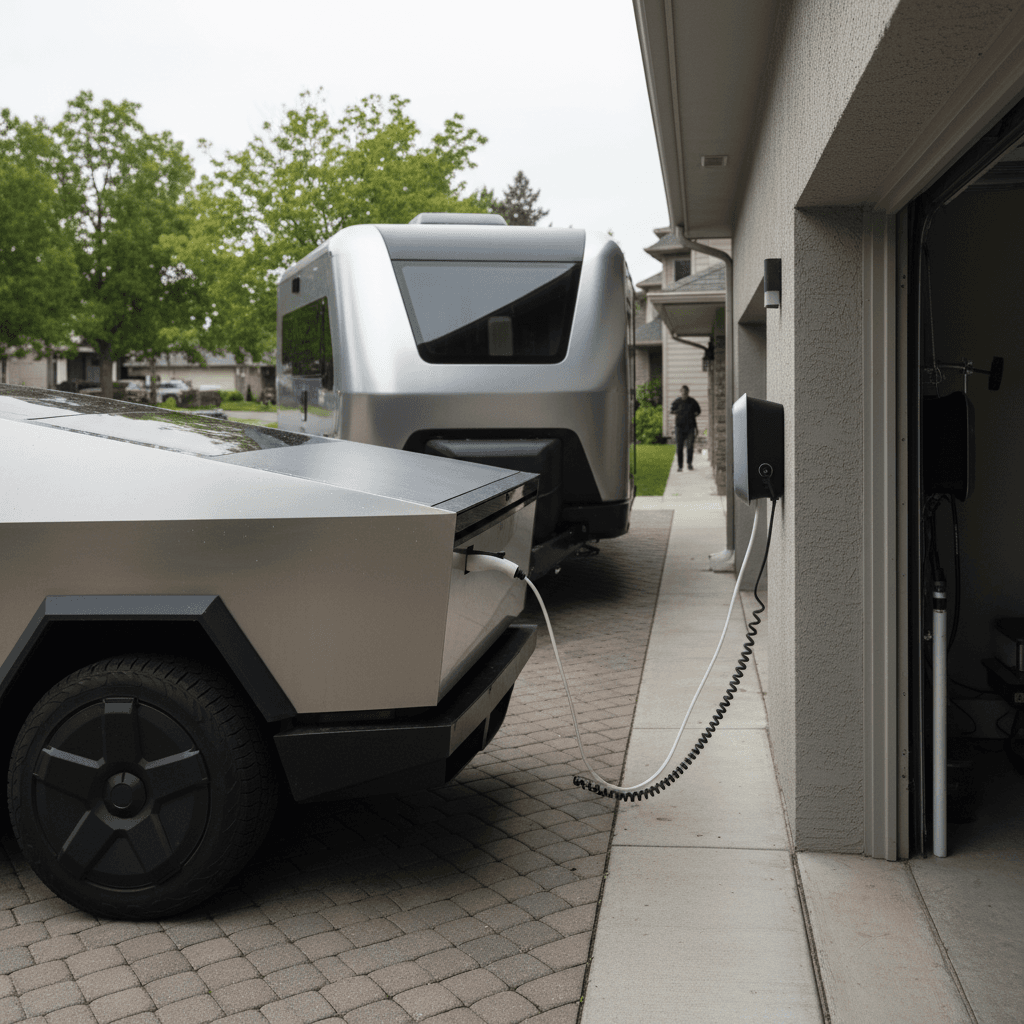
One big advantage the Cybertruck keeps over most rivals is **native access to Tesla’s Supercharger network**. In much of the U.S., that means cleaner station layouts, more reliable hardware, and simple plug‑and‑charge billing. Long‑term owners generally give the charging experience high marks, so long as they plan around the truck’s thirst at speed and, if towing, its dramatically shorter legs.
How long-term owners make charging painless
Habits matter more than hardware once you own the truck
Install solid home charging
A 240V Level 2 setup at home turns the Cybertruck from an anxious science experiment into a simple appliance. Overnight, you wake up “full” almost every day. If you don’t own your parking, factor that into your decision.
Let the trip planner work
Tesla’s built‑in navigation and trip planner do a good job of routing longer drives, preconditioning the battery for fast charging, and suggesting realistic stops based on your state of charge.
Re‑think your rhythm
On a long highway trip, the sweet spot is usually charging from roughly 10–15% up to 60–70%, then moving on. That keeps you in the fast part of the charging curve instead of nursing it to 100% every time.
Trailer and charger layouts
Who the Cybertruck actually suits in 2026
Owners who tend to love it long term
- Design true believers. If the stainless angles and Blade Runner vibe still make you smile every time you see it, that joy survives the new‑car honeymoon.
- Tech‑forward commuters. If your life is mostly 20–60‑mile days with home charging and occasional road trips, the Cybertruck is overkill in a charming way.
- Weekend adventurers. Folks who haul toys to the lake, hit the dunes, or head for trailheads a couple of hours away appreciate the torque, traction, and covered bed.
- Buyers taking advantage of 2026 prices. If you let someone else eat the early‑adopter depreciation, the value equation gets much more palatable.
Drivers who may be happier elsewhere
- Heavy long‑distance towers. If you tow 200–300 miles in one shot, often, with limited fast charging on your route, you may be better served by a conventional HD truck, for now.
- Refinement‑obsessed shoppers. If your benchmark is a top‑trim F‑150 or luxury SUV, the Cybertruck’s ride and cabin polish may disappoint.
- Parking‑lot warriors. Tight city garages, narrow drive‑throughs, and tiny parallel spaces are not this truck’s natural habitat.
- Buyers terrified of depreciation. The worst of the free‑fall may be over, but this is still a bold, polarizing EV truck in a fast‑moving market.
Buying a used Cybertruck: how to shop smarter
Shopping for a used Cybertruck in 2026 is very different from trying to get on a list in 2019. Inventory exists. Prices are negotiable. And you’re not playing speculator; you’re just trying to buy a truck that fits your life. Here’s how to tilt the odds in your favor.
Key checks before you buy a used Cybertruck
1. Decode the trim and build history
Confirm whether you’re looking at an AWD, Cyberbeast, or the rarer RWD, and whether it’s a Foundation build. That affects value, performance, and which early‑production quirks it may have.
2. Pull a full recall and service history
Use the VIN to check for open recalls and ask for documentation of completed work. On Recharged, we highlight open recalls and major repairs so you know what’s been addressed and what hasn’t.
3. Verify battery health, not just mileage
Two trucks with the same odometer reading can have very different battery histories. A Recharged Score battery health diagnostic helps you see real usable capacity and charging behavior before you buy.
4. Inspect stainless and underbody carefully
Stainless won’t rust like regular steel, but it can still be damaged. Look for poor repairs, creases, or signs of off‑road damage underneath. Because the body panels are structural, bad repairs can be costly.
5. Test all powered hardware
Check the power tonneau cover, tailgate, frunk, interior switches, and wipers repeatedly. Many early owner complaints live in this category, not in motors or batteries.
6. Sense-check the price against the market
Cybertruck pricing is volatile. On Recharged, we benchmark every listing against current nationwide sales and trade‑in data so you can see whether a given truck is fairly priced before you start negotiating.
Leaning on EV specialists helps
FAQ: Tesla Cybertruck long-term ownership questions
Frequently asked questions about long-term Cybertruck ownership
Bottom line: is the Tesla Cybertruck worth it in 2026?
Taken as a whole, the **Tesla Cybertruck long term review for 2026** tells a more balanced story than the launch‑day hype or the internet dunking contests. It’s a striking, capable, sometimes flawed EV pickup that’s finally being judged as a truck, not a meme. Range is good but not miraculous, towing is impressive but energy‑hungry, and reliability is typical early‑Tesla: evolving, sometimes messy, but improving as updates roll in.
If you’re shopping new at full sticker, you’ll want to be honest about how much you value the styling and the Tesla ecosystem versus quieter, more conventional rivals. If you’re shopping the **used Cybertruck market in 2026**, however, early depreciation has opened a window of opportunity for buyers who do their homework on battery health, recall history, and pricing.
That’s exactly where Recharged can tilt the table in your favor. With Recharged Score battery diagnostics, transparent pricing analysis, EV‑savvy support, and nationwide delivery, you can decide whether a Cybertruck fits your life, and your budget, before you ever see it in your driveway. In 2026, that combination of brutal honesty and real‑world data is what this truck, and its shoppers, finally deserve.