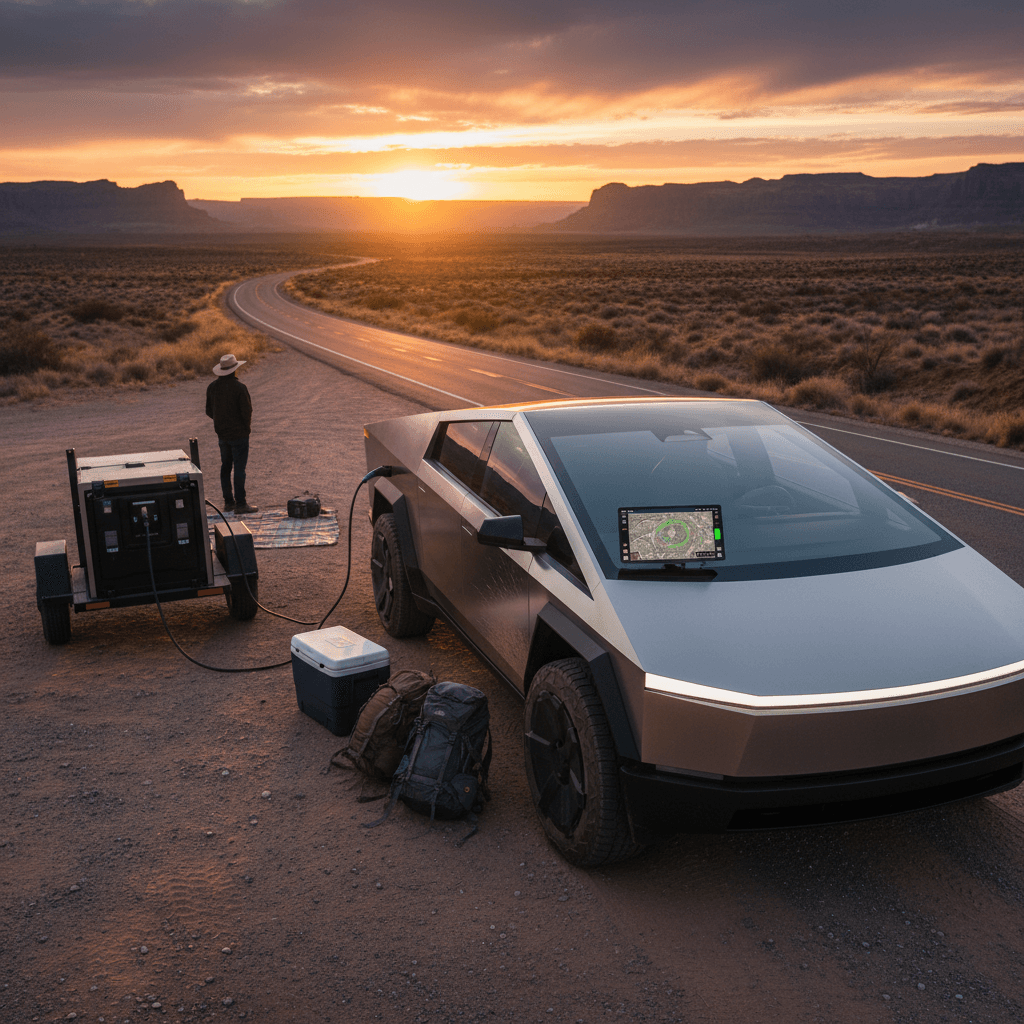
The Tesla Cybertruck is not just a stainless-steel conversation piece; it’s a 6,000‑plus‑pound rolling science project that rewrites what a pickup feels like on a long drive. If you’re thinking about a multi‑state road trip, you’ll need a different playbook than you used with your gas truck. These Tesla Cybertruck long distance driving tips focus on what actually matters on the road: usable range, charging rhythm, comfort, and not arriving with a white‑knuckle stare and 2% battery.
Cybertruck at a glance
Why the Cybertruck is a different kind of road-trip rig
EV pickup, not just an EV
The Cybertruck combines three things that punish range: weight, frontal area, and often big off‑road tires. Compared with a Model 3 or Y, you’ll see more energy use at the same speed, especially above 70 mph and in headwinds.
But it’s also very road-trip friendly
You get a huge battery, Tesla’s excellent Supercharger access, air suspension, Autopilot, a quiet cabin, and a giant center screen. Treated right, it’s calmer and more relaxing over 500 miles than many traditional trucks that stop as often for fuel as you stop for coffee.
- Plan around energy consumption (Wh/mi), not just EPA range posters and social media flexes.
- Charging stops are your gas stations, rest stops, and snack breaks rolled into one, use them intentionally.
- Payload, towing, wind, and weather move your range up or down faster than you expect.
Know your real-world range before you leave
Before you point that stainless prow at another time zone, learn what your Cybertruck actually does in your normal conditions. EPA numbers are like dating‑app photos; some relationship to reality, but lit very generously.
Quick pre‑trip range shakedown
1. Drive a full highway loop
On a normal day, drive 50–100 miles at your usual highway speed (set cruise control) on a round‑trip route. Note the average Wh/mi from the trip meter.
2. Repeat with a full cabin
If you’ll be loaded with people and luggage, repeat the loop roughly loaded the way you expect to be on the trip. The extra 300–600 lb will show up in your consumption.
3. Test your realistic cruising speed
Do one loop at 65 mph and another at 75 mph if it’s safe. You’ll see how dramatically speed swings your energy use, often 15–25% between those two speeds in a Cybertruck.
4. Save a dedicated "Road Trip" trip meter
Reset Trip B (or another profile) and label it mentally as your road‑trip baseline. Use that Wh/mi figure for planning instead of the marketing brochure.
Rule of thumb for range
Smart route planning with Tesla and beyond
Tesla’s in‑car Trip Planner is good, but on long Cybertruck drives you’re better off treating it as the starting point, not the gospel. Cross‑check with other tools and think like a pilot filing a flight plan, not a commuter chasing a Waze shortcut.
Core tools for Cybertruck long-distance planning
Layer them for redundancy and better decisions
Tesla Trip Planner
Built into the truck. It knows your current consumption, elevation, and weather forecasts. Use it for a first pass on stops and expected state of charge (SoC) at each charger.
Third‑party apps
Apps like A Better Routeplanner or community maps add non‑Tesla chargers, detailed elevation, and wind data. Useful if a Supercharger is down or you want redundancy in sparse areas.
Old‑fashioned overview
Look at the whole map in advance. Note gaps over 150–200 miles, mountain passes, and regions with limited lodging or 24‑hour services. That context matters when something changes mid‑trip.
How much battery to plan on when you arrive at each charger
Conservative arrival SoC targets make long days calmer and give you options if something goes wrong.
| Conditions | Suggested arrival SoC | Why it works |
|---|---|---|
| Mild weather, flat terrain, daytime | 10–15% | Maximizes efficiency without much risk. |
| Cold or very hot weather, moderate hills | 15–20% | Covers HVAC load and modest elevation changes. |
| Mountains, heavy rain, strong headwinds | 20–30% | Gives room for big swings in consumption. |
| Sparse charger coverage or new route | 25–30% | Buffer for surprise closures or rerouting. |
Aim higher in bad weather, mountains, or at night.
Don’t plan chargers at 0%
Charging strategy for long Cybertruck days
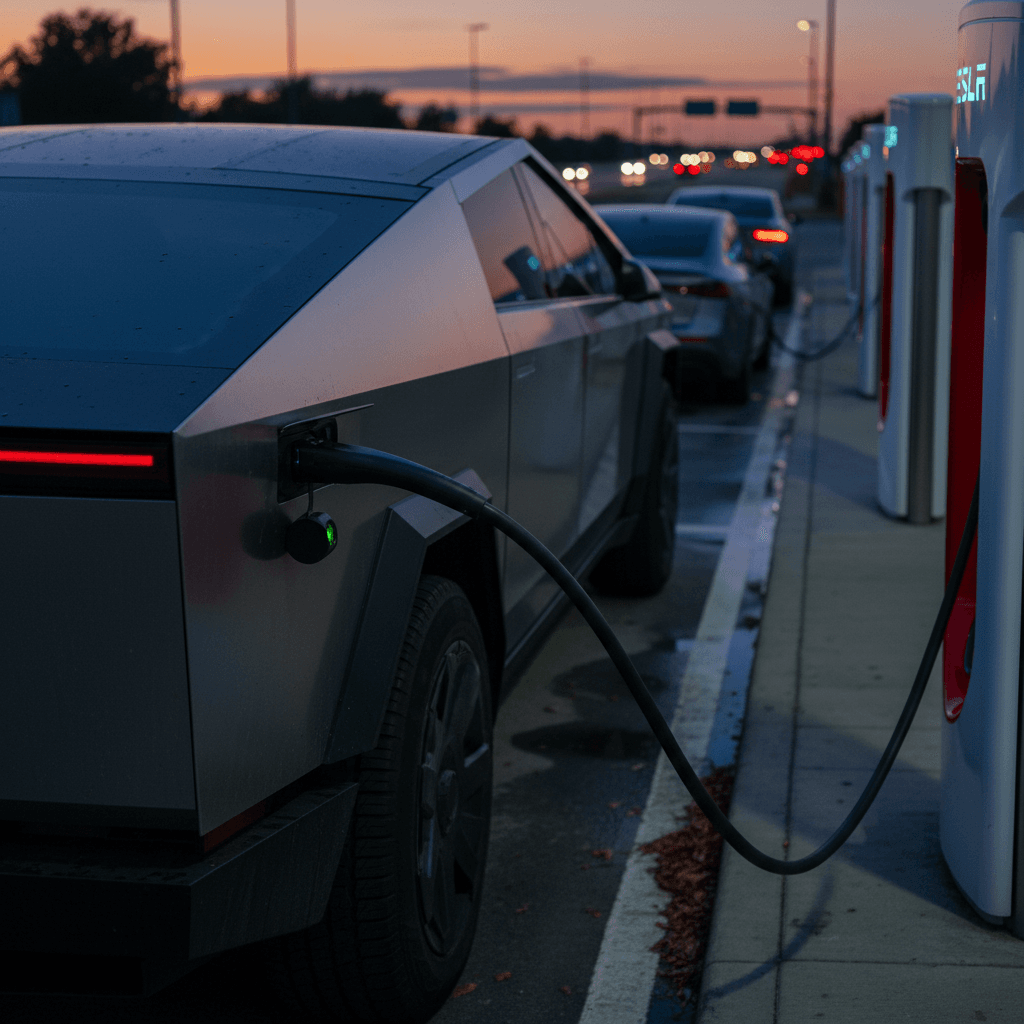
The Cybertruck’s big pack and Supercharger access are your secret weapon. But the fastest way to cross states in any Tesla is to charge more often, not fuller. You’re playing to the top of the fast‑charging curve, not trying to “fill the tank” every time.
The fast‑charging sweet spot
- Arrive low, leave around 55–70%. Below ~55–60% the Cybertruck can sip high power; above that, charging slows to protect the battery.
- Stack stops with real breaks. Plan meals, coffee, and short walks at Superchargers so time isn’t “wasted”, you’d stop anyway in a gas truck.
- Prefer V3 or newer Superchargers on long days. Higher peak power and more stalls reduce sharing and wait times.
- If you must use non‑Tesla DC fast charging, test once near home first. Not every station plays nicely; learn how your truck behaves on other networks before you’re 600 miles from home.
Use the "next charger" trick
Speed, tires, and aero: how to protect your range
Long‑distance Cybertruck driving is mostly a test of how patient you can be with the right‑hand pedal. This is a brick‑sized pickup that thinks it’s a sports car; if you let the acceleration and big‑tire look get to your ego, your range graph will look like the Nasdaq on a bad day.
Biggest range killers on the highway
Think of each one as a tax on your battery
High cruising speed
In a Cybertruck, jumping from 65 to 80 mph can chop a shocking amount of range. Air resistance grows non‑linearly with speed, and you’re pushing a lot of stainless steel through the air.
Aggressive off‑road tires
All‑terrain or mud‑terrain tires look the part but add rolling resistance and aero drag. Expect a noticeable hit versus more road‑biased rubber.
Roof racks & loose cargo
Roof pods, bikes on the roof, or open tailgate cargo all chew into your aero advantage. The vault is your friend, keep loads tucked out of the airstream when you can.
Quick ways to stretch Cybertruck highway range
Hold cruise near 65–70 mph when possible
On long legs, that modest speed drop often buys you an extra 30–60 miles of usable range and may even cut total trip time by reducing charging.
Use the vault, not the roof
The enclosed bed is relatively aero‑friendly. Strap gear down inside the vault whenever it fits instead of building a rooftop wind orchestra.
Set climate to Auto and use seat heaters
In cold weather, using seat and steering‑wheel heaters lets you keep cabin temp a bit lower, reducing HVAC load on the pack.
Check tire pressure before departure
Under‑inflated tires eat range and can run hotter on long days. Set them to the recommended pressures when cold and re‑check during big temperature swings.
Stop racing every light
Towing and hauling long distance with Cybertruck
Hook a trailer to almost any EV and your range graph will look like a dive bar’s revenue chart: steep drop as soon as the band starts. The Cybertruck is no exception. Long‑distance towing is absolutely doable, but it demands more margin and more conservative planning.
How towing affects long-distance Cybertruck range (very rough guide)
Your actual numbers will vary with speed, terrain, and trailer shape, but this gives you planning ballparks.
| Trailer type | Typical impact on range | Notes |
|---|---|---|
| Small utility trailer, lightly loaded | ~20–30% less | Mesh or low‑profile loads hurt less than tall, boxy items. |
| Single‑axle camper or small enclosed trailer | ~35–50% less | Aero is the enemy; speed makes a big difference. |
| Large enclosed trailer, tall camper, or high load | 50%+ less | Plan as if your range is roughly half, especially above 65 mph. |
When in doubt, assume less range and keep arrival SoC higher.
Long-distance Cybertruck towing playbook
1. Use 50% of your solo range as a starting point
Whatever range you see unladen at highway speed, cut it in half for first‑pass towing estimates. Adjust after you gather your own data.
2. Aim to arrive with 25–30% SoC
Towing adds unpredictability, wind, grades, and trailer sway. A fatter buffer means you’re not sweating every hill watching the estimate drop.
3. Favor chargers with easy trailer access
Look for Superchargers in mall lots or travel centers with pull‑through options. In tight sites, expect to briefly drop the trailer instead of blocking stalls.
4. Pre‑test your setup locally
Take your full rig out on a 50–80‑mile highway run near home. Learn your Wh/mi and practice charger approaches before you’re days from home.
Mind your payload and tongue weight
Weather and elevation planning for Cybertruck trips
Temperature and terrain are the invisible hands on your battery gauge. The Cybertruck’s battery is big and well‑managed, but on a long day in winter or in the Rockies, physics always gets the last word.
How nature reshapes your range
Plan ahead so it’s a shrug, not a crisis
Cold weather
Cold packs are less willing to give up energy quickly, and cabin heat is expensive in an EV. Expect shorter range until the pack is warm, and plan extra margin for the first leg of the day.
Big elevation swings
Climbing burns energy quickly; descending gives some back via regen, but not all of it. Long uphill grades at highway speed can push consumption far above your baseline.
Simple adjustments for weather and mountains
Add 10–20% buffer in winter
On cold days, especially the first drive of the morning, assume more energy use. Start with higher arrival SoC targets and shorter first legs until you see how the truck behaves.
Precondition while plugged in
Use scheduled departure or manual preconditioning in the app so the pack and cabin are warmed or cooled using shore power, not your battery miles.
Check wind forecasts on long, open stretches
A steady headwind at highway speeds can feel like driving uphill forever. If a choice exists, charge more before a windy leg or adjust speed down a notch.
Respect mountain passes
Treat long climbs as special segments: arrive with more SoC than usual, don’t be afraid to sit on the right lane, and let regen work for you on the way down.
Your energy graph is your weather report
Staying comfortable and sane on very long days
EV road trips have a different cadence: more, shorter breaks; less engine noise; a kind of serene, video‑game rhythm of drive‑charge‑drive. The Cybertruck leans into that with a living‑room‑on‑wheels vibe, provided you set it up thoughtfully.
Use the cabin tech
- Dial in seat and wheel position so your shoulders stay relaxed for hours. The truck’s mass and low center of gravity already do a lot of the work.
- Use profiles for different drivers so you’re not fiddling at every driver change.
- Experiment with Autopilot on long, boring stretches, but stay engaged. It’s an assistant, not a chauffeur.
Turn chargers into micro‑breaks
- Get out of the truck every time you plug in. Stretch, walk a loop of the parking lot, do a quick back and hamstring break.
- Pack a small “charger bag” with snacks, charging cables, wipes, and a power bank for devices.
- Use the time to tidy the cabin. A clean cockpit feels less fatiguing at hour nine than a snack graveyard.
Lean into the EV rhythm
Battery health and fast-charging habits
Long‑distance driving means frequent DC fast charging, and it’s fair to wonder what that does to the pack over years. Tesla designs for this use case; what matters more is how often you sit at extreme high or low state of charge and how you treat the truck when you’re *not* crossing three states in a day.
Healthy battery habits for frequent road‑trippers
Use these on trips and back home
Avoid living at 0–5%
Occasional low arrivals won’t kill the pack, but don’t make “rolling in at 1%” your personality. On regular days, plug in before you’re scraping bottom.
Save 100% for departure
For road trips requiring a full charge, set the limit to 100% but time it so you depart shortly after, rather than letting the truck sit fully topped for hours.
Daily life at 60–80%
When you’re not traveling, set your home charge limit lower, often 70–80% is plenty. That’s kinder to long‑term battery health than living at 95–100%.
Use AC when you can on trips
Used Cybertruck road trips and the Recharged Score
If you’re considering a used Cybertruck as your long‑distance weapon of choice, you’re buying not just a truck but a battery story. How it was driven and charged in its first years will affect how confidently you can plan 300‑mile days in the future.
Why battery health matters more on road‑trips
A few percent of capacity loss barely shows up in local driving, but on cross‑country runs it changes how often you stop and how tight you can run your margins. A healthier pack means more flexibility and less conservative planning.
How Recharged helps with used Cybertrucks
Every EV bought or sold through Recharged comes with a Recharged Score Report that includes verified battery‑health data, usage patterns, and fair‑market pricing. If you know you’ll be living on Superchargers all summer, buying a truck with strong pack health isn’t a luxury, it’s your whole trip plan.
You can also explore financing, trade‑in, and nationwide delivery through our fully digital experience, or visit our Experience Center in Richmond, VA if you want to talk through road‑trip realities with EV specialists.
Road-trip ready from day one
Ready to find your next EV?
Browse VehiclesTesla Cybertruck long-distance driving FAQ
Frequently asked questions
Key takeaways for your first Cybertruck road trip
Long‑distance driving in a Tesla Cybertruck isn’t about suffering through range anxiety; it’s about learning a new rhythm. Plan conservatively around your real‑world highway range, keep speeds reasonable, lean on Tesla’s Trip Planner without turning off your own judgment, and treat each charge stop as a deliberate micro‑break. The payoff is a truck that devours miles quietly, with far less fatigue than many gas pickups, and without smelling like a refinery when you arrive.
If you’re still shopping, or thinking about a used Cybertruck specifically for road‑trip duty, getting a clear picture of battery health, prior charging behavior, and fair pricing up front will make your decision a lot easier. That’s exactly what the Recharged Score Report and our EV‑specialist support are built for. However you get your Cybertruck, once you’ve dialed in your own long‑distance routine, you may find that the biggest surprise is how quickly an electric stainless wedge starts to feel like the obvious way to cross a continent.