If you’re looking at the Tesla Cybertruck in 2026, either as a new buy or on the used market, it’s natural to wonder about battery replacement cost. The Cybertruck’s high-voltage pack is the most expensive component in the vehicle, and understanding what a future replacement might run you is critical to predicting long‑term ownership costs and resale value.
Short answer
Overview: Cybertruck battery replacement cost in 2026
Tesla hasn’t published a menu price for Cybertruck battery replacements yet, and dealer‑style quotes are still rare simply because the truck is new. To get a realistic 2026 picture, you have to work backward from three things:
- What we know about Cybertruck battery size and architecture (around 123 kWh in current dual‑ and tri‑motor trucks).
- Current industry battery cost per kWh in 2026 (cells in the ~$80/kWh neighborhood, with full packs and service work marked up well above that).
- Real‑world replacement quotes from other large‑pack Teslas (Model X and high‑range Model S), which often land in the mid‑teens to high‑twenties in thousands of dollars.
Where Cybertruck battery costs sit in 2026
Think in scenarios, not single numbers
Cybertruck battery basics: size, tech and expected life
To make sense of potential replacement costs, you first need a basic grasp of how the Cybertruck stores energy and how that pack tends to age.
What’s inside a Cybertruck battery pack?
Big capacity, 800V architecture, and 4680 cells drive both capability and cost.
Large 800V pack
Cybertruck uses an 800‑volt battery architecture with a pack capacity in the ~123 kWh range in current dual‑ and tri‑motor variants. That’s significantly larger than a typical crossover EV pack.
4680 cell technology
The pack leverages Tesla’s cylindrical 4680 cells and structural pack design, helping stiffness and crash performance but also tying battery and chassis more closely together.
Truck‑grade duty cycle
It’s built for towing, hauling, off‑road use, and powershare home/onsite power. That heavy duty cycle can stress the pack if you’re frequently at high load or fast‑charging multiple times per day.
In terms of life span, Tesla’s large packs have historically held up well. Many owners see 10–15 years of service before degradation becomes a real ownership issue, assuming normal use: moderate fast‑charging, limited time spent at 100%, and avoiding heat extremes when possible.
Why Cybertruck use cases matter
2026 Cybertruck battery replacement cost estimates
Because Cybertruck is still early in its lifecycle, we don’t yet have a big stack of real invoices. But we do have three solid anchors: the pack size, 2026 battery cost trends, and what owners are paying to replace similarly large Tesla packs today.
Likely 2026 Cybertruck battery replacement cost ranges
Ballpark figures for different repair scenarios in 2026 dollars. Actual quotes will vary by Tesla service policy, parts availability, and third‑party EV shop capabilities.
| Scenario | What’s happening | Estimated 2026 cost (USD) | Notes |
|---|---|---|---|
| Minor high‑voltage repair | Contactors, wiring, sensors, fuses; pack stays intact | $1,000–$4,000 | Often covered under base or extended warranty if it occurs early. |
| Module‑level repair | One or more battery modules replaced, pack resealed and tested | $6,000–$12,000 | Requires specialized EV shop or Tesla; availability depends on Tesla repair strategy for Cybertruck. |
| Refurbished/reconditioned pack | Swap to a Tesla remanufactured Cybertruck pack | $15,000–$24,000 | Similar to long‑range Model S/X pack replacements seen today. |
| Brand‑new full pack | New Cybertruck pack from Tesla, installed | $22,000–$32,000+ | Upper end will depend on pack revision, parts scarcity, and labor rates. |
These are directional estimates, not official Tesla prices, and assume work performed out of warranty.
Why estimates vary so widely
A useful way to sanity‑check those numbers is to look at cost per kWh on big Tesla packs. Historically, retail repair pricing on 90–100 kWh packs in larger Teslas works out somewhere in the $180–$260 per kWh installed range when you divide the invoice by capacity. Apply that to a ~123 kWh Cybertruck pack, and you quickly land in the high‑teens to low‑thirties in thousands of dollars if the entire pack is swapped.
Repair vs. full pack replacement on a Cybertruck
When owners talk about “battery replacement,” they often imagine the entire pack being lifted out and a brand‑new one dropped in. On a Cybertruck, that’s the most expensive option, and, in many cases, not the first step a shop or Tesla service center will take.
When a repair may be enough
- HV contactor or fuse failures that cause the truck to shut down or throw HV alerts.
- Coolant leaks in or around the pack that can be fixed externally or with limited intrusion.
- Isolated module issues where a small portion of cells misbehaves but the rest of the pack is healthy.
- Electronics issues in the BMS (battery management system) that can be resolved with component or board replacement.
These jobs typically stay in the low‑ to mid‑four‑figure range and may fall under warranty, depending on age and mileage.
When a full pack swap makes sense
- Severe internal damage from impact, deep corrosion, or flooding.
- Major thermal event where safety and liability dictate complete replacement.
- Pack‑wide degradation where usable capacity has fallen so much that the truck can’t meet your daily needs.
- Repeated module failures that suggest systemic pack issues, not isolated defects.
Here you’re in the mid‑ to high‑five‑figure range, and it’s where owners start weighing replacement versus trading into a different EV.
Good news for most owners
Warranty coverage for Tesla Cybertruck batteries
The biggest lever on your personal Cybertruck battery replacement cost in 2026 is whether Tesla still has your pack under high‑voltage warranty. Tesla’s exact terms can vary by trim and model year, but they typically look like this on modern vehicles:
- Time/mileage coverage: Around 8 years and a six‑figure mileage cap for the high‑voltage battery and drive unit.
- Capacity retention: Tesla usually guarantees the pack won’t fall below a certain percentage of its original capacity within the warranty window (for example, 70%).
- Defect coverage: Manufacturing defects, internal shorts, and many BMS‑related issues are covered, while collision, flooding, or abuse are not.
Read the fine print for your model year
If a covered failure occurs, Tesla typically absorbs the cost of repair or replacement, sometimes using a remanufactured pack rather than a brand‑new one. From an owner’s perspective, the out‑of‑pocket bill is the same: $0, aside from any diagnostic fees outside standard warranty procedures.
Where it gets complicated is at the edges, years 7–10 of ownership, high‑mileage commercial use, or borderline degradation complaints. That’s where a third‑party EV specialist can provide a second opinion, and where understanding your options (repair vs. replacement vs. trade‑in) becomes valuable.
How battery health affects used Cybertruck pricing
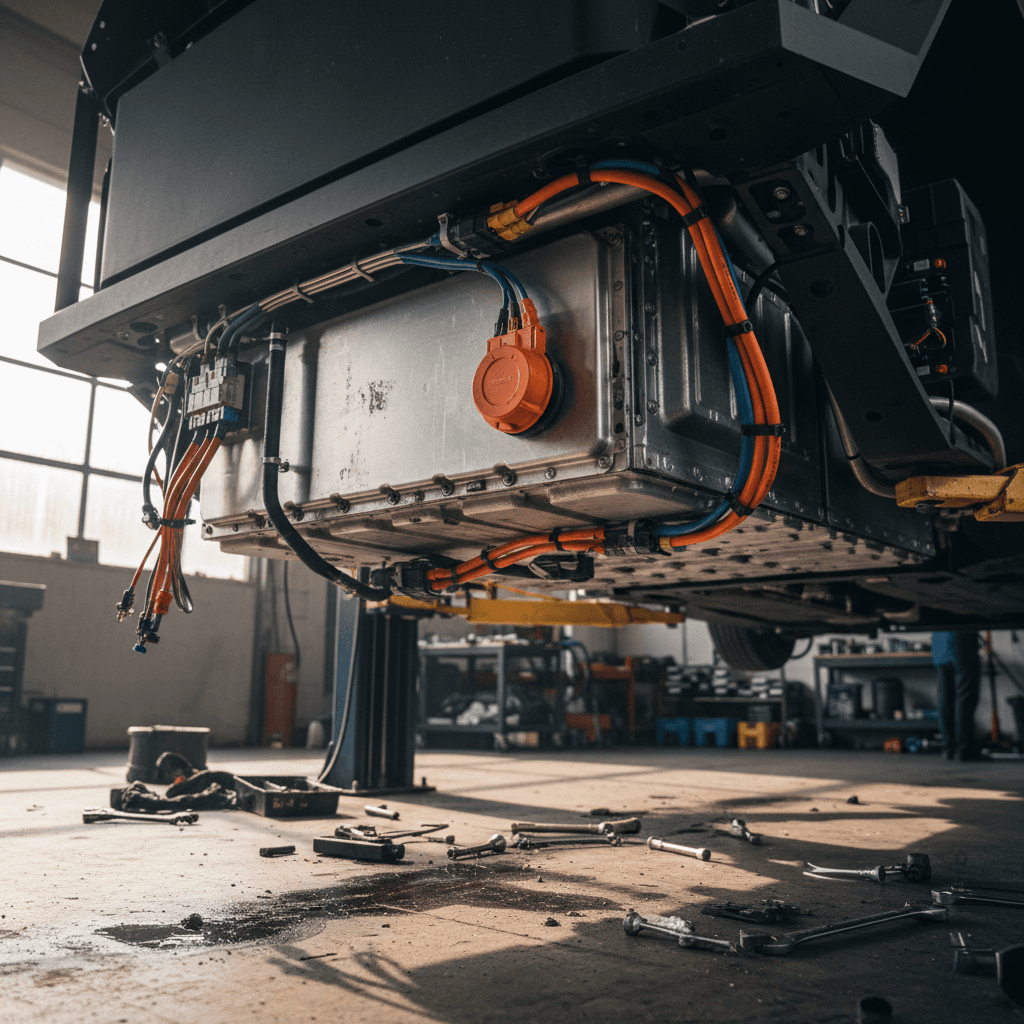
By 2026, the used Cybertruck market is still thin but growing. Battery health is already a major pricing lever on used EVs, and heavy trucks with big packs magnify that effect. A Cybertruck with a strong pack and clean charging history will command a very different price than one showing accelerated degradation or a prior pack replacement.
Battery health vs. used Cybertruck value
Why a detailed battery report matters more than a simple "range looks fine" test drive.
Capacity and balance
Buyers want to know usable capacity today, pack balance between modules, and whether there are early signs of trouble, data you won’t see from the dash alone.
Charging history
Frequent fast‑charging to high states of charge, especially in hot climates, can accelerate wear. A good report surfaces that history, not just current range.
Price impact
A truck with documented healthy pack performance can justify a stronger price. One with unknown or poor battery data will see buyers discount for potential $20k‑plus replacement risk.
This is exactly why Recharged builds a Recharged Score battery health report into every used EV we list. For a used Cybertruck, that means verifying high‑voltage pack health, checking for error codes and software limits, and baking that reality into fair market pricing, so you’re not guessing about a five‑figure component.
Buying a used Cybertruck? Make this non‑negotiable
Managing battery degradation and avoiding premature replacement
You can’t stop battery degradation entirely, but you can slow it down enough that a full Cybertruck battery replacement remains a distant, theoretical event rather than a near‑term bill. Most strategies are simple habit changes.
Habits that protect your Cybertruck battery
1. Treat 80–90% as your daily max
For normal commuting, avoid charging to 100% every night. Reserve full charges for road trips or heavy towing days. Lower average state of charge is gentler on lithium‑ion chemistry.
2. Don’t live at 0% or 100%
Occasional deep discharges are fine, but regularly running the pack to “, ” or parking it full for days on end stresses the cells. Aim to keep the truck between roughly 10–90% most of the time.
3. Be selective with fast charging
DC fast charging is a core Cybertruck feature, but try to use it when you need speed, not as a daily habit. Home Level 2 charging at moderate rates is easier on the pack.
4. Watch temperature
Whenever possible, park in shade and avoid leaving the truck baking at a high state of charge in extreme heat. Tesla’s thermal management helps, but it can’t change physics.
5. Stay current on software
Tesla regularly adjusts thermal management, charging curves, and battery protections via OTA updates. Staying current keeps your pack on the latest protection strategies.
6. Address warnings early
If you see repeated high‑voltage alerts or range behaving oddly, don’t ignore it. Early diagnostics can mean a small repair instead of a future pack replacement.
Don’t DIY high‑voltage repairs
Planning ahead: budgeting, insurance, and timing a trade-in
Because a worst‑case Cybertruck battery replacement is a large, lumpy expense, it’s smart to plan around it, even if you never actually pay it. That planning touches your budget, insurance, and how long you intend to keep the truck.
Budgeting and insurance
- Think in replacement odds, not certainties. Set a small annual amount aside in your mental EV budget (or actual savings) for long‑term battery and high‑voltage work.
- Check comprehensive coverage. Collision, flooding, or debris damage to the pack may be covered under auto insurance, which can turn a five‑figure invoice into a deductible.
- Evaluate extended warranties and service contracts. Third‑party EV warranties are emerging for high‑voltage systems, just scrutinize exclusions and claim history.
Keeping vs. trading your Cybertruck
- Align ownership with the warranty window. Many EV drivers choose to own for roughly 6–8 years, then trade while they still have meaningful battery warranty remaining.
- Use battery health to time your exit. If a report shows accelerated degradation, it may make sense to exit earlier rather than waiting for a big repair.
- Leverage marketplaces that understand EVs. Platforms like Recharged factor verified pack health into offers, so you’re not penalized for vague “EV battery fears.”
How Recharged can help
Ready to find your next EV?
Browse VehiclesTesla Cybertruck battery replacement FAQ (2026)
Frequently asked questions about Cybertruck battery costs
Key takeaways for current and future Cybertruck owners
In 2026, a Tesla Cybertruck battery replacement is a high but manageable risk, not an inevitability. A worst‑case, out‑of‑warranty full pack swap could cost you somewhere in the high‑teens to low‑thirties in thousands of dollars, but most owners will never see that bill, especially if they drive and charge thoughtfully and make ownership decisions around the battery warranty window.
If you’re already in a Cybertruck, focus on healthy habits, watch for warnings, and consider how long you truly plan to keep the truck. If you’re browsing the used market, make verified battery health non‑negotiable. That’s exactly the gap Recharged was built to fill: every used EV we sell comes with a transparent Recharged Score report, fair pricing that reflects real battery condition, and EV‑specialist support from first search to final hand‑off.
Do that, and the Cybertruck’s battery becomes what it should be: a powerful asset that enables towing, powershare, and long‑range adventures, not a mystery box hanging over your ownership experience.