A Tesla’s battery warranty is separate from its shorter Basic Vehicle Limited Warranty, and it also covers the drive unit. For a used-car buyer, the important questions are how much time and mileage remain, whether the battery is still above the capacity threshold, and whether any damage or modification could affect eligibility. The warranty is valuable protection, but it isn’t a promise that the battery will retain its original range or be replaced whenever range declines.
What does the Tesla battery warranty cover?
The warranty covers qualifying defects in the high-voltage battery and drive unit, as well as capacity loss that takes the battery below Tesla’s stated minimum during the applicable term. Tesla may repair the battery or replace components rather than install a completely new pack, and a replacement battery only needs to provide capacity appropriate for the vehicle’s age and mileage. The separate Basic Vehicle Limited Warranty commonly applies for four years or 50,000 miles, whichever comes first, so components outside the battery and drive unit may have already lost coverage on an older used Tesla.
Capacity loss is not the same as a defect
Coverage depends on the model and configuration
Tesla’s commonly published U.S. battery and drive-unit terms provide eight years of coverage, but the mileage limit varies by vehicle and configuration. The table summarizes the standard new-vehicle terms most used-Tesla shoppers are likely to encounter; legacy vehicles, vehicles first sold in another market, and later policy changes can have different terms. Always treat the warranty shown in the vehicle’s Tesla account or app as the controlling record.
Common Tesla battery and drive-unit warranty terms
Coverage ends when either the time limit or mileage limit is reached first.
| Vehicle or configuration | Time limit | Mileage limit | Minimum retention |
|---|---|---|---|
| Model 3 or Model Y Rear-Wheel Drive | 8 years | 100,000 miles | 70% capacity |
| Model 3 or Model Y Long Range or Performance | 8 years | 120,000 miles | 70% capacity |
| Model S or Model X | 8 years | 150,000 miles | 70% capacity |
| Cybertruck | 8 years | 150,000 miles | 70% capacity |
Verify the original in-service date, configuration, mileage, and vehicle-specific documents before relying on coverage.
The time limit begins from the vehicle’s original warranty start date, not the date you buy it used. A Model 3 sold several years ago therefore carries only the unused portion of its original eight-year term, even if it has low mileage. The same first-to-expire rule applies to mileage: coverage ends when the vehicle reaches its limit even if time remains.
What can prevent a Tesla battery warranty claim?
Damage caused by an outside event or improper use generally isn’t covered as a battery defect. Tesla evaluates the vehicle, fault data, condition, and repair history before approving a claim, so a warning message alone doesn’t guarantee warranty service. Exact exclusions depend on the warranty document issued with the vehicle, but several recurring issues deserve attention.
- Collision, impact, flood, fire, or other environmental damage
- Improper towing, lifting, storage, or charging practices
- Repairs or alterations performed outside Tesla procedures
- Unauthorized software, electrical, or battery modifications
- Failure to respond appropriately to battery or thermal warnings
- Normal degradation that remains above the stated capacity threshold
- Range changes caused by temperature, driving speed, tires, terrain, or accessory use
A dashboard range estimate is not a warranty diagnosis
How do you verify coverage on a used Tesla?
You should verify the car’s original warranty start date, current odometer reading, configuration, ownership status, and battery condition before buying. Don’t assume the model year alone tells you how much coverage remains, because a vehicle may have entered service earlier or later than expected. For broader inspection guidance, see Recharged’s used Tesla buying guide and explanation of how to check a used EV battery.
Used-Tesla warranty checklist
Confirm the warranty start date
Check the vehicle-specific Tesla account or service records rather than estimating from the model year.
Match the exact configuration
Rear-wheel-drive and longer-range configurations can carry different mileage limits.
Read the odometer
The time and mileage limits work together, and whichever limit arrives first ends coverage.
Transfer ownership in Tesla’s system
Complete the digital ownership process so you can access vehicle information, service, and available warranty details.
Check for battery alerts
Review active warnings and ask about previous battery, thermal, charging, or drive-unit repairs.
Measure battery health
Use a diagnostic result rather than relying only on the dashboard’s estimated range.
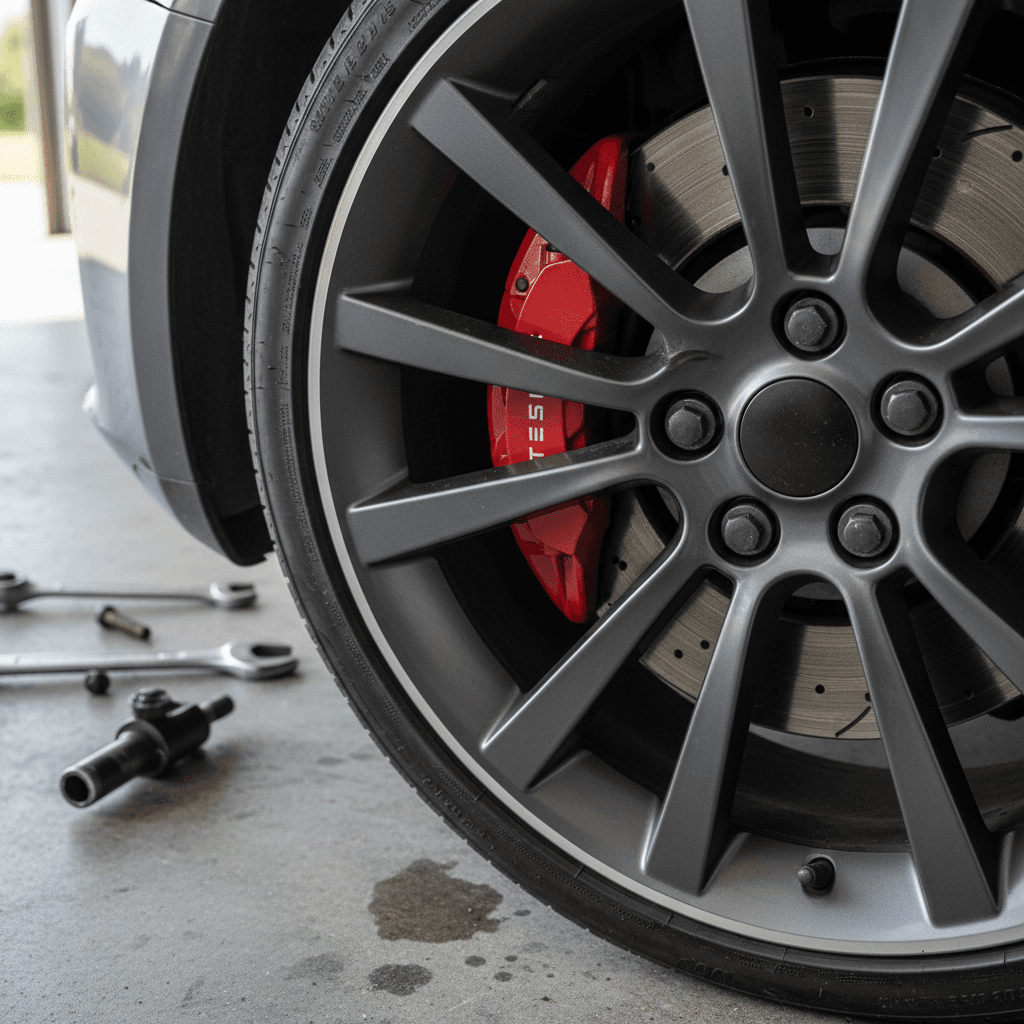
Tesla’s in-car battery health test can help provide context where the feature is available for that vehicle and software version. In the test documented by the Recharged team, the car had to be parked, connected to the internet and an AC charging station, free of active battery or thermal alerts, and below 20% charge before starting. The process discharged the battery below 10%, recharged it to 100%, and could take up to 19 hours, so it requires uninterrupted access to charging.
The warranty tells you what Tesla may cover; a battery-health test tells you more about the battery you’re actually buying. Used-EV shoppers should look at both rather than treating remaining warranty time as a substitute for diagnostics.
What Recharged battery-health data shows
Recharged’s verified battery diagnostics show why measured health matters even when warranty coverage remains. Across 2,242 EVs inspected for the Recharged Score, tested remaining capacity averaged 93.9% of original capacity, while the median was 94.9%. These figures cover the inspected EV fleet rather than Tesla vehicles alone, so they provide used-EV context, not a Tesla-specific degradation forecast.
The practical takeaway is that a battery can be healthy but still have less capacity than when it was new, and that ordinary decline may remain far above Tesla’s 70% warranty threshold. Conversely, remaining warranty time doesn’t prove that a specific vehicle’s pack is healthy today. A verified diagnostic such as the Recharged Score battery-health inspection helps you evaluate present condition alongside future warranty protection.
Recharged data
Used EV battery health
94%
avg remaining capacity
From Recharged battery inspections, not manufacturer estimates.
- Lowest
- 63%
- Median
- 95%
- Highest
- 100%
- Est. range
- 266 mi avg
- Cell balance pass
- 100%
- Quick charges
- 18 avg
- Slow charges
- 65 avg
Average cell imbalance: 7.3 mV
Based on vehicles Recharged tested
Recharged data
Used EV prices at Recharged
$30,997
median list price
Current list prices for matching inventory at Recharged.
- Lowest
- $12,996
- Average
- $34,803
- Highest
- $146,998
Average Recharged Score on these listings
4.8 / 5
Range
3.7 – 5.0
Based on available listings
Every EV is battery-tested with a Recharged Score. Nationwide delivery.
Tesla battery warranty FAQ
The bottom line for used-Tesla shoppers
A Tesla battery warranty provides meaningful protection against covered defects and severe capacity loss, but it shouldn’t replace a pre-purchase battery assessment. Verify the exact vehicle’s start date, mileage limit, configuration, history, and current battery health before deciding what the remaining coverage is worth. Every qualifying vehicle sold through Recharged includes a Recharged Score Report with verified battery health, helping you compare the battery’s present condition with the warranty protection that remains.
Instant offer, trade-in, or consignment. Pickup available.