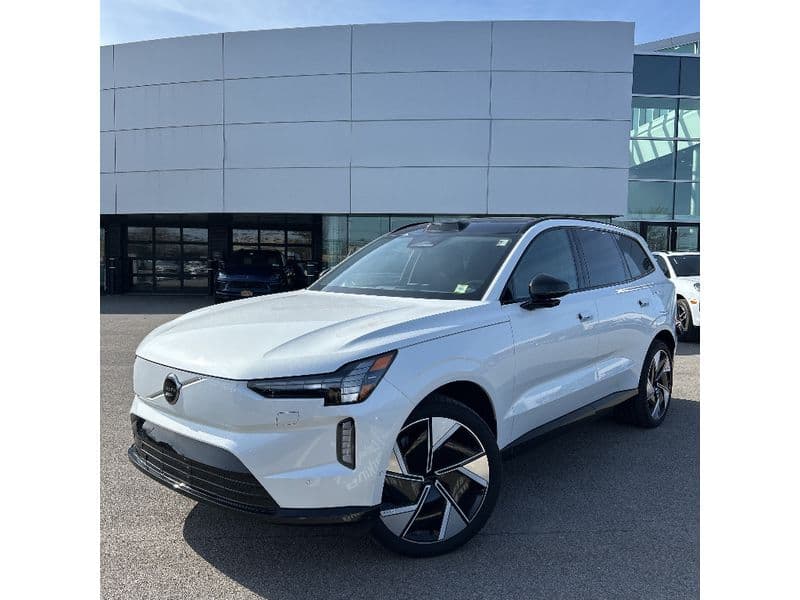
If you drive a Volvo XC60 and are eyeing the all‑electric Volvo EX90, the big question isn’t just range or tech, it’s money. Switching from a Volvo XC60 to a Volvo EX90 for cost savings can absolutely make sense, but the math depends on how you drive, charge, and buy. This guide breaks down fuel, maintenance, insurance, depreciation, and incentives so you can see what the switch really looks like over 5–10 years.
What this guide covers
Why consider switching from a Volvo XC60 to the EX90?
Top reasons XC60 owners look at the EX90
Cost matters, but it’s not the only motivator
Lower running costs
The EX90 replaces gasoline with relatively cheap electricity and cuts many routine maintenance items entirely. Over time, that can add up to thousands of dollars in savings compared with an XC60.
Safety and tech leap
The EX90 is built as a technology flagship: advanced driver‑assistance, lidar‑based sensing, over‑the‑air software updates, and Volvo’s latest safety thinking in a three‑row layout.
Emissions and future‑proofing
Going electric now means you’re ahead of tightening emissions rules, city restrictions, and potential fuel‑price shocks, especially if you keep vehicles for 8–10 years.
Still, none of that matters if the total cost of ownership explodes your budget. To understand switching from XC60 to EX90 cost savings, you need to separate emotion from math, and look at where the EX90 wins (and where it doesn’t) line by line.
Key spec differences that actually affect your costs
Volvo XC60 vs Volvo EX90: cost‑relevant specs (U.S. market, typical trims)
Approximate figures for a gas XC60 vs dual‑motor EX90. Exact numbers vary by model year, engine, and wheel size, but these ranges are enough for cost modeling.
| Metric | Volvo XC60 (gas/mild‑hybrid) | Volvo EX90 (dual‑motor) | Why it matters |
|---|---|---|---|
| Powertrain | 2.0L turbo (with or without mild hybrid) | Dual‑motor all‑wheel‑drive electric | Drives fuel vs electricity costs and maintenance needs. |
| EPA combined efficiency | ~23–25 mpg | ~2.3–2.7 mi/kWh (mid‑size 3‑row EV) | Determines how much energy you use per mile. |
| Fuel/energy type | Premium gasoline recommended | Electricity (AC home + DC fast) | Gas prices are volatile; power prices change slowly and can be optimized. |
| Oil & filters | Regular changes needed | None | Direct maintenance savings for the EX90. |
| Brakes | Conventional wear | Reduced wear with regenerative braking | EVs often stretch brake‑service intervals. |
| Purchase price (new) | Lower than EX90 | Significantly higher MSRP | Up‑front cost for EX90 is higher, even if running costs are lower. |
Use this as a directional comparison, not a replacement for Volvo’s official specs.
MSRP vs total cost
Fuel vs electricity: how much can you really save?
Typical U.S. annual energy costs: XC60 vs EX90
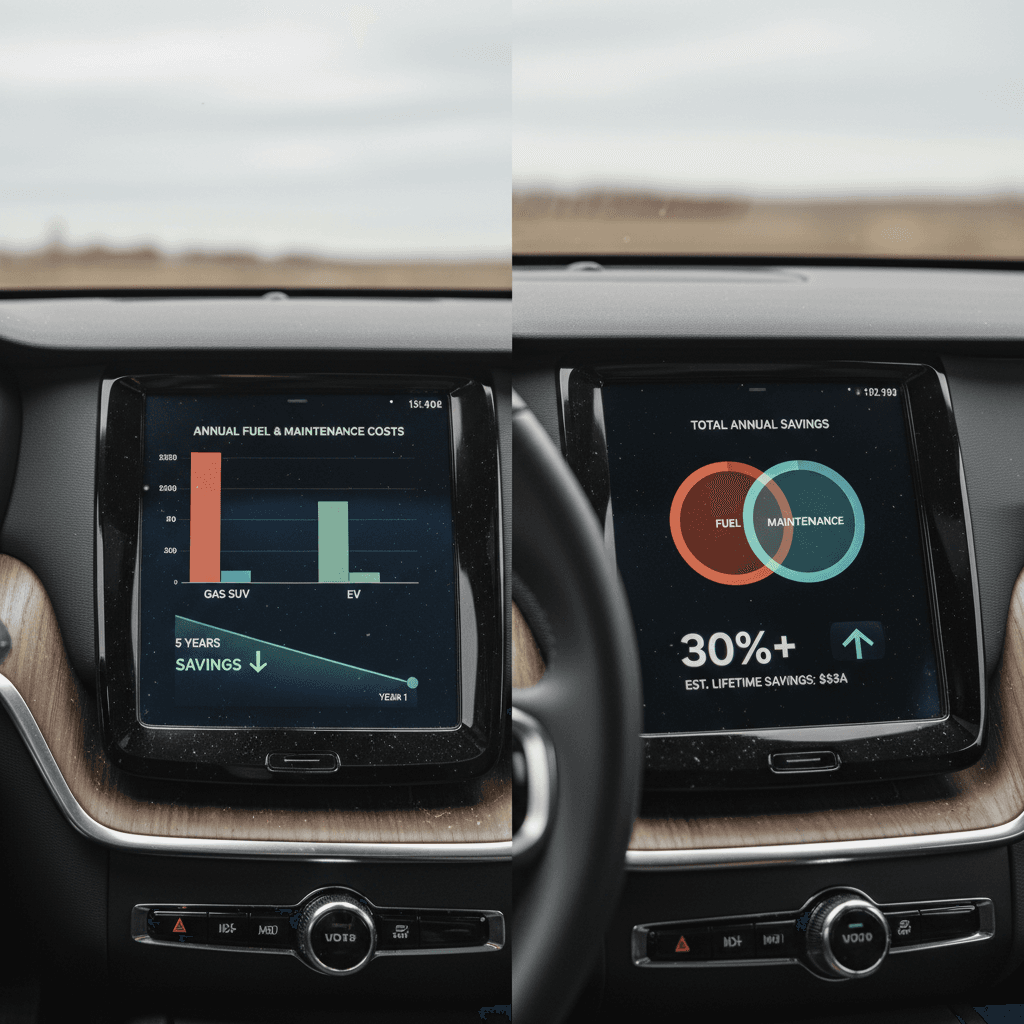
For most drivers, fuel vs electricity is where the biggest and most reliable EX90 savings show up. The XC60 burns gasoline every mile you drive; the EX90 runs on kWh, and those kWh are usually much cheaper per mile, especially if you can charge at home overnight.
- A typical gas XC60 might see 23–25 mpg in mixed driving. At 15,000 miles per year and $3.70/gal, you’re in the $2,200–$2,400 per‑year range on fuel.
- A large three‑row EV like the EX90 will typically get somewhere around 2.3–2.7 miles per kWh in mixed use. That means about 5,600–6,500 kWh per year at 15,000 miles.
- If most of your charging is at home at roughly $0.13–$0.18/kWh, you’re looking at $730–$1,100 per year in electricity, plus a bit more if you use DC fast charging on road trips.
Dial in your own fuel savings
Maintenance and repairs: EX90 vs XC60
Where the EX90 saves
- No oil changes: Modern Volvos call for oil and filter service roughly every 10,000 miles or annually. Over 5–10 years, that adds up.
- Fewer moving parts: No exhaust system, spark plugs, timing components, or transmission fluid service in the traditional sense.
- Brake wear reduction: Regenerative braking lets the motors slow the car, so pads and rotors often last much longer than on a gasoline XC60.
Costs that are similar or higher
- Tires: The EX90 is heavy and torquey. It will likely go through tires at least as fast as your XC60, possibly faster.
- Software and diagnostics: EVs are more software‑defined. Serious issues may require dealer‑level tools, and out‑of‑warranty repairs can be pricey.
- Out‑of‑warranty risks: High‑voltage components are durable, but when they do fail, replacement costs can be significant.
Why many owners see lower maintenance costs
Insurance, registration, and fees
Insurance and registration are the wildcards in any XC60 to EX90 cost savings conversation. They depend heavily on your ZIP code, driving record, credit profile, and the specific trim you choose.
- Insurance: Newer, more expensive vehicles usually cost more to insure. An EX90 might be 10–25% higher than your current XC60 if you keep similar coverage, though advanced safety features can sometimes offset part of that.
- Registration and EV fees: Some states have extra EV registration charges to replace fuel‑tax revenue. Others offer lower registration or access perks like HOV lanes.
- Local incentives: Free or discounted public charging, reduced tolls, or parking perks can tilt the math back in the EX90’s favor.
Don’t ignore insurance quotes
Depreciation and resale value
Depreciation is where a lot of online calculators quietly punt, but it’s critical. The EX90’s higher purchase price means more dollars at risk, even if its percentage depreciation is similar to or better than an XC60’s.
How depreciation shapes XC60 vs EX90 value
Think in terms of dollars lost, not just percentage drops
XC60 depreciation profile
A gas XC60 is a known quantity in the used market. Buyers understand it, and there’s deep demand for mid‑size luxury crossovers. Depreciation is steady but predictable, and the market for clean used examples is broad.
EX90 early‑adopter curve
The EX90 is a new, tech‑heavy EV. Early years can see steeper dollar depreciation as incentives, tech improvements, and market perception shift. Buying a used EX90 once the first owner has taken that hit can dramatically improve your cost equation.
Why used often makes more sense
Tax credits, incentives, and financing
Federal and state incentives can swing the EX90’s cost significantly, but they change frequently and may depend on where the vehicle is built, its price cap, and your personal tax situation. In some cases, you can capture EV value through lease or loan structures even if you don’t qualify for credits directly.
What to check before you pencil in incentives
1. Federal EV incentives
Look up whether the EX90, in the configuration you’re considering, is eligible for any current federal EV tax credit or point‑of‑sale incentive. Rules shift with sourcing and price caps, so don’t assume, verify for the model year you’re buying.
2. State and local programs
Some states, utilities, and cities offer rebates on EV purchases, home charger installation, or off‑peak charging. Others add EV registration fees. Include both sides of the equation.
3. Financing rates and terms
EVs sometimes qualify for special financing offers compared with gasoline models. Even a 1–2 percentage‑point rate difference over 60–72 months can move your monthly payment noticeably.
4. Leasing vs buying
If you lease, the lessor may claim any available credits and pass some or all of the benefit into your monthly payment. That can make the EX90 more payment‑competitive with an XC60, even before fuel savings.
Use pre‑qualification to see the full picture
5‑year cost comparison example: XC60 vs EX90
Let’s walk through a realistic 5‑year scenario for a U.S. driver doing 15,000 miles per year. These numbers are simplified but directionally useful for thinking about switching from a Volvo XC60 to a Volvo EX90 cost savings.
Illustrative 5‑year cost comparison (15,000 miles/year)
Rounded estimates for a typical American driver. Your actual numbers will vary by state, model year, and driving style.
| Category (5 years) | Volvo XC60 (gas) | Volvo EX90 (electric) | Notes |
|---|---|---|---|
| Fuel / Electricity | $11,500 | $4,500 | XC60: ~$2,300/yr in gasoline. EX90: ~$900/yr in electricity. |
| Maintenance & repairs | $5,000 | $3,000 | XC60: engine, transmission, exhaust, more frequent brakes. EX90: fewer routine services. |
| Tires | $2,000 | $2,200 | Heavier EX90 could push slightly higher tire spend. |
| Insurance | $7,500 | $8,500 | Assumes EX90 is ~$200/yr more to insure. |
| Registration & fees | $1,500 | $1,800 | Includes potential EV fees in some states. |
| Total running costs | $27,500 | $20,000 | +~$7,500 advantage for EX90 over 5 years, before financing & depreciation. |
Assumes both vehicles bought used, financed similarly, ignoring tax credits for simplicity so you can clearly see operating‑cost differences.
What this example leaves out
How to calculate your own Volvo EX90 savings
Step‑by‑step: build your personal XC60 → EX90 cost model
1. Gather today’s XC60 numbers
Write down your actual fuel spend for the last 6–12 months, your average mpg (from the trip computer or fuel receipts), and your maintenance/repair invoices. This becomes your real‑world baseline.
2. Estimate EX90 energy cost
Multiply your annual miles by an efficiency assumption (for a big 3‑row EV SUV, something like 2.3–2.7 mi/kWh is reasonable), then multiply kWh by your home electricity rate. Add a buffer if you expect frequent fast charging.
3. Adjust maintenance assumptions
Start by cutting engine‑related services (oil, plugs, timing, emission system work) from your budget, but keep tires and general wear items. Add a small reserve for unexpected EV‑specific repairs if you’re past warranty.
4. Get real insurance quotes
Ask your insurer (or a comparison site) for an EX90 quote with your exact coverage. Use that instead of a generic percentage so you’re not surprised later.
5. Factor in financing and depreciation
Compare the out‑the‑door prices of the XC60 you’d otherwise buy vs the EX90 you’re considering (ideally both used). Estimate resale after 5–7 years based on current used EV and Volvo markets.
6. Sanity‑check with an EV specialist
If the math looks close but you’re unsure about things like battery health, range in your climate, or charging access, talk to an EV‑savvy retailer. At Recharged, our specialists walk through this exact exercise with XC60 owners moving into three‑row EVs.
Buying a used Volvo EX90 with confidence
If you want the EX90 experience without taking the full new‑car price hit, a used EX90 is where Recharged is designed to help. The challenge with any used EV, especially a tech‑dense flagship like the EX90, is understanding what you’re really buying beyond the odometer reading.
How Recharged helps de‑risk a used EX90 purchase
Turn “EV unknowns” into clear, inspectable data points
Recharged Score battery health
Every EV on Recharged, including three‑row SUVs like the EX90, comes with a Recharged Score Report that includes verified battery‑health diagnostics. You see how the pack is performing versus new, so you’re not guessing about the most expensive component.
Transparent pricing & comps
We benchmark each vehicle against the broader used EV market so you can see whether a given EX90 is fairly priced, without the usual haggling guesswork of traditional dealers.
Digital purchase, real‑world support
From financing and trade‑in to nationwide delivery and our Experience Center in Richmond, VA, Recharged is built to simplify the switch from a gas Volvo to an electric one, with EV specialists focused on long‑term ownership, not just the sale.
Ready to find your next EV?
Browse VehiclesTurn your XC60 into EX90 equity
FAQ: Switching from XC60 to EX90 cost savings
Frequently asked questions about Volvo XC60 → EX90 savings
Bottom line: is switching from XC60 to EX90 worth it?
If you’re doing average‑to‑high annual mileage, have access to home charging, and are willing to buy a lightly used Volvo EX90 rather than chasing the newest VIN off the lot, switching from a Volvo XC60 can absolutely deliver meaningful long‑term cost savings. The EX90’s higher upfront price is real, but its lower energy and maintenance costs chip away at that gap year after year.
The key is to run your own numbers, based on your fuel receipts, your local electricity rates, and real quotes on insurance and financing, rather than relying on generic calculators. If you’d like help modeling that side‑by‑side and finding a used EX90 with verified battery health, Recharged was built exactly for that: transparent diagnostics, fair pricing, digital‑first shopping, and EV‑specialist guidance from your first question through delivery.