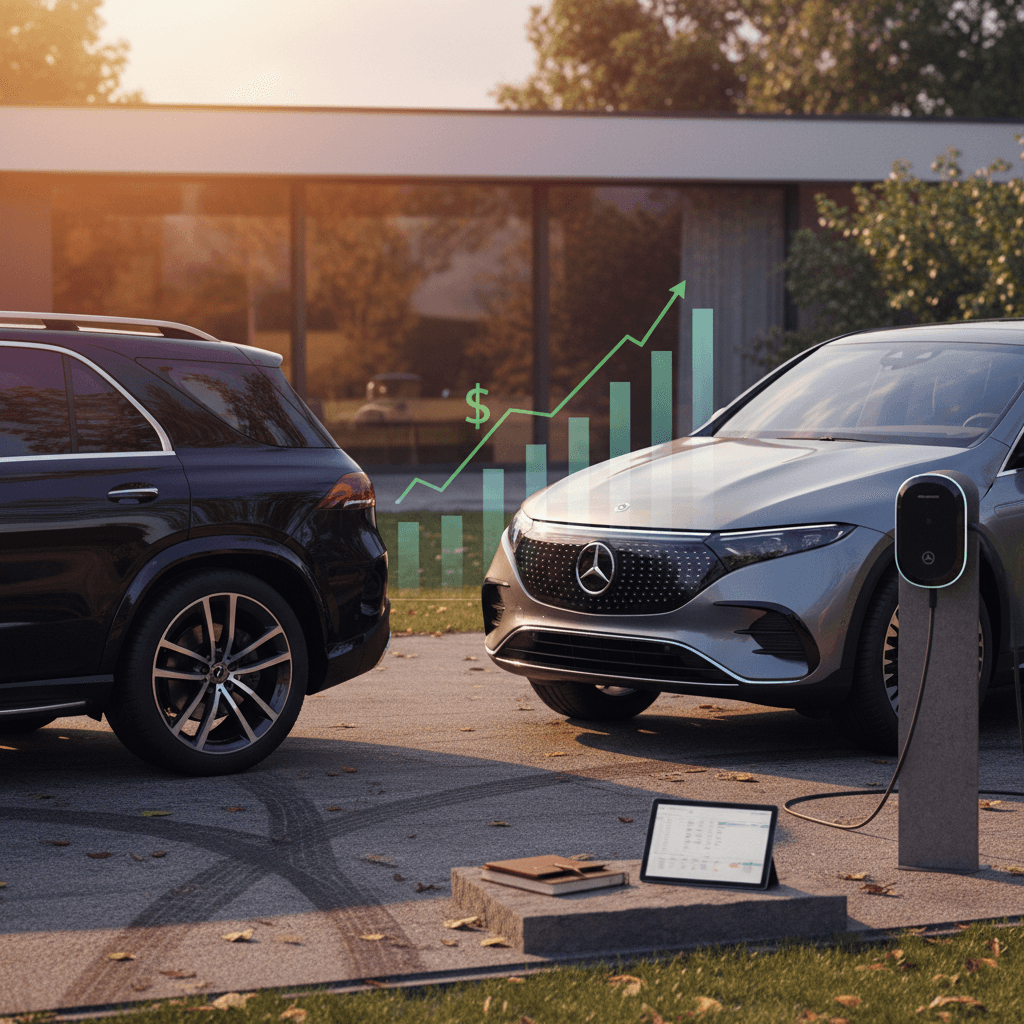
If you own a Mercedes GLE and you’re eyeing the all‑electric Mercedes EQS SUV, you’re probably wondering one thing above everything else: **how much will I actually save** by switching from gasoline to electricity? This guide walks through the real‑world cost savings of switching from a Mercedes GLE to a Mercedes EQS SUV, using today’s U.S. gas and electricity prices and realistic driving assumptions, not wishful thinking.
Who this guide is for
Why GLE owners are looking at the EQS SUV
The GLE and the EQS SUV appeal to the same driver: you like **luxury, space, and refinement**, but you’re also paying attention to fuel bills and where the market is headed. With national gasoline prices bouncing around the **$3–$4 per gallon** range and electricity averaging roughly **17 cents per kWh** residentially in recent years, many GLE owners are running the numbers and realizing that fuel spend is no longer a rounding error, it’s a budget line.
- You’re putting 10,000–15,000 miles a year on a gasoline GLE and feeling the fuel costs.
- You like the Mercedes cabin experience and don’t want to downshift to a mainstream brand just to go electric.
- You’re worried about future resale value for large gas SUVs.
- You’re curious if a used EQS SUV could deliver lower monthly costs than keeping or replacing your GLE.
Before we dig into dollars, we need a fair **apples‑to‑apples comparison** between common GLE and EQS SUV variants.
Baseline specs: GLE vs EQS SUV
Mercedes offers multiple engines in the GLE and several powertrains in the EQS SUV. For cost comparisons, we’ll use mainstream configurations many U.S. buyers choose:
Representative GLE vs EQS SUV models for cost comparison
Typical trims a U.S. luxury SUV shopper might cross‑shop.
| Model | Powertrain | EPA combined efficiency | Energy use assumption |
|---|---|---|---|
| 2024 Mercedes GLE 350 4MATIC | 2.0L turbo gas, AWD | 23 mpg combined (approx.) | 4.35 gallons per 100 miles |
| 2024 Mercedes GLE 450 4MATIC | 3.0L mild‑hybrid gas, AWD | 22 mpg combined (approx.) | 4.55 gallons per 100 miles |
| 2024 Mercedes EQS 450+ SUV (RWD) | All‑electric | ~39 kWh/100 miles (EPA data, rounded) | 39 kWh per 100 miles |
| 2025 Mercedes EQS 580 4MATIC SUV | All‑electric, dual‑motor AWD | ~42 kWh/100 miles (EPA data, rounded) | 42 kWh per 100 miles |
These aren’t the only variants, but they give a realistic benchmark for fuel and electricity use.
Always verify your own model’s ratings
Fuel vs electricity costs: how much can you save?
To keep the math approachable, we’ll work with simple, conservative assumptions and then show how things change with higher or lower prices. You can easily swap in your own numbers.
Core cost assumptions used in this guide
With those assumptions, here’s how **fuel vs electricity** pencils out for 12,000 miles per year.
Annual energy cost: GLE vs EQS SUV (12,000 miles/year)
Using 22–23 mpg for GLE trims and 39–42 kWh/100 miles for EQS SUV trims, at $3.25/gal gasoline and $0.17/kWh electricity.
| Vehicle | Energy per 100 miles | Annual fuel/electricity use | Annual energy cost (approx.) |
|---|---|---|---|
| GLE 350 4MATIC | 4.35 gal/100 mi | 522 gallons | ~$1,695/year |
| GLE 450 4MATIC | 4.55 gal/100 mi | 546 gallons | ~$1,775/year |
| EQS 450+ SUV | 39 kWh/100 mi | 4,680 kWh | ~$795/year |
| EQS 580 4MATIC SUV | 42 kWh/100 mi | 5,040 kWh | ~$860/year |
These are illustrative numbers; your local gasoline and power rates will change the outcome.
Headline savings number
If gas prices spike
At $4.00 per gallon (not unusual in recent years), that same GLE 450 jumps to roughly $2,185 a year in fuel, while the EQS 580 still sits around $860 if your power rate doesn’t change much. Your annual savings grow to roughly $1,300.
If your electricity is expensive
Even at $0.25/kWh, a high but realistic rate in some states, the EQS 580’s annual electricity cost at 12,000 miles is about $1,260. That still undercuts the GLE 450 at $3.25/gal and narrows but doesn’t erase the advantage if gas is higher.
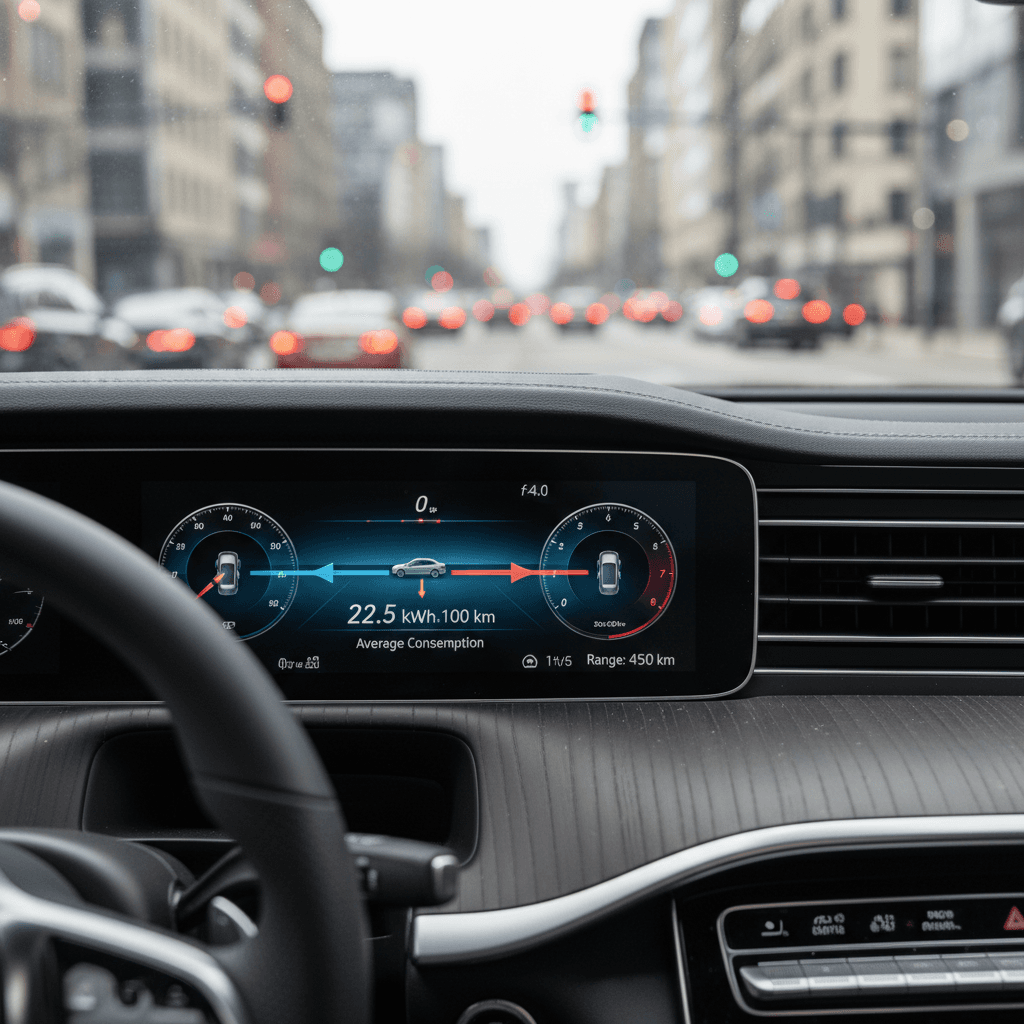
Home charging makes the biggest difference
Maintenance and repairs: gas SUV vs electric SUV
Fuel isn’t the only line item that changes when you go electric. The GLE is a sophisticated luxury SUV with a **combustion engine, multi‑speed transmission, exhaust, and complex emissions systems**. The EQS SUV removes that entire stack and replaces it with an electric drivetrain and high‑voltage battery.
Where the EQS SUV tends to save you money
Areas where EV simplicity helps, without sacrificing luxury
Oil & engine service
GLE: Regular oil changes, spark plugs, belts, filters, and periodic engine diagnostics.
EQS SUV: None of that. Routine maintenance focuses on cabin filters, brake fluid checks, and inspections.
Transmission & driveline
GLE: Multi‑gear automatic transmission, transfer case, and associated fluids.
EQS SUV: Single‑speed reduction gear. Fewer moving parts typically mean fewer mechanical surprises.
Brakes & wear items
GLE: Heavier reliance on friction brakes in daily driving.
EQS SUV: Aggressive regenerative braking generally extends pad and rotor life, especially in city driving.
Luxury‑brand maintenance costs are highly variable, but it’s reasonable for a typical GLE owner to spend **$800–$1,200 a year** on scheduled maintenance and minor wear items, especially out of warranty. An EQS SUV owner might realistically spend **$400–$700 a year** in the same period, aided by fewer fluids and the gentler use of brakes.
What about big EV repair bills?
Insurance, depreciation and resale value
Insurance and depreciation are where the numbers get murkier, because they depend heavily on **your ZIP code, driving record, and how much you pay for the vehicle in the first place**. But there are trends worth noting.
- Historically, large luxury SUVs like the GLE have held value relatively well, but they’re facing long‑term headwinds as regulations and buyer preferences move toward electrification.
- EQS SUVs, like many early EVs, have seen **steeper early depreciation**, which is bad news for first owners but **great news if you’re buying used**.
- Insurance rates for EQS SUVs can be similar to or slightly higher than a comparable GLE in some markets, reflecting higher repair costs for advanced electronics and aluminum bodywork. In other areas, they’re surprisingly close. Quotes matter more than averages here.
New vs used: different depreciation curves
Real-world 3‑year cost comparison
Let’s put the major pieces together for a realistic three‑year scenario. We’ll assume you currently own (or are about to buy) either a late‑model GLE 450 or an EQS 580 SUV and plan to keep it **three years**, driving 12,000 miles a year. Numbers are rounded and illustrative.
Illustrative 3‑year cost comparison: GLE 450 vs EQS 580 SUV
Assumes 36,000 miles total, $3.25/gal gasoline, $0.17/kWh home electricity, and typical luxury‑brand maintenance.
| Category (3 years) | GLE 450 4MATIC | EQS 580 4MATIC SUV |
|---|---|---|
| Fuel/electricity | ~$5,325 | ~$2,580 |
| Routine maintenance & wear | ~$3,000 | ~$1,800 |
| Total energy + routine maintenance | ~$8,325 | ~$4,380 |
| Estimated 3‑year savings vs GLE , | , | ~$3,900 |
Purchase price and financing will move these numbers up or down, but the relative differences in operating costs remain similar.
Think of that nearly **$4,000 difference** as a cushion that can help offset a slightly higher purchase price, higher insurance, or future EV‑specific repairs. And remember, if gas heads closer to $4 a gallon and your electricity rate stays about the same, that gap widens.
How this plays into your monthly payment
Charging lifestyle: home vs public for a former GLE driver
Driving a GLE, you’re used to five‑minute fuel stops and not thinking much about where the energy comes from. An EQS SUV changes the rhythm, especially if you can charge at home.
How your routine changes when you switch
The biggest cost savings come with small habit changes
Home charging dominant
- Plug in most nights; wake up with a full "tank."
- Electricity cost is predictable and often cheaper overnight.
- Best for owners with a garage or driveway and access to a 240‑volt circuit.
This is where the EQS SUV’s running‑cost advantage over a GLE is strongest.
Public charging dominant
- Rely on DC fast charging and workplace/public Level 2.
- Per‑mile cost can edge closer to gasoline, especially at high‑priced fast chargers.
- You trade some savings for flexibility if home charging isn’t practical.
The EQS SUV can still be cheaper to run than a GLE, but the savings are smaller.
Plan your charging like you plan fuel on a road trip
How buying used changes the math
So far, we’ve mostly compared running costs. On the **purchase‑price side**, buying a used EQS SUV can dramatically tilt the equation in your favor because early luxury EVs often experience **heavy first‑owner depreciation**. That’s painful for them and extremely helpful for you.
Scenario: late‑model used GLE vs used EQS SUV
Suppose you’re choosing between a 3‑year‑old GLE and a 3‑year‑old EQS SUV. In many U.S. markets, you’ll find that the **used EQS SUV’s asking price** is surprisingly close to, or sometimes below, what a comparable‑age GLE commands, despite a much higher original MSRP.
Why Recharged focuses on used EVs
Recharged exists for exactly this kind of opportunity. By combining **EV‑specialist inspections**, a verified **Recharged Score battery health report**, and transparent pricing, Recharged makes it easier to capitalize on that depreciation curve without taking on unknown battery risk.
Stacking savings with a used EQS SUV
Checklist: deciding if switching from GLE to EQS SUV makes sense
Key questions before you make the switch
1. How many miles do you actually drive?
If you’re in the 10,000–15,000 miles‑per‑year range, you stand to see meaningful fuel‑to‑electricity savings. If you only drive 6,000 miles a year, the financial payoff will be slower, so other benefits (quiet, performance, tech) may matter more.
2. Can you reliably charge at home?
A garage or driveway with access to a 240‑volt circuit unlocks the lowest‑cost, most convenient charging. If you’re apartment‑bound and dependent on public charging, run the numbers using your local fast‑charging rates.
3. What are your local gas and power prices?
Look up your utility’s all‑in residential kWh rate (including fees) and the typical price of premium gasoline in your area. Plug them into the simple per‑mile formulas from this article to see your personalized savings.
4. How long do you plan to keep the vehicle?
The longer you keep the EQS SUV, the more its lower running costs compound. If you swap every 18–24 months regardless, depreciation and incentives will weigh more heavily in your decision than fuel savings alone.
5. Are you comfortable with EV charging on road trips?
If your GLE sees frequent cross‑country use, spend time with route‑planning apps and EQS SUV charging videos. Make sure you’re comfortable with the **time trade‑off** at DC fast chargers in exchange for lower energy costs.
6. Are you buying new or used?
If you’re buying used, the EQS SUV’s steeper early depreciation can work in your favor. Tools like Recharged’s **Recharged Score** help ensure the discount you’re getting isn’t hiding battery or condition issues.
FAQs: switching from Mercedes GLE to EQS SUV
Frequently asked questions about GLE vs EQS SUV costs
Bottom line: should you make the switch?
If you’re driving a Mercedes GLE today and you’re considering a move to the Mercedes EQS SUV, the numbers are on your side, especially if you drive a typical 10,000–15,000 miles a year and can charge at home. Under reasonable assumptions, switching from a GLE 450 to an EQS SUV can trim close to **$4,000 from your three‑year running costs**, while also giving you a quieter, smoother, and more future‑proof driving experience.
The key is to look at the **whole picture**: purchase price (new or used), energy costs in your area, realistic maintenance expectations, and your charging setup. This is where a used EQS SUV with a verified **Recharged Score battery health report**, fair‑market pricing, and expert EV guidance can turn a “maybe someday” idea into a confident decision today.
If you’re ready to see how a used Mercedes EQS SUV stacks up against keeping your GLE, you can browse curated EV inventory, explore your **financing** options, get an **instant offer or trade‑in value** for your GLE, and, if you’d like, work entirely online with EV‑specialist support, and even doorstep delivery. For many GLE owners, that combination of lower operating costs and a smoother buying experience makes switching to an EQS SUV less of a gamble and more of a smart next move.