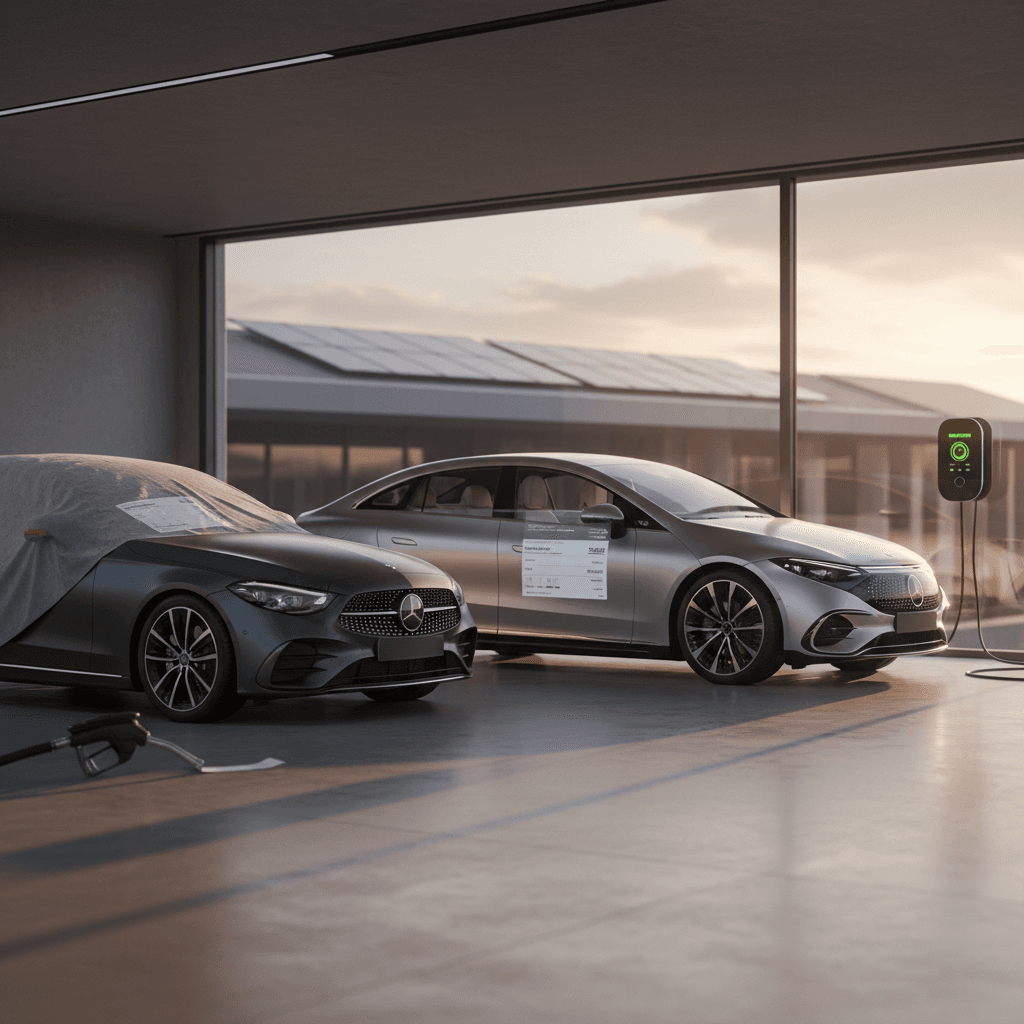
If you own a Mercedes C‑Class and you’re eyeing the electric Mercedes EQE, you’re probably wondering one thing: how much will I actually save? This guide walks through the real‑world math of switching from a gasoline C‑Class to an electric EQE in the U.S., fuel vs electricity, maintenance, depreciation, and how buying a used EQE through a marketplace like Recharged can tilt the numbers even further in your favor.
Assumptions we’ll use for the math
Why owners are jumping from C‑Class to EQE
C‑Class vs EQE: what’s driving the switch?
Same badge on the steering wheel, totally different cost story under the skin.
Running costs keep climbing
Luxury without the tailpipe
Used EQE prices are softening
Baseline: which C‑Class vs which EQE are we comparing?
“C‑Class” and “EQE” each cover several powertrains and trims, so let’s define a realistic pair an American owner might cross‑shop in 2026.
Representative models used in this cost comparison
You can mentally substitute your exact trim; the economics won’t swing wildly unless you’re in an AMG or a plug‑in hybrid.
| Model | Drivetrain | Typical real‑world efficiency | Fuel/energy type | Notes |
|---|---|---|---|---|
| 2023–2025 C300 4MATIC | 2.0L turbo I4, 9‑speed auto, AWD | ≈30 mpg highway, high‑20s mixed | Premium gasoline | Most common modern U.S. C‑Class sedan |
| 2023–2025 EQE 350+ (RWD) or EQE 350 4MATIC | Dual‑motor EV (or single‑motor RWD), 90+ kWh battery | ≈30 kWh/100 miles (about 3.3 mi/kWh) | Electricity | EPA‑style mixed efficiency, real owners report 3–3.5 mi/kWh in normal driving |
EPA and market‑typical figures; rounded for clarity.
Beware: plug‑in C‑Class and AMG trims skew the math
Fuel vs electricity: how much can you save?
Annual energy cost: C‑Class vs EQE (typical U.S. driver)
Let’s unpack the math. A modern C300 driven 12,000 miles a year at around 27 mpg combined burns about 445 gallons of gasoline annually. If pump prices average $3.10–$3.50 over the next several years, you’re spending roughly $1,400 a year on fuel. The EQE driving the same 12,000 miles at 30 kWh/100 miles (that’s 3.3 miles per kWh) uses about 3,600 kWh annually. At 16–17¢ per kWh, home charging lands near $600–$650 a year. The moment you stop buying gasoline, your cost‑per‑mile drops in half.
What if gas goes back to $4+?
If your local pump price trends toward $4 per gallon, that same C‑Class fuel bill jumps to roughly $1,780 per year. The EQE’s electricity cost barely moves unless your utility rates spike, pushing your annual savings toward or above $1,100.
What if you rely on DC fast charging?
Public DC fast chargers often price power like liquid gold. If you road‑trip constantly and pay 40–50¢/kWh, your annual EQE “fuel” could approach $1,400, erasing most of the savings. The big wins assume you can charge primarily at home or at lower‑cost workplace chargers.
Run your own numbers in five minutes
Maintenance and repairs: where EVs quietly win
The C‑Class is a sophisticated little Swiss watch: direct‑injected turbo engine, exhaust after‑treatment, 9‑speed automatic, all of it cycling away every time you press the starter button. The EQE simply…doesn’t have most of that hardware. Fewer moving parts, fewer fluids, no scheduled spark plugs or timing chains.
Typical maintenance differences over 3 years
Smoothed, real‑world style, not dealer “worst case” menus.
Oil & engine service
EQE: No engine, no oil. Cabin filter and brake fluid at longer intervals.
Wear items & brakes
EQE: Regenerative braking dramatically extends pad and rotor life; no transmission fluid service in the traditional sense.
Big‑ticket surprises
EQE: Most major risk is software gremlins and out‑of‑warranty electronics; the traction battery is usually under long‑term warranty.
In practice, many C‑Class owners see $600–$900 a year in maintenance and minor repairs once the car is out of its free‑service window, while EQE owners often land closer to $300–$500, especially if they avoid the dealer for basic items like tires and cabin filters. Over three years, it is entirely reasonable to expect an extra $900–$1,200 in maintenance savings with the EQE, assuming no major out‑of‑warranty drama for either car.
EVs aren’t maintenance‑free
Insurance, registrations and other line items
Insurance on a new‑ish EQE can be slightly higher than on an equivalent C‑Class because repair complexity and parts prices are higher, and the sticker price often is too. On the flip side, some states offer lower registration fees or EV incentives that effectively rebate a chunk of what you’re paying in premiums.
- In many U.S. zip codes, expect EQE insurance to run 5–15% higher than a comparable C‑Class, especially if the EQE is newer and worth more on paper.
- A few states still tack on additional annual EV registration fees, which can nibble $100–$200 a year out of your fuel savings.
- State and utility incentives, discounted nighttime rates, bill credits, or home‑charger rebates, can partially or fully cancel those extra costs.
Where a used EQE changes the math
Depreciation and resale: C‑Class vs EQE
Depreciation is where the storyline gets subtle. Historically, gasoline C‑Class sedans depreciate briskly in the first three years and then settle into a predictable glide path. Early EQE models, like most new EVs, have depreciated faster up front thanks to rapid tech change, incentives, and shifting sentiment.
New to new: similar pain, different timing
If you buy new, a C‑Class and an EQE can both shed 40–50% of their value in the first 4–5 years. The C‑Class does it in a smoother curve; the EQE tends to plunge faster at first and then level out.
Used to used: EQE can be a bargain
If you’re stepping from a 3–5‑year‑old C‑Class into a 2–4‑year‑old EQE, you’re often buying the EQE at that post‑plunge “value plateau.” That means you capture the running‑cost savings without standing under the steepest part of the depreciation curve.
How Recharged helps de‑risk a used EQE
Ready to find your next EV?
Browse Vehicles3‑year cost comparison: C‑Class vs EQE
Let’s pull it all together. Assume you currently own a late‑model C300 outright and are considering moving into a used EQE of similar market value through a trade‑in or sale. We’ll ignore financing costs to keep the comparison clean and focus on operating costs.
Illustrative 3‑year ownership costs (12,000 miles/year)
These are conservative, rounded estimates for a typical U.S. driver who charges an EQE mostly at home.
| Category (3 years) | C‑Class (gas) | EQE (electric) | Notes |
|---|---|---|---|
| Fuel / electricity | ≈$4,200 | ≈$1,900 | Assumes $3.20/gal gas; 17¢/kWh home power; light public charging. |
| Maintenance & minor repairs | ≈$2,100 | ≈$1,200 | Higher routine service and wear on the gas car. |
| Insurance & fees difference | Baseline | +≈$300 | Slightly higher insurance and some EV fees netted against incentives. |
| Total running costs (3 yrs) | ≈$6,300 | ≈$3,400 | Roughly $2,900 saved before financing/taxes. |
| Per‑mile cost (energy + maintenance) | ≈17.5¢/mi | ≈9.4¢/mi | Ignoring insurance and taxes. |
Your actual numbers will vary; this is a framework, not an invoice.
Quick rule of thumb
Charging lifestyle: home vs public cost differences
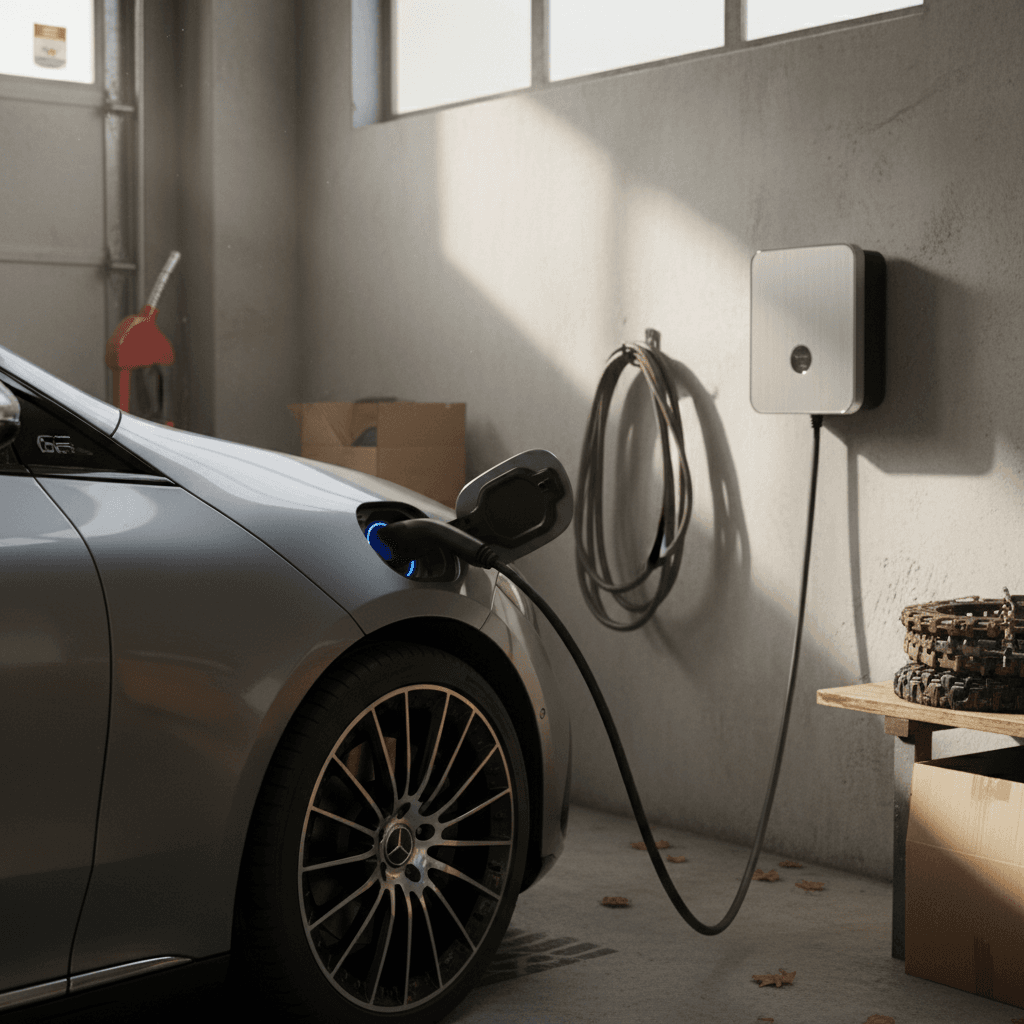
Fuel savings are only as good as your charging reality. An EQE that lives on a 240‑volt home charger is a very different financial animal from one that lives on DC fast chargers at highway rates.
How your charging pattern changes the savings story
1. Mostly home, occasional public
This is the sweet spot. You pay near‑retail residential rates 80–90% of the time and sprinkle in the odd road‑trip fast charge. Expect maximum savings vs your C‑Class.
2. Home + free or cheap workplace charging
You win twice: low home rates plus subsidized or free workplace charging. Over 3–5 years, this can turn the EQE into a running‑cost cheat code.
3. Apartment living, limited home charging
If you rely on mixed‑bag public Level 2 (paid parking garages, shopping centers) the savings shrink but rarely disappear entirely, especially if gas is expensive where you live.
4. Heavy DC fast‑charging usage
If most of your energy comes from 150–350 kW highway chargers at 40–60¢/kWh, treat the EQE as roughly cost‑neutral on “fuel” vs an efficient C‑Class. You’re switching for performance and experience more than money.
Don’t forget home charger installation
Battery health and range: what to expect
With any used EV, battery health is the elephant in the garage. A healthy EQE pack should still deliver comfortable real‑world range after several years; a badly abused one can eat into your savings by forcing more frequent charging stops or, in the worst case, out‑of‑warranty repair.
EQE battery reality vs fear
Separating internet horror stories from normal aging.
Normal degradation
What accelerates wear
How Recharged measures it
Range expectations in the real world
How to structure the switch: trade‑in & financing
The soft underbelly of any cost‑savings story is how you actually get from one car to the other. If you roll negative equity or overpay for the EQE, three years of fuel savings won’t bail you out. You want the numbers tight and transparent.
Leverage your C‑Class value intelligently
Get firm offers for your C‑Class from multiple sources, not just the dealer down the street. Platforms like Recharged can give you an instant offer or consignment option, so you can see whether selling outright or trading is smarter.
Financing and payment comfort
Even if your EQE payment is slightly higher than what you spend today, factor in lower fuel and maintenance. Recharged offers EV‑friendly financing and can show your estimated monthly total cost, not just the loan payment in isolation.
Digital, end‑to‑end makes the switch easier
Checklist before you ditch your C‑Class
Pre‑switch checklist: C‑Class to EQE
Confirm your charging plan
Do you have, or can you install, home Level 2 charging? If not, map out nearby Level 2 and DC fast‑charging options and their pricing. Home charging is where most of the savings come from.
Know your real mileage
Pull your service records or trip‑computer data. If you drive under ~8,000 miles a year, savings will accrue more slowly; if you’re over 15,000, the EQE can be a financial slam‑dunk.
Get concrete quotes
Use valuation tools and offers to know exactly what your C‑Class is worth today. Compare that to firm pricing on specific used EQE examples, not hypothetical window stickers.
Review incentives & fees
Check state and utility EV incentives, EV‑specific registration fees, and special rate plans for home charging. These can swing hundreds of dollars a year either way.
Scrutinize battery health
On any used EQE, insist on objective battery data. With Recharged, the Recharged Score Report pulls this into one place so you’re not buying blind.
Run a 3–5 year horizon
Think in multi‑year blocks, not months. Even if your upfront costs rise a bit, cumulative fuel and maintenance savings over 3–5 years can still make the EQE the cheaper companion.
FAQ: Switching from Mercedes C‑Class to EQE
Frequently asked questions
Bottom line: is switching to a Mercedes EQE worth it?
Switching from a Mercedes C‑Class to a Mercedes EQE isn’t a miracle money hack; it’s a structural shift in how you spend on transportation. You’re trading gasoline volatility and engine complexity for a bigger, quieter, more digital car whose main consumable is electricity. For many American drivers, with a driveway, a Level 2 charger, and five‑figure annual mileage, that trade unlocks hundreds of dollars a year in savings and a nicer daily experience.
If you approach it thoughtfully, buying a used EQE with verified battery health, structuring your C‑Class trade‑in or sale intelligently, and embracing home charging, the EQE can undercut your C‑Class on total cost of ownership while feeling like a class‑up move behind the wheel. That’s exactly the transition Recharged was built to support: transparent pricing, a Recharged Score battery report on every EV, financing and trade‑in help, and nationwide delivery when you’re ready to swap the gas pump for the charging cable.