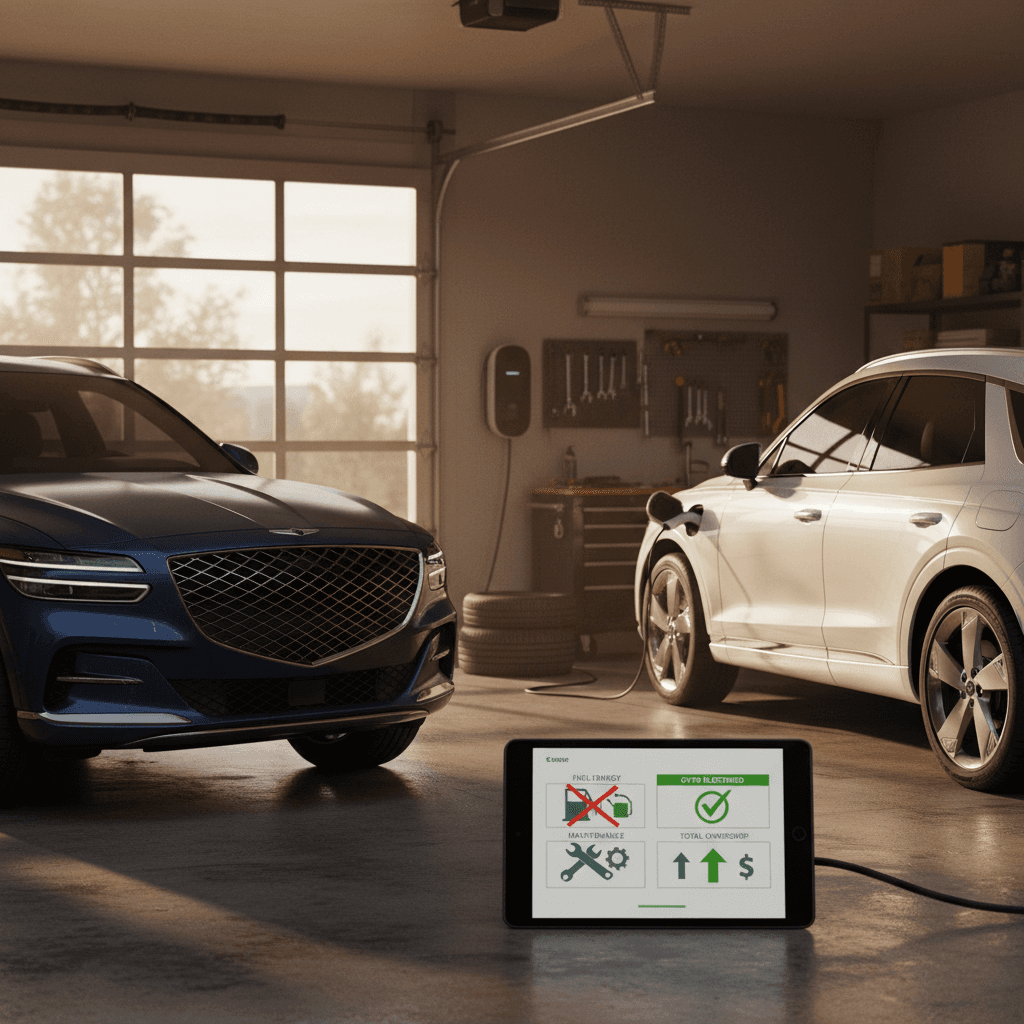
You bought a Genesis GV70 because you like your luxury with a side of understatement. Now you’re wondering what happens to your wallet if you switch to the Genesis Electrified GV70. Does the electric version really save enough in fuel and maintenance to justify the higher sticker price, or the hassle of swapping vehicles?
The short answer
Why look at GV70 vs Electrified GV70 costs now?
Genesis did something refreshingly honest with the Electrified GV70: it’s basically your existing GV70, just with the gasoline ripped out and 483 electric horses dropped in. Same tasteful cabin, similar footprint, familiar driving position. That makes it one of the cleanest A/B tests in the luxury world for comparing gas vs electric ownership costs, you’re not paying for a whole new lifestyle, just a different powertrain.
- Same basic body and interior layout as the gas GV70
- Similar luxury feature set and tech stack
- Different fuel, different running costs, very different character
Think in total cost of ownership, not sticker price
Gas GV70 vs Electrified GV70: spec-sheet reality check
Genesis GV70 vs Electrified GV70: key specs that matter for costs
High-level comparison using typical U.S. figures to frame energy use and running costs. Numbers are approximations, not official Genesis data sheets.
| Gas GV70 (2.5T AWD) | Electrified GV70 | |
|---|---|---|
| Powertrain | Turbo 4‑cyl gas, 8‑speed auto, AWD | Dual‑motor electric AWD |
| Power (approx.) | 300 hp | 483 hp (boost) |
| EPA combined efficiency | ~24 mpg | ~2.9–3.1 mi/kWh |
| Usable energy per "tank" | ~17 gal × energy in gasoline | ~75–80 kWh battery capacity |
| Typical real-world range | ~400+ miles on highway tank | ~230–250 miles mixed driving |
| Fuel type | Premium gasoline | Electricity (home + public charging) |
These figures are ballpark estimates to help you understand directionally where the cost differences come from.
On paper the Electrified GV70 looks extravagant, more power, instant torque, weight like a small moon. But in everyday driving, the big swing isn’t performance; it’s how you buy your energy. Gasoline is a premium, retail, pay‑as‑you‑go product. Home electricity, by contrast, is closer to a utility subscription, you’re already paying the connection fee; you’re just using more kWh.
Fuel vs electricity: where the big savings hide
Typical annual energy costs: GV70 vs Electrified GV70
Let’s put realistic numbers to it. These are deliberately conservative and U.S.-focused; if your fuel prices are higher or your electricity is cheaper, the electric GV70 wins by an even wider margin.
- Assume you drive 12,000 miles per year.
- Gas GV70 at ~24 mpg burns about 500 gallons/year. At $4.40/gal for premium, that’s about $2,200 per year.
- Electrified GV70 at ~3.0 mi/kWh uses about 4,000 kWh/year. At $0.18/kWh home rates, that’s about $720 per year.
- That’s roughly $1,480 in fuel vs electricity savings every year, before we talk about road trips and DC fast charging.
Fast charging changes the math a bit
Run the clock out to five years with mostly home charging and normal driving habits and you’re in the neighborhood of $7,000–$8,000 in fuel savings alone. That’s money you don’t have to ask your paycheck about.
Maintenance and repairs: how much simpler does it get?
Gas GV70: busy calendar, busy service bay
- Oil changes every ~5,000–7,500 miles
- Engine air filters, spark plugs, belts
- Transmission service, AWD system fluids
- More complex exhaust and emissions hardware
The GV70 is a luxury crossover, not a track toy, but it still carries the full mechanical orchestra under the hood. Every moving part is a future line item.
Electrified GV70: the quiet life
- No oil changes, no spark plugs, no exhaust
- Simpler driveline with far fewer wear items
- Dual‑motor AWD packaged cleanly with the battery
- Biggest routine items: tires, brake fluid, cabin filters
Regenerative braking means your brake pads live the good life; many EV owners see pad replacement at 80,000+ miles.
Ballpark maintenance savings
That’s before we get into the more existential failures, turbo issues, transmission problems, odd vibrations that send techs spelunking for billable hours. EVs aren’t magically immune to repair, but the list of expensive, high‑heat, high‑friction parts is dramatically shorter.
Purchase price, incentives, and used-market dynamics
Now for the awkward part: the Electrified GV70 usually costs more up front than a comparable gas GV70 when new. Genesis often sweetens the deal with lease cash, but you’re still buying a big battery and a lot of copper. The good news? The used market is starting to do some of the work for you.
How price and incentives line up in the real world
Exact numbers vary by model year and region, but these are the levers that matter when you switch from a gas GV70 to the Electrified GV70.
MSRP vs transaction price
Luxury SUVs rarely sell at full sticker. Gas GV70s may be easier to discount on the lot, while Electrified GV70s can benefit from EV-focused promotions or interest-rate support.
Tax credits & rebates
Depending on when and how you buy, you may qualify for federal or state EV incentives, especially on a used Electrified GV70. Always check the latest rules for point-of-sale rebates and income limits.
Used-market softness
Luxury EV SUVs have seen faster early depreciation than gas counterparts. That can hurt first owners but create very compelling deals if you’re shopping a used Electrified GV70 from a trusted seller.
New vs used: the EV twist
5‑year cost comparison: a realistic example
Let’s run a simple, conservative 5‑year scenario assuming you currently own (or could buy) either model at similar age and trim. We’ll keep the assumptions clean so you can mentally swap in your own numbers.
Estimated 5‑year ownership costs: GV70 vs Electrified GV70
Illustrative comparison over 5 years / 60,000 miles. Excludes insurance and financing to keep the focus on vehicle-related costs.
| Cost component (5 years) | Gas GV70 | Electrified GV70 |
|---|---|---|
| Purchase price / depreciation | $30,000 net cost | $32,000 net cost |
| Fuel / electricity | $11,000 | $3,600 |
| Maintenance & minor repairs | $4,000 | $2,000 |
| Home charging equipment | $0 | $800 (Level 2 charger + install) |
| Total estimated 5‑year cost | $45,000 | $38,400 |
| Net 5‑year advantage | , | ~$6,600 lower overall cost |
All numbers are rounded estimates for context, not quotes. Your actual costs will depend on pricing, incentives, energy rates, and driving habits.
This scenario assumes the Electrified GV70 costs you about $2,000 more up front (or loses a bit more to depreciation) but then claws back that difference, plus several thousand dollars, through lower fuel and maintenance bills. Even after buying and installing a proper Level 2 home charger, the EV comes out about $6,000–$7,000 ahead over five years.
How to stress-test this for your situation
Charging habits that make or break your savings
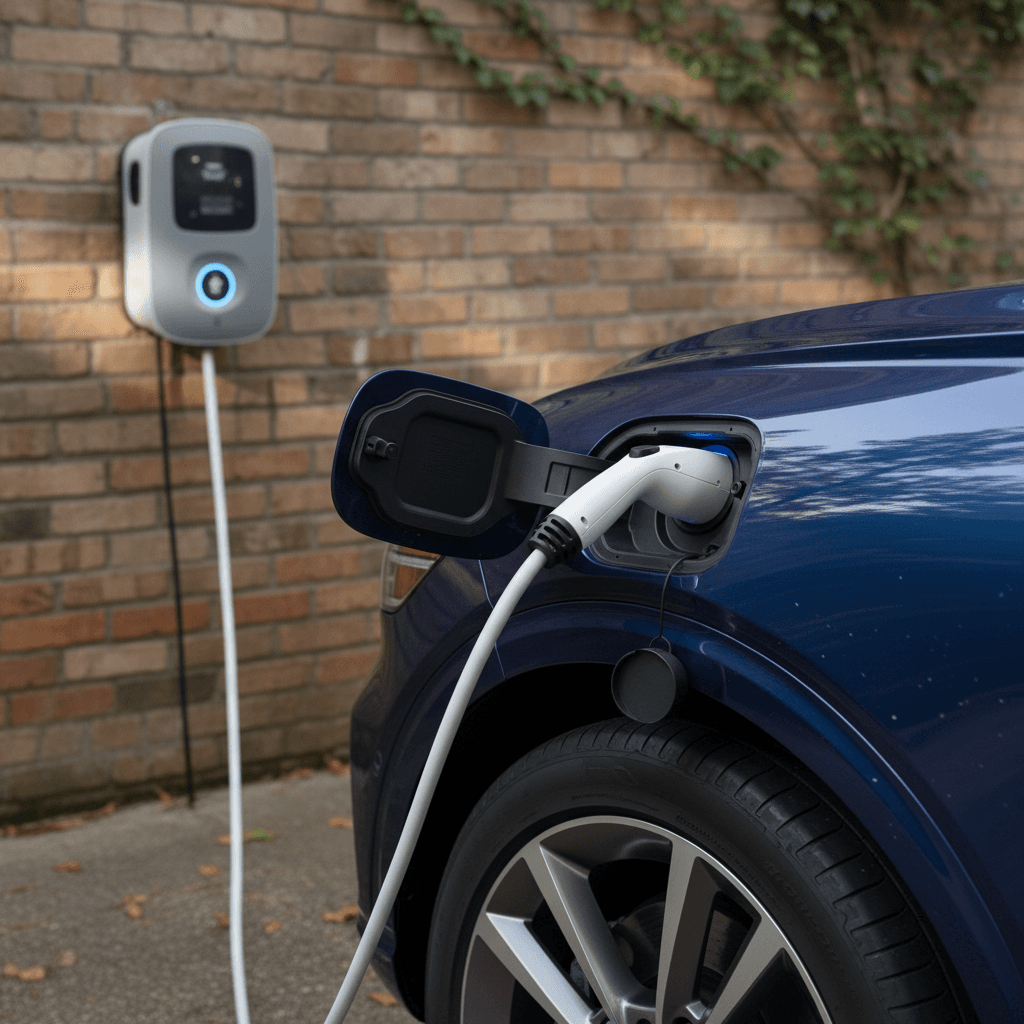
Three Electrified GV70 owner profiles, and what they save
Your real-world cost savings depend heavily on where you plug in.
The driveway charger
80–90% home charging on a Level 2 charger, occasional road trips.
Outcome: Maximum savings. Electricity stays cheap and predictable, EV crushes the gas GV70 on running costs.
The apartment opportunist
Mix of workplace charging, public Level 2 and some fast charging.
Outcome: Still likely ahead of gas on fuel, but you’ll want to watch fast‑charge pricing and be strategic with routes.
The highway warrior
Frequent long‑distance trips, heavy DC fast charging use.
Outcome: Energy costs move closer to gasoline, but you still get maintenance savings and that silent, effortless thrust.
Do the outlet check before you fall in love
When switching to the Electrified GV70 makes the most sense
You’re a prime candidate to switch if…
1. You drive at least 10,000 miles per year
Below that, the fuel savings are real but slower to show up. Above 12,000–15,000 miles per year, the gas GV70’s fuel bill starts to look like a second car payment.
2. You can install (or already have) Level 2 home charging
A 240‑volt Level 2 charger lets you wake up every day with a "full tank" and the lowest possible electricity cost. It’s the cornerstone of the savings story.
3. Premium gas prices sting where you live
If premium fuel in your area is regularly above the national average, the Electrified GV70 pays you back faster every time you pass a gas station without stopping.
4. You plan to keep the vehicle 4–6+ years
EVs tend to shine over longer ownership windows, when low running costs have time to overpower any purchase-price premium.
5. You value smooth, quiet power as much as noise
The Electrified GV70 isn’t just cheaper to feed; it’s <strong>quicker, quieter, and more effortless</strong> than the gas version. If that appeals to you, the financial case is easier to swallow.
How Recharged helps if you switch into a used Electrified GV70
If the math is pushing you toward the electric side but you don’t love the idea of paying new‑car money, a used Electrified GV70 is where things get interesting. Early luxury EVs often depreciate faster than their gas siblings, which is bad news for the first owner and very good news for you, provided you can verify the battery health and overall condition.
What Recharged brings to a used Electrified GV70 purchase
Luxury EVs are sophisticated machines; you deserve more than a quick test drive and a handshake.
Recharged Score battery health diagnostics
Every EV on Recharged comes with a Recharged Score Report, including verified battery health. On an Electrified GV70, this helps you understand how much usable range the pack still delivers, and whether prior fast charging or climate abuse has taken a toll.
Financing, trade‑in, and delivery made simple
Recharged can evaluate your current GV70 for trade‑in or instant offer, help you finance a used Electrified GV70, and arrange nationwide delivery. If you want to touch before you buy, you can visit the Recharged Experience Center in Richmond, VA.
Ready to find your next EV?
Browse VehiclesLeaning toward used?
Genesis GV70 to Electrified GV70: FAQ
Frequently asked questions about switching to the Electrified GV70
Bottom line: is the Electrified GV70 worth the switch?
If you strip away the marketing and just look at the ledger, switching from a gas Genesis GV70 to the Electrified GV70 is a game of patience that heavily favors the electric side. The gas SUV is cheaper to understand, pay at the pump, pay at the dealer, repeat. The EV asks for a bit of upfront planning: a home charger, a look at your panel, maybe a dive into incentive fine print. In return, it hands you thousands of dollars in lower fuel and maintenance costs, plus a quieter, quicker, more modern driving experience.
If you drive enough, can charge at home, and plan to keep your next SUV for a while, the Electrified GV70 doesn’t just make emotional sense; it makes spreadsheet sense. And if you’re open to buying used, platforms like Recharged can stack the deck further in your favor with verified battery health, transparent pricing, and EV‑savvy guidance from search to delivery. That’s how you turn a speculative technology play into a very solid ownership decision.