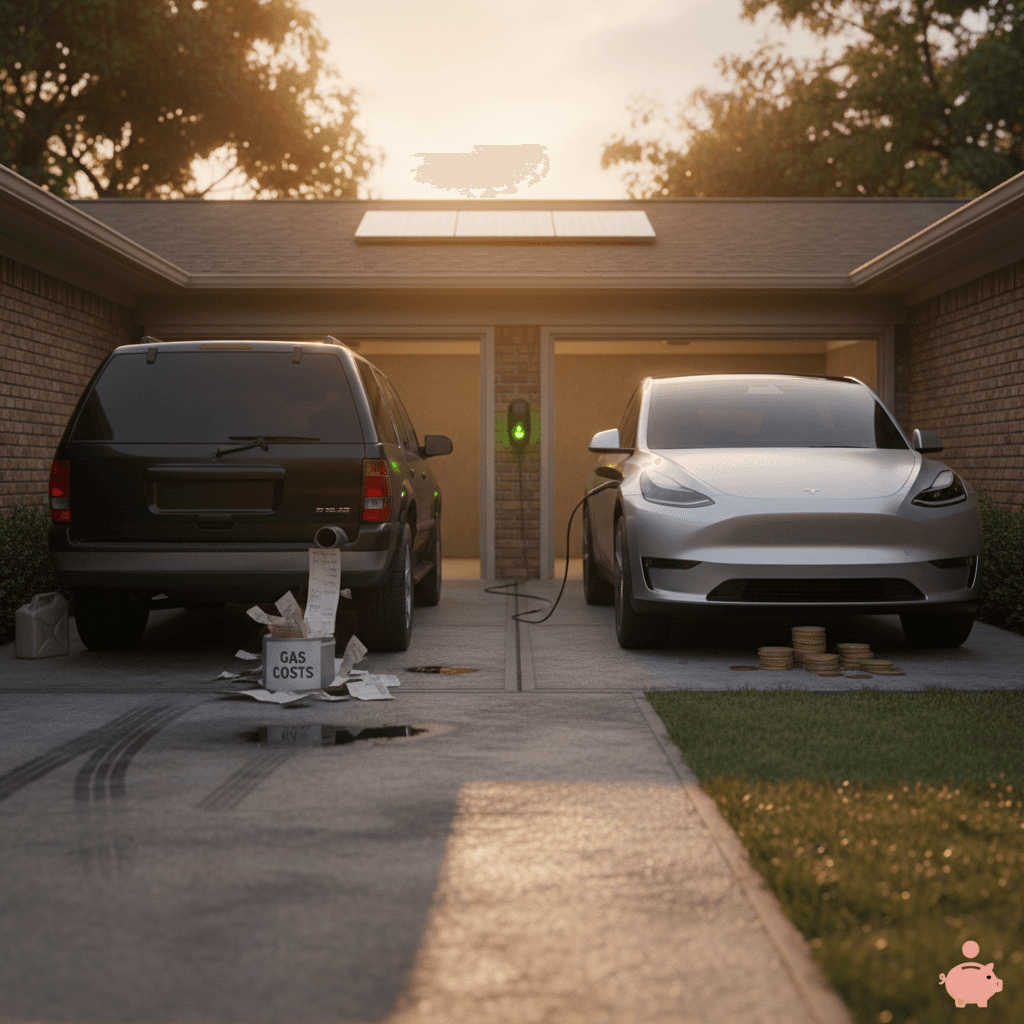
If you’re driving a 20 mpg gas SUV, you’re burning through cash as surely as you’re burning gasoline. Switching from a 20 mpg SUV to an electric SUV can easily save you thousands of dollars over a few years, but how much, exactly, and where do those savings really come from?
Key idea
Why 20 MPG SUVs Are So Expensive to Run
Let’s start by translating that 20 mpg into dollars. A typical U.S. driver covers about 12,000–15,000 miles per year. To keep the math clear, we’ll use 15,000 miles per year and a national-average gas price of $3.25 per gallon over the next few years (roughly in line with recent AAA data).
Annual Fuel Use in a 20 MPG SUV vs Electric SUV
Those back-of-the-envelope numbers show the core of the story: for the same mileage, you’re trading roughly $2,400+ in gasoline for roughly $700–$800 in electricity if you charge primarily at home. That’s before we even touch maintenance.
Local prices matter
Step-by-Step: Fuel Savings From 20 MPG to Electric SUV
1. Annual fuel cost for a 20 mpg SUV
- Miles per year: 15,000
- MPG: 20
- Gallons used: 15,000 ÷ 20 = 750
- Gas price: $3.25/gal (example)
- Annual fuel cost: 750 × $3.25 = $2,438
2. Annual charging cost for an electric SUV
- Energy use: ~0.30 kWh/mile (typical electric SUV)
- kWh per year: 15,000 × 0.30 = 4,500 kWh
- Electricity price: $0.165/kWh (2024 US residential average, rounded)
- Home charging cost: 4,500 × $0.165 ≈ $742
Annual Energy Cost: 20 MPG SUV vs Electric SUV
Illustrative comparison at 10,000, 15,000, and 20,000 miles per year.
| Miles per year | 20 mpg SUV – fuel cost | Electric SUV – electricity cost | Annual savings |
|---|---|---|---|
| 10,000 | $1,625 | $495 | $1,130 |
| 15,000 | $2,438 | $742 | $1,696 |
| 20,000 | $3,250 | $990 | $2,260 |
Assumes $3.25/gal gasoline, 20 mpg SUV, 0.30 kWh/mile electric SUV, and $0.165/kWh home electricity.
Quick rule of thumb
Beyond Fuel: Maintenance and Other Running Costs
The financial case for an EV isn’t just about energy prices. Modern electric SUVs eliminate or reduce entire categories of maintenance that are baked into internal-combustion ownership. Independent analyses and AAA’s recent "Your Driving Costs" reports consistently find that maintenance and repair costs per mile are lower for EVs than for comparable gas models, even though EV tires and insurance can be a bit higher.
Why Electric SUVs Typically Cost Less to Maintain
These savings stack on top of your fuel savings.
No oil changes
Fewer moving parts
Less brake wear
What still needs attention
Typical Annual Running-Cost Gap
Total Cost of Ownership: 5-Year Example
Fuel and maintenance alone don’t tell the full story. To really understand switching from a 20 mpg SUV to an electric SUV savings, you need a total cost of ownership (TCO) view: purchase price (or monthly payment), fuel, maintenance, insurance, taxes, and depreciation. To keep this practical, let’s look at a 5-year, 15,000-miles-per-year comparison using realistic but simplified numbers.
Illustrative 5-Year Cost: Used 20 MPG SUV vs Used Electric SUV
Simplified example for mainstream, non-luxury models bought used today.
| Item (5 years) | 20 mpg gas SUV | Electric SUV |
|---|---|---|
| Purchase price (or financed principal) | $28,000 | $30,000 |
| Fuel / electricity | $12,190 | $3,710 |
| Maintenance & repairs | $6,000 | $3,500 |
| Insurance (slightly higher for EV) | $7,500 | $8,000 |
| Registration & misc. fees | $2,000 | $2,000 |
| Estimated resale value after 5 years | -$10,000 | -$11,000 |
| Total 5-year cost (illustrative) | $45,690 | $36,210 |
Assumes both vehicles bought used for $28,000 (gas) vs $30,000 (EV); 15,000 miles per year; no major repairs beyond typical maintenance. Incentives, state taxes/fees, and resale value can shift these numbers.
Even after giving the electric SUV a slightly higher purchase price and slightly higher insurance, this example shows a 5-year savings of around $9,000. Push your annual mileage higher, or pay more for gas, and the gap widens. Buy a competitively priced used electric SUV and the upfront cost difference can shrink, or disappear entirely.
New vs used changes the picture
How Driving Habits Change Your Savings
Your personal savings depend heavily on how, and where, you drive. The more miles you rack up, the more brutal 20 mpg becomes and the more compelling an electric SUV looks. On the flip side, if you barely drive and have unusually cheap gas, the payback will be slower.
- High-mileage commuters (15,000–20,000+ miles/year): You feel the fuel savings the most. Switching can realistically save $2,000+ per year between energy and maintenance.
- Suburban families (10,000–15,000 miles/year): You’ll still see meaningful savings, often $1,200–$1,800 per year, especially if your current SUV is older and maintenance-heavy.
- Low-mileage drivers (<8,000 miles/year): Your fuel bill is already relatively small. An electric SUV may still make sense for comfort, performance, or environmental reasons, but pure dollar savings will be modest.
Use your own numbers
Home Charging vs Public Charging: What to Budget
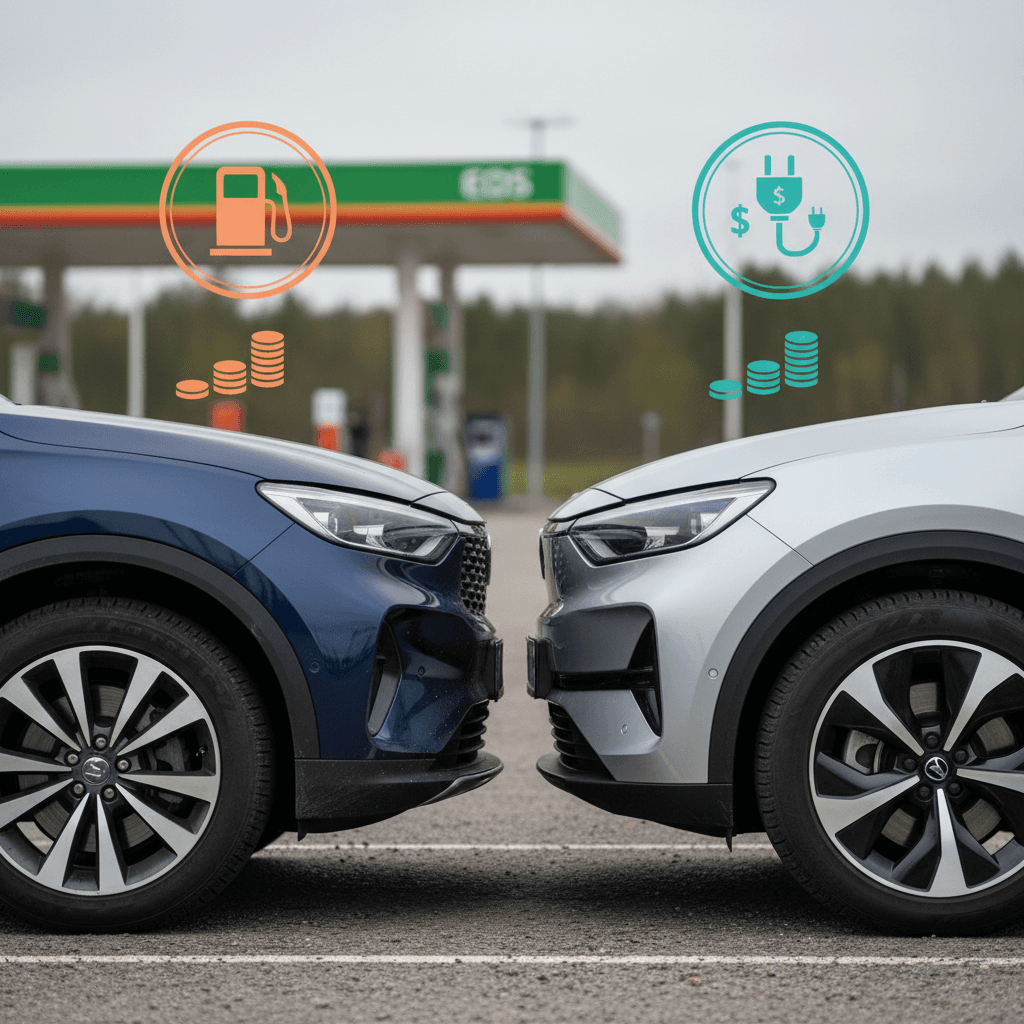
All the headline savings assume most charging happens at home on a standard residential rate. If you live on public fast charging, the cost can creep closer to gasoline, especially at premium price DC fast chargers. The good news is that many SUV owners have a garage or driveway and can capture the best-case scenario.
Charging Scenarios and What They Mean for Savings
How where you plug in affects switching-from-20-mpg-SUV-to-electric-SUV savings.
Mostly home charging
Mixed home & public
Mostly DC fast charging
Don’t ignore install costs
Environmental Impact: CO₂ Savings in Plain English
Even if you’re focused on dollars, it’s worth understanding the environmental side. Burning a gallon of gasoline emits about 19.6 pounds of CO₂ from the tailpipe alone, plus emissions from refining and transporting the fuel. A 20 mpg SUV using 750 gallons per year is responsible for roughly 7+ metric tons of CO₂ annually, just from driving.
20 mpg gas SUV CO₂
- 750 gallons of gasoline per year
- ~19.6 lb CO₂ per gallon from tailpipe
- ≈ 14,700 lb CO₂, or about 6.7 metric tons, per year
- Upstream emissions from oil production and refining add more.
Electric SUV CO₂
- Emissions depend on your grid mix (coal vs renewables).
- Even on a relatively dirty grid, per‑mile CO₂ is typically lower than a 20 mpg SUV.
- On cleaner grids (hydro, wind, solar), the gap is enormous.
- As the grid gets cleaner, your EV keeps getting “greener” automatically.
Rough climate takeaway
Using a Used Electric SUV to Boost Your Savings
If you really want to tilt the economics in your favor, a used electric SUV is where things get interesting. New EVs still carry a price premium in many segments, but used electric SUVs have already absorbed the steepest early depreciation. When you buy used, you combine a lower upfront price with all the running‑cost savings you’ve just seen.
Why a Used Electric SUV Often Beats a New Gas SUV
Especially when you’re coming out of a thirsty 20 mpg truck or crossover.
Battery health transparency
Lower total payment stack
What about range and charging network?
Checklist: Questions Before You Switch
Key Questions Before Ditching Your 20 MPG SUV
1. How many miles do you actually drive?
Pull a year’s worth of odometer readings or estimate based on your commute and trips. Higher annual mileage makes the switch to an electric SUV financially stronger.
2. Can you charge at home (or work)?
A driveway or garage outlet, ideally with Level 2, lets you capture the cheapest electricity and the largest savings over your 20 mpg SUV.
3. What are your local gas and electricity prices?
Check current gas prices and your latest power bill. Plug those into a simple spreadsheet using 20 mpg for your SUV and about 0.28–0.33 kWh/mile for a typical electric SUV.
4. Do you take frequent long road trips?
If you’re on the highway every weekend, look carefully at public charging coverage on your routes and how much it costs per kWh compared with gas.
5. What’s your budget and credit profile?
Total monthly cost matters more than sticker price. With Recharged, you can <strong>pre-qualify for financing online</strong> and see payments on specific used EVs with no impact on your credit score.
6. What is your current SUV worth?
Your 20 mpg SUV may still have strong resale value. Trading it in or getting an instant offer through Recharged can reduce how much you finance on the electric SUV.
FAQ: Switching From a 20 MPG SUV to an Electric SUV
Frequently Asked Questions
Bottom Line: Is Switching From 20 MPG to Electric Worth It?
If you’re driving a 20 mpg SUV, you’re sitting on one of the most obvious cost‑cutting opportunities in personal transportation. For a typical U.S. driver who can charge at home, switching to an electric SUV can realistically trim $1,500–$2,000 or more per year off your combined fuel and maintenance costs, while also slashing your tailpipe emissions.
The exact savings depend on your miles, your local gas and electricity prices, and whether you buy new or used. But in most realistic scenarios, a thoughtfully chosen electric SUV, especially one bought used with verified battery health, delivers a lower total cost of ownership than hanging onto a thirsty 20 mpg truck or crossover.
If you’re ready to run your own numbers, start by looking at your actual fuel spend and exploring used electric SUVs with transparent battery reports. On Recharged, you can browse EV SUVs, get an instant offer or trade‑in value for your 20 mpg SUV, pre‑qualify for financing with no impact to your credit, and have an EV specialist walk you through the cost comparison step by step. In a world of rising energy costs, that kind of clarity is worth as much as the savings themselves.