If you’re considering a Subaru Solterra, or eyeing a used one, the big question is obvious: how long will the Solterra’s battery actually last, and what does that mean for range, resale value, and long‑term ownership? The good news is that modern EV packs, including the Solterra’s, are engineered to outlast typical ownership cycles when they’re treated reasonably well.
Quick answer
Subaru Solterra battery basics: size, chemistry, and design
Before you can make sense of Subaru Solterra battery lifespan, it helps to understand what’s actually under the floor. The Solterra is a close sibling of Toyota’s bZ4X, and it uses a similar battery architecture and chemistry, tuned for longevity more than brag‑worthy 0–60 numbers.
- Pack size: Around 71–73 kWh gross capacity depending on model year; usable capacity is roughly 64–65 kWh once you account for the built‑in buffer.
- Chemistry: Lithium‑ion cells designed for long cycle life, similar to other mainstream EVs in this class.
- Cooling: Liquid‑cooled pack to keep temperatures in a healthy range during fast charging and hot weather.
- Position: Floor‑mounted, structural pack that contributes to stiffness and safety as well as energy storage.
Hidden buffer = built‑in protection
Subaru Solterra battery at a glance
Warranty vs. real Solterra battery lifespan
Battery warranties and real‑world lifespan aren’t the same thing, but they’re related. Subaru gives the Solterra a dedicated Battery and Electric Drive Unit Limited Warranty of 8 years or 100,000 miles, whichever comes first. The key clause is that Subaru expects the pack to retain at least 70% of its original capacity through that period under normal use.
Subaru Solterra warranty coverage for the high‑voltage battery
How Subaru’s battery warranty lines up with typical EV expectations.
| Coverage type | Term | What it means for the battery |
|---|---|---|
| Basic vehicle warranty | 3 years / 36,000 miles | Covers general defects, not specific to the traction battery. |
| Powertrain (EV) warranty | 5 years / 60,000 miles | Covers electric drive components beyond the main pack. |
| Battery & electric drive unit | 8 years / 100,000 miles | Subaru expects ≥70% original capacity at or before this point. |
| Corrosion, emissions, etc. | Varies by state | Not directly related to high‑voltage battery lifespan. |
Note: always confirm exact warranty terms for your model year and region.
Think of the warranty as the floor, not the ceiling
So how long will a Subaru Solterra battery last?
We now have more than a decade of real‑world data across modern EVs, plus evolving modeling from national labs. Taken together, that evidence suggests that current EV batteries typically last longer than originally expected, and the Solterra is built squarely in this modern generation.
Subaru Solterra battery lifespan: realistic expectations
Approximate ranges, not guarantees, your usage and climate matter.
Years of useful life
For a typical U.S. driver putting 12,000–15,000 miles per year on a Solterra, the battery pack is likely to remain useful for 12–15 years before range loss becomes a day‑to‑day annoyance.
Miles before major concern
Most Solterra batteries should comfortably cross 150,000–250,000 miles before falling near the 70% capacity mark, assuming average usage and reasonable charging habits.
Range you’ll still have
At 70% capacity, a Solterra that once delivered ~230 miles of mixed‑driving range might still offer roughly 160 miles in similar conditions, plenty for commuting and errands, but less ideal for frequent road‑trippers.
What “end of life” really means
What Subaru Solterra battery degradation actually looks like
Battery degradation isn’t a smooth, straight line. It’s more like a curve: a bit of early loss as the pack breaks in, followed by a slower, steadier decline. That pattern holds for most modern EVs and is what Solterra owners should expect as well.
- Year 0–2: It’s common to see a 2–5% loss from brand‑new capacity as the pack stabilizes. Most drivers won’t notice this outside of careful tracking.
- Year 3–6: Many EVs show a slow drift of around 1–2% per year in typical use, assuming reasonable temperatures and charging behavior.
- Year 7–10: This is where some owners will approach the 70–80% mark, depending heavily on mileage, climate, and how often they fast‑charge. Others may still be well above that threshold.
Real‑world resale hints
5 factors that speed up or slow down Solterra battery wear
You can’t change chemistry, but you have a lot of influence over how your Solterra’s battery ages. These are the levers that matter most, whether you’re the first owner or evaluating a used one.
Key drivers of Solterra battery lifespan
The physics are the same across modern EVs, but your habits decide how hard the pack works.
1. Temperature extremes
High heat is the enemy of lithium‑ion longevity. Regularly baking the car in direct sun, or fast‑charging hard in extreme heat, can speed wear. Very cold temps mostly hurt short‑term range rather than permanent capacity, but repeated deep cold plus fast charging is still more stressful than mild weather.
2. Fast‑charging habits
Occasional DC fast charging is fine, Subaru engineered the Solterra for road trips. But using high‑power DC charging multiple times a week, especially from very low states of charge, can add more wear than slower home Level 2 charging.
3. How low you run the battery
Regularly driving down to the last few percent and then charging all the way back up creates larger “cycles,” which are more taxing over time. Keeping daily use between roughly 20–80% state of charge (SOC) is gentler on the pack.
4. Charge level you live at
Subaru and Toyota designed this pack with a generous buffer, so charging to 100% for trips is less of a concern than with some early EVs. Still, living at 100% day in and day out in hot climates is tougher on any lithium‑ion pack than hovering around the middle.
5. Annual mileage and duty cycle
A Solterra driven 30,000 miles a year and fast‑charged heavily will age faster than one doing 10,000 miles on mostly gentle home charging. That said, modern cells are robust enough that even high‑mileage packs often surprise people with how much capacity they retain.
The real red flags
Habits to extend your Solterra battery lifespan
The nice thing about modern packs like the Solterra’s is that you don’t have to baby them. A few simple habits go a long way, especially if you plan to keep the car for a decade or you care about resale value.
Practical ways to help your Solterra battery last longer
1. Make home Level 2 charging your default
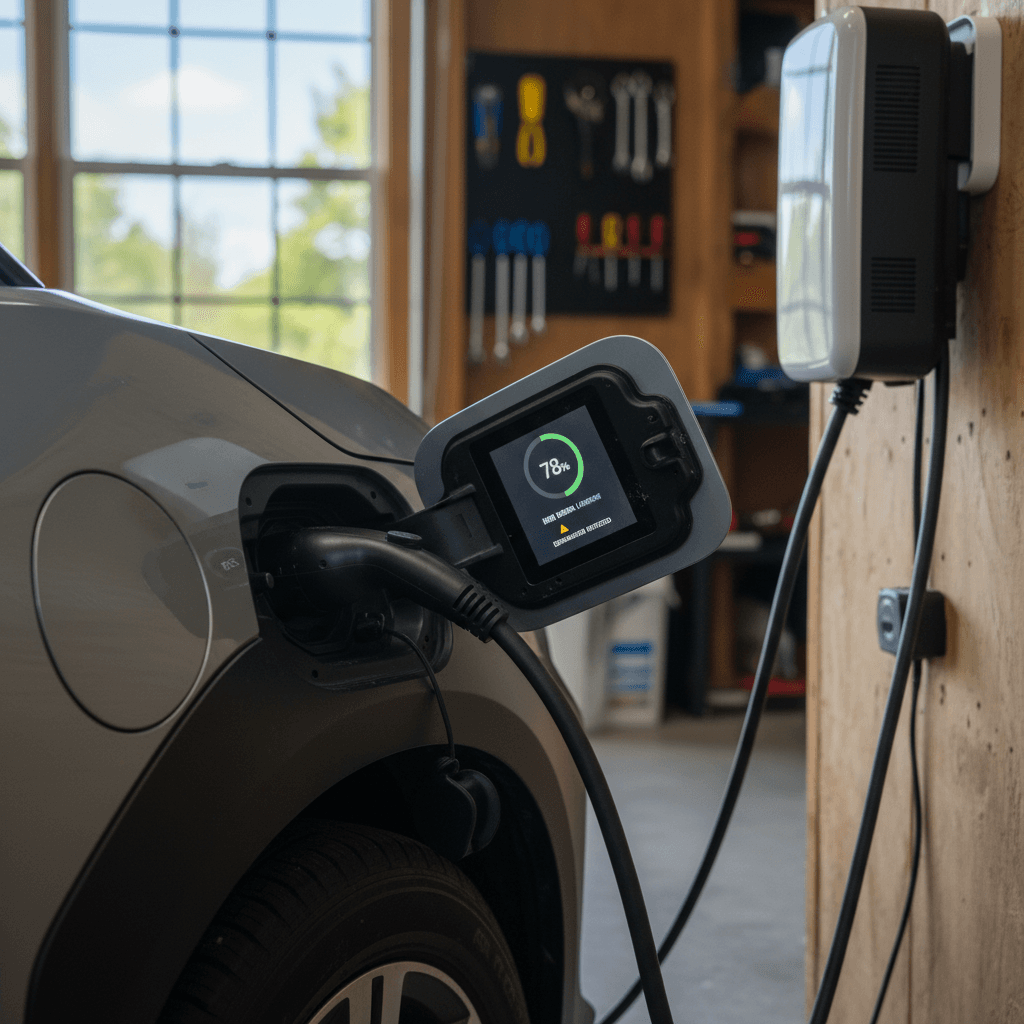
If you have access to a 240‑volt Level 2 charger, use that as your primary fueling source. It’s gentler on the pack than frequent DC fast charging and usually cheaper per kWh, especially with off‑peak rates.
2. Aim for a mid‑pack daily SOC
For everyday commuting, try to keep the battery roughly between 20–80% state of charge. Use 90–100% for trips when you need the range, not as a permanent setting unless your daily drive demands it.
3. Avoid living at 0% or “turtle mode”
Don’t repeatedly drive the Solterra all the way to shutdown warnings. The occasional deep cycle won’t kill the pack, but habitually running it to the bottom does add stress.
4. Keep the car cool when you can
In hot climates, park in the shade or a garage when possible. Cabin pre‑conditioning while plugged in is easier on both the battery and your range than blasting HVAC from a cold start on battery power alone.
5. Use DC fast charging strategically
Fast‑charge on road trips or when you genuinely need a quick turnaround, not as your daily fueling plan. When you do fast‑charge, unplug once you have enough range rather than waiting to crawl from 80% to 100%.
6. Stay on top of software updates and basic service
Subaru and Toyota continue to refine charging curves and thermal management via software. Keeping the car updated and following the EV service schedule helps the car protect the battery on its own.
Buying a used Subaru Solterra? How to check battery health
Because the Solterra is still a relatively new model, most used examples on the market today have plenty of life left in the pack. Still, two Solterras of the same age and mileage can have very different battery health depending on how they were driven and charged.
What you can check yourself
- Range at a known SOC: On a test drive, note the displayed range at, say, 80% charge, then compare it to EPA‑rated range. A small gap is normal; a massive one can point to degradation or simply very cold weather and heavy HVAC use.
- Trip computer efficiency: Look at miles per kWh over the last few hundred miles. Extremely poor efficiency may reflect driving style, conditions, or, in rare cases, emerging battery or drivetrain issues.
- Charging behavior: If you can, plug into a Level 2 or DC fast charger during the inspection. Very slow or erratic charging can sometimes indicate thermal issues or pack problems worth investigating.
What’s worth a professional check
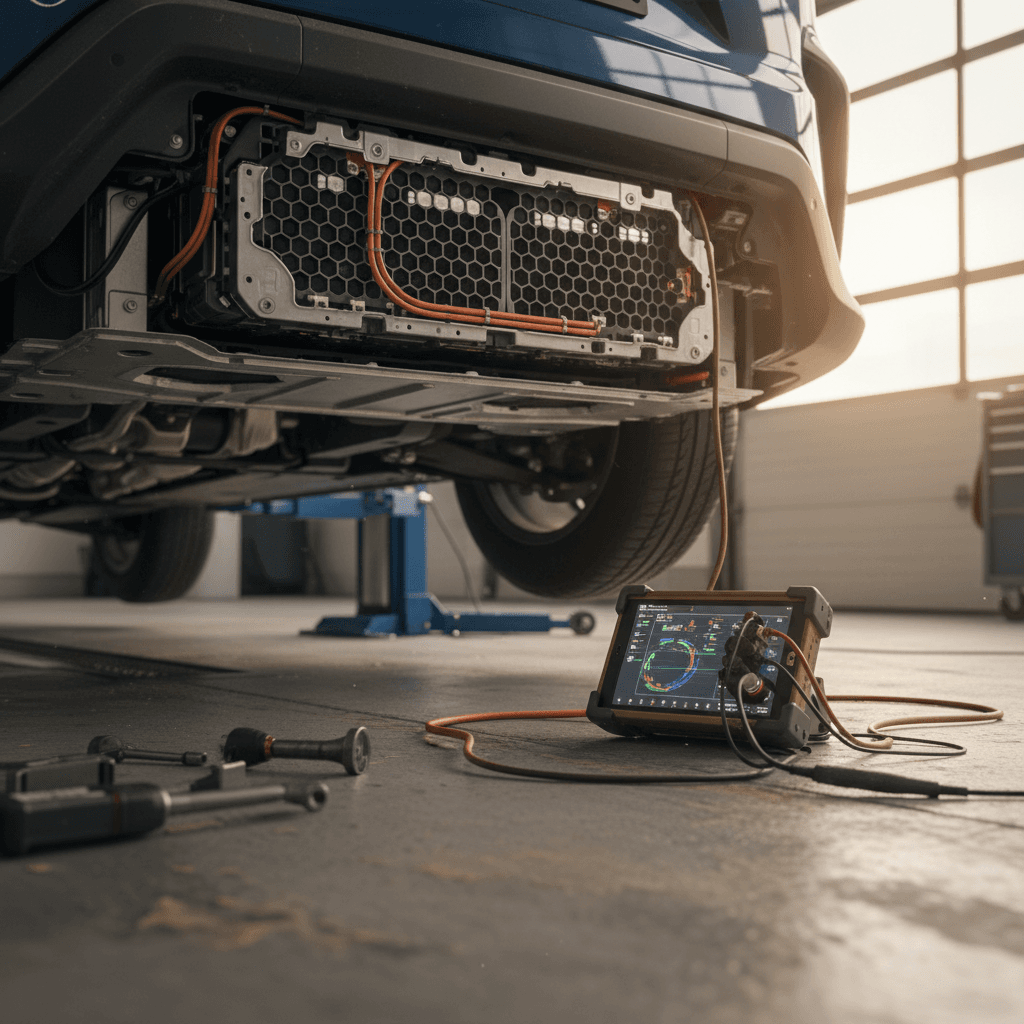
- Battery health scan: Specialized tools can read the pack’s state of health (SOH) more precisely than the dash display alone.
- Warranty status: Confirm in writing how much time and mileage remains on the 8‑year/100,000‑mile battery warranty and whether any claims have already been made.
- Previous use pattern: Ask for service records and charging history if available, heavy DC fast charging and very high annual mileage are not deal‑breakers, but they should inform price.
At Recharged, every used EV, including the Subaru Solterra, comes with a Recharged Score Report that summarizes verified battery health, charging history patterns where we can see them, and how that specific car compares to peers. That transparency is critical in a market where batteries are the single most expensive component.
How Solterra battery life compares to other EVs
Because the Solterra shares a platform and battery technology with the Toyota bZ4X, it’s best understood as part of the mainstream EV pack, not an outlier. Toyota has publicly targeted very low degradation over long periods for this platform, and Subaru benefits from that same engineering philosophy.
Solterra battery life in context
High‑level comparison of the Solterra and typical modern EVs.
| Model / segment | Typical battery warranty | Realistic useful life | Notes |
|---|---|---|---|
| Subaru Solterra / Toyota bZ4X | 8 yr / 100,000 mi (≥70% capacity) | Likely 12–15 years, 150k–250k+ miles | Conservative warranty; Toyota engineering target is long‑life packs. |
| Mainstream compact crossovers (Hyundai Ioniq 5, VW ID.4, etc.) | 8–10 yr / 100,000–150,000 mi | Similar 12–15+ year expectation | Real‑world data now shows slower degradation than early fears. |
| Early‑generation EVs (2011–2015 LEAF, etc.) | 5–8 yr warranties, less robust thermal management | Often 8–10 years before major range loss | Lacked modern cooling and buffer strategies now used on Solterra. |
| Future solid‑state / sodium‑ion packs | TBD | Potentially much longer | Emerging chemistries aim to further extend lifespan, but Solterra’s pack is already plenty durable for normal ownership cycles. |
These are generalized patterns; individual models and use cases can vary meaningfully.
Where the Solterra lands
FAQ: Subaru Solterra battery lifespan and degradation
Common questions about Subaru Solterra battery life
Bottom line: Is Subaru Solterra battery life a concern?
If you strip away the speculation and look at the engineering, warranty, and broader EV data, the Subaru Solterra’s battery isn’t something most owners need to fear. With a modern, buffered pack; an 8‑year/100,000‑mile 70%‑capacity warranty; and typical EV degradation curves, it’s reasonable to expect a Solterra to deliver solid, useful range well past the point when many drivers would consider trading into something newer.
Where battery life really matters is in pricing and peace of mind, especially on the used market. That’s why Recharged focuses so heavily on independent battery health diagnostics, transparent reporting, and fair market pricing for EVs like the Solterra. Whether you’re buying your first electric Subaru or trading into a gently used one, understanding how long the Solterra battery lasts, and why turns a source of anxiety into a straightforward ownership decision.