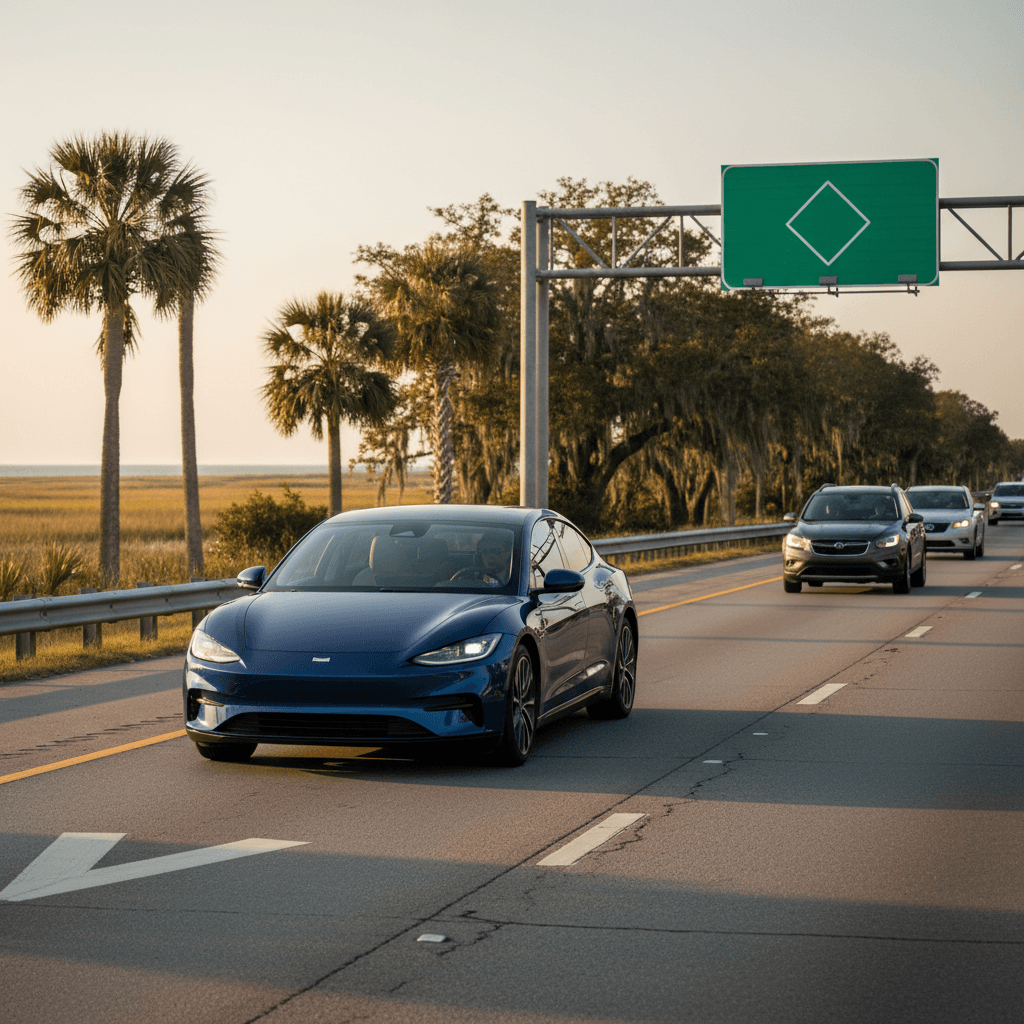
If you spend much time on I‑26, I‑77, or I‑85, you’ve probably wondered whether South Carolina EV HOV lane rules give you a break for driving electric. Some states let solo EV drivers use carpool lanes as a reward for going plug‑in. South Carolina…is not (yet) one of those states. But the details matter, especially if you commute across state lines or are thinking about buying a used EV primarily for traffic relief.
Quick answer
Overview: South Carolina EV HOV lane rules in plain English
Let’s strip away the legalese. South Carolina treats **EVs, plug‑in hybrids, and hybrids** essentially **the same as gasoline cars** when it comes to HOV (high‑occupancy vehicle) or carpool lanes. A few key points frame the whole conversation:
- There is **no special, statewide HOV exemption** just because your car is electric.
- Where HOV lanes exist or are created, they are **primarily for carpools and buses**, not fuel type.
- Some secondary online sources mention possible **high‑efficiency-vehicle exemptions**, but as of early 2026, there is **no widely implemented decal program on major interstates** that lets solo EVs ride in HOV lanes.
- Rules can differ on **future HOT or toll lanes**, where occupancy and transponder requirements may replace simple HOV signs.
Why this is confusing
Where are HOV lanes in South Carolina today?
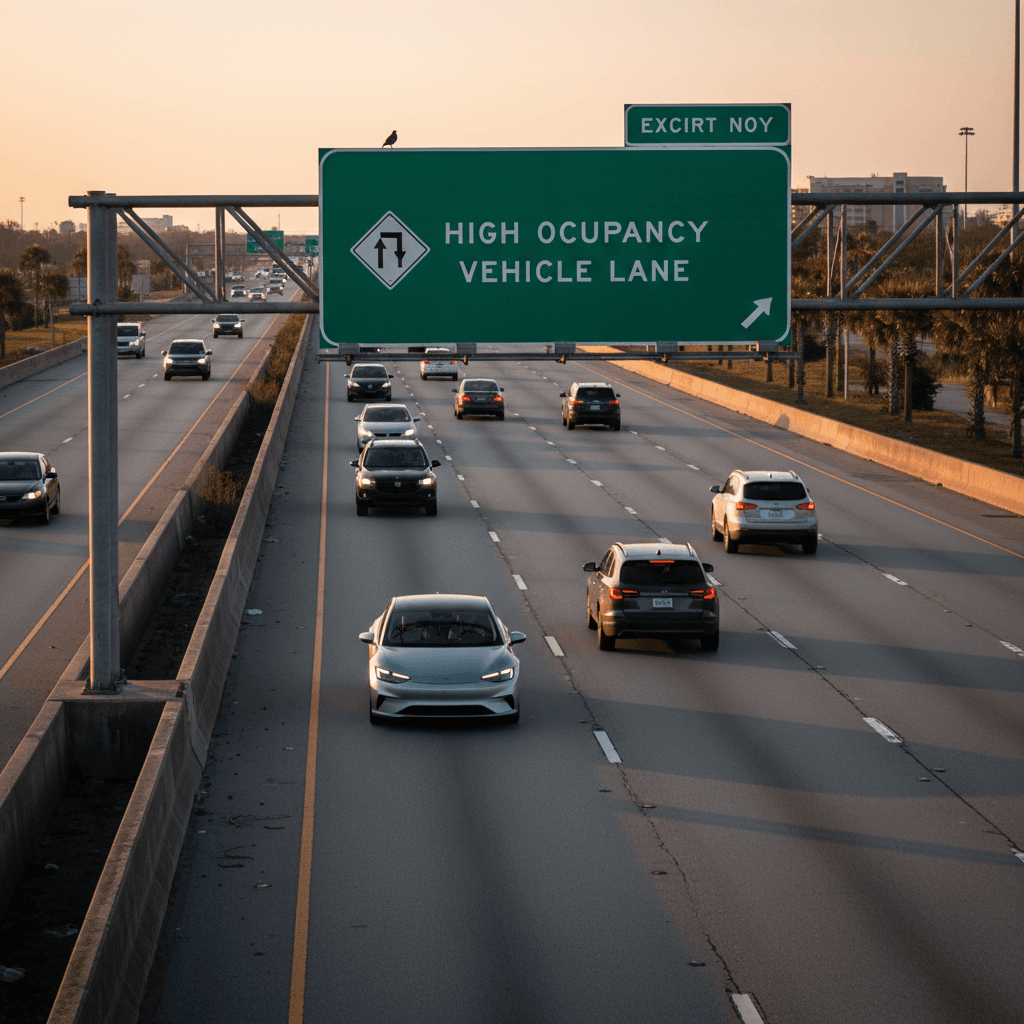
Compared with California, Georgia, or Virginia, South Carolina is still in its **early innings on HOV and express lanes**. There are **no long, statewide HOV corridors** signed the way you see around Atlanta or Northern Virginia. Instead, you’re likely to encounter HOV or carpool restrictions in two scenarios:
Typical South Carolina “HOV-style” situations
What EV drivers are most likely to encounter in 2026
Urban interchanges & choke points
Short stretches around busy interchanges (for example near growth hubs like Fort Mill or Blythewood) may eventually mark **carpool or bus‑priority lanes** as part of larger reconstruction projects.
Even when projects are tied to EV factories or logistics hubs, that doesn’t automatically mean EVs get HOV privileges.
Future express / managed lanes
Regional planners are leaning toward **HOT or express toll lanes** on congested corridors (like the I‑77 Charlotte–SC corridor). Those are typically **priced lanes**, not classic HOV lanes, and rarely give freebies just for being an EV.
Because South Carolina doesn’t yet have a dense HOV network, **EV HOV policy isn’t front‑and‑center** the way it is in California. That’s why you see conflicting online explanations: a policy idea here, a theoretical EV incentive there, but little that changes how you actually drive tomorrow morning.
Can electric vehicles use HOV lanes in South Carolina?
The short version: **Yes, but only when you meet the same rules as everyone else.** Owning an EV does not, by itself, open the HOV lane for solo commuting.
Who can use HOV lanes in South Carolina?
How typical South Carolina HOV or carpool rules treat different vehicle types.
| Vehicle type / situation | Solo driver | 2+ occupants | Notes |
|---|---|---|---|
| Gasoline or diesel car | Not allowed in HOV lane | Allowed in HOV lane (if signs say 2+ or 3+) | Standard HOV rules, fuel type doesn’t matter. |
| Hybrid or plug‑in hybrid | Not allowed solely for being hybrid/EV | Allowed with required number of occupants | No widely implemented decal program as of 2026. |
| Battery‑electric vehicle | Not allowed solely for being electric | Allowed with required number of occupants | Same as hybrids; EV status alone doesn’t grant access. |
| Bus or qualifying transit vehicle | Usually allowed | Allowed | Often exempt from occupancy rules. |
| Emergency vehicle on call | Allowed when responding to emergencies | Allowed | Standard emergency exception. |
These are generalized rules. Always follow the specific signs posted for the lane you’re using.
Think "people first, electrons second"
Occupancy, decals, and eligibility requirements
Some states use **special license plates or decals** to identify EVs that qualify for HOV perks. South Carolina has **discussed high‑efficiency‑vehicle ideas**, but in practical, roadside terms, there is **no widely deployed HOV‑decal system** today that opens HOV lanes to solo EV drivers on major interstates.
Checklist: Before you slide into an HOV lane
1. Read the signs, literally
Look for **occupancy minimums** such as “HOV 2+ ONLY” or “HOV 3+ ONLY,” as well as time‑of‑day restrictions. If a lane is simply marked as “EXPRESS” or “TOLL,” you may be looking at a HOT lane instead of a traditional HOV lane.
2. Count your passengers
Include yourself. If the sign says **2+**, you and one passenger qualify; if it says **3+**, you need two passengers plus you. Being in an EV does not change the math.
3. Look for decal language
In some states, signs specifically reference **“clean fuel decals”** or **“low‑emission vehicle plates.”** You will not see that kind of carve‑out on South Carolina’s current HOV‑style lanes.
4. Don’t invent your own exemption
Fake passengers, dummy car seats, and made‑up “EV stickers” are all treated as **intentional violations** if you’re stopped. Courts are rarely amused, and neither are troopers.
5. Crossing state lines? Relearn the rules
If your commute crosses into North Carolina or Georgia, expect **different rules on the other side of the sign**, especially on toll or express lanes where EVs must still pay unless they also meet HOV rules. A benefit in one state does not automatically carry into another.
No shortcut for solo EV commuters (today)
How South Carolina compares to neighboring states
North Carolina
North Carolina has **HOT and express lanes** (for example, on I‑77 and I‑485 around Charlotte) where pricing and HOV status are controlled by transponders and apps. EVs **don’t get automatic free access**; they pay tolls unless they also meet HOV occupancy rules and follow the specific HOT‑lane procedures.
If you live in South Carolina but commute into Charlotte, your EV behaves like any other car once you cross the state line.
Georgia & other neighbors
Georgia used to be generous with **Alternative Fuel license plates** that opened HOV and HOT lanes to solo EV drivers. That program was phased back as EV adoption grew. Today, most drivers, EV or not, must meet **occupancy or toll requirements**.
The trend in the Southeast is clear: **EV perks are shifting from lane access to infrastructure and charging support.**
Bigger picture: Lanes vs. infrastructure
Common mistakes, enforcement, and fines
Because there isn’t a big, flashy EV HOV program in South Carolina, most violations look **old‑fashioned and human**: people see a faster lane, decide they’re special, and dive in. Driving an EV doesn’t make those tickets any cheaper.
- **Assuming “EV” equals “exempt.”** A surprising number of drivers believe every EV is treated like a bus. It isn’t.
- **Ignoring time‑of‑day limits.** Some HOV restrictions only apply during peak hours, but if the sign says it’s in force, it’s in force.
- **Entering or exiting over solid lines.** In managed lanes, even if you’re eligible, you can be cited for crossing where you’re not supposed to.
- **Treating out‑of‑state blogs as law.** A blogger in California may describe HOV perks that simply do not exist on I‑26 or I‑77.
The cost of wishful thinking
Planning your South Carolina commute in an EV
If you’re shopping for an EV, or already own one, and commute on South Carolina highways, the question isn’t just “Can I use the HOV lane?” It’s **how the EV changes the rest of your commute calculus**: charging, reliability in stop‑and‑go, and cross‑border rules if you drive into North Carolina or Georgia.
Three smart ways to optimize your EV commute
Even without special HOV access, you can still win the commute.
1. Use time, not just lanes
EVs are ideal for **off‑peak charging at home** and can pre‑condition the cabin while plugged in. If your schedule is flexible, shifting your commute **30–45 minutes earlier or later** often beats gambling on a legally risky HOV dash.
2. Map reliable charging
Whether you live in Columbia, Charleston, or the Upstate, build a mental map of **dependable Level 3 and Level 2 chargers** along your route. That way, traffic surprises don’t turn into low‑battery anxiety.
3. Make “real” carpooling pencil out
If you truly want HOV access, **add actual passengers**. A couple of coworkers and a set carpool schedule can turn the HOV lane into a real, legal perk, EV or not.
Buying a used EV if you rely on HOV access
If lane access is a big part of how you justify an EV, you need to be **ruthlessly honest about your route**. In South Carolina, the value of a used EV isn’t tied to any special HOV privileges; it’s tied to how well the car fits your mileage, your charging options, and your cross‑border driving habits.
Questions to ask yourself
- Do I actually drive in or near signed HOV or express lanes? If not, HOV policy is just background chatter.
- Do I routinely cross into North Carolina or Georgia? If yes, read up on their specific HOT and HOV rules.
- Is my primary benefit lower fuel and maintenance costs? That’s where EVs shine, regardless of lane rules.
Where Recharged fits in
At Recharged, every used EV listing includes a Recharged Score Report with verified battery health, realistic range, and fair‑market pricing. Our EV specialists can walk through your **exact commute**, including cross‑state HOV or express‑lane questions, so you’re not buying a car on the basis of perks that don’t exist.
You can shop fully online, trade in your current car, and get nationwide delivery, or visit our Experience Center in Richmond, VA if you want to talk in person.
FAQ: South Carolina EV HOV lane rules
Frequently asked questions about South Carolina EV HOV rules
Key takeaways for South Carolina EV drivers
- In South Carolina, **HOV lanes are about people, not powertrains**. EVs must meet the same occupancy rules as gasoline cars.
- There is **no active, statewide HOV‑decal program** giving solo EVs blanket access to HOV lanes on interstates.
- If you commute into neighboring states, **re‑learn their specific HOT and HOV rules**, especially where toll transponders and apps control lane access.
- When evaluating a used EV, focus on **range, charging access, and daily mileage**, not hypothetical HOV perks that may never materialize on your route.
- If lane priority really matters to you, the most reliable strategy is still the old‑school one: **build a real carpool** and drive something with solid range and healthy battery life.
EVs change the way you commute in South Carolina, but not because they magically unlock the HOV lane. They pay you back in lower running costs, smoother traffic slogging, and the quiet satisfaction of skipping gas stations, not in diamond‑lane heroics. If you’re weighing a used EV for your daily grind, start with the numbers that actually move the needle: range, battery health, and total cost of ownership. That’s exactly where Recharged focuses with our Recharged Score Report and expert guidance, so you can buy the right EV for your life today, not for a perk that might show up on a roadside sign someday.