
Searches for smart car prices have climbed again in 2025 as shoppers look for any way to escape $50,000 new-car stickers and rising used-vehicle costs. Tiny city cars like the Smart Fortwo and Smart EQ Fortwo promise easy parking and low running costs, but what do they really cost today, and how do you shop them smartly in a tight used-car market?
Quick note on availability
Why smart car prices matter right now
Average new-vehicle transaction prices in the U.S. topped $50,000 in late 2025, and three‑year‑old used vehicles now average over $30,000. In that landscape, a $10,000–$17,000 used smart car looks appealing, especially if you mostly drive in the city and don’t need 300 miles of range or three rows of seats.
Smart car prices in context (U.S. 2025)
Smart cars sit firmly on the lower end of the price spectrum, but that doesn’t automatically make every listing a good deal. Because the brand left the U.S. market, supply is limited and condition varies widely. That’s where shopping discipline, and tools like battery health reports on EV versions, start to matter.
Quick price overview: what smart cars cost in 2025
Typical smart car price ranges in 2025
These are ballpark U.S. retail asking ranges from dealers and large online retailers. Exact prices vary with condition, mileage, trim and battery health.
| Model / type | Typical model years on market | Common price band | Notes |
|---|---|---|---|
| Smart Fortwo (gas) | 2013–2017 | $8,000–$15,000 | Lower end for high‑mileage or older cars; upper end for later years with clean history. |
| Smart Fortwo Electric Drive | 2017–2018 | $10,000–$15,500 | Short‑range EV; prices hinge heavily on battery condition and miles. |
| Smart EQ Fortwo | 2019 | $12,900–$17,000+ | Last U.S. smart EVs; clean, low‑mile cars often list in the mid‑teens. |
| Smart Fortwo Cabrio (gas or EV) | 2013–2019 | +$1,000–$3,000 over coupe | Open‑top body style usually commands a noticeable premium. |
Use this as a starting point when you evaluate smart car listings online.
Price ranges are not guarantees
Gas vs. electric smart models and what they cost
Gasoline Smart Fortwo pricing
Gas Smart Fortwo models are the most common smart cars in the U.S. market. They’re tiny two‑seat hatchbacks with a 3‑cylinder engine and city‑friendly footprints.
- Older gas Fortwos (≈2013–2015): Often list around $8,000–$11,000, especially with 80,000+ miles.
- Newer gas Fortwos (2016–2017): Clean‑title cars with moderate miles tend to fall in the $11,000–$15,000 window.
- Cabrio versions: Expect to pay a premium for the convertible roof, particularly in warmer regions.
If you’re strictly watching upfront price and don’t drive many miles, a gas Fortwo can be the cheapest way into smart ownership.
Electric Smart Fortwo pricing
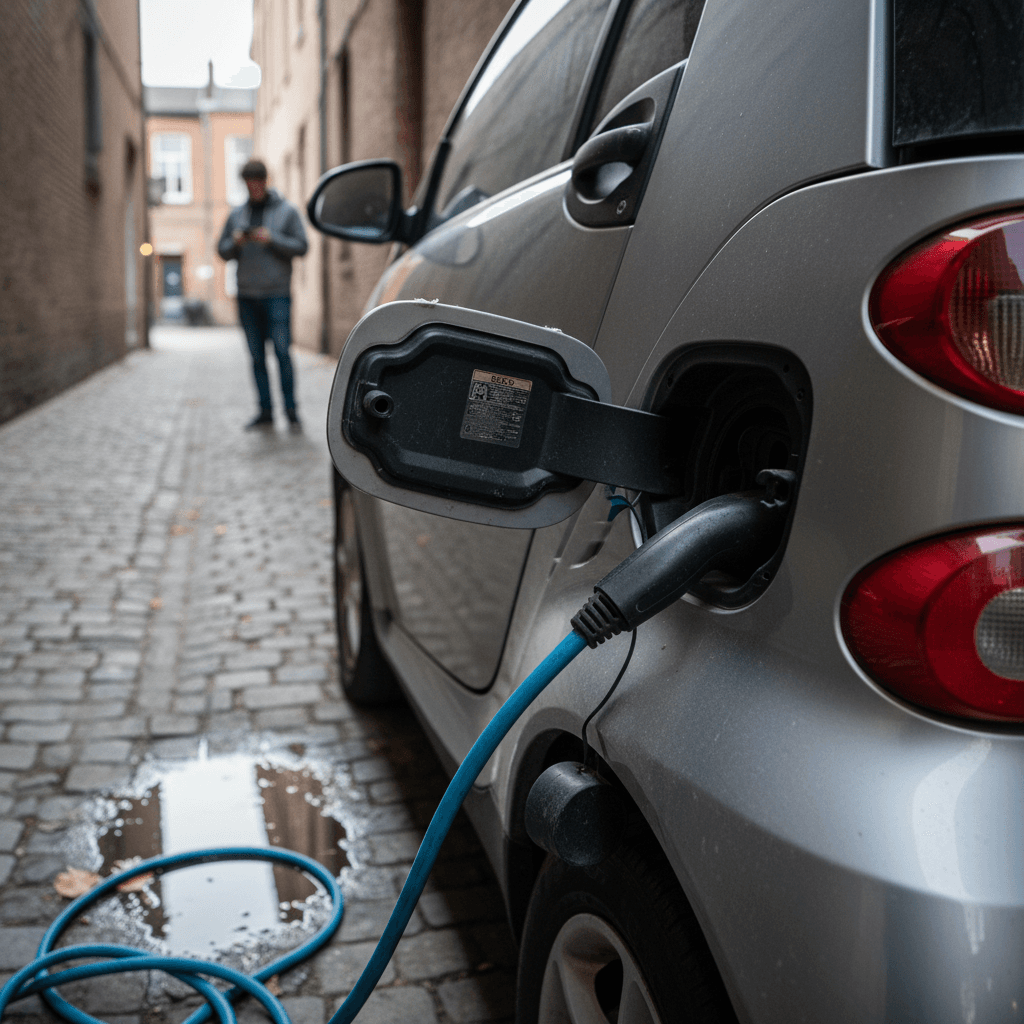
Smart sold several electric variants in the U.S., most notably the Fortwo Electric Drive (2017–2018) and later EQ Fortwo (2019). These are pure EVs with roughly 58 miles of rated range when new.
- 2017–2018 Fortwo Electric Drive: Typical dealer pricing today clusters around $10,000–$15,500 depending on miles, trim and region.
- 2019 EQ Fortwo: Kelley Blue Book fair‑purchase estimates for common trims land roughly in the $13,000–$14,000 range, with some clean, low‑mile examples listed higher.
- Older EVs with issues: Cars with battery or title flags can dip below $10,000 but may be risky without a detailed inspection.
Used smart EVs look inexpensive next to newer long‑range EVs, but range is limited and battery health is everything.
How to quickly sanity‑check a listing
5 big factors that move smart car prices
What actually drives smart car prices?
These five levers explain most of the differences you see between similar listings.
1. Mileage
Smart cars were often used as city runabouts. A 2017 Fortwo with 30,000 miles will generally command much more than the same year with 90,000 miles.
On EVs, low miles usually correlate with less battery wear, which buyers are willing to pay for.
2. Condition & history
Accident history, rust, interior wear and maintenance records can swing value thousands of dollars either way.
Clean Carfax/AutoCheck reports and documented service help justify higher asking prices.
3. Battery health (for EVs)
On Smart Fortwo Electric Drive and EQ Fortwo models, battery state‑of‑health is critical.
Because these cars start with modest range, any degradation is noticeable, and buyers pay a premium for packs that still deliver close to original range.
4. Region & demand
Smart cars are more desirable in dense urban markets where parking is scarce.
In some Sun Belt and coastal cities, clean examples may bring more money than similar cars in smaller markets with weaker EV or city‑car demand.
5. Model year & rarity
Later‑year cars, especially the final 2019 EQ Fortwo models, are rarer and can fetch higher prices.
Special trims and cabrio versions also narrow supply and push prices up.
Bonus: Modifications & repairs
Well‑documented repairs, like new tires or fresh brakes, can support price. But major collision repairs or questionable mods (lowering, remapped ECUs) may turn off buyers and lenders.
Watch for ultra‑cheap examples
Smart car prices vs. other small EVs
It helps to zoom out and see how smart EV prices compare with other compact electric cars. In many cases, a used smart EV is among the least‑expensive ways into electric ownership, but it also offers the shortest range and least utility.
Smart EV pricing vs. other budget-friendly used EVs
Typical 2025 U.S. used‑market price bands for popular compact EVs in average condition.
| Model | Typical model years | Approx. price band | EPA range when new | Seats |
|---|---|---|---|---|
| Smart Fortwo Electric Drive / EQ Fortwo | 2017–2019 | $10,000–$18,000 | ≈58 miles | 2 |
| Nissan Leaf (first gen, 24–30 kWh) | 2013–2017 | $7,000–$15,000 | 73–107 miles | 5 |
| Nissan Leaf (40 kWh) | 2018–2019 | $12,000–$20,000+ | 151 miles | 5 |
| Chevy Spark EV | 2014–2016 | $8,000–$15,000 | 82 miles | 4 |
| BMW i3 (BEV) | 2014–2018 | $13,000–$22,000+ | 81–153 miles | 4 |
If you need more range or space than a smart EV offers, these are the models shoppers often cross‑shop.
Smart EVs compete mostly on price, maneuverability and city charm. If you routinely drive more than 40–50 miles in a day or need rear seats, a used Leaf, Spark EV or i3 may make more sense even if the upfront price is a bit higher.
How to shop smart cars in today’s used market
Step-by-step: shopping a used smart car
1. Clarify your daily use case
Write down your real daily and weekly driving patterns. If you rarely exceed 30–40 miles in a day and mostly stay in the city, a smart, especially an EV, can work. If you do regular highway trips, you may outgrow it fast.
2. Decide gas vs. electric up front
Gas Fortwos are cheaper to buy and refuel anywhere, but they lack the smooth, quiet driving of the EV. Smart EVs cut fuel and maintenance costs, but range is short and you’ll need access to charging.
3. Set a realistic price ceiling
Given today’s market, many shoppers target $10,000–$14,000 for a solid smart car and more for pristine late‑model EVs. Build in a cushion for taxes, fees and immediate maintenance items like tires or a 12‑volt battery.
4. Scrutinize the vehicle history
Pull a history report and look for accidents, title brands, odometer discrepancies and frequent owners. Smart cars are often city‑parked, so watch for repeated minor collision or damage entries.
5. Inspect in person or use a trusted shop
Because parts and service networks are thinner than mainstream brands, you want to avoid hidden damage. For EVs, ask specifically about high‑voltage system checks and any battery replacements or warranty claims.
6. For EVs, demand real battery data
Ideally, you want a quantified battery state‑of‑health reading, not just “it seems fine.” At Recharged, every EV gets a <strong>Recharged Score Report</strong> with verified battery diagnostics so you know how much real‑world range to expect before you buy.
Where Recharged fits in
Ready to find your next EV?
Browse VehiclesFinancing, insurance and total cost
Sticker price is just one part of the equation. With smart cars, and especially smart EVs, you’ll want to think about the full ownership picture: interest costs, insurance, energy and maintenance.
Financing a low-priced smart car
- Loan minimums: Some banks and credit unions set minimum auto‑loan amounts (for example, $7,500 or $10,000). On a cheaper smart car, you may need a larger down payment or a personal loan instead.
- Rate vs. term: Because your principal is smaller, it often makes sense to choose a shorter term and pay slightly higher monthly payments to keep interest costs low.
- Pre‑qualification: Getting pre‑qualified, something Recharged offers with no impact to your credit, helps you understand your budget before you start chasing specific listings.
Insurance, energy and maintenance
- Insurance: Smart cars are small and inexpensive, but rates can vary by ZIP code, claims history and repair costs. Get quotes before you buy.
- Electricity vs. gas: In many regions, charging a smart EV at home costs the equivalent of paying well under $2 per "gallon" in electricity. Gas Fortwos sip fuel but are still tied to pump prices.
- Maintenance: EVs skip oil changes and have fewer wear items, but older packs and power electronics can be costly if they fail out of warranty. Gas Fortwos have simple drivetrains but may need transmission and cooling‑system attention with age.
When a smart car makes sense, and when it doesn’t
Is a smart car a good fit for you?
Use this quick lens before you get too deep into listings.
Great use cases
- You live or work in a dense city where parking is tight and streets are narrow.
- Your daily round‑trip is modest, ideally under 40–50 miles, especially for an EV.
- You already have a larger family or road‑trip vehicle and just need a second commuter.
- You value easy maneuverability and low fuel/energy costs more than cargo space.
Situations where it’s a stretch
- You regularly drive long highway distances or in areas with high speed limits.
- You need rear seats or meaningful cargo space more than once in a while.
- You’re uncomfortable with limited parts availability or niche service networks.
- You rely on a single car for everything, including road trips and hauling.
Think about resale before you buy
FAQ: smart car prices and shopping questions
Smart car price & shopping FAQs
Bottom line on smart car prices
In a market where mainstream new vehicles now average more than $50,000, the appeal of a $10,000–$17,000 smart car is obvious. For the right driver, short urban commutes, tight parking, no need for rear seats, a used Smart Fortwo or Smart EQ Fortwo can deliver low running costs and a surprisingly fun city‑car experience. The key is to be ruthless about condition, history and, on EVs, battery health rather than chasing the very cheapest listing.
If you decide you want a bit more range or space while staying in the same price ballpark, consider broadening your search to other compact EVs. That’s where a marketplace like Recharged shines: you can compare multiple used EVs side‑by‑side, each with a Recharged Score battery report, transparent pricing, financing help and nationwide delivery. However you decide to go, understanding today’s smart car prices, and what drives them, puts you back in control of the deal.