If you live in New York and keep asking yourself, “Should I switch to an electric car?”, you’re not alone. Between state mandates pushing toward all‑electric sales by 2035, crowded city streets, and a blizzard’s ability to turn the BQE into a parking lot, New York is a very particular place to go electric. The good news: for a lot of New Yorkers, an EV already makes practical and financial sense. For others, it’s still a stretch, and you’re smart to run the numbers before you jump.
New York is going electric, like it or not
Is an EV Right for You in New York?
Electric Cars in New York: 2026 Snapshot
Across New York, EV ownership is still highly uneven. In parts of Brooklyn and Queens, an electric car is *still* a curiosity; in Westchester or the Capital Region suburbs, it’s just another crossover in the school pickup line. The key is not whether EVs work in New York, they already do, but whether they work for your exact housing, commute, and budget.
Quick Answer: When an EV Makes Sense in NY (and When It Doesn’t)
Fast Fit: Are You a Good New York EV Candidate?
If 3 or more of the “Yes” boxes describe you, an EV deserves a hard look, especially a used one.
You’re probably a good fit if…
- You can charge at home (driveway, garage, or deeded spot) or at work reliably.
- You drive 8,000–15,000 miles a year and mostly within the state.
- You live in the suburbs or upstate, or in NYC with off‑street parking.
- You can leave the car plugged in overnight most days.
- You plan to keep your next car at least 4–6 years.
- You’re open to a used EV to capture lower purchase prices.
You may want to wait or stay hybrid if…
- You rely on street parking only in NYC with no realistic plan for home or workplace charging.
- You drive long highway miles daily (e.g., sales or field work) with limited fast chargers along your route.
- You take frequent winter road trips to places with thin charging coverage.
- Your budget is tight and you cannot risk range learning curves the first year.
- Your landlord or condo board is actively blocking outlet or charger installation.
Think in years, not weeks
New York EV Incentives: What’s Still on the Table
The financial case for switching in New York depends heavily on how much help you get from Albany and Washington, and on timing. As of April 2026, some of the richest incentives are still active, but not forever.
Key EV Incentives for New Yorkers (2025–2026)
Always confirm details with NYSERDA, the IRS, or a tax professional before you buy.
| Incentive | Applies To | Max Amount | Key Timing (as of 2026) | Notes |
|---|---|---|---|---|
| Federal Clean Vehicle Credit (new) | New EVs that meet income & assembly rules | Up to $7,500 | Available for eligible purchases through Sept 30, 2025 | Often applied at point of sale; many leases bake this in even when purchase credits phase down. |
| Federal Used Clean Vehicle Credit | Used EVs at least 2 years old under price & income caps | Up to $4,000 | Still available in 2026 unless changed by new federal law | Especially powerful for New Yorkers eyeing affordable used EVs. |
| NY Drive Clean Rebate | New plug‑in hybrid & battery EVs bought/leased in NY | Up to $2,000 | Ongoing state program, subject to annual funding | Stackable with federal credits on qualifying new vehicles. |
| Utility Charging Incentives | Home Level 2 charger installation, smart charging programs | Varies by utility | Active in 2026; programs differ by service area | Con Edison, National Grid and others offer rebates and off‑peak charging incentives. |
| Home EV Charger Tax Credit | Installation of home charging equipment | Up to 30% of costs (capped) | Phased down by mid‑2026 under current federal law | Useful if you’re upgrading your panel or adding a 240V circuit. |
Incentive amounts and deadlines change. Treat this as a starting point, not a legal document.
Watch the 2025–2026 federal deadlines
If you’re considering a used EV in New York, the federal used‑EV credit plus New York’s relatively strong charging incentives can erase a meaningful chunk of the price difference versus a comparable gas car. That’s where a marketplace like Recharged leans in, curated used EVs, battery health verified, and experts who can help you navigate which incentives you actually qualify for, not just the ones in the brochure.
EV vs Gas Costs in New York
Fuel: gas vs electricity
In early 2026, New York gasoline prices bounce around, but you’ve probably seen $3.50–$4.00 a gallon more often than you’d like. An efficient compact gas car might average 30 mpg. At $3.75/gal, that’s about 12.5¢ per mile in fuel.
A typical EV might use 28 kWh to go the same 100 miles. If your all‑in residential electricity rate is a painful 25¢/kWh in NYC, that’s about 7¢ per mile. On off‑peak EV or time‑of‑use rates, that can drop closer to 4–5¢ per mile.
Translation: even with New York’s “are you kidding me?” power prices, home‑charged EV miles are usually 30–60% cheaper than gas miles. Public DC fast charging is more expensive, sometimes close to gas equivalency, so you don’t want that to be your primary fuel source.
Maintenance and repairs
Electric cars have far fewer moving parts than internal‑combustion cars. No oil changes, timing belts, spark plugs, or exhaust systems. Over 5–8 years of ownership, many New York drivers will spend noticeably less on routine service.
Two big caveats:
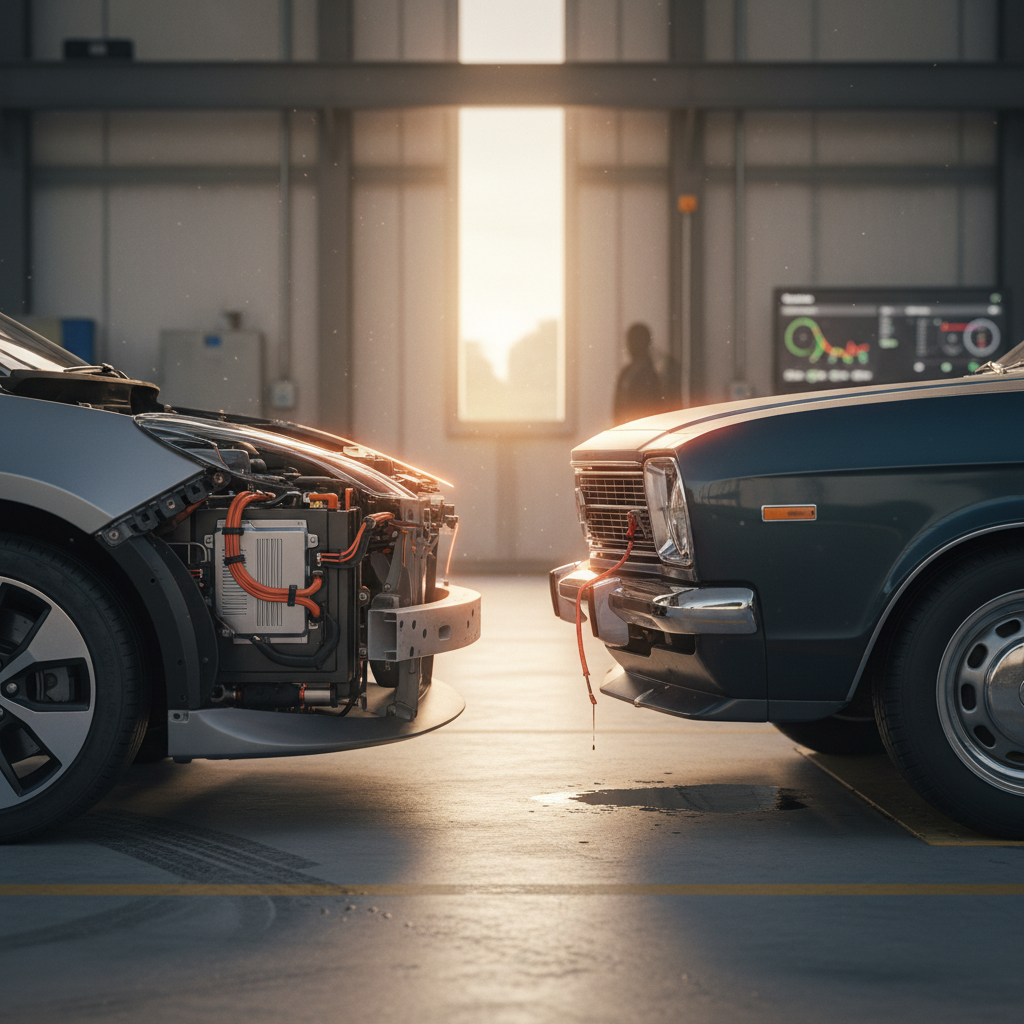
- Collision repairs can be more expensive on some EVs because of sensors and aluminum structures.
- Out‑of‑warranty battery work is costly, which is why you absolutely want a clear picture of battery health on any used EV you consider.
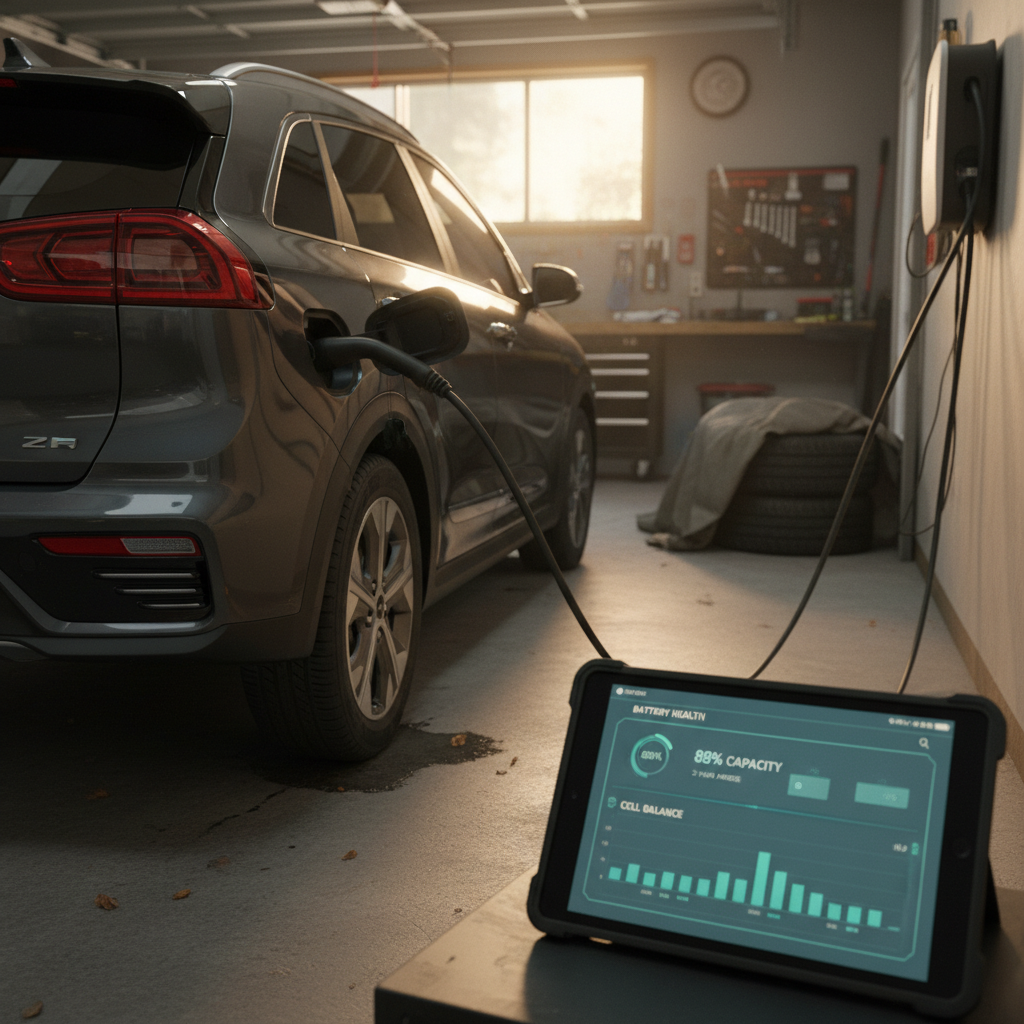
This is exactly what Recharged’s Recharged Score Report is built to address, independent battery diagnostics, so you’re not guessing about the most expensive part of the car.
Where New Yorkers most clearly save
Charging in NYC vs Upstate and the Suburbs

Charging Landscape: Three Different New Yorks
1. New York City (5 boroughs)
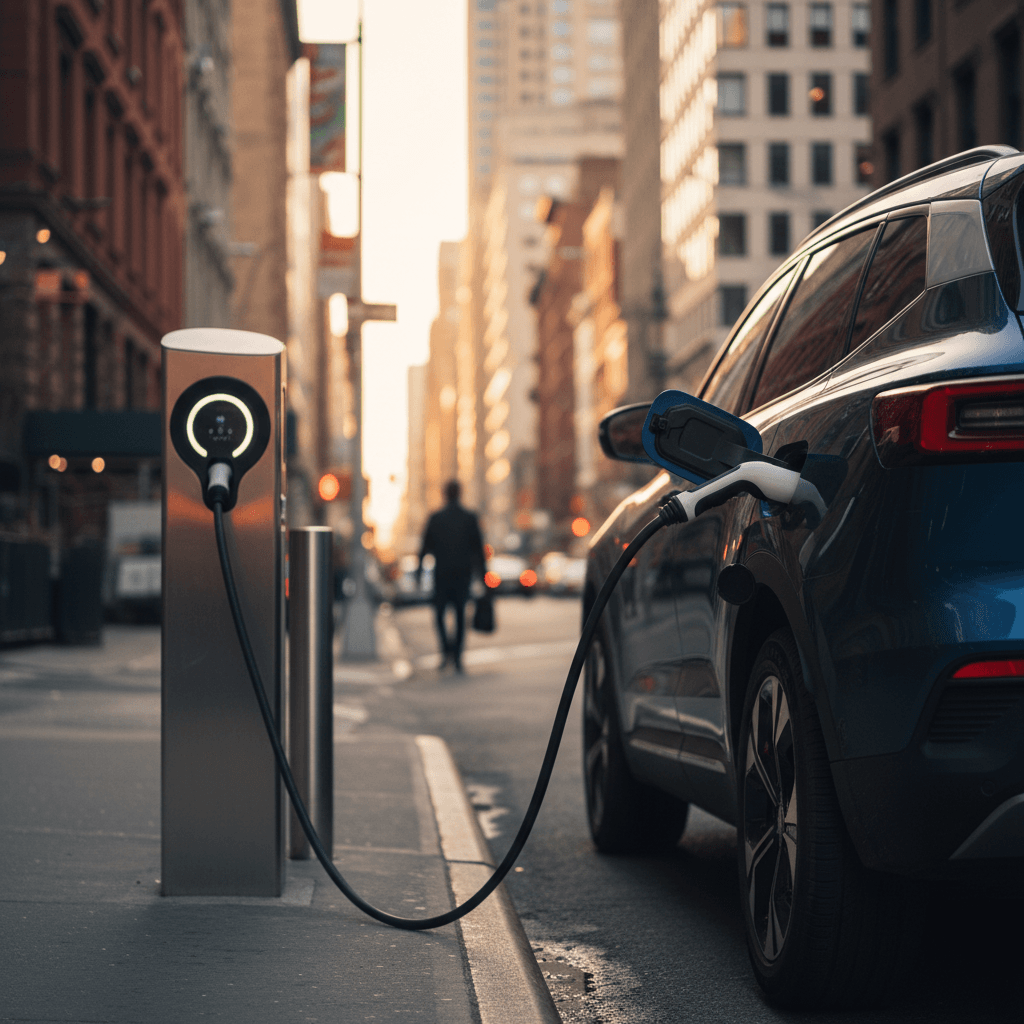
Public charging has grown, but it still lags demand. There are more Level 2 and DC fast chargers sprinkled across garages, curbside pilots, and private lots, yet curbside overnight charging is nowhere near as common as curbside parking itself. If you have a driveway, garage, or deeded condo spot that can host a 120V or 240V outlet, NYC becomes a much friendlier EV city.
2. Suburbs (Westchester, Long Island, Hudson Valley)
This is prime EV territory: off‑street parking is common, many utilities offer EV‑friendly rates, and public fast‑charging dots major highways and shopping centers. For a two‑car suburban household, putting the daily‑driver on electrons and keeping one gas vehicle for road‑trip duty is an extremely workable setup.
3. Upstate cities and rural towns
Albany, Rochester, Buffalo, Syracuse, and Ithaca all have growing charging networks and plenty of single‑family homes. Once you leave the cities, public charging thins out, but home charging gets easier. If you mostly drive local miles and plan long trips in advance, an EV can work well, even in the North Country, so long as you respect winter range limits and know where your fast chargers are.
Plot your real routes, not ideal ones
Apartment, Condo, and Street-Parking Reality Check
Here’s the hard truth for many New Yorkers: if you rely strictly on street parking in a dense neighborhood, an EV can still be a logistical gymnastics routine. Not impossible, but you need a very clear weekly charging plan that doesn’t depend on winning the curbside lottery.
- In walk‑up rentals with no driveway or garage, you’ll be leaning on a mix of DC fast charging, workplace charging, or parking‑garage chargers.
- In co‑ops and condos, boards are warming to EV infrastructure, but approvals can be slow, and costs may be passed to residents.
- Running an extension cord across the sidewalk is not just a bad idea, it’s often forbidden and unsafe. Don’t plan on “just dropping a cord out the window.”
If you only have street parking, read this twice
On the other hand, if your building or employer is actively exploring chargers, getting into an EV before everyone else does has perks: easier access to plugs, more predictable charging, and the satisfaction of not donating half your paycheck to Midtown gas stations.
Cold Winters, Range, and Battery Health
New York winters are not kind to anyone, least of all lithium‑ion chemistry. Cold weather hits EVs in two ways: you use energy to heat the cabin, and the battery itself becomes less efficient. The result: 20–40% less range on the coldest days, depending on the car and how you drive.
How New York Winters Change EV Ownership
Winter doesn’t make EVs impossible. It just makes sloppy planning expensive.
Plan for reduced winter range
Precondition while plugged in
Battery health over the long term
Who Should Strongly Consider a Used EV in New York
The used EV market in New York is finally interesting. Early Tesla Model 3s, Chevy Bolts, Hyundai Konas, Nissan Leafs, and a wave of off‑lease crossovers are showing up with reasonable prices and plenty of life left, if you pick carefully.
- You’re in the suburbs or upstate with driveway/garage parking.
- You want to cut your fuel bill in half without taking on a luxury‑car payment.
- You’re okay with a realistic 180–230 miles of range instead of chasing 300+ miles on the window sticker.
- You drive mostly within New York and neighboring states.
- You like the idea of skipping depreciation on the priciest first years of an EV’s life.
Where Recharged fits into the used EV picture
How to Evaluate a Used EV in NY With Less Risk
Used EV Due-Diligence Checklist for New Yorkers
1. Confirm usable range for your worst‑case day
Don’t shop by EPA range alone. Ask for real‑world range estimates at highway speeds and in winter. If you have a 70‑mile winter commute with no workplace charging, a used EV that realistically delivers 140 miles of cold‑weather range gives you the buffer you need.
2. Demand objective battery health data
Battery replacement is the economic bogeyman in EV ownership. Look for a <strong>professional health report</strong> based on diagnostic tools, not just a guess from the dash display. Recharged bakes this into its Recharged Score so you’re not buying blind.
3. Check charging history and hardware
Has the car spent most of its life on gentle Level 2 home charging, or has it lived at DC fast chargers on I‑87? Either is survivable, but it affects long‑term health. Confirm that the charging port, cables, and adapters you’ll actually use in New York are included and in good shape.
4. Match the connector to your life
In New York, the charging landscape is shifting toward the Tesla‑style NACS connector even for non‑Tesla brands. Make sure you understand exactly which plugs your car uses and how that plays with your local networks. Adapters solve a lot but not all compatibility issues.
5. Run the insurance and parking math
Some EVs cost more to insure, some don’t; it depends on the model and your ZIP code. If you use garages in the city, compare monthly parking rates for EVs (with charging) vs standard spots. A charger‑equipped space that saves 75% of your fuel cost may pencil out.
6. Think about exit strategy
New York’s 2035 rules will make clean vehicles more common, and older, shorter‑range EVs less desirable. Favor models with solid demand and reputations. A battery with verified health today should make the car easier to sell or trade later, especially through EV‑focused platforms like Recharged.
Step-by-Step “Should I Switch?” Decision Checklist
Two Paths: Ready to Switch vs. Not Yet
Path A: You’re likely ready for an EV now
You have reliable home or workplace charging, or can add at least a 120V outlet near your parking spot.
Your typical day is under 80–100 miles round trip, with a few longer drives per month.
You qualify for at least one major incentive (federal or state) and can buy before key 2025–2026 deadlines.
You’re comfortable learning a new routine around charging and trip planning for the first few months.
You’re open to a used EV and willing to insist on independent battery‑health verification, such as a Recharged Score Report.
Next step: price out 2–3 EVs (including used) against your current car’s fuel and maintenance costs over 5 years. The numbers will likely surprise you.
Path B: You should probably wait or go plug‑in hybrid
You rely entirely on street parking in a dense NYC neighborhood and have no near‑term prospect of off‑street or workplace charging.
Your work routinely sends you on 200+ mile days to areas with spotty fast‑charging coverage.
Your budget is extremely tight, and the learning curve of first‑year EV ownership would create stress, not relief.
Your building or board is hostile to even basic electrical upgrades for parking areas.
You aren’t ready to think about charging at all, you just want to fill up and forget it.
Next step: look at efficient hybrids or plug‑in hybrids now, while keeping a close eye on how quickly charging shows up on your actual block. When that changes, revisit a full EV.
Frequently Asked Questions About EVs in New York
New York EV FAQ
Bottom Line: Should You Switch to an EV in New York?
An electric car in New York is not a lifestyle accessory anymore; it’s rapidly becoming the default for people with the right infrastructure and driving patterns. If you have reliable charging, drive a sane number of miles, and can take advantage of today’s incentives, switching to an EV, especially a well‑vetted used one, can cut your running costs, tame your maintenance schedule, and future‑proof your driveway against New York’s coming bans on new gas‑only cars.
If, on the other hand, you’re locked into street parking in a dense NYC neighborhood with no realistic path to home or work charging, the calculation is harsher. In that case, give the grid a little time to catch up. New York’s streets are going electric; the question is whether you’re better off being an early adopter or a fast follower. With clear eyes about your housing, routes, and budget, and with tools like a Recharged Score Report to de‑risk the battery piece, you can make that call with confidence instead of hype.