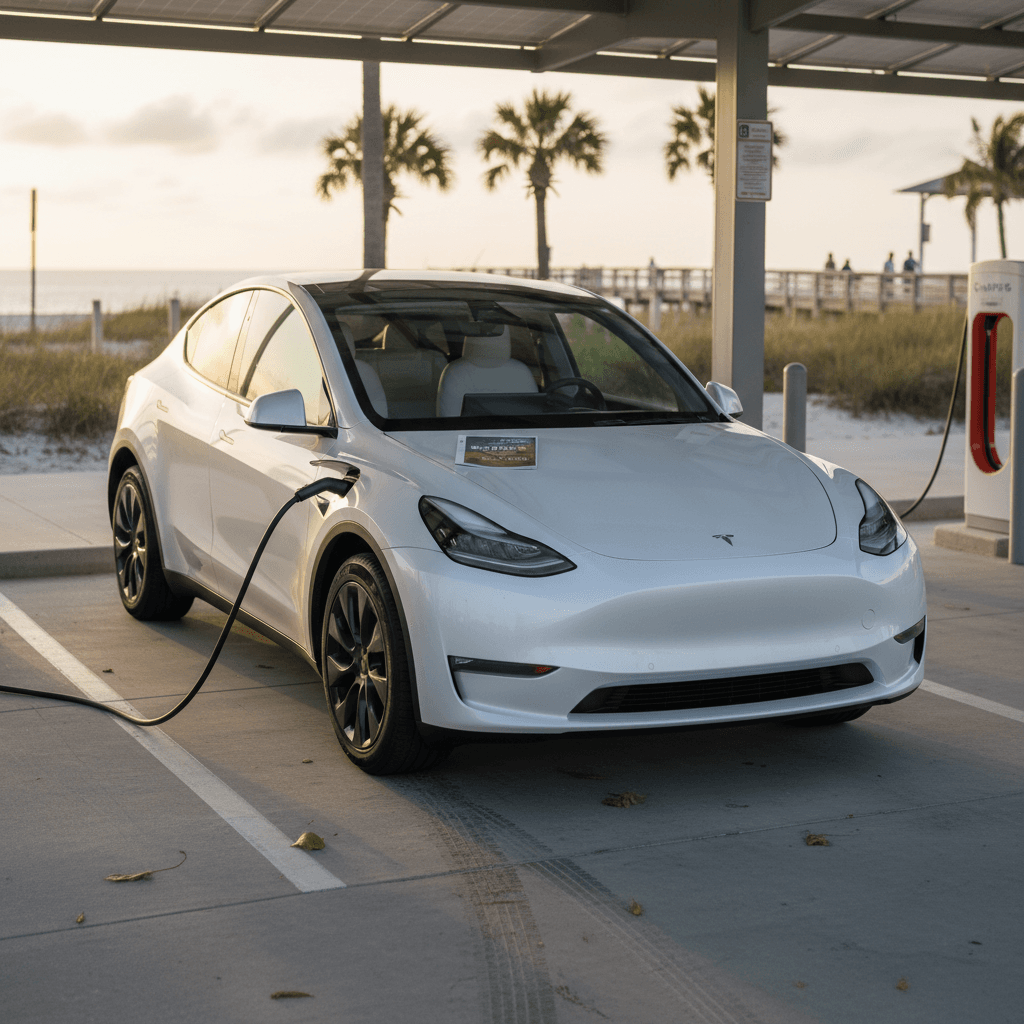
If you live in Florida and you’re wondering, “Should I switch to an electric car?”, you’re not alone. Florida now trails only California in EV adoption, and public charging locations here have more than doubled in the last few years. At the same time, you have real questions: hurricanes, power outages, condo parking, long drives on I‑75 or I‑95, and whether the numbers actually work. This guide walks through the Florida‑specific pros, cons, and costs so you can decide with confidence.
Florida is already an EV hotspot
Is an electric car in Florida a good idea in 2026?
For many drivers, yes, an electric car already makes solid financial and practical sense in Florida. The state’s flat terrain, mild winters, and heavy highway network all play to an EV’s strengths, and charging infrastructure is growing quickly along major corridors and in metro areas like Miami, Orlando, Tampa Bay and Jacksonville. But it isn’t automatically the right answer for everyone.
Florida EV snapshot in 2026
Those topline numbers are promising, but the right question isn’t “Are EVs big in Florida?” It’s: Does an EV fit your daily driving, your home situation, and your hurricane plan? The rest of this guide is structured around those three realities.
Key pros and cons of switching to an EV in Florida
Major advantages in Florida
- Fuel savings with low off‑peak power rates: Utilities like Duke Energy Florida and Florida Power & Light now offer off‑peak EV charging programs, so if you charge overnight you can often drive for the equivalent of $1–$1.50 per gallon.
- No winter range penalty: You don’t battle sub‑freezing temperatures, so your real‑world range is usually close to what’s on the window sticker.
- Strong charging build‑out: Florida has thousands of public ports, with more DC fast chargers being added along interstates and tourist corridors every quarter.
- Quiet, smooth city driving: Stop‑and‑go traffic in Miami, Orlando or Tampa plays to the strengths of instant torque and one‑pedal driving.
Real drawbacks to weigh
- Hurricane‑driven outages: A multi‑day grid outage in late summer can temporarily strand any electric car that isn’t charged in advance.
- Flood and saltwater risk: Like gas cars, EVs can be totaled by storm surge and standing saltwater, and damaged battery packs are costly.
- Condo and apartment friction: If you don’t control your parking or electrical panel, getting Level 2 charging installed can take time and HOA politics.
- Long‑distance rural travel: The coasts and big metros are well covered, but deep‑rural Panhandle or interior trips still require route planning.
How to use this guide
How good is Florida’s EV charging network?
Florida’s charging network is no longer in its infancy. Public EV chargers in the state have more than doubled over roughly four years, and today there are more than 3,600 public locations with around 11,000 ports. That puts Florida near the top nationally for both Level 2 and DC fast charging availability, especially along interstates and in tourist‑heavy regions.
Where charging is strongest, and where it’s still thin
Florida is in good shape in the metros and on major corridors; rural areas still lag behind.
Big metro areas
Miami–Fort Lauderdale, Orlando, Tampa Bay, Jacksonville and their suburbs have dense Level 2 coverage at workplaces, hotels and shopping centers, plus growing DC fast‑charging hubs along ring roads and major highways.
Interstates & corridors
Routes like I‑95, I‑75, I‑4 and the Florida Turnpike now have regular DC fast‑charging stops from major networks such as Tesla Supercharger, Electrify America, EVgo and others, making long road trips much easier than just a few years ago.
Rural gaps
Rural stretches in the Panhandle, Big Bend and parts of inland Central Florida still have fewer options, especially for non‑Tesla fast charging. You’ll need to plan charging stops in advance and may rely more on Level 2 chargers.
Don’t trust the map blindly
Can you charge at home in Florida? Options and costs
Home charging is the single biggest factor in whether an EV works smoothly for you in Florida. If you can plug in where you park every night, you turn every morning into a “full tank” start, and you’re insulated from some hurricane‑season chaos. Let’s look at the main home‑charging scenarios.
Home charging options for Florida drivers
Rough cost and practicality ranges; actual electrician quotes will vary by home.
| Scenario | What it looks like | Upfront cost range | Good fit for |
|---|---|---|---|
| Level 1: Standard outlet (120V) | Use the portable cord in a normal outlet, ~3–5 miles of range per hour. | $0–$300 | Low‑mileage drivers (<30 miles/day) with a garage outlet and patience. |
| Level 2: 240V on existing circuit | Re‑use a dryer or existing 240V circuit with a NEMA 14‑50 or 6‑50 outlet. | $300–$900 | Homeowners with flexible electrical panel capacity; ideal for most EV owners. |
| Level 2: New circuit & wallbox | New dedicated 240V circuit plus hard‑wired 32A–48A wall charger. | $800–$2,000+ | Homeowners planning to own EVs long term, two‑EV households, or high‑mileage commuters. |
| Condo / apartment shared charger | Community Level 2 station in parking lot or garage, sometimes with a fee. | Varies widely | Multi‑family residents where personal installation isn’t allowed but property has, or will add, shared EV spaces. |
Level 2 charging (240V) is ideal, but many lower‑mileage drivers can limp along on Level 1 if needed.
Talk to your utility before hiring an electrician
Hurricanes, flooding and power outages: are EVs a bad idea?
Hurricanes are the number‑one reason many Floridians hesitate on EVs. It’s a fair concern: if a major storm knocks out power for days, how do you charge? And what about saltwater flooding and battery fires that occasionally make headlines after landfall?
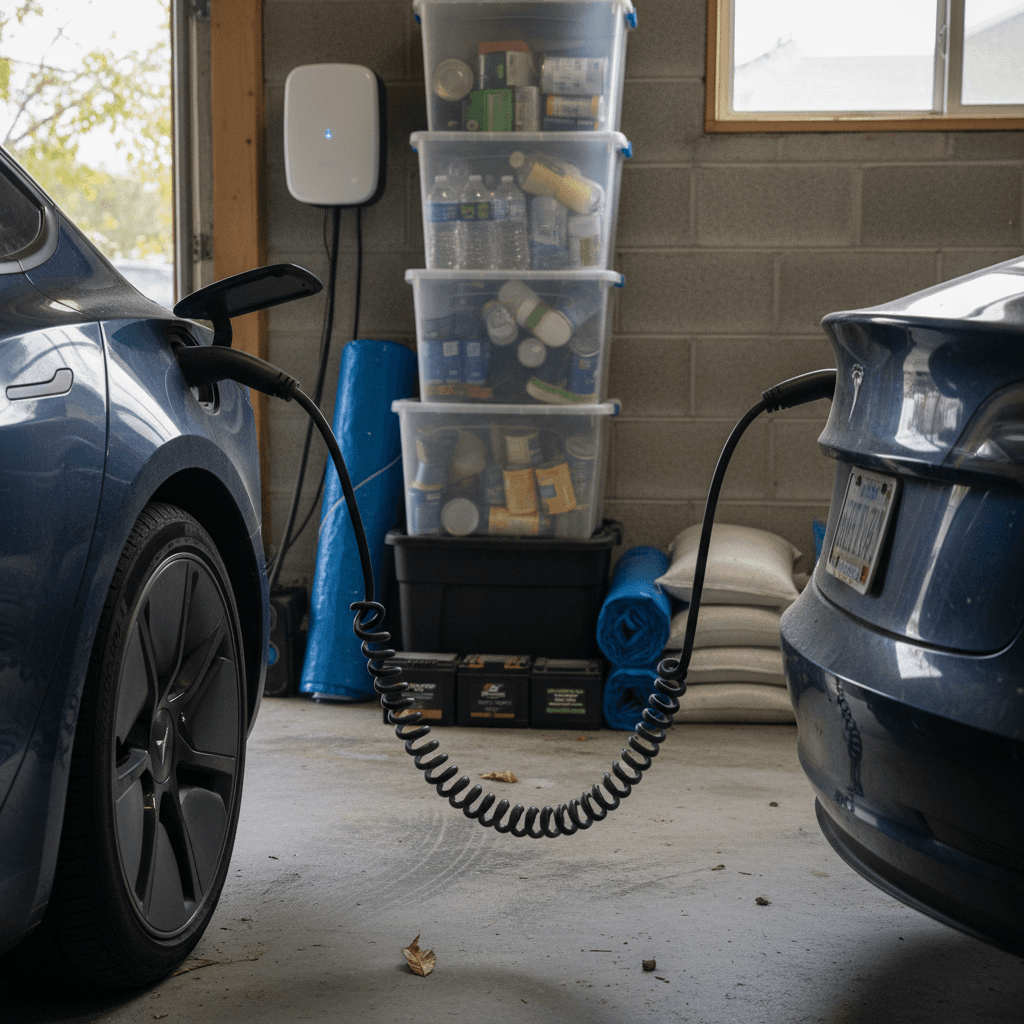
- Power outages hit gas and EV drivers. During major storms, gas stations also lose power or run dry. An EV with a full battery before landfall can actually be more predictable than trying to find an open station afterward.
- Saltwater flooding is dangerous for any car. Gas or electric, a vehicle that sits in storm surge is often a total loss. Some EVs have caught fire after being submerged in saltwater, rare, but serious enough that Florida officials now warn EV owners to move cars to higher ground before landfall.
- Garage owners have an edge. If you can park in a garage or on high ground and keep your EV charged to 70–90% when a storm is in the forecast, you’re unlikely to be stuck, especially if outages last a couple of days, not weeks.
- Backup power is a growing option. Some newer EVs support bidirectional charging, which lets the car power parts of your home. Others can at least run tools and appliances from accessory outlets. That’s not universal yet, but it’s worth considering if you’re in a hurricane‑prone county.
Hurricane safety basics for EV owners
EV vs gas in Florida: what will you really spend?
In a state where driving is practically mandatory, total cost of ownership matters as much as sticker price. EVs tend to cost more up front but less to “fuel” and maintain over time. Let’s look at how that shakes out using ballpark Florida numbers. (Exact figures will vary by model and utility.)
Fuel and maintenance
- Electricity vs gas: A typical EV in Florida might use ~28 kWh to drive 100 miles. If you’re on an off‑peak EV rate around 10–12¢/kWh, that’s roughly $2.80–$3.40 per 100 miles. A comparable gas car getting 30 mpg at $3.25/gal costs about $10.80 per 100 miles.
- Routine maintenance: EVs skip oil changes, exhaust systems and many transmission services. You’re mainly dealing with tires, cabin filters, brake fluid and the occasional coolant service.
- Unexpected repairs: Out‑of‑warranty battery or high‑voltage system work can be expensive, which is why understanding battery health up front is critical, especially on a used EV.
Purchase price and incentives
- New EVs: New‑car pricing is still higher than equivalent gas models in many trims, though aggressive leasing and federal incentives through at least late 2025 can narrow the gap for qualifying buyers.
- Used EVs: Depreciation has made used electric vehicles surprisingly affordable in Florida, especially 2–4‑year‑old models with strong range. In many cases, a used EV plus low running costs beats a similarly priced gas car over a five‑year horizon.
- Charging equipment: Expect to budget several hundred to a couple thousand dollars for a proper Level 2 home setup if you own your home and don’t already have a 240V outlet near where you park.
What about tax credits?
Who is (and isn’t) a good candidate to switch now?
Is an EV a good fit for your Florida lifestyle?
Match your situation to the profiles below.
Great candidates
- Homeowners with a driveway or garage who can install a Level 2 charger and charge most nights.
- Daily commuters under ~80 miles round‑trip who mostly drive in metro areas or along well‑served corridors.
- Households with two cars who can keep a gas vehicle for rare long‑distance or emergency scenarios.
- Drivers who hate gas‑station stops and want a quieter, smoother daily drive.
Think twice (or plan carefully)
- Apartment and condo residents who have no access to on‑site charging and limited workplace options.
- Sales reps and field techs covering hundreds of rural miles a week in regions with sparse charging.
- One‑car households in high‑risk coastal flood zones who cannot easily evacuate or charge ahead of storms.
- Buyers living far from EV‑savvy service centers, especially for rarer models with limited dealer support.
A simple rule of thumb
Why a used EV often makes the most sense in Florida
Used EVs are where Florida drivers often find the sweet spot between price, range and features. Because early owners absorbed the biggest depreciation hit, a 2–4‑year‑old EV can cost thousands less than new while still offering plenty of range for daily Florida driving. That’s particularly attractive if you’re EV‑curious but nervous about dropping new‑car money on your first electric.
- Depreciation is your friend. EV technology improved quickly from about 2020 onward, which pushed down prices on earlier models. That creates opportunity, if you can verify battery health and understand real‑world range.
- Range is more forgiving in Florida. Without harsh winters, a used EV with 220–260 miles of original EPA range can still deliver very livable daily range years later, especially if you charge at home.
- Insurance and registration can be manageable. Insurance premiums in Florida are high for almost everyone; choosing a slightly older EV rather than the newest, highest‑performance trim can help keep costs in check.
- Plenty of off‑lease supply. Off‑lease vehicles from coastal metros and fleet turn‑ins are feeding a growing used‑EV market, giving Florida shoppers more choice than even a couple of years ago.
The catch: battery health and pricing transparency
How Recharged can help you buy the right used EV
This is exactly the problem Recharged was built to solve. If you’re leaning toward a used electric car in Florida but you’re worried about batteries, pricing, or the buying process itself, Recharged acts as a specialized EV retail and marketplace partner, not a traditional dealer focused only on moving metal.
What you get with a used EV from Recharged
Built to make EV ownership simple and transparent.
Recharged Score Report
Every vehicle includes a Recharged Score Report with verified battery health diagnostics, so you aren’t guessing about degradation. You see how the pack is performing today, and how that feeds into fair, transparent pricing.
Fair pricing & financing
Recharged benchmarks vehicles against the used‑EV market so you can see whether a price is genuinely fair. You can also access EV‑friendly financing, trade‑in options, and instant offers or consignment if you’re selling a gas car or older EV.
Digital, expert‑guided experience
You can browse and complete most of the process online, lean on EV‑specialist support for questions, and arrange nationwide delivery, or visit the Recharged Experience Center in Richmond, VA if you prefer an in‑person feel.
Ready to find your next EV?
Browse VehiclesNot sure which EV fits your life?
Checklist: steps before you switch to an electric car in Florida
10‑minute readiness check for Florida EV ownership
1. Map your real daily miles
Look at a normal week, not a one‑off road trip. Add up your commute, school runs and errands. If most days are under 80–120 miles, almost any modern EV will work comfortably, especially in Florida’s mild climate.
2. Confirm where you’d charge
Do you have a garage, driveway, or deeded parking spot near power? If so, talk to an electrician and your utility about a 240V outlet or wallbox. If you’re in a condo or apartment, ask the property about existing or planned shared chargers.
3. Check utility EV rates and incentives
Visit your utility’s website or call directly to ask about EV‑specific or off‑peak rates, charging credits, and any rebates for Level 2 equipment. Factor these into your fuel‑savings math.
4. Think through hurricane season
Consider where you’d park during a storm, how you’d charge in the days leading up to landfall, and whether you have a second vehicle as backup. If you live in a high‑risk surge zone and rely on a single car, you may want a conservative range buffer.
5. Decide on new vs used
Set a budget, then compare total cost of ownership for a new EV, a used EV and a comparable gas car over five years. Don’t forget insurance estimates, home‑charging costs and expected fuel savings.
6. Prioritize range and charging speed
For Florida, focus less on 0–60 times and more on <strong>real‑world highway range</strong> and fast‑charging capability. If you take I‑95 or I‑75 road trips, a car that can comfortably add 150+ miles in about 25–30 minutes is a big plus.
7. Look for transparent battery health on used EVs
If you’re shopping used, insist on objective battery diagnostics, not just a dashboard bar graph. Tools like the Recharged Score Report translate battery data into plain‑language range expectations and pricing guidance.
8. Confirm local service options
Search for EV‑certified dealers or independent shops within a reasonable drive, especially if you’re considering a less common brand. Check parts availability and any history of recalls or common issues.
9. Test‑drive in your real conditions
Drive in the same traffic and road types you’ll use daily. Try one‑pedal driving, check visibility, and pay attention to driver‑assist tech for heavy Florida traffic and rain‑slick roads.
10. Plan your first long trip
Before you buy, open a charging‑network app or your car’s online route planner and map a typical weekend getaway. If the charging plan looks reasonable, and you’re comfortable with a bit of planning, you’re likely ready to live with an EV.
Frequently asked questions about EVs in Florida
Florida EV FAQs
Bottom line: should you switch to an electric car in Florida?
If you’re in Florida and you can reliably charge where you park, an electric car is no longer a niche experiment, it’s a practical upgrade that can cut your running costs, simplify your driving life, and still keep up with hurricane‑season realities as long as you plan ahead. The state’s charging network is maturing, the climate works in your favor, and the used‑EV market is rich with options that don’t require new‑car pricing.
The people who struggle most with EVs in Florida are those without dependable charging at home or work, or those who routinely push into rural areas well beyond today’s fast‑charging corridors. If that’s you, the answer might be “not yet”, or “yes, but only as a second car.” For everyone else, especially homeowners in metro areas, the balance in 2026 has tipped toward “yes, it’s time”, and a carefully chosen used EV with verified battery health is often the smartest way to make that switch.