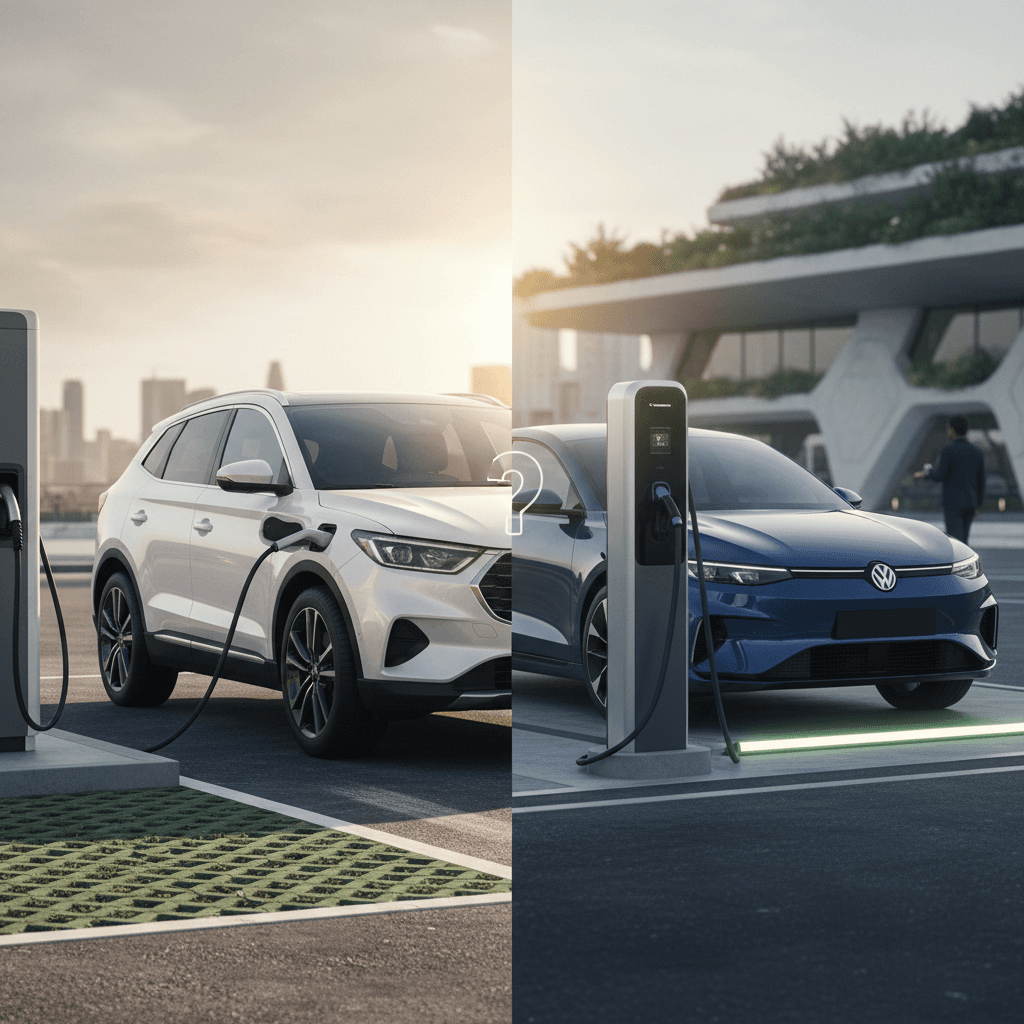
If you’re asking yourself, “Should I buy a plug-in hybrid or a full electric car?” you’re not alone. With more plug-in hybrid (PHEV) crossovers and trucks on sale and full battery-electric vehicles (BEVs) still grabbing headlines, choosing the right tech can feel confusing. The good news: if you understand your driving pattern, your home charging options, and how long you plan to keep the car, the answer gets a lot clearer.
Key takeaway in one line
Plug-In Hybrid vs Full Electric: Quick Overview
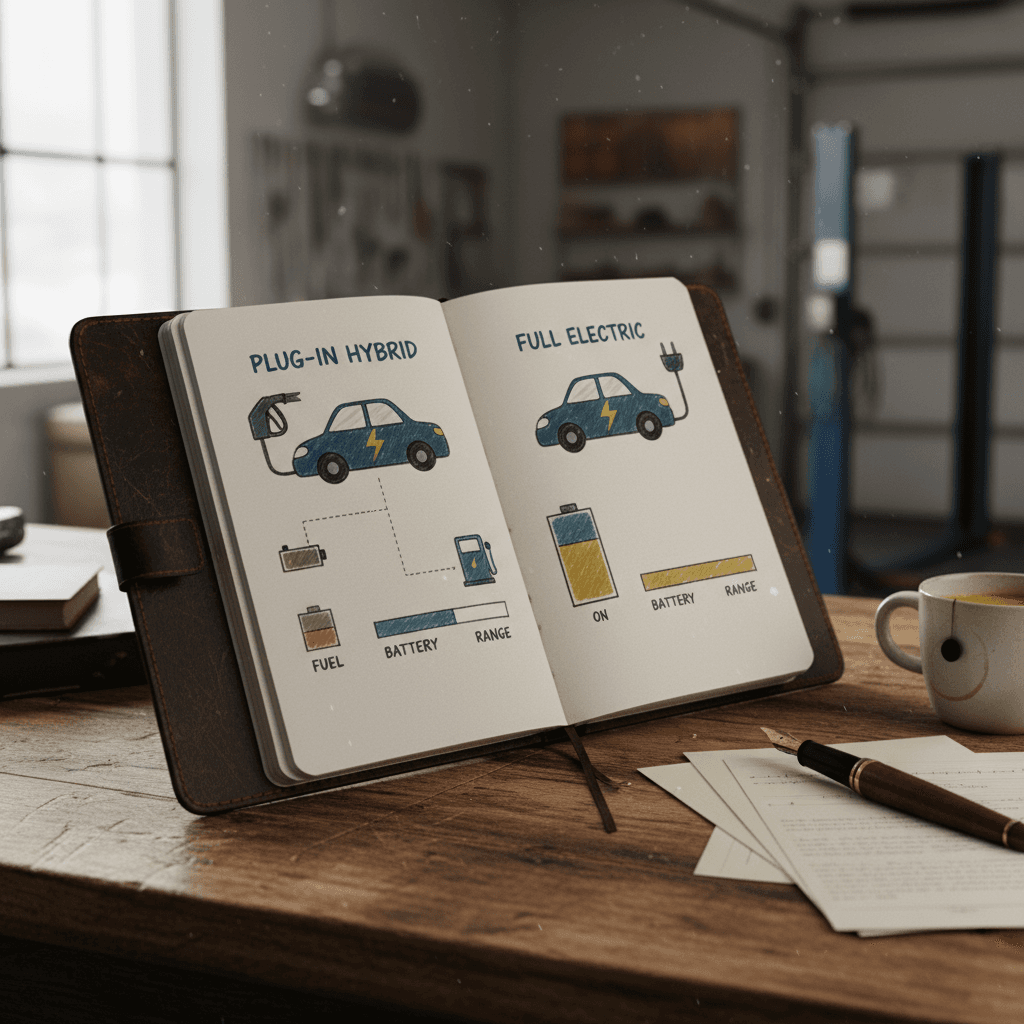
What is a Plug-In Hybrid (PHEV)?
- Has both an electric motor and a gasoline engine.
- Can drive a limited distance (often 20–50 miles) on electricity alone.
- After the battery is depleted, it behaves like a regular hybrid using gas.
- You still visit gas stations, but much less if you plug in consistently.
What is a Full Electric (BEV)?
- Powered only by an electric motor and a battery.
- Typical real-world range is 200–300 miles on a full charge, often more.
- No gas tank, no oil changes, no tailpipe emissions.
- You depend on charging at home, work, or public stations.
Why This Choice Matters in 2026
Don’t start with the technology
Step 1: How to Think About Your Driving
Before you debate plug-in hybrid vs full electric, get honest about how you actually use your car. The average American drives about 30–40 miles per day, but averages hide a lot. The key question is not your longest trip of the year; it’s what you do on a normal Tuesday.
- Daily commute: How many miles round trip, and can you charge at home or work?
- Weekend errands: Do you mostly stay within 20–50 miles, or is every weekend a 200‑mile run?
- Road trips: How often do you truly drive 300+ miles in a day? Once a year, or every other weekend?
- Climate: Very hot or very cold weather can temporarily cut EV range. How many weeks per year is that a factor?
- Household fleet: Do you have another gasoline vehicle that can handle the rare long-haul trip?
A simple rule of thumb
When a Plug-In Hybrid Makes More Sense
Great Scenarios for Plug-In Hybrids
These are the buyers who tend to be happiest with PHEVs
Unpredictable or long drives
Limited charging options
Frequent road-trippers
The plug-in hybrid sweet spot is the driver whose daily use fits in the electric range, think 20–40 miles each way, but who regularly travels beyond that. A PHEV lets you treat most weekdays like EV ownership while eliminating the “What if the charger is broken?” anxiety on long drives.
- You like the idea of electric driving but aren’t ready to go 100% electric.
- Your workplace or apartment occasionally offers charging, but it’s not guaranteed.
- You live in a rural area where fast chargers are sparse, and winter weather can be harsh.
- You tow or haul occasionally, and you’re worried about how that would impact an EV’s range.
- You plan to keep the car for 3–5 years and want flexibility in case local charging infrastructure doesn’t grow as fast as promised.
The big PHEV pitfall
When a Full Electric Vehicle Is the Better Choice
Full battery‑electric vehicles make the most sense when you can use their strengths every day: low running costs, smooth performance, and quiet, zero‑emission driving. If you mostly travel short to medium distances and have a predictable routine, a BEV can simplify your life rather than complicate it.
You’re a Great Fit for a Full EV If…
These patterns favor going all‑electric
Home charging is easy
Commute is modest
You own another car
You prioritize emissions
Where full EVs quietly win
Costs: Fuel, Maintenance, and Resale Value
There’s no single answer to which is cheaper, plug-in hybrid or full electric, because local electricity and fuel prices vary. But there are some patterns you can count on.
Plug-In Hybrid vs Full EV: Typical Cost Patterns
General trends; actual numbers depend on your model, driving, and local prices.
| Cost Factor | Plug-In Hybrid (PHEV) | Full Electric (BEV) |
|---|---|---|
| Upfront price | Often slightly cheaper than a comparable-range EV; battery is smaller but you’re also paying for an engine and transmission. | Can be higher sticker price, especially new, but used EVs often see steeper discounts. |
| Fuel/energy | Electric miles are inexpensive; gas miles cost similar to an efficient hybrid. Real savings depend on what share of your miles are electric. | Electricity usually beats gasoline on a per‑mile basis, especially if you can charge off‑peak at home. |
| Maintenance | More complex: engine + electric system. You’ll still have oil changes, exhaust, and more fluids. | Simpler: no engine, no oil changes, fewer wear items. Tires and brakes are the main regular expenses. |
| Long-term repairs | Two powertrains mean more potential systems to maintain as the car ages. | Fewer major components. Battery health is critical but many EVs show modest degradation when well cared for. |
| Resale value | Depends heavily on gas prices and how well the car has been maintained; buyers may worry about battery and engine age. | Improving as EVs go mainstream, but older short‑range EVs can depreciate sharply. Battery health reports help a lot. |
Use this table as a directional guide rather than a quote sheet.
How Recharged helps on used pricing
Charging and Living With the Car Day to Day
How the car fits into your life matters more than any spec sheet. Ask yourself how often you’re willing to think about charging and whether you want gas stations to be part of your routine at all.
Living With a Plug-In Hybrid
- Best case: you plug in at home most nights, run primarily on electricity, and only buy gas on long trips.
- Worst case: you rarely plug in, and the car behaves like a heavy gasoline SUV with mediocre mpg.
- You don’t have to plan around charging stops on road trips; gas stations are everywhere.
- You still need regular engine service (oil, filters, possibly spark plugs) on schedule.
Living With a Full Electric
- Best case: you charge overnight at home, start each day with a “full tank,” and almost never think about public chargers.
- On road trips, you plan charging stops like you’d plan meal or rest breaks. Apps make this easier than it used to be.
- Public charging reliability is better than it was, but you’ll still occasionally find broken or busy stations.
- Maintenance is simpler, but you need to be slightly more aware of range in extreme weather or when towing.
Public charging may not match the brochure
Environmental Impact and Future Regulations
From a pure emissions standpoint, a full battery‑electric vehicle is the cleanest option in everyday use, especially if your electricity mix includes a lot of renewables. But a plug-in hybrid driven thoughtfully, charged often and rarely run on gas, can also slash fuel use compared with a conventional SUV or truck.
- Full EV: Zero tailpipe emissions, and total lifecycle emissions keep falling as the grid gets cleaner.
- PHEV: Potentially large fuel savings vs a typical gas car, but only if you plug in and use the EV range consistently.
- Regulations: Several states are tightening emissions rules and offering incentives that favor zero‑emission vehicles; in some markets, PHEVs qualify for fewer perks than BEVs.
- Access and fees: Some cities discuss congestion zones or parking incentives for EVs; PHEVs don’t always get the same benefits as full EVs.
Don’t overthink the perfect, choose the better
Buying Used: Plug-In Hybrid vs Full EV
On the used market, both plug-in hybrids and full EVs can be strong values, but you need to check different things on each. This is where data, not just a quick test drive, really matters.
What to Check on a Used Plug-In Hybrid vs Full EV
1. Battery health and real-world range
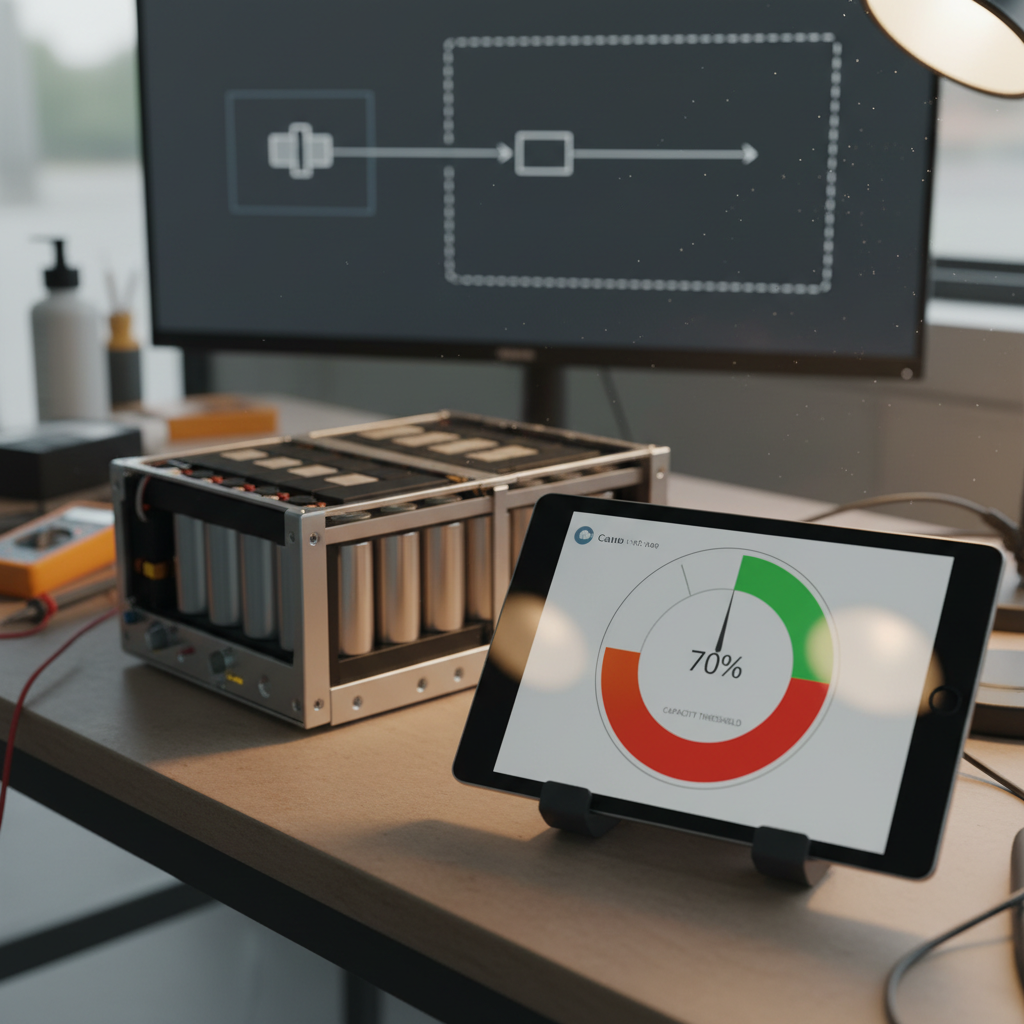
For both PHEVs and BEVs, ask for a battery health report or range test. With Recharged, the Recharged Score includes independent battery diagnostics so you see current performance, not just the original EPA figure.
2. Engine and hybrid system (PHEV only)
Listen for odd noises, check service records, and ensure the car has had regular oil changes. A neglected engine can erase the fuel savings that attracted you to a PHEV in the first place.
3. Charging history and hardware
Inspect the charge port, cables, and any included home charger. Ask how often the previous owner charged at home vs relying on gas (PHEV) or public fast charging (BEV).
4. Warranty coverage
Many EV and PHEV batteries carry 8‑year/100,000‑mile warranties or more. See how much coverage is left and whether the pack has ever been repaired or replaced.
5. Software and recalls
Make sure all software updates and recalls have been completed. For many EVs, software updates can improve range, charging behavior, and ownership experience.
Where Recharged fits in
Ready to find your next EV?
Browse Vehicles5-Minute Checklist: Plug-In Hybrid or Full Electric?
If you only remember one section, make it this one. Answer these questions honestly, and your answer, plug-in hybrid or full electric, will likely be clear.
Answer Yes/No to Each Question
Can you install (or reliably access) Level 2 home charging?
If yes, that’s a big plus for a full EV. If no, a PHEV may be less stressful unless your local public charging is excellent.
Is your typical daily driving under 150 miles?
If most days are comfortably within modern EV range, even in winter, a full electric is viable for you. If not, a PHEV offers a safety net.
Do you take 300+ mile trips more than once per month?
Frequent long trips tilt the scales toward a plug-in hybrid unless you’re willing to plan charging stops carefully and your routes are well covered.
Is avoiding gas stations a top priority?
If you really want to be done with gasoline, the answer is a full EV. A PHEV still burns fuel when the battery is depleted.
Do you have another gasoline vehicle in the household?
If yes, using that car for the rare epic road trip makes a full EV much easier to live with as your daily driver.
Which Way You’re Leaning Based on Your Answers
You’re a Better Fit for a Plug-In Hybrid If…
You can’t reliably install home charging in the next year or two.
You often drive well beyond typical EV range and don’t want to rely on public chargers.
You’re comfortable managing both an engine and an electric system in one vehicle.
You like the idea of electrically covering your commute but want gas backup for everything else.
You’re a Better Fit for a Full EV If…
You have or can add home charging, even a modest Level 2 setup.
Your daily miles are stable and mostly local, with occasional long trips.
You have (or plan to keep) another gasoline vehicle in the driveway.
You’re attracted to lower running costs, smooth performance, and minimal maintenance.
FAQ: Plug-In Hybrid vs Full Electric
Frequently Asked Questions
Bottom Line: How to Choose With Confidence
You don’t need to be an engineer to decide between a plug-in hybrid and a full electric car. You just need to be honest about where and how you drive, whether you can reliably charge at home, and how often those big road‑trip days really happen. If your life is mostly local and you can plug in where you sleep, a full EV likely gives you lower running costs, less maintenance, and a more relaxing day‑to‑day experience. If your driving is unpredictable, charging is uncertain, or you regularly stretch beyond typical EV range, a well‑chosen plug-in hybrid can deliver much of the EV experience with fewer compromises.
When you’re ready to run the numbers on actual cars, not just concepts, consider browsing used plug-in hybrids and full EVs with verified battery health. Recharged’s Recharged Score Report, fair pricing tools, and EV‑savvy support team make it easier to see which option really fits your budget and your life, so you can stop wondering, “Should I buy plug-in hybrid or full electric?” and start enjoying the right car in your driveway.