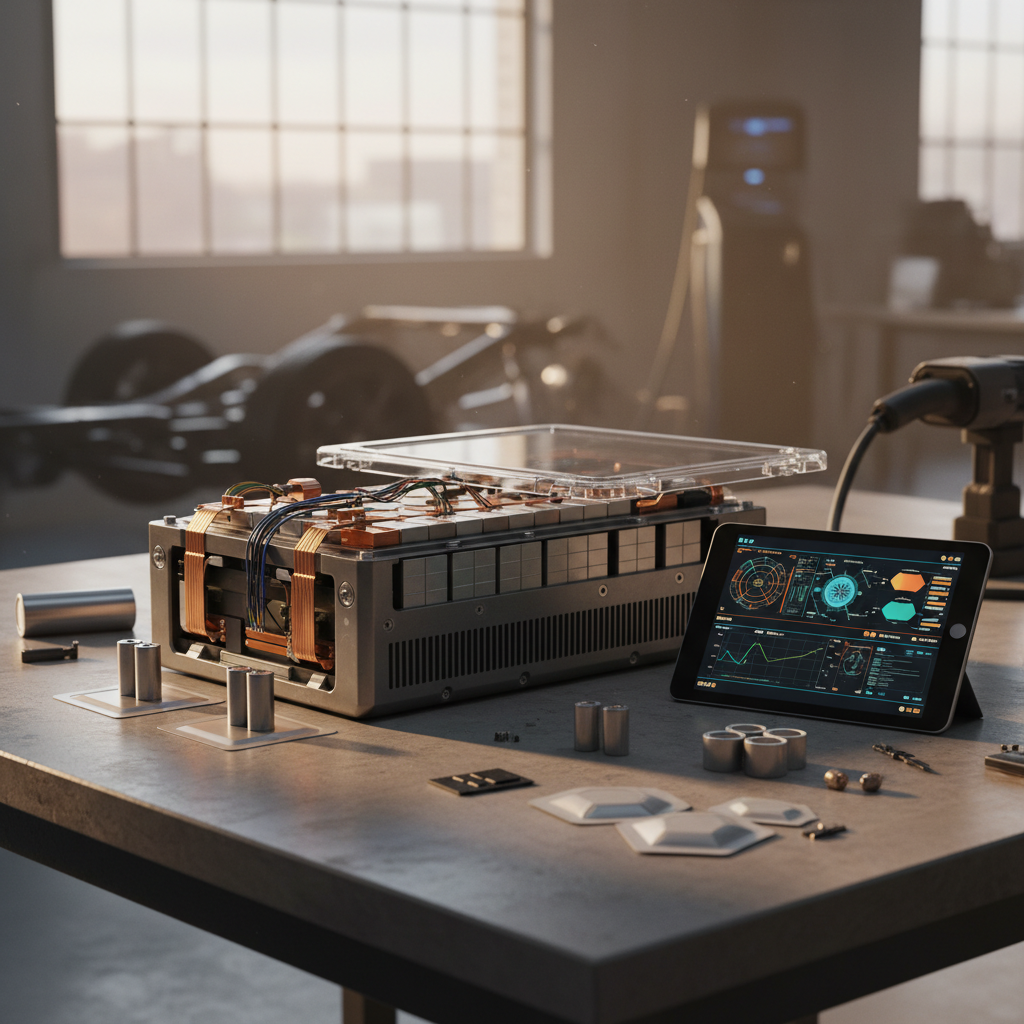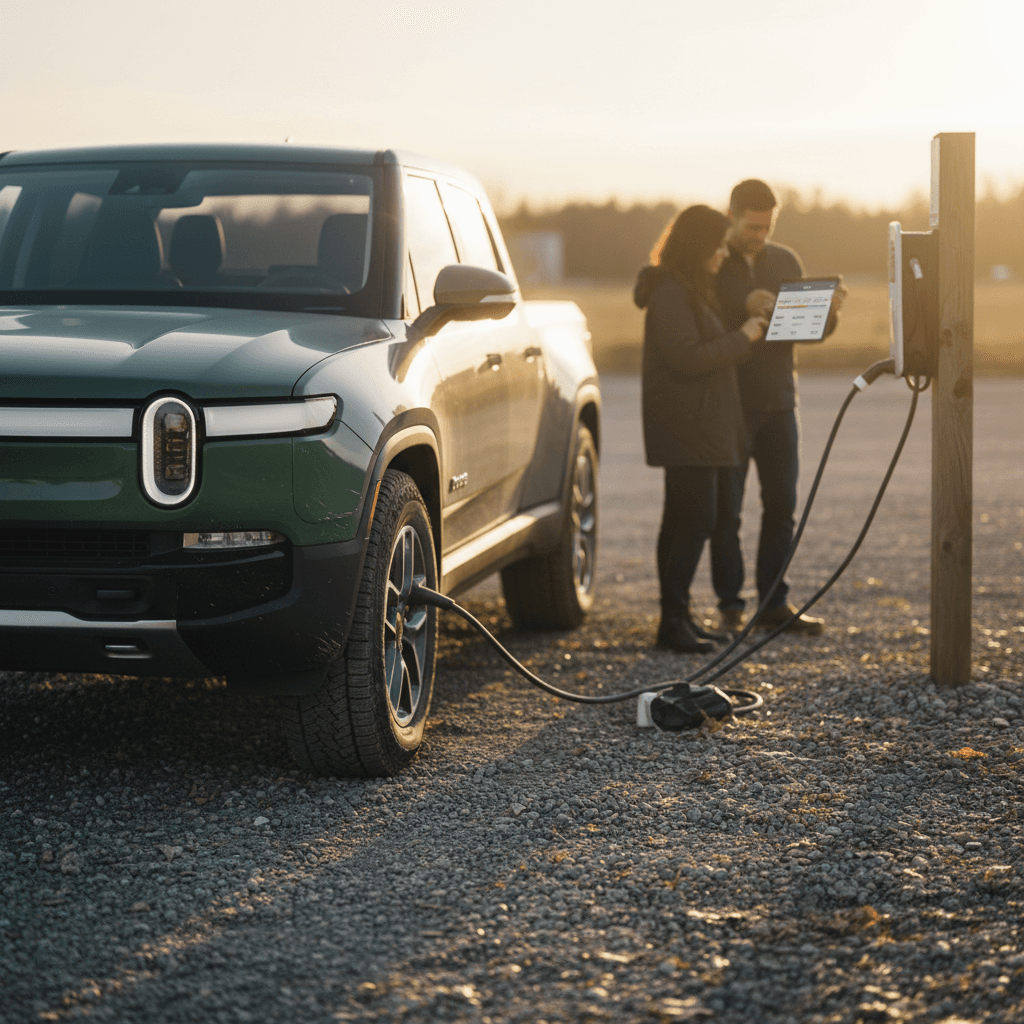
If you’re asking yourself, “Should I buy a used Rivian R1T?” you’re not alone. Rivian’s electric pickup is one of the most interesting trucks on the road right now, part luxury SUV, part off‑road toy, part rolling tech demo. On the used market, prices have come down from early hype, but questions around reliability, battery life, and long‑term costs are very real. This guide walks through the upside and the risks so you can decide, with eyes open, whether a used R1T fits your life and budget.
Quick take
Is a used Rivian R1T right for you?
Good fit if you…
- Want a quick, quiet pickup that can still tow, haul, and go off‑road.
- Regularly drive under 200–250 miles a day and have reliable home charging.
- Value design, tech, and driving feel as much as, or more than, traditional truck ruggedness.
- Can live with the occasional software quirk or service visit as Rivian continues to mature.
Might not be ideal if you…
- Need absolute, proven long‑term reliability above all else.
- Don’t have easy access to Level 2 charging at home or work.
- Tow heavy loads long distances in remote areas where charging is sparse.
- Are extremely payment‑sensitive and simply want lowest cost per mile.
How much do used Rivian R1Ts cost?
As of early 2026, used Rivian R1T pricing has settled into a more rational range after the early adopter frenzy. Original MSRPs were typically in the high‑$60,000s to $90,000+ when new, depending on quad‑motor vs. dual‑motor setups, battery pack, and options. On major used‑car listing sites, 2023–2024 R1Ts commonly list in the mid‑$40,000s to high‑$60,000s, with low‑mile, heavily optioned trucks still asking more.
Used Rivian R1T price snapshot (early 2026)
Where Recharged fits in
Pros of buying a used Rivian R1T
What a used R1T does really well
These strengths are why buyers keep coming back to Rivian despite the rough edges.
Serious performance
Adventure hardware
Real‑world range
Modern tech & UI
Quiet & emissions‑free
Discount vs. new
Cons and risks to know about
Be realistic about the trade‑offs
- Brand‑new automaker reliability: Consumer‑survey data has consistently placed Rivian near the bottom of brand reliability rankings so far, with multiple recalls and quality issues across R1 models.
- Service network still maturing: Rivian’s service centers and mobile service are expanding but remain limited compared with Ford, GM, or Toyota. You may be farther from authorized service than you’d like.
- Recall and software‑update cadence: The upside of over‑the‑air updates is quick fixes; the downside is that you’re depending on software patches for important systems.
- Fast‑charging costs and planning: Road trips in an R1T are absolutely doable, but you’ll plan around DC fast‑charging availability and accept longer stops than a 5‑minute gas fill‑up.
- Towing reality check: Like all EVs, the R1T’s range drops sharply when towing heavy or pushing high speeds. If you regularly tow long distances, you’ll need to budget extra time and charging stops.
Battery, range, and warranty on a used R1T
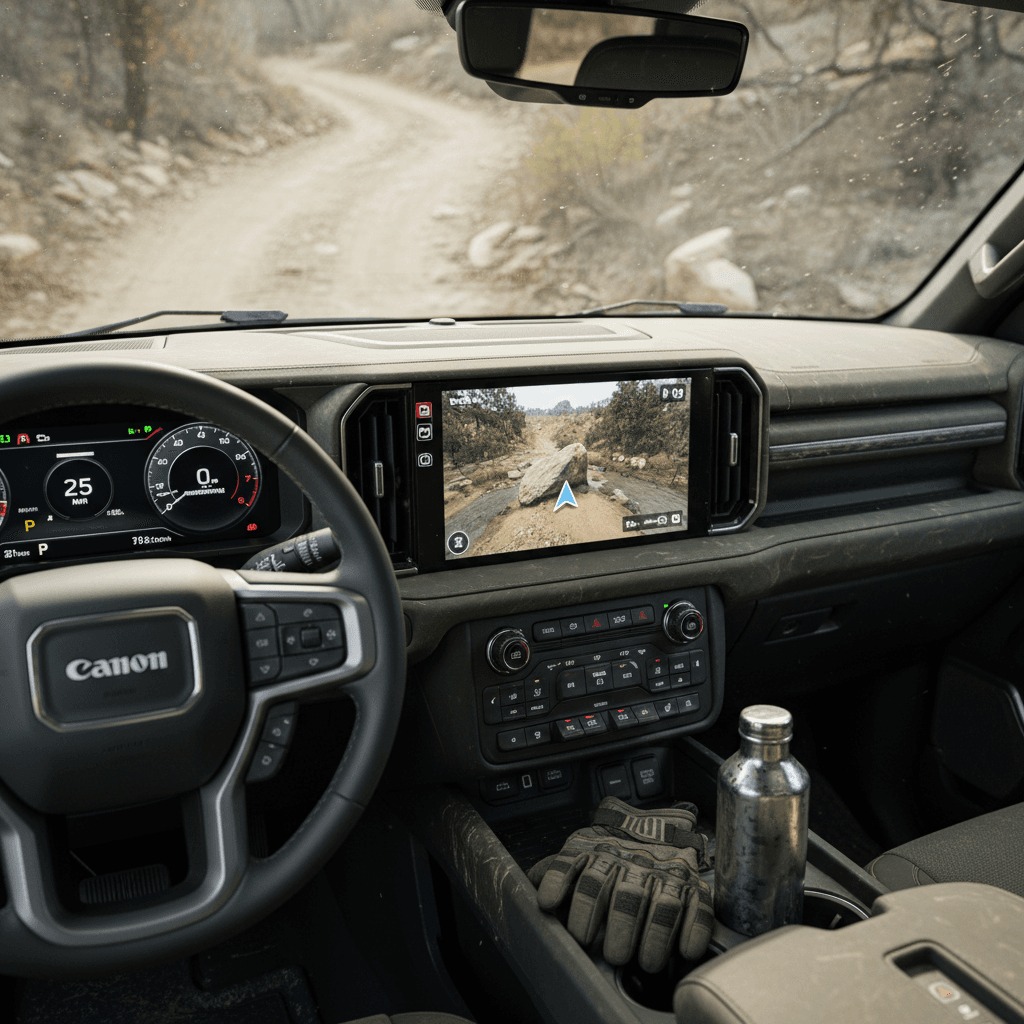
For any used EV, the battery is the single most important (and expensive) component. The Rivian R1T launched with strong warranty protection: trucks have generally carried a 5‑year/60,000‑mile comprehensive warranty and an 8‑year/175,000‑mile battery and drivetrain warranty, which is more generous than many competitors. On a 2022 R1T first sold in mid‑2022, that means battery coverage runs roughly through mid‑2030, as long as the mileage cap hasn’t been exceeded.
Key battery and range questions to ask
If the seller can’t answer these clearly, that’s a red flag.
What’s the current battery health?
How does it perform on a full‑to‑low test drive?
How much warranty remains?
How has it been charged?
How Recharged de‑risks this
Reliability, recalls, and ownership experience
There’s no way around it: early Rivian ownership has come with more hiccups than a typical Toyota or Honda. Multiple recalls have affected R1T and R1S models, including issues around seat‑belt anchorage, pillar trim that could affect air‑bag deployment, headlight aiming, and driver‑assistance software. Some trucks have also needed suspension and hub‑related service actions, and owner forums report a mix of minor build‑quality problems (rattles, trim, paint) and occasional drive‑system faults that required visits to Rivian service centers.
What this means for you
- Plan on being engaged with the ownership experience, keeping up with updates, scheduling recall work promptly, and paying attention to new noises or warnings.
- Factor in the possibility of longer service visits, especially if you live far from a Rivian service center.
- Understand that the truck is evolving; software updates can both fix issues and change behavior you’re used to.
How to protect yourself as a used buyer
- Run the VIN through an official recall lookup and ensure all campaigns are completed or scheduled.
- Ask for service records and verify that any recurring issues were properly resolved, not just reset.
- Consider buying through a retailer, like Recharged, that pre‑screens trucks and stands behind the sale, instead of taking a chance on a private‑party one‑off.
Don’t skip the safety check
What to check when inspecting a used R1T
Critical inspection steps for a used Rivian R1T
1. Confirm software, recalls, and updates
From the center screen, check that the truck is on <strong>current software</strong>. Use the VIN to verify recall status and ask the seller for documentation of any completed campaigns or major repairs.
2. Evaluate battery and range
Start with a high state of charge, drive a meaningful distance (ideally 40–60 miles), and see whether <strong>projected range falls in line with actual miles</strong>. Watch for error messages related to the battery or drive system.
3. Inspect suspension, steering, and tires
Listen for clunks or shudders over bumps. Note uneven tire wear, which can indicate <strong>alignment or suspension issues</strong>. An independent lift inspection is money well spent.
4. Test all drive modes and air suspension
Cycle through the R1T’s drive modes and ride‑height settings. The truck should raise and lower smoothly, without warnings. Any <strong>suspension faults</strong> can be expensive out of warranty.
5. Check doors, seals, and interior build quality
Look for wind noise, misaligned panels, loose trim, or rattles on your test drive. These aren’t necessarily deal‑breakers, but they’re <strong>negotiation points</strong> and hints about build quality.
6. Review charging behavior
If possible, plug into a Level 2 station during the inspection. Confirm <strong>normal charge rates</strong>, that the charge door operates correctly, and that there are no fault messages.
Leverage a professional EV inspection
Used Rivian R1T vs other electric trucks
How a used Rivian R1T stacks up
General tendencies; individual vehicles will vary by year, trim, and condition.
| Model | Strengths | Weak Points | Best for |
|---|---|---|---|
| Rivian R1T | Stand‑out performance, off‑road capability, distinctive design, generous battery warranty | Brand‑new automaker reliability, smaller service network, pricing still premium | Drivers who want a high‑tech, adventure‑ready electric truck |
| Ford F‑150 Lightning | Familiar F‑150 cabin, broad dealer network, work‑friendly packaging | Range drops quickly when towing, software not as polished | Truck buyers who want mainstream support and capability |
| Chevy Silverado EV (early used) | Big battery options, GM dealer footprint | Limited early availability, first‑year bugs still emerging | Brand‑loyal GM truck fans willing to be early adopters |
| GMC Hummer EV Pickup | Huge power, off‑road party trick, bold styling | Very heavy, expensive, not practical as a daily driver | Enthusiasts who want a statement truck more than efficiency |
R1T aims at the premium, adventure‑oriented end of the EV‑truck market.
If you’re cross‑shopping, the used R1T is often the most “special” to drive of the bunch, with a distinctive personality and more of an adventure‑touring focus than a job‑site focus. The trade‑off is that mainstream brands may beat Rivian on dealer coverage and parts availability, especially in smaller markets.
Financing and total cost of ownership
On paper, a used Rivian R1T can still look expensive compared with a well‑equipped gas half‑ton. But remember that you’re also trading oil changes, many routine maintenance items, and volatile fuel costs for electricity and tire wear. Over several years, that can narrow the gap, especially if you can charge at home on a good electric rate plan.
Key cost factors to run the numbers on
Don’t just look at the monthly payment, look at the whole picture.
Home charging cost
Service and repairs
Depreciation and resale
Financing a used R1T with Recharged
Frequently asked questions
Used Rivian R1T FAQ
Bottom line: should you buy a used Rivian R1T?
If you’re looking for a quiet, anonymous appliance, a used Rivian R1T probably isn’t it. This is a truck that trades a bit of predictability for a lot of personality: stunning acceleration, true off‑road chops, a thoughtfully designed cabin, and over‑the‑air tech that keeps evolving. On the flip side, you’re signing up for a brand that’s still working through quality growing pains and building out its service footprint.
So, should you buy a used Rivian R1T? If you have solid home charging, value the driving experience as much as the spreadsheet, and are comfortable being a little ahead of the curve, the answer can be yes, especially if you let data, not just emotions, drive the decision. At Recharged, our Recharged Score reports, EV‑savvy inspections, and financing tools are built to help you find the right used R1T (or another EV truck) with far less guesswork and far more confidence.