If you’re wondering, “Should I buy a used Nissan Leaf?” you’re not alone. The Leaf is one of the cheapest ways to get into an electric vehicle today, but its early batteries had quirks that can turn a bargain into a bad bet. The trick is knowing which Leafs still deliver the range you need, and which ones to walk away from.
The Leaf in 2026: Still Relevant, Just Different
Is a Used Nissan Leaf Right for You?
Great Fit If…
- You mostly drive short trips: school runs, errands, commuting under ~60 miles round-trip.
- You have reliable home or workplace charging.
- You want a low purchase price and very low running costs.
- You don’t care about the latest tech, just simple, quiet transportation.
- You already own another car for long road trips.
Poor Fit If…
- You regularly drive more than 120–150 miles in a day.
- You rely on road trips and public fast charging to get around.
- You live in a region with very hot summers and no garage parking.
- You need one do‑it‑all family vehicle that can go anywhere.
Quick Answer: When a Used Leaf Makes Sense
Should You Buy a Used Nissan Leaf?
Three common buyer profiles, and whether a Leaf fits.
Urban Errand Runner
Yes, strongly consider it.
If you mostly hop around town and rack up under 50 miles a day, a 2018+ Leaf with the 40 kWh battery can be a ridiculously cheap, quiet, and easy-to-live-with daily driver.
Long‑Distance Commuter
Maybe, choose carefully.
If your commute pushes 80–120 miles a day, you’ll want a Leaf Plus (60–62 kWh) and reliable Level 2 charging on both ends. Anything smaller will feel stressful.
Road‑Trip Adventurer
Probably not.
The Leaf’s CHAdeMO fast‑charging port and limited network support make it a poor choice as your primary road‑trip machine in 2026. Consider a different used EV if that’s your priority.
Nissan Leaf Generations, Batteries, and Real-World Range
Before you decide whether to buy a used Nissan Leaf, you need to understand that not all Leafs are created equal. Battery size and model year completely change what the car can realistically do for you day‑to‑day.
How Leaf Batteries Evolved
Used Nissan Leaf Batteries and Approximate Real‑World Range
These are ballpark figures for healthy batteries. Age, climate, and fast‑charging habits can reduce actual range.
| Battery | Approx. Model Years | EPA Range New (mi) | Typical Real‑World Range When New (mi) | What That Feels Like Today |
|---|---|---|---|---|
| 24 kWh | 2011–2015, some 2016 S | 73–84 | 55–70 | Often 40–60 miles now; best for very short city duty. |
| 30 kWh | 2016–2017 (SV/SL) | 107 | 80–100 | Many now in the 60–80‑mile range; okay for short commutes. |
| 40 kWh | 2018–2024 base | 149–151 | 120–140 | Still solid for 50–70‑mile daily use with margin. |
| 60–62 kWh (Leaf Plus) | 2019–2024 | 212–226 | 190–215 | Comfortable 100+ mile commutes and regional trips with charging. |
Use this table to match a Leaf’s battery to your daily driving needs.
Pros and Cons of Buying a Used Nissan Leaf
What a Used Leaf Does Really Well
- Low purchase price: Older Leafs are among the cheapest used EVs on the market.
- Minimal maintenance: No oil changes, timing belts, or exhaust work.
- Quiet, smooth drive: Instant torque and one‑pedal driving in later models.
- Perfect city car: Compact size, easy parking, simple controls.
- Great for predictable routines: School runs, commuter rail parking, grocery trips.
Where a Used Leaf Can Disappoint
- Battery degradation: Early, air‑cooled packs in hot climates can lose range quickly.
- Limited fast‑charging future: CHAdeMO ports are slowly being phased out in North America.
- Short legs for road trips: Even Leaf Plus models need more stops than newer EVs.
- Older tech: Pre‑2018 cars feel basic inside, with dated infotainment.
- Resale value: Leafs depreciate faster than many newer‑architecture EVs.
Don’t Fall for a Cheap Leaf Without Checking Range
Battery Health: The Make-or-Break Factor
On a used Nissan Leaf, battery health is the whole ballgame. The car itself is simple and generally reliable; it’s the aging battery that determines whether you’ve bought a bargain commuter or a driveway decoration.
- Leafs do not show a simple battery percentage like some EVs. Instead, you get 12 small capacity bars on the instrument cluster.
- A brand‑new Leaf shows 12 bars. As the battery loses capacity, you lose bars, roughly 8–15% per lost bar depending on pack and year.
- An older 24 kWh Leaf at 8–9 bars may struggle to deliver more than 45–60 miles of mixed driving, less in winter.
- A healthy 40 kWh car with 11–12 bars can still be a very usable 100‑mile‑plus commuter.
Pro Tip: Use a Scan Tool When Possible
Years and Trims to Target vs. Avoid
Which Used Nissan Leafs Are Worth a Look?
General guidance, individual battery health still matters more than model year.
Best Bets
- 2018–2020 Leaf (40 kWh) – Sweet spot of price, range, and improved battery chemistry.
- 2019–2022 Leaf Plus (62/60 kWh) – Long‑range versions that can cover serious commuting.
- Cool‑climate cars with 11–12 bars – Regardless of year, these are worth a close look.
Proceed with Caution
- 2013–2017 (24/30 kWh) – Fine for short trips if priced low and battery bars are 10–12.
- Hot‑climate cars – Desert or deep‑South histories can mean extra degradation.
- Leaf Plus with heavy DC fast‑charge history – Ask how it was used.
Often Best to Avoid
- 2011–2012 Leafs – Early battery chemistry, many now have severe degradation.
- Any Leaf with 8 bars or fewer – Unless you truly only need a 30–40‑mile city car.
- Cars with missing service records – Especially in hot or coastal climates.
Watch Out for Fire‑Risk Recall Cars
Charging and Road-Trip Realities
The Leaf was built first and foremost as a commuter, not a coast‑to‑coast cruiser. Understanding its charging hardware and network limitations will save you a lot of frustration later.
Home & Local Charging
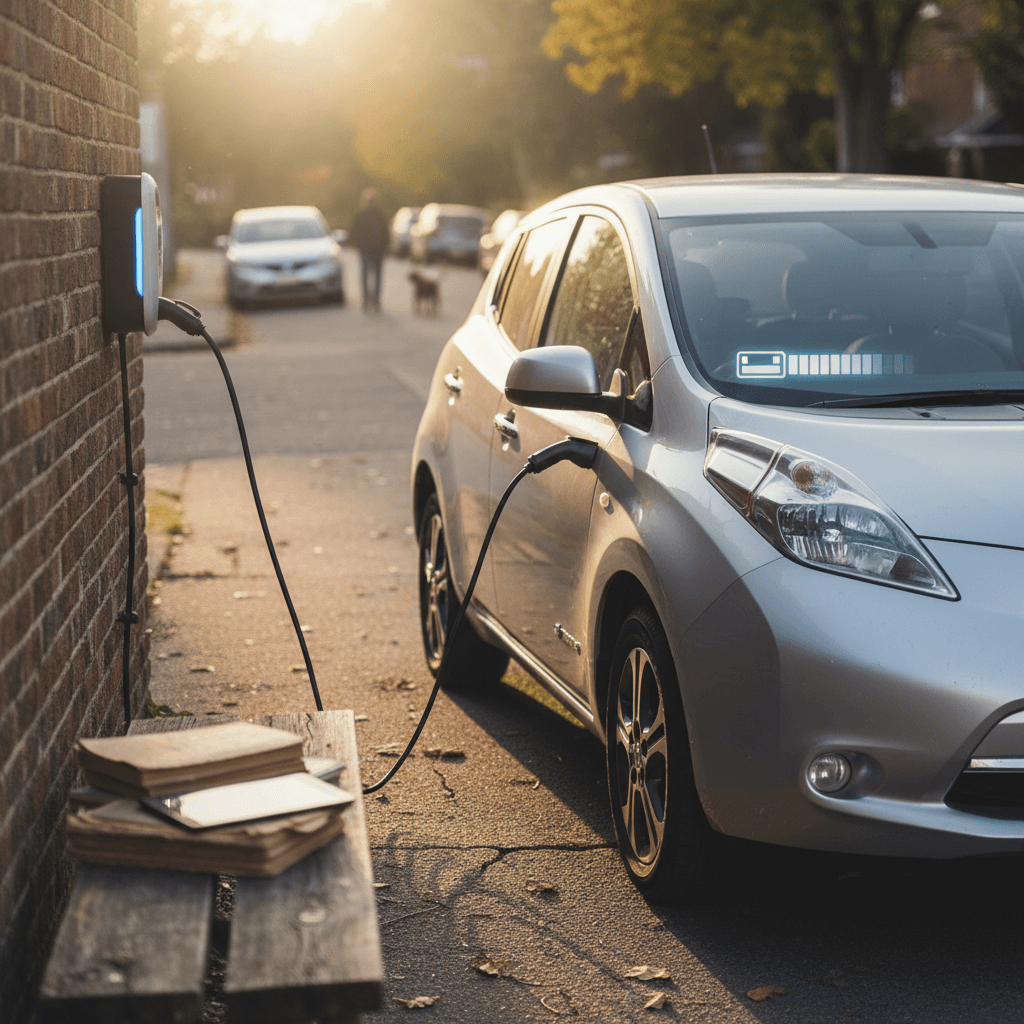
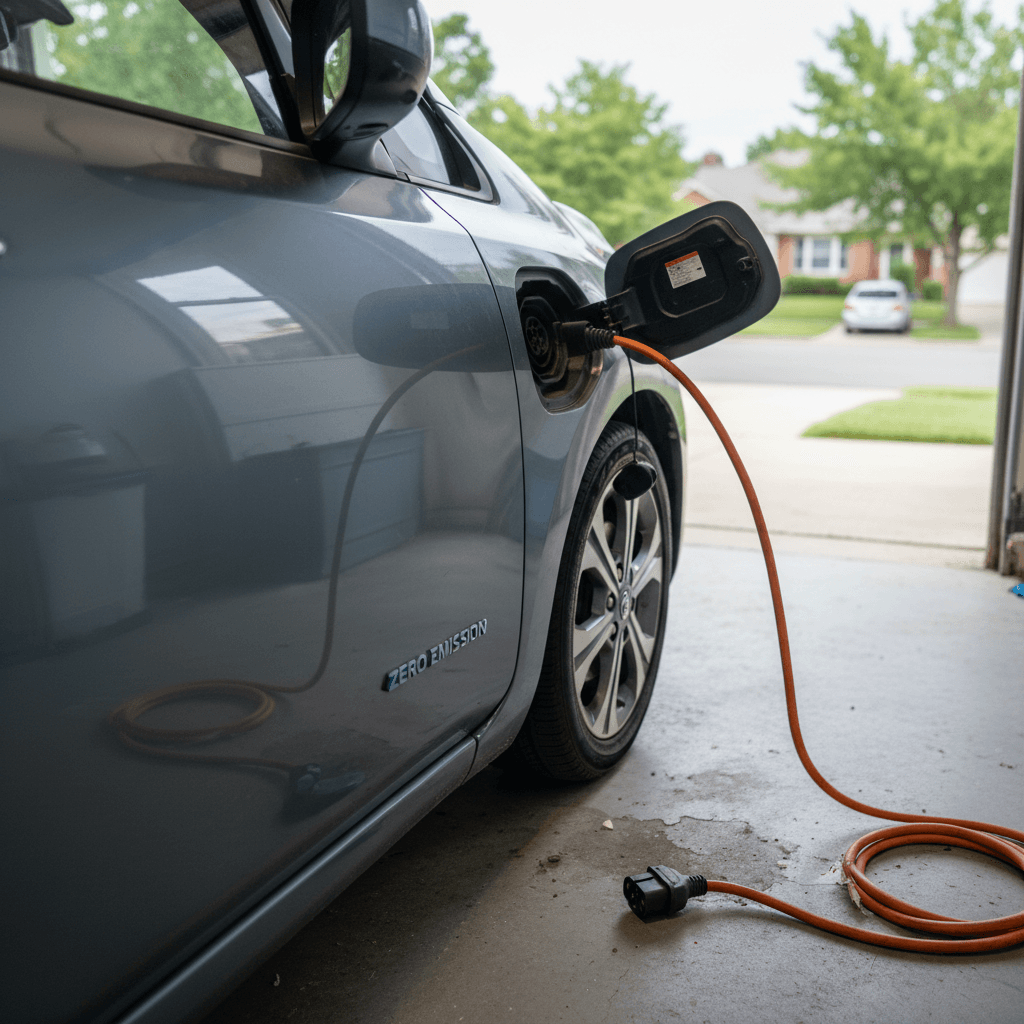
- All Leafs use a J1772 Level 2 port for AC charging, plus a CHAdeMO port for DC fast charging on most trims.
- On Level 2 (240V), expect roughly 20–30 miles of range per hour on newer Leafs.
- If you can plug in every night at home or work, even a 40 kWh Leaf is easy to live with for daily commuting.
- Charging costs are typically far lower than gasoline, especially with off‑peak utility rates.
Public Fast Charging & Road Trips
- The Leaf’s CHAdeMO port is slowly being phased out in North America in favor of CCS and NACS (Tesla’s standard).
- Fast chargers that support CHAdeMO still exist, but new sites increasingly skip it.
- On a Leaf Plus, a 10–80% DC fast charge can take around 40–45 minutes when conditions are ideal.
- If your lifestyle depends on cross‑country travel by EV, a used Leaf is not the ideal choice.
Think of the Leaf as an Electric Corolla, Not a Private Jet
Safety, Recalls, and Reliability
Mechanically, the Leaf is a simple machine: single‑speed gearbox, no turbocharger, no transmission with dozens of moving parts. That simplicity helps its reliability record. But there are still a few things to keep in mind.
- Battery‑related recalls: Some late‑2010s and early‑2020s Leafs have been recalled for software updates to reduce rare fire risk during DC fast charging. Check any car’s VIN on the NHTSA site and confirm recall work is done.
- Safety ratings: Many Leafs earned solid crash‑test scores for their time, and later models add more active safety tech (automatic emergency braking, blind‑spot monitoring, etc.).
- Rust and wear: Look for corrosion underneath in snow‑belt or coastal cars, and check for neglected basic maintenance like tires and brakes.
- Infotainment & tech: Older Leafs lack Apple CarPlay/Android Auto. If that matters to you, target 2018+ cars.
Good News on Running Costs
What You Should Pay for a Used Leaf
Used Nissan Leaf pricing moves quickly with the broader EV and fuel market, but as of early 2026 you can think in rough bands. Exact values depend heavily on battery health, mileage, trim, and where you live.
Typical Used Nissan Leaf Price Ranges (U.S., Early 2026)
These are ballpark asking‑price ranges for private‑party and dealer sales in average condition with clean titles. Exceptional battery health or low miles can push prices higher.
| Model/Pack | Typical Years | Approx. Price Range (USD) | Who It Suits |
|---|---|---|---|
| Early Leaf, 24 kWh | 2011–2014 | $4,000–$7,000 | Ultra‑short‑range city car buyers who understand the limitations. |
| Late Gen 1, 24/30 kWh | 2015–2017 | $6,000–$10,000 | Budget commuters under ~40–60 miles/day in mild climates. |
| Gen 2, 40 kWh | 2018–2021 | $10,000–$17,000 | Mainstream buyers wanting a modern‑feeling daily driver. |
| Leaf Plus, 60–62 kWh | 2019–2023 | $15,000–$22,000+ | Drivers needing 150‑mile‑plus real‑world range and more flexibility. |
Always weigh price against remaining battery range, not just model year.
Value Check: Compare Cost per Remaining Mile
Inspection Checklist for Shopping Used
Used Nissan Leaf Buying Checklist
1. Confirm Battery Capacity Bars
With the car fully charged or close to it, check the battery gauge. Aim for <strong>10–12 bars</strong>, especially on older cars. Walk away from severely degraded packs unless you truly only need very short range.
2. Test a Real‑World Drive
Drive your likely daily route if possible, or at least 15–20 miles on mixed roads. Watch how fast the range estimate drops compared to miles traveled.
3. Check Charging Hardware
Verify the J1772 port works at a Level 2 station and, if relevant, that the CHAdeMO fast‑charge port latches and communicates properly. Inspect for corrosion or damage around the ports and cables.
4. Run a Battery Health Report
Ask for a professional battery diagnostic. At Recharged, this comes in the <strong>Recharged Score</strong> and includes a verified battery‑health measurement so you’re not guessing.
5. Review Recall and Service History
Look up the VIN for open recalls, especially recent battery‑related campaigns. Ask for maintenance records, including tire rotations, brake service, and any battery warranty work.
6. Inspect Interior and Electronics
Confirm that climate control, heated seats/steering wheel (if equipped), cameras, and infotainment work properly. In an EV, reliable heat and defrost are essential for winter range and safety.
7. Evaluate Your Charging Situation
Before signing papers, be honest about where you’ll charge. If you can’t install home Level 2 charging or reliably charge at work, reconsider whether a short‑range EV fits your life.
How Recharged Makes Buying a Used Leaf Safer
If you decide a used Nissan Leaf fits your life, the next challenge is finding one with a battery you can trust. That’s where Recharged is built to help.
- Every EV on Recharged comes with a Recharged Score Report that includes verified battery health, so you’re not just guessing from capacity bars.
- You can handle the whole purchase online, from browsing Leafs in our marketplace to financing, trade‑in or instant offer, and nationwide delivery.
- Our EV specialists can walk you through whether a 24, 40, or 60–62 kWh Leaf actually fits your driving pattern, and what range to expect in your climate.
- If you’re near Richmond, VA, you can visit the Recharged Experience Center to see vehicles in person and talk through options with experts.
Buying a Leaf With Eyes Wide Open
FAQ: Used Nissan Leaf
Frequently Asked Questions About Buying a Used Nissan Leaf
Bottom Line: Should You Buy a Used Leaf?
A used Nissan Leaf is one of the cheapest, easiest ways into EV ownership, if you respect what it was built to do. Treat it as a practical, short‑to‑medium‑range commuter with a battery that needs to be checked as carefully as any engine, and it can be a terrific value. Expect it to be a cross‑country mile‑eater on a shrinking fast‑charge network, and you’ll be frustrated.
So should you buy a used Nissan Leaf? If most of your life happens within a comfortable radius of home, you have solid charging access, and you choose a car with healthy battery diagnostics, the answer is very likely yes. And if you’d like help finding that just‑right Leaf, with verified battery health, transparent pricing, and EV‑specialist support, Recharged was built exactly for that journey.