If you’re thinking, “It’s time to sell my Tesla Model S, but I don’t want to leave money on the table,” you’re not alone. The Model S has seen some of the steepest depreciation of any modern EV, yet it’s still one of the most desirable electric cars on the used market. That gap between perception and pricing is exactly where smart sellers can win, if you know how to play it.
The good‑news, bad‑news story
Why selling a Tesla Model S feels tricky right now
Selling a Model S in 2026 is not like selling a typical gas sedan. Tesla slashed new‑car prices in 2023–2024 and kept tweaking trims and options. That pushed used Tesla prices down faster than the overall market. At the same time, more owners are trading out of long‑range luxury EVs into crossovers or smaller, cheaper models, so there’s real supply out there.
Yet demand hasn’t gone away. Data from market‑tracking services and listing sites shows a healthy used‑EV market, with average used Tesla Model S prices typically running from the high‑$20,000s for older cars to well over $50,000 for low‑mile Plaid and refresh models. Buyers have options, though. That means condition, battery health transparency, and realistic pricing matter more than ever.
Tesla Model S resale snapshot, early 2026
Expect a reality check
What is my Tesla Model S worth today?
Every used Tesla is its own little snowflake, but there are four big levers that determine what your Model S is worth in 2026: year, mileage, battery/drive unit warranty remaining, and configuration (Long Range vs. Performance vs. Plaid, plus options like Full Self‑Driving).
Typical Tesla Model S value bands in 2026
These are broad, illustrative bands for private‑party or retail pricing on clean‑title vehicles in the U.S. Your actual value will depend on condition, battery health, location, and options.
| Model year / era | Example trims | Typical mileage range | Illustrative asking‑price band |
|---|---|---|---|
| 2013–2015 (early cars) | 60 / 85 / P85D | 70k–140k+ miles | $15,000–$24,000 |
| 2016–2018 (facelift / 75D–100D) | 75D / 90D / 100D / P100D | 60k–120k miles | $22,000–$33,000 |
| 2019–2020 (late pre‑refresh) | Long Range / Performance | 40k–90k miles | $30,000–$40,000 |
| 2021–2024 (refresh & Plaid) | Long Range / Plaid | 15k–70k miles | $40,000–$65,000+ |
Use this as a starting point, not a final number. Always cross‑check against current listings and instant‑offer quotes.
Stack your data sources
Four main ways to sell a Tesla Model S
Where can I sell my Tesla Model S?
Each path trades price for convenience. The right choice depends on your timeline and tolerance for hassle.
1. Instant offer / wholesale buyers
If you want your Model S gone this week, online buyers and local dealers will happily oblige. You’ll typically get less money but zero hassle: quick appraisal, simple paperwork, and a ride home.
This is the baseline number you should know before trying anything else.
2. Trade‑in toward another vehicle
Trading your Model S to a dealer or directly to Tesla is convenient if you’re hopping into another car immediately. You may get a lower offer than selling privately, but you might save on sales tax in states that tax the difference.
Always compare trade‑in numbers against instant‑offer quotes.
3. Private‑party sale
Private sale is where you usually see the highest selling price. In exchange, you’ll handle the listing, test drives, questions about battery health, and payment safety yourself.
Preparation and clear communication matter a lot here.
4. EV‑focused marketplace or consignment
Marketplaces that specialize in EVs, like Recharged, are a middle lane: you connect with EV‑savvy buyers, often with battery diagnostics and listing help baked in.
With Recharged, you can get an instant offer or use consignment support while your car is marketed nationwide.
Best if you value time over every last dollar
- Take an instant offer or dealer bid if you need to sell in days, not weeks.
- Use trade‑in if you’re rolling equity straight into your next car.
- Be willing to accept less money in exchange for one appointment and done.
Best if you want to squeeze out top dollar
- Choose private sale or EV‑focused consignment if you can wait a bit.
- Lean on tools like a Recharged Score battery health report so buyers can justify paying more.
- Be ready to field questions, negotiate, and manage paperwork.
Step‑by‑step: how to sell your Model S
Model S selling game plan
1. Get a realistic value range
Collect values from guides, instant‑offer sites, and real listings. Note what similar cars with your year, mileage, and options are actually listed and selling for, not just what the calculators say.
2. Decide where you’ll sell
Pick your lane: instant offer, trade‑in, private party, or EV‑focused marketplace like Recharged. Your choice will shape how much prep and marketing you need to do.
3. Gather documents and Tesla details
Locate the title (or lender info), registration, service records, and a list of key options (battery size, Autopilot/FSD status, premium audio, wheels). Buyers will ask; be ready.
4. Prep, detail, and photograph the car
Fix the easy stuff, clean it inside and out, and take honest, well‑lit photos. A clean, well‑presented Model S can sell faster and justify a higher price than a dusty one with vague descriptions.
5. Create a transparent, EV‑savvy listing
Highlight battery health, charging behavior, real‑world range, and software features. Explain how you’ve used the car, commuter, road‑trip machine, or garage queen, to give buyers confidence.
6. Handle showings, payment, and transfer
For private sales, meet in safe, public places, verify funds (cashier’s check or bank‑to‑bank transfer), and walk through title signing and Tesla app transfer together so there are no loose ends.
Prepping your Tesla Model S to sell
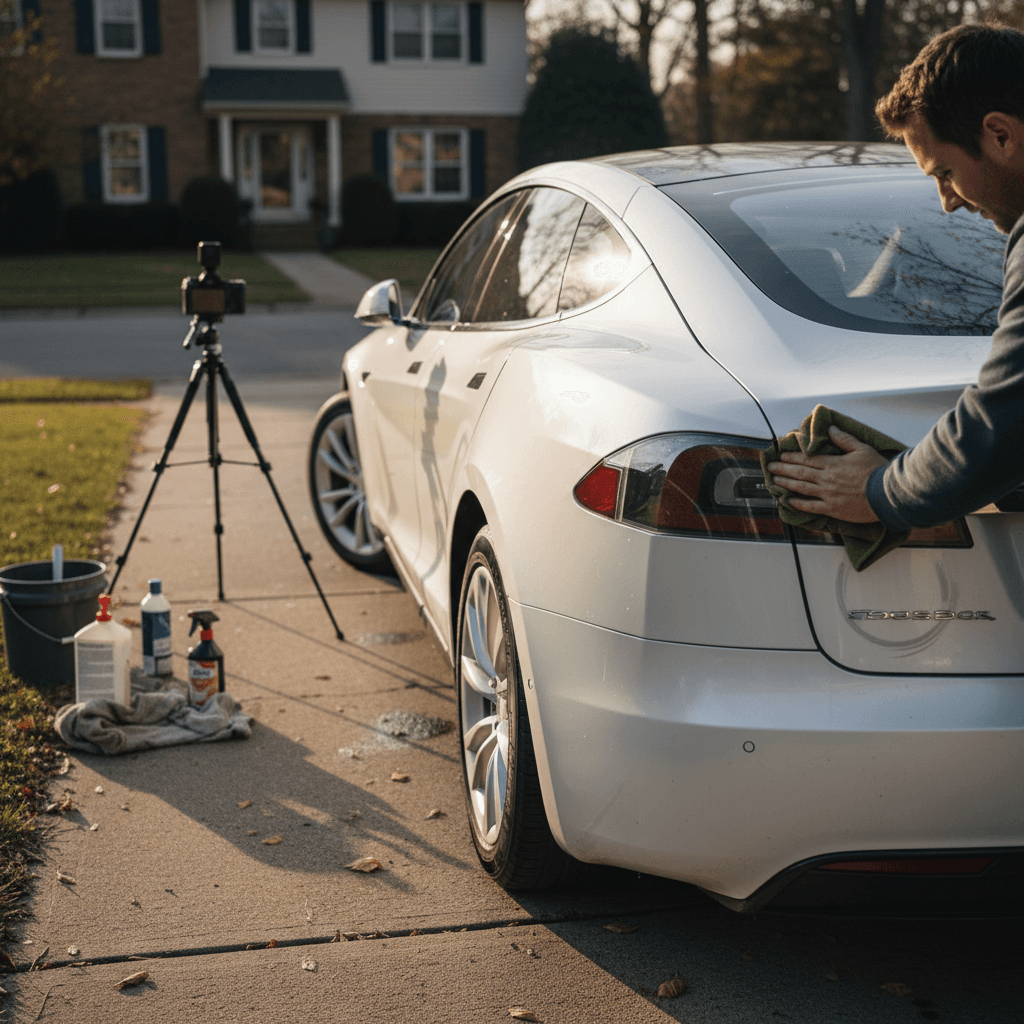
Think of your Model S the way a buyer scrolling on their phone will see it: four or five thumbnail photos, a price, a year, and a mileage number. Your job is to make them stop scrolling.
- Give it a thorough wash, including wheels and door jambs.
- Vacuum the interior, clean the touchscreen and glossy trim, and remove personal items.
- Address low‑cost fixes: burned‑out bulbs, badly curbed wheel, missing center caps, worn wipers.
- Resolve obvious warning lights if you can; unexplained alerts crush buyer confidence.
- Charge the battery to 70–80% before photos and showings so the range display looks realistic.
Small cosmetic work, big psychological payoff
Battery health, software, and features buyers care about
With a Model S, the conversation always comes back to the big three: battery health, charging behavior, and software features. Buyers know the battery pack is the most expensive component on the car, and they’re wary of listings that say nothing about it.
What smart Model S buyers look for
If you disclose this up front, you’ll get better leads and fewer tire‑kickers.
Real‑world range
Share what you typically see on a full charge at 90–100% and how you drive. Buyers expect some degradation; they don’t expect magic.
Charging habits
Mention whether you mostly charged at home, how often you used DC fast charging, and whether the car has seen extreme heat or cold climates.
Software & options
Clarify which Autopilot or FSD package is on the car, whether premium connectivity is active, and any unlocked features (acceleration boost, etc.).
Why a third‑party battery report helps
“If you’re selling an EV, battery transparency is the new Carfax. Buyers don’t just want it, they’re starting to expect it.”
Pricing strategy: how to avoid over‑ or under‑pricing
The fastest way to stall a Model S sale is wishful thinking on price. The second‑fastest is panicking and underpricing it. You want to land in the pocket where buyers feel they’re getting a fair deal and you’re not giving the car away.
Build your starting price
- Start with guide values for your VIN and mileage.
- Check what similar Model S listings are actually advertised for within 250 miles.
- Adjust for condition: above‑average, average, or needs‑work.
- Add a small premium if you can offer verified battery health and clear records.
Then adjust to the market
- If you get no serious bites in 7–10 days, your price is probably too high.
- Price reductions should be meaningful (think $500–$1,000), not $100 nibbles.
- Watch competing listings: if they move and yours doesn’t, it’s time to react.
Don’t price against your purchase price
Paperwork, title, and Tesla account details
The paperwork on a Tesla Model S is mostly the same as any other car, with one big twist: you’re also handing off a software‑defined product. That means you’re not done when the buyer drives away; you’re done when your Tesla account and data are cleaned up.
- Confirm whether you have a clear title or an active loan. If financed, call your lender to ask about payoff, timing, and how they handle private‑party sales.
- Have your registration, driver’s license, and any lien release letters ready for closing.
- Print or save a simple bill of sale with buyer and seller information, price, VIN, and date.
- Before the handoff, remove personal data from the car: log out of streaming accounts, erase navigation history, and perform a factory reset if appropriate.
- In your Tesla account and app, remove the vehicle after the sale so the new owner can add it. If you’re using a marketplace like Recharged, your specialist will walk you through the timing.
- Clarify what happens to software options like Full Self‑Driving. Tesla’s rules can change; don’t promise transferability you can’t control.
Stay safe during payment
When it makes sense to sell through Recharged
If you want EV‑savvy buyers and professional help without giving up the upside of a strong sale price, selling your Model S through Recharged can be a smart middle‑ground. Recharged is built specifically for used EVs, so you’re not explaining what kilowatts and kilowatt‑hours are to every shopper who messages you at midnight.
How Recharged can help you sell your Model S
You bring the car; Recharged brings the data, buyers, and support.
Verified battery health
Every EV on Recharged comes with a Recharged Score Report that includes independent battery diagnostics, charging performance, and real‑world range estimates. That takes the guesswork, and the arguing, out of battery health.
Nationwide reach, local sale
Your Model S isn’t limited to buyers in your ZIP code. Recharged markets EVs nationwide and can coordinate shipping or delivery, opening the door to more serious shoppers.
EV‑specialist support
From pricing strategy to handling buyer questions and paperwork, Recharged’s EV‑focused team can guide you through every step, whether you choose an instant offer, trade‑in, or consignment‑style sale.
Ready to find your next EV?
Browse VehiclesIf you already know you don’t have time for tire‑kickers, or you’d like a data‑backed price on your Model S before you list it anywhere else, starting with Recharged can give you a clear, EV‑specific benchmark.
FAQ: selling a Tesla Model S
Frequently asked questions about selling a Tesla Model S
Bottom line: sell your Model S with confidence
Selling a Tesla Model S in 2026 means navigating a market where values have come down, but interest is still high. The sellers who do best aren’t the lucky ones, they’re the ones who price to the real market, disclose battery health clearly, and choose the right selling lane for their situation.
Whether you take an instant offer, trade in toward your next car, go all‑in on a private sale, or lean on an EV‑first marketplace like Recharged, you’re not stuck guessing. Get your numbers, prep your car, tell the truth about how it’s behaved for you, and you’ll give the next owner a great story to continue, while you move on to your next chapter with cash in hand.