
You bought the Mini Cooper SE because it’s charming, quick, and perfect for your daily loop. Now you’re staring at the odometer, scrolling classifieds, and thinking: “It’s time to sell my Mini Cooper SE… but what’s it actually worth, and where do I get the best offer?” This guide walks you through the 2026 Mini Electric market, how to prep and price your car, and where to sell it so you don’t leave money on the table.
What makes the Mini SE tricky to price
Why selling a Mini Cooper SE feels different
Selling a used EV is not the same as selling a used gas hatchback, and the Mini SE lives at a weird crossroads. It’s a premium, fashion‑forward car wearing a mainstream badge, with a battery that’s perfectly fine for the city but outgunned by today’s 250‑mile crossovers. Buyers have learned this, and it shows up in resale values and in the questions you’ll get when you list the car.
Where the Mini Cooper SE stands in the used EV world
Quirky, city‑friendly, and now surprisingly affordable
Short‑range specialist
The original Cooper SE’s real‑world range is closer to **100–115 miles** for many drivers, so you’re selling a city car, not a road‑trip machine. Your buyer profile is commuters, couples with a second car, or urban households.
Big early depreciation
Early SEs have already taken a substantial hit. Many 2020–2021 cars now retail in the high‑teens to mid‑$20k range, with some older or higher‑mile examples creeping into the low teens.
Fun-to-drive halo
The good news? Enthusiasts love how the SE drives. The instant torque, small footprint, and Mini styling give it an emotional edge over anonymous commuter EVs. That’s leverage when you present the car well.
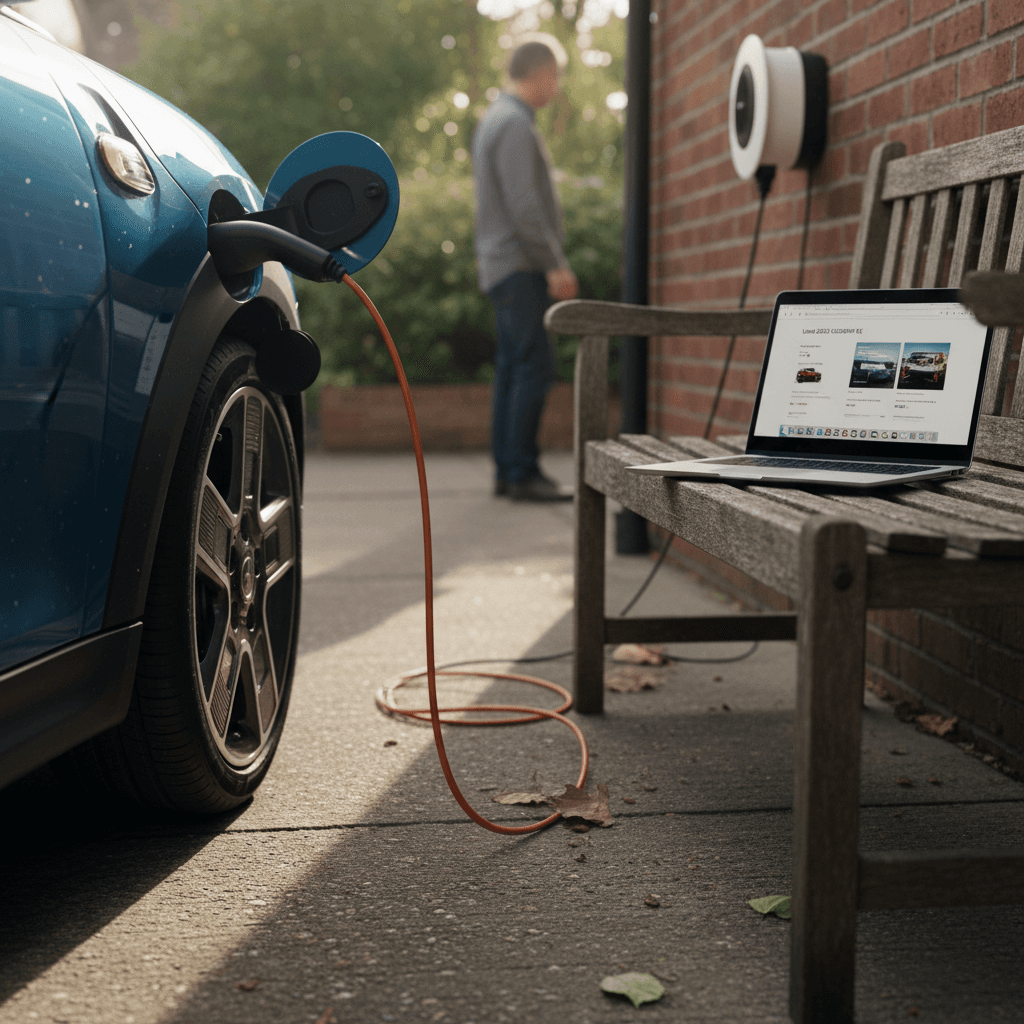
What is my Mini Cooper SE worth in 2026?
Snapshot: Mini Cooper SE values in early 2026 (U.S.)
Those are rough bands, not quotes. Your actual number will swing based on mileage, options, cosmetic condition, battery health, and, crucially, how and where you sell. A rough trade‑in on a base 2020 car might see five figures starting with a 1. A well‑presented, low‑mile 2023 with a clean battery report can comfortably sit in the mid‑$20ks on the retail side.
Use multiple valuation tools
3 main ways to sell your Mini Cooper SE
1. Trade it in
Best for: Convenience, if you’re already buying another car.
- Fastest option: one dealer visit, one stack of paperwork.
- Lower price but lower hassle; they handle reconditioning and resale risk.
- On an SE, expect the offer to skew conservative, especially if they’re wary of EV demand.
2. Sell to an online buyer
Best for: Quick cash offers, no strangers at your house.
- Get instant or same‑day bids from national buyers.
- Offers can beat local dealers, especially on clean, low‑mile cars.
- They’ll heavily adjust for range, battery health, and local EV demand.
3. Sell or consign with an EV‑focused marketplace
Best for: Maximizing price without doing everything yourself.
- Platforms like Recharged specialize in used EVs, including Mini Cooper SEs.
- They understand battery reports, EV incentives, and buyer questions.
- Options include instant offers, trade‑in, or consignment with nationwide exposure.
Where Recharged fits in
How battery health can make or break your sale
For a Mini Cooper SE buyer, the battery is the story. The pack itself has proven reasonably robust so far, with many owners reporting only single‑digit percentage loss in capacity after 30,000–40,000 miles. But the perception is that a short‑range EV can’t afford to lose much more. That’s why documenting battery health and warranty coverage is the single most valuable thing you can do before you sell.
4 battery details every Mini SE buyer will ask about
Have the answers ready before you list the car
1. Remaining battery warranty
Most Mini Cooper SEs sold in the U.S. carry around an 8‑year high‑voltage battery warranty from the in‑service date, often with a mileage cap. Pull your exact warranty dates from your service records or a Mini dealer so you can quote them confidently.
2. Recent range and charging behavior
Buyers want to know what you actually see on the dash. Share a recent photo of 100% charge and estimated range, along with your typical driving mix (city vs highway, climate, speeds).
3. Battery health report
A third‑party battery health diagnostic can move your Mini out of the “mystery EV” bucket and into the “safe bet” bucket. Every car sold with Recharged includes a Recharged Score report with verified battery data.
4. Recalls and high‑voltage service
If your car has had battery‑related recall work or high‑voltage service, have that paperwork ready. For a lot of shoppers, “problem found and fixed under warranty” feels safer than “no idea.”
Don’t guess about battery warranty
Prep checklist before you sell your Mini Cooper SE
Step‑by‑step prep to maximize your sale price
1. Gather service and charging records
Pull Mini dealer invoices, tire rotations, brake service, and any high‑voltage work. If you kept notes about typical range and charging habits, that’s a bonus. EV buyers love documentation.
2. Fix the easy stuff first
Touch up curb‑rashed wheels, replace wiper blades, address burned‑out bulbs, and handle inexpensive cosmetic flaws. On a small hatchback, $200–$400 of cosmetic TLC can easily add $1,000 of perceived value.
3. Get a professional detail
A full interior/exterior detail can make a city‑used Mini look and smell like new. Clean white wheels, glossy paint, and a spotless cabin do more for resale than any Instagram filter.
4. Check tires and brakes
Because EVs are heavy, shoppers are wary of worn tires and pads. Include tread depth and recent brake work in your listing. If they’re marginal, consider replacing them before sale rather than losing negotiation power.
5. Photograph the EV‑specific details
Beyond the usual glamour shots, take clear photos of the charge port, included charging cable(s), range display, and any added home‑charging hardware you’re including in the sale.
6. Decide what’s included
Are you including the Level 1/Level 2 portable charger? Wallbox? Roof rack? Winter wheels? Spell it out. Those items can justify a slightly higher asking price or sweeten the deal at negotiation time.
Shoot it like a listing, not a selfie
How to write a listing that actually sells your Mini
Mini buyers tend to be emotionally driven; they’re shopping with their hearts as much as their spreadsheets. Your job is to hit both. For the Mini Cooper SE, that means a listing that’s frank about range and honest about city‑car limitations, but also sells the fun: instant torque, small‑car agility, easy parking, and low running costs if you can charge at home.
Essential elements of a strong Mini Cooper SE listing
Use this as a template for your ad on classifieds or marketplace sites.
| Section | What to Include | Mini SE Example |
|---|---|---|
| Headline | Year, trim, mileage, one standout feature | "2022 Mini Cooper SE Signature – 24k miles, home‑charged, remaining battery warranty" |
| Opening hook | Why you’re selling + ideal use case | "Loved this as our city runabout; selling only because we added a longer‑range family EV." |
| Specs & options | Trim, packages, wheels, driver‑assist, interior | "Signature trim, Comfort Package, heated seats, 17" wheels, Apple CarPlay." |
| Battery & range | Typical range, driving mix, climate | "See 105–115 miles per charge in mixed city/suburban use in mild weather; drops in cold winters, as with all EVs." |
| Charging details | Where and how it’s been charged | "90% of charging done at home on Level 2, rarely DC fast‑charged." |
| Service & history | Ownership, accidents, recalls | "One‑owner, clean title, no accidents; recent tires, all recalls and software updates done at Mini dealer." |
| Extras | Included accessories | "Includes factory Level 1/2 portable charger and weather mats." |
Honesty about range and usage beats vague superlatives every time.
Range honesty is a filter, not a liability
Trade-in vs cash offer vs consignment
Which selling path fits your Mini SE and your patience?
There’s no single right answer, just better fits for different situations.
Traditional trade‑in
Pros: Fast, rolled into your next deal, potential tax advantage in some states if you’re trading against a new purchase.
Cons: Lowest number on the table, especially if the dealer is skeptical about used EV demand or has limited Mini Electric experience.
Instant or online cash offer
Pros: Transparent, quick, often higher than walk‑in dealer bids; no haggling with private buyers.
Cons: Offers can be conservative if your car sits outside their sweet‑spot age/mileage or if your battery documentation is thin.
Consignment with an EV specialist
Pros: You tap into EV‑educated buyers and professional marketing while someone else handles photos, listing, questions, and paperwork.
Cons: Takes longer than an instant offer, and a fee or commission comes out of the final sale price.
Recharged was built for exactly this gap. If you want the ease of an instant offer, you can get one. If your car is clean and the numbers make sense, consignment might net you more by marketing your Mini SE nationwide with verified battery health and a Recharged Score report attached.
Selling a Mini Cooper SE with Recharged
Because Recharged focuses exclusively on used EVs, a Mini Cooper SE isn’t a weird edge case, it’s part of the core menu. That matters when you’re trying to explain short‑range reality to a buyer who’s been reading spec sheets all night.
How Recharged can help you sell your Mini Cooper SE
From valuation to delivery, with EV‑literate support the whole way.
Data‑driven pricing & offers
Recharged looks at real‑world Mini SE resale data, not just generic hatchback comps, to appraise your car. You’ll see how your mileage, options, and market conditions stack up, then choose an instant offer, trade‑in, or consignment path.
Recharged Score battery diagnostics
Every vehicle sold through Recharged includes a Recharged Score with verified battery health. That transparency calms buyer nerves and helps you justify a stronger price than “trust me, it’s fine.”
Nationwide audience & delivery
Instead of hoping the right Mini nerd lives within 20 miles of you, Recharged can market your SE across the country and handle nationwide delivery from its fully digital retail platform.
EV‑specialist support
From Richmond, VA’s Experience Center to remote guidance, Recharged staff live in the world of kilowatts and connectors. They can field buyer questions, explain battery reports, and walk you through financing or trade‑ins.
Ready to find your next EV?
Browse VehiclesA smoother way to exit your Mini SE
Common pitfalls when selling a used EV
- Pricing your Mini Cooper SE as if it were a long‑range crossover, then wondering why the phone doesn’t ring.
- Hiding range limitations or winter performance and creating mistrust on the test drive.
- Ignoring open recalls or warning lights and hoping the buyer doesn’t notice until after money changes hands.
- Letting a dealer low‑ball the trade because “used EVs don’t sell around here” without checking online and EV‑focused outlets.
- Failing to mention remaining battery warranty or not having documentation to back it up.
Never fudge safety or warning lights
FAQs: Selling a Mini Cooper SE
Frequently asked questions when you’re ready to sell
Is now a good time to sell my Mini Cooper SE?
If you’re asking “should I sell my Mini Cooper SE now or wait?”, the honest answer is that EV markets are still in motion, but your personal timing matters more. If the car no longer fits your life, every extra month is more miles, more wear, and a slightly smaller check down the road.
What you can control is how you exit: clean documentation, a honest listing, realistic pricing, and a selling channel that understands EVs. Whether you choose a fast trade‑in, an online offer, or a higher‑upside consignment with Recharged’s battery‑verified listings and nationwide reach, the combination of preparation and the right partner will do more for your Mini’s value than any amount of wishful thinking on a window sticker.