If you’re typing “sell my Mercedes EQE” into a search bar, you’ve probably already felt the sting of luxury‑EV depreciation. The EQE is a gorgeous, quiet, tech‑heavy sedan, but in the used market it behaves more like a smartphone than an old‑school E‑Class. This guide walks you through what your EQE is likely worth in 2026, the smartest ways to sell it, and how to keep thousands of dollars from evaporating in the hand‑off.
The EQE resale story, in one sentence
Should I Sell My Mercedes EQE Now?
Before you ask “how do I sell my Mercedes EQE?”, it’s worth asking whether you should sell it at all, and if now is the right moment. EQE prices have already taken their biggest hit in the first couple of years, but the EV market is still unsettled. Incentives, new models, and changing tastes can shift values noticeably over just 6–12 months.
Quick gut‑check: sell now or hold?
Use this to sanity‑check your timing before you list your EQE.
Signs it’s time to sell your EQE
- Your lease is ending in the next 6–12 months and residual value is much higher than current market prices.
- You rarely use the car’s range or performance and want something simpler or cheaper.
- You’re worried about being the one holding the bag once the warranty ends, especially on the battery and high‑voltage hardware.
- Your commute or lifestyle changed and you don’t need a big luxury EV sedan anymore.
Signs you might wait a bit
- You love the car, it’s under warranty, and your payment is comfortable.
- Your EQE has very low mileage or rare options that may hold niche value.
- You expect more EV‑friendly policies or local incentives that could support prices.
- Replacements you’re eyeing are still very expensive compared with what you’d get for your EQE today.
Think in warranty arcs, not calendar years
What Is My Mercedes EQE Worth Today?
Every EQE is its own snowflake, sedan vs SUV, 350+ vs AMG, miles, options, and region all matter, but you can still anchor your expectations. As of early 2026, used‑market data and independent depreciation analyses suggest a typical EQE 350+ sedan is holding somewhere around 70–75% of its original MSRP after two years, with a rough early‑years depreciation rate around 15% per year in balanced conditions.
Mercedes EQE value snapshot (2026)
These are directional ranges, not offers. Your EQE could be worth more if it’s low‑mileage, well‑optioned, and shows excellent battery health, or less if it has high miles, accident history, or a noticeably degraded pack. Always cross‑check two or three sources (KBB, Edmunds, live listings, and specialized EV tools) before you lock in a number.
Don’t confuse residual value with real‑world value
Factors That Move Your EQE Price Up or Down
You can’t control the entire EV market, but you can absolutely control how your specific EQE looks on paper and in person. Here are the levers that really move your sale price.
Key drivers of Mercedes EQE resale value
What buyers, and smart marketplaces, actually care about.
Battery health & range
For any used EV, the battery is the plot. Buyers want to know:
- How much usable range is left vs original EPA.
- Whether DC fast charging has been abused.
- If there are any warnings or open battery‑related recalls.
A verified battery health report can add real dollars to your EQE’s value.
Mileage & use pattern
10,000 gentle highway miles isn’t the same as 10,000 stop‑and‑go miles with a lot of fast‑charging. Shoppers still look at odometer first, but EV‑savvy buyers also care about:
- Typical daily usage.
- Climate (extreme heat or cold).
- Charging habits (home AC vs DC fast).
Warranty & service history
A fully documented EQE with:
- Regular Mercedes service records,
- Software updates done,
- Clear in‑warranty status on the battery and high‑voltage system,
will almost always sell faster and closer to asking.
Trim, options & tech
In the EQE world, certain spendy features don’t hold their cost, but they still help your car stand out:
- AMG Line styling or true AMG models.
- Advanced driver‑assist packages.
- Panoramic roof, premium audio, big wheels.
Cosmetic condition
Used‑car gravity still applies. Curb rash on 21‑inch wheels, door dings, and scratched piano‑black trim all chip away at value. Professionally fixing the most obvious defects often returns more than it costs at sale time.
Where you’re selling
EQE demand isn’t uniform. Metro areas with strong EV adoption and home charging (West Coast, parts of the Northeast, pockets of Texas/Colorado) often support higher prices than regions where EV infrastructure and awareness lag.
Battery report = leverage
Where to Sell Your Mercedes EQE
Once you have a sense of what your EQE is worth, the next decision is where to sell it. Each channel trades convenience for money in a slightly different way.
Ways to sell your Mercedes EQE
How major sales paths compare for a modern luxury EV like the EQE.
| Channel | Typical Payout | Effort Level | Best For | Biggest Catch |
|---|---|---|---|---|
| Dealer trade‑in | Lowest | Low | Rolling equity into another Mercedes or different brand | Dealers often underpay on EVs they don’t understand or want on the lot. |
| Instant online offer | Low–Medium | Very low | Quick exit, no strangers, payment in days not weeks | Numbers may drop after inspection, especially if battery health is unclear. |
| Private sale | Highest (on paper) | High | Maximizing sale price, especially on well‑optioned cars | Requires marketing, screening buyers, and handling payment and paperwork safely. |
| Specialized EV marketplace (like Recharged) | Medium–High | Medium | Balancing price with EV‑savvy buyers and less hassle | Fees apply, but you gain battery diagnostics, pricing guidance, and national reach. |
Use this to match your appetite for hassle against how much of the car’s value you want to keep.
Why a dedicated EV marketplace can pay off
How to Prepare Your Mercedes EQE for Sale
The EQE is already a rolling spa, quiet, lit like a nightclub, smells like leather and new money. Your job is to make it look like a carefully loved piece of tech, not a used rental that’s been to too many airport parking garages.
Pre‑sale checklist for your EQE
1. Get your software and recalls up to date
Visit your Mercedes dealer or trusted independent shop to confirm software is current and there are no open recalls, especially on the high‑voltage system. A clean service printout reassures buyers.
2. Pull a fresh battery health report
If you’re selling through Recharged, a Recharged Score battery health diagnostic is part of the process. If not, gather everything you can: service records, range screenshots at specific state‑of‑charge levels, and any prior diagnostics.
3. Detail the car, professionally if possible
A full interior and exterior detail, plus paint touch‑ups and wheel repair where needed, can add perceived value that far exceeds the cost. Luxury EV buyers notice smudged screens and scratched piano‑black trim.
4. Gather both keys, chargers, and accessories
Missing keys or charge cables are big red flags. Make sure you have both fobs, the portable charger, manuals, and any accessories that originally came with the car.
5. Organize your paperwork
Have your title (or payoff info), registration, service records, charging receipts (if notable), and any warranty documentation ready. A tidy paper trail supports a strong price.
6. Capture honest, high‑quality photos
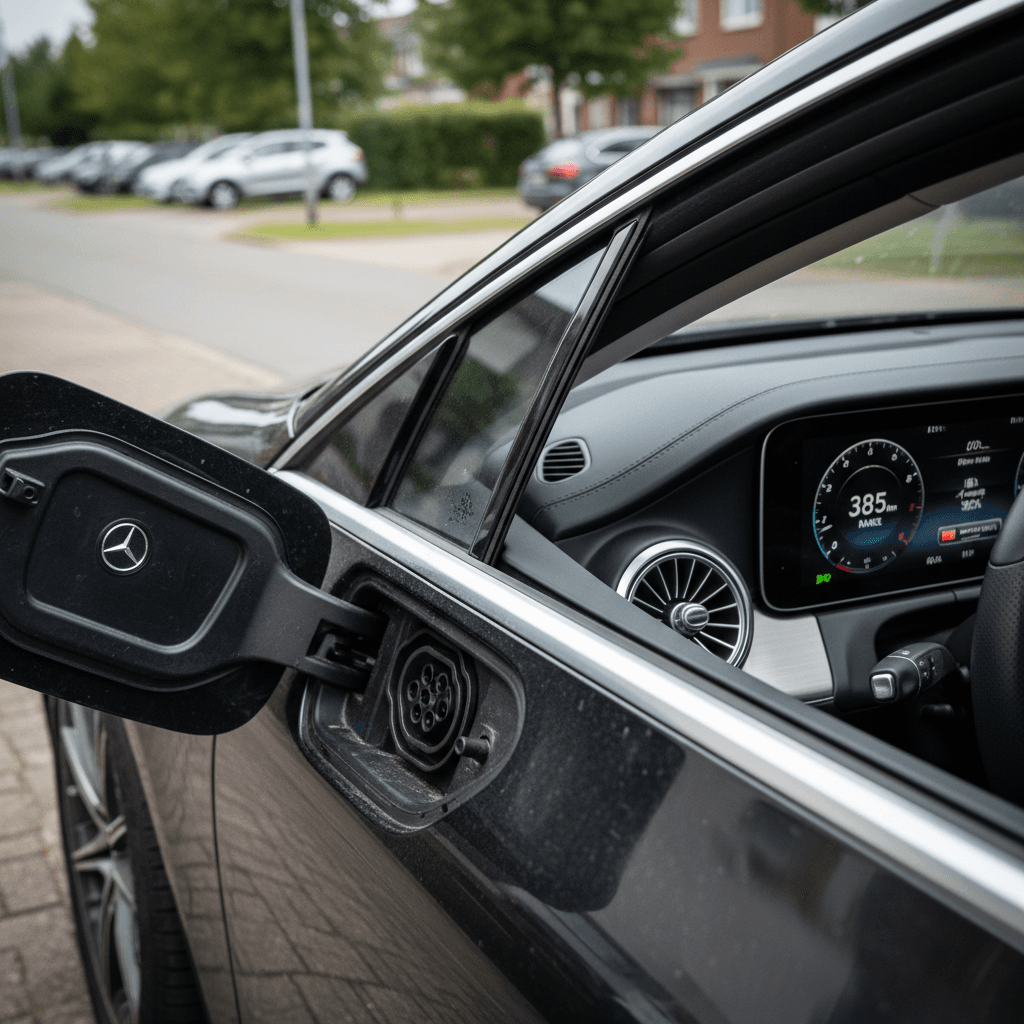
Photograph the EQE in good natural light, showing all angles, wheels, interior, screens, and any flaws. For a model this design‑driven, presentation is half the sale.
Pricing Strategy for Selling a Mercedes EQE
If you price your EQE like it’s still parked in a glossy showroom, you’ll be staring at stale listings and lowball offers. Price it like a commodity and you’ll leave thousands on the table. The sweet spot lives between valuation tools and live market behavior.
Step 1: Triangulate the real number
- Run your VIN through 2–3 mainstream tools (KBB, Edmunds, etc.) for trade‑in and private‑party ranges.
- Search live listings within 200 miles for EQEs with similar year, trim, miles, and options.
- Note how long those cars have been listed, fresh vs price‑reduced vs obviously stale.
Your realistic sale price usually sits near the middle of those ranges, nudged up or down by battery health, history, and cosmetics.
Step 2: Leave room without being delusional
- For a private sale, list the car 3–5% above your target “happy” number to leave negotiating room.
- For a consignment or EV marketplace sale, work with their specialists to set a competitive national price anchored to your car’s battery data.
- Be prepared to adjust if you get views but no inquiries within the first 10–14 days.
Remember: time is a cost. Another month of insurance and payments can eat more than a modest price reduction.
Watch trim‑level illusions
How Selling Your EQE Through Recharged Works
If you want more reach than a driveway “for sale” sign, but more intelligence than a one‑click instant offer, selling your EQE through Recharged is a middle path: EV‑savvy buyers, verified battery health, and help with the messy parts.
Two main ways to sell your EQE with Recharged
Both options include expert EV support and a Recharged Score Report.
Instant offer or direct purchase
If you want speed and simplicity:
- Share your EQE’s details online (VIN, miles, photos, payoff info).
- Recharged evaluates the car using market data and your battery profile.
- You get a firm offer, typically faster than a traditional dealership can manage.
- If you accept, Recharged arranges paperwork and pickup or drop‑off.
You trade a bit of upside for a quick, low‑friction exit.
Consignment listing on Recharged
If you’d like to chase more value:
- Recharged runs full diagnostics and creates a Recharged Score Report with verified battery health and fair‑market pricing benchmarks.
- Your EQE is photographed and listed on Recharged’s nationwide marketplace.
- EV‑interested buyers see your car with transparent battery data and expert commentary.
- Recharged handles inquiries, paperwork, and logistics; you keep more of the final sale price.
Ready to find your next EV?
Browse VehiclesWhat’s in a Recharged Score Report?
Common Mistakes When Selling a Luxury EV
Selling an EQE is not like off‑loading a used crossover. The stakes are higher, the tech is denser, and the buyers are more skeptical. Here are the missteps that cost sellers real money.
- Listing the car before you understand its true market value or payoff amount.
- Hiding or hand‑waving battery or charging issues instead of documenting them honestly.
- Pricing based only on what you still owe, not what the market will pay.
- Letting the car go through another year of heavy depreciation while you “think about it.”
- Trying to sell with missing charge equipment, keys, or obvious cosmetic damage.
- Treating every buyer like a time‑waster instead of pre‑qualifying them with good information up front.
The silent killer: negative equity
Frequently Asked Questions About Selling a Mercedes EQE
FAQ: “Sell My Mercedes EQE”
Bottom Line: Is It Time to Sell Your EQE?
Selling a Mercedes EQE in 2026 means facing two truths at once: yes, the car probably shed value faster than a traditional E‑Class, and no, that doesn’t mean you have to give it away. If you know what your EQE is realistically worth, document its battery health, clean up the story it tells on photos and paper, and choose the right sales channel, you can still exit gracefully, and with more of your money intact.
If you decide, “Yes, it’s time to sell my Mercedes EQE,” consider letting an EV‑focused partner shoulder some of the complexity. Recharged can give you an instant offer or list your EQE on consignment with a Recharged Score Report, expert pricing guidance, and nationwide exposure. However you sell, treat your EQE like what it is: a sophisticated piece of battery tech whose value lives as much in its electrons as in its leather and chrome.