If you’re thinking, “It’s time to sell my electric car in New York,” you’re not alone. New York’s EV adoption keeps climbing, and used EV prices have reset since their 2022 peak, creating a busy, often confusing market for sellers. The good news: if you understand how EVs are valued, how NY paperwork works, and which sales channel fits you best, you can move on from your car without headaches, or leaving thousands on the table.
New York is an EV hot spot
Why selling an electric car in New York feels different
Battery health matters more than mileage
With gas cars, buyers obsess over odometer readings. With EVs, they zero in on battery health, fast‑charging history, and real‑world range. Two New York cars with the same mileage can sell for very different prices if one shows stronger battery diagnostics and slower degradation.
Policies and incentives shape buyer behavior
New York’s history of EV incentives and New York City’s toll, congestion, and parking realities push many shoppers into used EVs after their first lease. Savvy buyers know about federal used EV tax credits and NY’s past programs, so they’re more likely to ask informed questions and negotiate hard.
Avoid generic "used car" advice
Decide how you want to sell your EV in NY
Four main ways to sell an electric car in New York
Each path trades time, convenience, and price a little differently.
1. Sell privately
Best for: Maximizing price if you’re comfortable fielding calls and meeting strangers.
- Create listings on major marketplaces and EV‑focused forums.
- Handle test drives, inspections, and negotiations yourself.
- Manage all NY DMV paperwork with the buyer.
Expect the most work and risk, but potentially the highest sale price if you’ve kept excellent records and can prove battery health.
2. Trade in to a dealer
Best for: One‑trip convenience when you’re buying another car right away.
- Dealership handles payoff (if you have a loan) and all title work.
- Value is rolled into your next purchase, which can reduce taxable purchase price.
- Offer may be lower, especially if the dealer doesn’t specialize in EVs.
3. Sell to an EV specialist like Recharged
Best for: Sellers who want transparent EV‑specific pricing and support.
- Get an instant offer or choose consignment to market the car more broadly.
- Recharged uses a battery health diagnostic (Recharged Score) instead of guessing.
- Digital paperwork, nationwide buyers, and pickup options make it easier to sell from anywhere in New York.
4. Consign your EV
Best for: When you want dealer‑style marketing but aren’t in a rush.
- A partner markets and shows the car; you retain ownership until it sells.
- Potentially higher net than a trade‑in, with less work than a private sale.
- Expect to pay a fee or percentage of the final price.
Match the channel to your timeline
What your electric car is worth in New York’s market
How used EV values are shifting
Pricing a used EV in New York starts with the same inputs as any used car, year, mileage, trim, options, accident history, but then the EV‑specific questions kick in. Buyers in Queens, Brooklyn, and Westchester, for example, often look for home‑charging readiness and how quickly the car can DC fast‑charge on weekend trips, while upstate buyers may prioritize winter range.
- Year, mileage, and trim (still the baseline for any valuation tool)
- Battery size and typical real‑world range at 100%
- Documented battery health or diagnostics (capacity remaining)
- Fast‑charging behavior (does it still hit expected kW rates?)
- Warranty status on the high‑voltage battery and drive unit
- Accident history and flood exposure, big red flags near coastal NY
- Seasonal timing (spring and fall are often stronger listing windows)
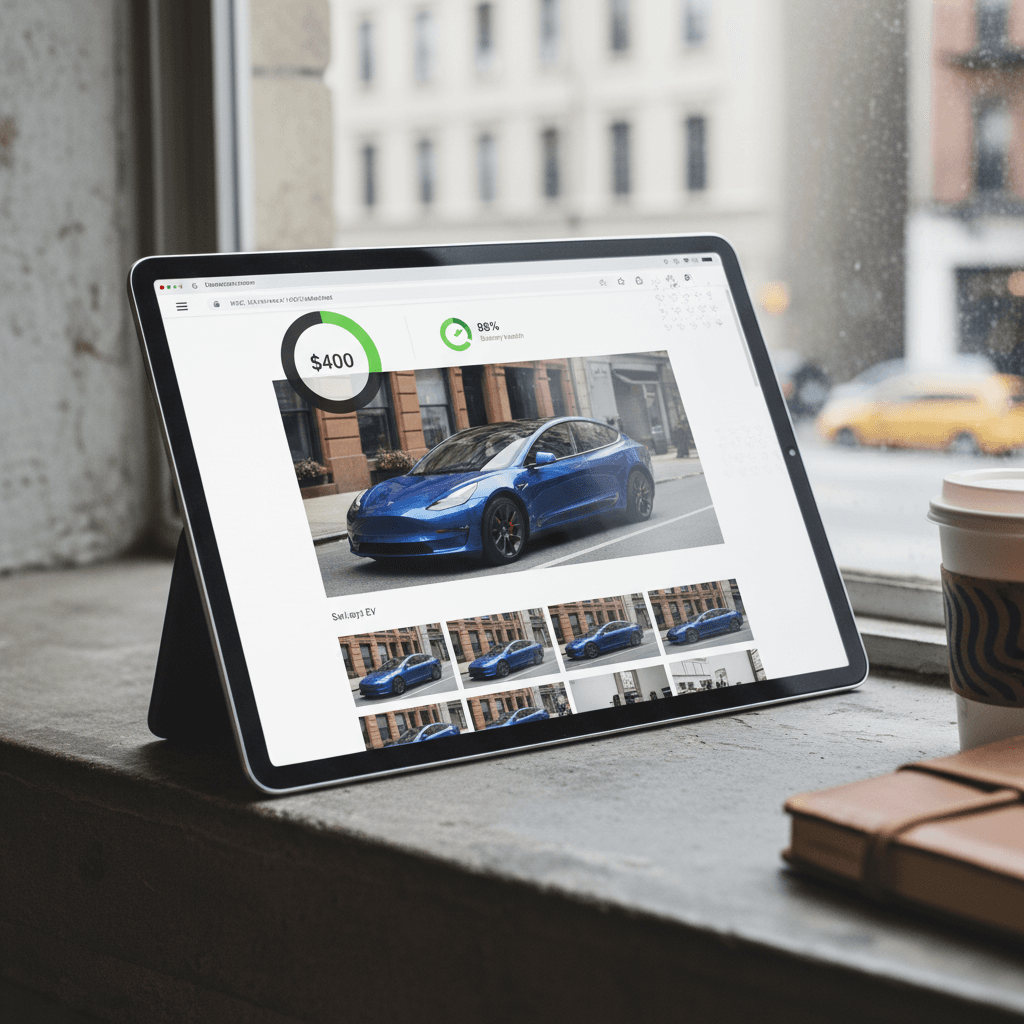
Why a battery health report pays for itself
Prep your EV to sell faster and for more
Four high‑impact prep steps for New York sellers
These are the things serious EV buyers will notice first.
Deep clean & de‑clutter
Document battery health
Include charging gear
Organize service records
Highlight what makes EV ownership easy
Paperwork to sell an electric car in New York
Selling any vehicle in New York, including an EV, comes with specific DMV rules. The basic requirements are the same as a gas car, but there are a few EV‑specific angles to think about, especially around loans and timing when the buyer plans to claim a used‑EV tax credit.
Key documents to sell an EV in New York
What you need as the seller, and what your buyer will expect, whether they’re in NYC or upstate.
| Item | Who provides it | Why it matters |
|---|---|---|
| Original NY title | Seller (current owner) | Proof of ownership. You’ll sign over the title to the buyer; make sure any lien release is included if the loan is paid off. |
| Bill of sale | Seller & buyer | Documents the sale price, date, and mileage. The buyer needs this for registration and taxes. |
| Odometer & damage disclosures | Seller | On newer vehicles, federal and state rules require accurate odometer reporting and, in some cases, damage disclosure. |
| Loan payoff or lien release | Seller or lender | If you still owe money, the lienholder has to be paid and release the title before the buyer can register the car. |
| Driver’s license & insurance | Buyer | Required when the buyer registers the vehicle in their name at NY DMV. |
| Battery & service records | Seller | Not legally required, but crucial for buyer confidence, and your final sale price. |
Always verify the latest forms and requirements directly with the NY DMV or a qualified professional before you finalize a sale.
Don’t skip the title details
- Confirm with your lender (if applicable) how payoff and title release will work, especially if you’re trading in or selling to a company like Recharged.
- Check the title for accurate name, VIN, and lien information before you list the car.
- Print a clean, legible bill of sale; complete it with the buyer at the time of sale.
- Remove your plates and return or transfer them per NY DMV guidelines before the buyer drives off.
- Cancel or adjust your insurance once the sale and plate return/transfer are complete.
Special considerations for NYC and downstate sellers
Parking, test drives, and logistics
If you’re selling in New York City or dense suburbs, plan how you’ll handle test drives and parking in advance. Meet in well‑lit, public areas, and consider having a friend with you. If street parking is tight, arrange to meet near a public lot or charging station instead of your block.
Charging access for urban buyers
Many NYC buyers don’t have home charging. In your listing, explain how you’ve lived with the car: local DC fast‑charging options, workplace charging, or nearby Level 2 stations. The more you can paint a picture of day‑to‑day use in New York, the easier it is for shoppers to say yes.
Watch out for payment scams
How Recharged helps New Yorkers sell electric cars
Because EVs aren’t just “used cars,” more New York owners are turning to EV‑specific marketplaces instead of general sites or traditional dealers. Recharged was built from the ground up for used EVs, with tools and services designed to answer the exact questions New York buyers ask about range, battery life, and fair pricing.
What you get when you sell your EV through Recharged
Whether you want an instant offer or to squeeze out every last dollar, there’s a path built for EVs.
Recharged Score battery report
Fair market EV pricing
Fully digital selling experience
Instant offer or consignment
Pickup and transport support
EV‑specialist support
Ready to find your next EV?
Browse VehiclesUse the marketplace to benchmark your price
Step‑by‑step checklist to sell your EV in NY
From "I should sell" to "plates returned"
1. Clarify your priorities
Decide what matters most: <strong>maximum price, minimum hassle, or speed</strong>. That choice will drive whether you go private sale, trade‑in, instant offer, or consignment with a marketplace like Recharged.
2. Gather your documents
Locate your NY title, loan information, service history, and any prior battery checks. Fix any name or address discrepancies before you list the car.
3. Get a realistic valuation
Use EV‑specific pricing tools and consider getting a quote from Recharged. Compare that to dealer trade‑in numbers to understand your realistic price range in New York.
4. Prep the car and take photos
Detail the car, stage clean photos in good daylight, and capture screenshots of real‑world range and charging history. Show any included charging equipment clearly.
5. Choose your sales channel
List the car on your chosen platform(s), or finalize an instant offer or consignment agreement. In your description, speak directly to New York buyers’ daily‑use questions about range and charging.
6. Screen buyers and schedule safe meetings
Verify serious interest by phone or video before test drives, meet in public places, and confirm insurance coverage for test drives. Be especially cautious in dense NYC areas.
7. Close the deal and finalize paperwork
Complete the bill of sale, sign over the title correctly, and handle payment securely. Remove plates before the buyer drives away, and cancel or update insurance immediately after.
FAQ: Selling an electric car in New York
Common questions from New York EV sellers
Bottom line on selling your EV in New York
Selling an electric car in New York comes down to three things: choosing the right channel, pricing around real battery health, and getting the paperwork right. The more clearly you can answer a buyer’s questions about range, charging, and history, the more leverage you’ll have, whether you’re closing a private sale in Brooklyn or accepting an instant offer from an EV specialist.
If you want help from people who live and breathe used EVs, Recharged can give you a data‑driven valuation, a Recharged Score battery report, and flexible options to sell, trade, or consign your electric car. That way you spend less time worrying about DMV rules and lowball offers, and more time planning what you’ll drive, or charge, next.