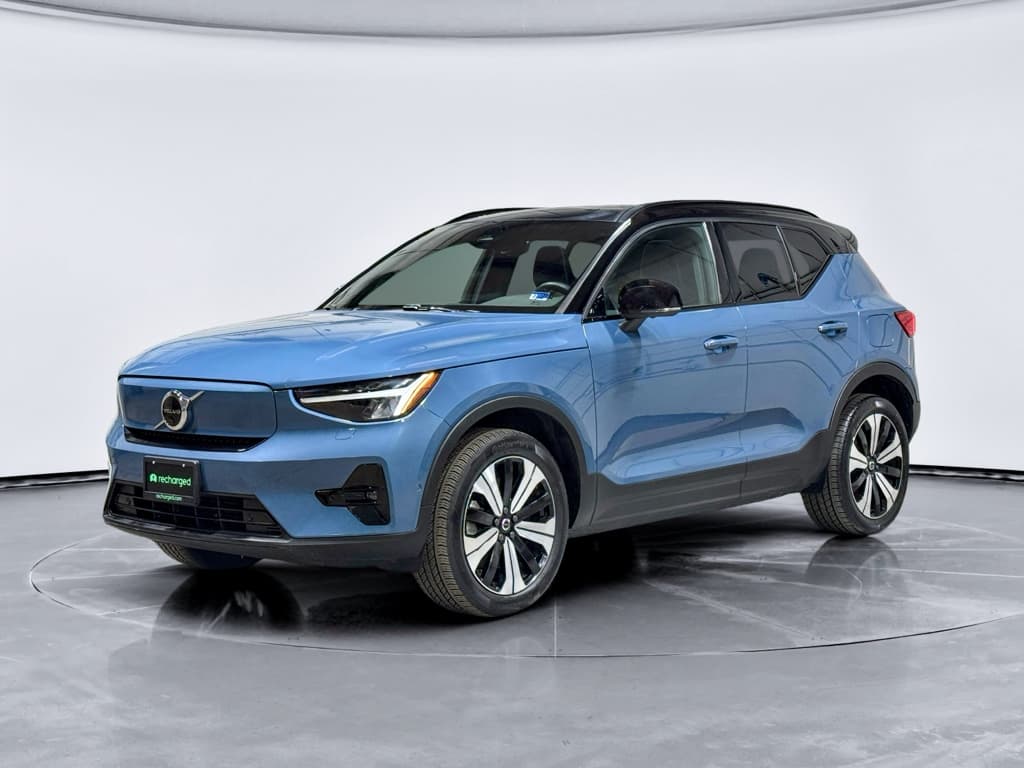
If you’re considering a Volvo EX30, you’re probably wondering whether this tiny electric SUV is as safe as the badge on its nose suggests. The good news: the **Volvo EX30 safety rating and crash test results** show that this is one of the safest small EVs you can buy right now, new or used. But as always, the details matter.
Headline verdict
Volvo EX30 safety overview
Volvo built its reputation on safety long before batteries and range became part of the conversation. The EX30 is the brand’s smallest, most affordable EV, but it still had to live up to that legacy. Under its clean Scandinavian sheetmetal you’ll find a rigid body structure, smart energy absorption, and layers of collision-avoidance tech aimed at keeping you out of trouble in the first place.
Small SUV, big safety brief
- Subcompact footprint makes it easy to place in tight city traffic.
- All-electric platform with a low-mounted battery helps stability.
- Available in single-motor RWD and twin-motor AWD trims.
Who it’s for
- Urban and suburban families who want top-tier crash protection in a small package.
- First-time EV buyers stepping out of a gas crossover.
- Shoppers cross-shopping Tesla Model Y, Hyundai Kona Electric, and Volvo’s own XC40 Recharge.
Crash test ratings at a glance
Volvo EX30 safety scores (Euro NCAP)
How to read these scores
How the Volvo EX30 performed in Euro NCAP crash tests
In December 2024, the EX30 went through the latest round of **Euro NCAP** testing and walked away with a full **five-star rating**. That’s the independent gold standard for crash safety in Europe, and the EX30 hit it on the first try.
Euro NCAP crash test highlights for the EX30
Where this small SUV shines, and what that means for you
Frontal and side impacts
The EX30’s passenger cell remained stable in frontal offset and full-width barrier tests. Dummies showed low to moderate injury risk for the chest and legs, which is what you want to see in a small vehicle.
Side impact and pole tests were another strong point, thanks to a stiff structure and effective side-curtain airbags.
Whiplash and rear-impact safety
Head restraints and seat design help reduce the risk of whiplash in rear-end collisions. For a short-wheelbase SUV that may spend its life in traffic, that matters just as much as big crash numbers.
Child occupant protection
With an 85% score, the EX30 protects child occupants well in both frontal and side crashes. Isofix anchorages are clearly marked and easy to access, making correct seat installation simpler.
Vulnerable road user protection
The EX30’s front end and hood are engineered to be more forgiving to pedestrians and cyclists in a collision. Combine that with active emergency braking that spots people and bikes, and it’s built for dense urban environments.
“It may be our smallest ever SUV, but the Volvo EX30 is also a proud flagbearer of our longstanding and well-known position as a leader in automotive safety.”
Remember: ratings aren’t everything
What about IIHS and NHTSA ratings?
As of early 2026, the EX30 is just reaching U.S. customers in volume. That means U.S.-specific ratings from **NHTSA** (star ratings) and **IIHS** (Top Safety Pick awards) are still in progress or not yet published. Automakers often submit new models once production stabilizes, and the U.S.-spec EX30 has had some timing changes due to where it’s built and how it’s configured for this market.
- Expect NHTSA and IIHS data to arrive after more U.S.-spec EX30s are on the road and in testing cycles.
- In the meantime, Euro NCAP’s results are your best objective benchmark for crash performance.
- Because Volvo typically engineering-shares crash structures globally, there’s good reason to expect similar protection once U.S. ratings arrive.
Shopping tip for U.S. buyers
Key Volvo EX30 safety features
Numbers are one thing; the **safety tech** built into every EX30 is what you’ll feel day to day. Volvo loads even base cars with features that many rivals keep on the options list.
Active and passive safety in the EX30
From airbags and structure to smart sensors and software
Airbags & structure
- Front, side and curtain airbags cover all seating positions.
- Reinforced passenger cell with front and rear crumple zones.
- Battery pack integrated into the floor to lower the center of gravity and improve rollover resistance.
Collision avoidance
- Forward collision warning with automatic emergency braking.
- Pedestrian and cyclist detection, including at night.
- Intersection support that can brake if you turn across oncoming traffic.
Keeping you in your lane
- Lane Keeping Aid to gently nudge you back if you drift.
- Oncoming Lane Mitigation to help avoid head‑on collisions.
- Road Sign Information that can warn if you exceed posted limits.
Pilot Assist & adaptive cruise
- Pilot Assist combines lane centering with adaptive cruise on highways.
- Can handle stop‑and‑go traffic within its operating limits.
- Hands-on system: you stay responsible and must remain ready to steer and brake.
Rear impact and door safety
- Rear collision warning and mitigation can pre‑tension belts and apply brakes.
- Door opening alert watches for bikes and scooters as you exit.
- Helps protect cyclists in tight city streets and bike lanes.
Driver monitoring
- Camera-based driver monitoring can sense distraction or drowsiness.
- Escalating alerts if the driver appears unresponsive.
- Can safely bring the car to a stop if the driver doesn’t respond.
Driver-assist is not self-driving
Real-world safety: how the EX30 drives and protects
A five-star sticker doesn’t tell you how the EX30 feels when a delivery truck cuts across your lane or when the weather closes in. On the road, the EX30’s safety story is shaped just as much by its size, weight, and power as it is by its crash structure.
Stability and traction
- The EX30 is short and relatively heavy for its footprint thanks to the battery. That can make it feel planted in corners and in crosswinds.
- The twin‑motor AWD models add huge traction off the line, but also supercar‑level acceleration. Respect the throttle, especially in the rain.
- Standard stability and traction control systems step in early and smoothly when you over‑ask the tires.
Braking and visibility
- Regenerative braking gives you strong deceleration without fighting a mushy pedal once you’re used to it.
- Big side mirrors and a high driving position help in traffic, though the thick rear pillars make the rearward view more dependent on cameras.
- Parking sensors and available Park Pilot Assist take the stress out of tight urban spots.
What owners tend to appreciate
Battery safety and the EX30 recall
Safety isn’t just about what happens in a crash. With EVs, you also need to think about **battery integrity** and how the car manages thermal risks. Volvo has long experience with high-voltage systems, and the EX30’s pack is designed with robust cooling, shielding and structure. But like many new EVs, it hasn’t been completely free of issues.
- In early 2026, Volvo announced a small recall, around 40 EX30s in the U.S., related to potential overheating in individual high-voltage battery cells.
- The affected vehicles were built within a narrow production window; later builds are not included in the recall.
- Volvo’s guidance to affected owners has included temporarily limiting charge level and avoiding indoor parking until a permanent remedy is installed.
If you’re considering a recalled EX30
At Recharged, every EV we list goes through a **Recharged Score** evaluation that includes verified battery-health diagnostics and recall checks. That helps you separate a well-cared-for EX30 from one that might need extra attention.
Safety checklist for shopping a used Volvo EX30
Used Volvo EX30 safety & inspection checklist
1. Confirm build year and trim
Note whether you’re looking at a Single Motor or Twin Motor EX30, and which model year. Early production cars may have different software levels and may be more likely to appear in early recall campaigns.
2. Run a recall and service check
Use the VIN to check for open recalls and confirm with service records that any EX30 battery or safety-related recalls have been completed. A marketplace like Recharged will surface this in the vehicle report.
3. Inspect airbags, belts & warning lights
On your test drive, make sure the airbag and ABS/ESC lights cycle on with ignition and go out shortly after. Inspect seatbelts for frays and confirm they retract smoothly and lock under a sharp tug.
4. Test driver-assistance systems
On a clear road, carefully try adaptive cruise and Pilot Assist. The car should track smoothly within marked lanes and adjust speed predictably. Any odd jerks, warnings, or steering behavior should be investigated.
5. Check cameras and parking sensors
Verify that the rear camera image is sharp, guidelines move with the steering wheel, and front/rear sensors detect obstacles at close range. In a city car like the EX30, this is core to everyday safety.
6. Review battery health and charging history
Ask for a recent battery-health report. At Recharged, this is part of the Recharged Score, so you can see how much usable capacity remains and whether the pack has been fast‑charged heavily or abused.
7. Look underneath and at the rocker panels
Because the battery is in the floor, impacts from curbs or debris can matter. Have a technician check the underbody panels, mounting points and rockers for damage that might suggest a hard impact.
8. Confirm software is up to date
The EX30 relies heavily on software for safety systems. Make sure over‑the‑air updates are current, or have a Volvo dealer bring the car up to the latest software level before you rely on its driver-assist tech.
FAQ: Volvo EX30 safety rating and crash tests
Frequently asked questions about Volvo EX30 safety
Is the Volvo EX30 a safe bet?
If you boil the data and the driving impressions down to one line, it’s this: the Volvo EX30 delivers big‑league safety in a very small footprint. Its Euro NCAP crash test scores are strong across the board, the driver-assistance tech is among the most comprehensive in the segment, and early battery-related concerns are contained to a narrow recall that Volvo is actively addressing.
For you as a buyer, especially if you’re looking at a used EX30, the key is to focus on the individual car: recall status, battery health, software updates, and evidence of proper repairs after any prior accidents. When you shop through Recharged, those questions don’t get waved away. Every EX30 we list comes with a Recharged Score Report that verifies battery health, flags open recalls, and gives you a clear, expert-backed view of the car’s safety story before you ever click “buy.” That’s how a five-star rating on paper becomes real confidence on the road.