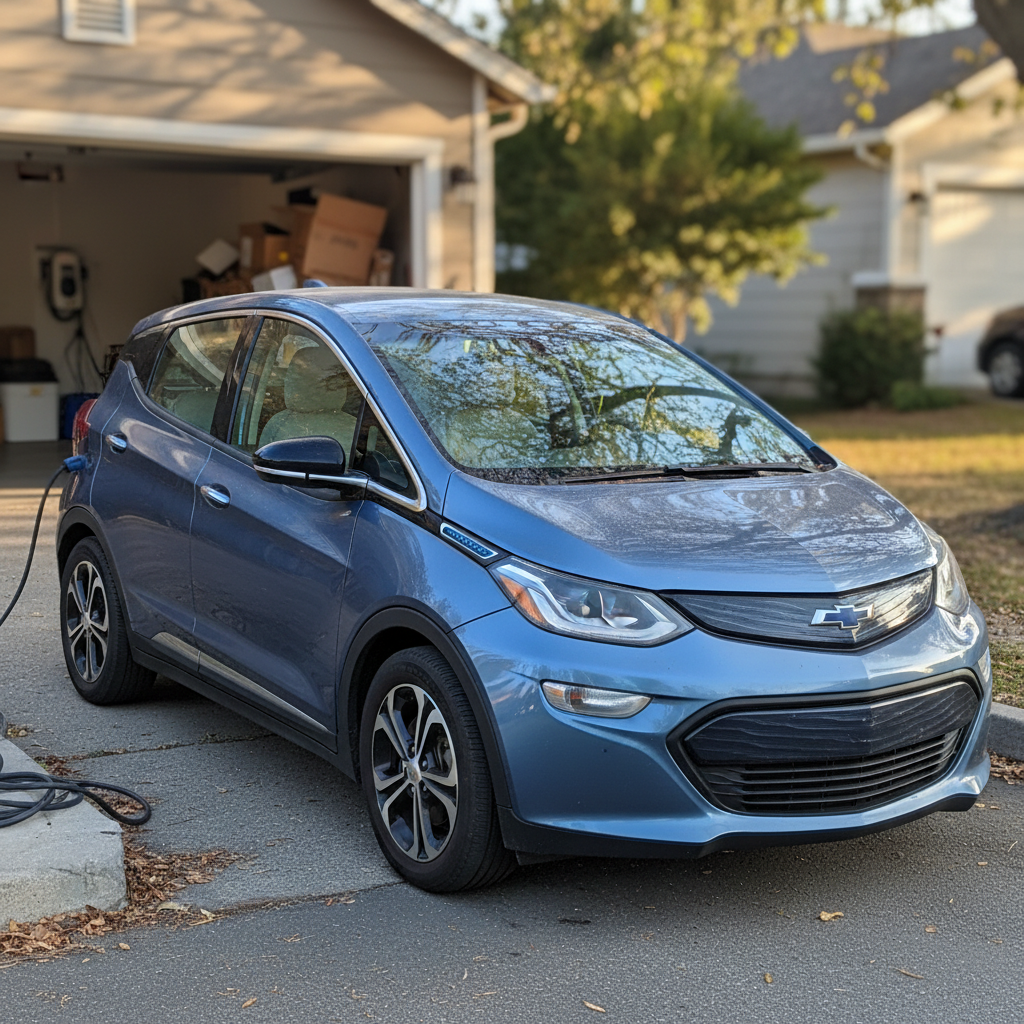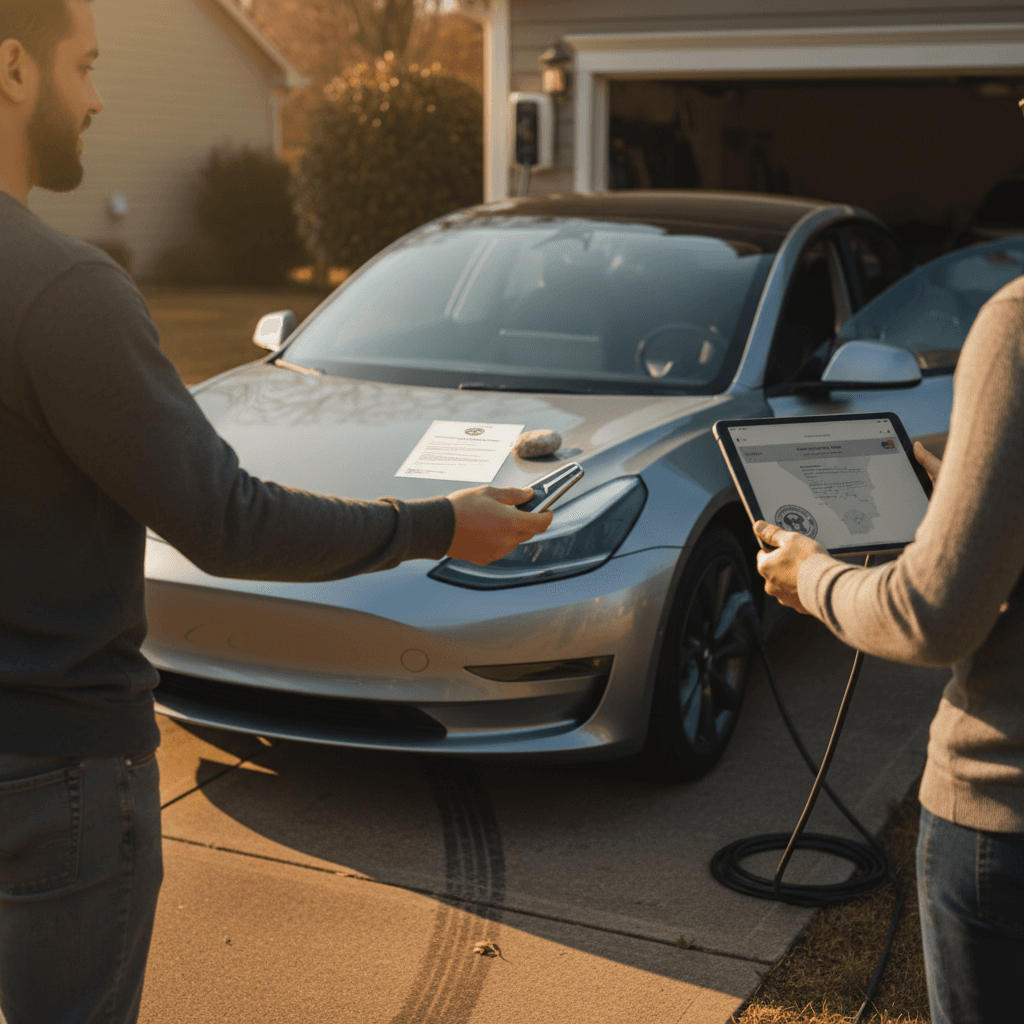
If you’re thinking, “I’m ready to sell my electric car in Georgia,” you’re already ahead of the curve. The state is quietly turning into an EV powerhouse, Hyundai, Kia, and Rivian are all building or expanding plants here, and that factory energy is spilling into the used market. The twist: selling an EV isn’t quite like selling a gas car, especially when it comes to battery health, emissions rules around Atlanta, and explaining range to skeptical buyers.
Georgia’s EV moment
Why Selling an Electric Car in Georgia Feels Different
On paper, Georgia treats your electric car like any other vehicle: you sign the title, the buyer pays taxes and registration, and everyone goes home. In reality, EV shoppers in Georgia ask different questions: How healthy is the battery? What does range look like in Atlanta traffic or up I‑75 into the mountains? Where can I fast‑charge between Savannah and Macon? If you prepare for those questions up front, you’ll sell faster and for more money.
Why buyers love EVs here
- Stop-and-go Atlanta traffic makes instant torque weirdly fun.
- Many commuters can comfortably charge at home overnight.
- Public DC fast-charging is expanding along major interstates.
Why some buyers hesitate
- Confusion about federal and state EV incentives ending or changing.
- Uncertainty around battery life on older EVs.
- Fear of getting stuck without a charger on longer trips.
Quick Overview: Your Main Options to Sell an EV in Georgia
Four Ways to Sell Your Electric Car in Georgia
From DIY to fully handled, here’s how each option stacks up.
Private sale
Best for: maximizing price if you’re willing to handle photos, listings, messages, and test drives.
You’ll generally get the most money, but you take on all the work, title transfer logistics, and some safety risk meeting strangers.
Trade-in at a dealer
Best for: convenience when you’re already buying another car.
Dealers in Georgia still undervalue many EVs, especially if they don’t understand battery health, but the transaction is fast and simple.
Instant-offer / online buyer
Best for: quick, predictable exit.
Sites and services will quote you online, pick up the car, and handle paperwork. Offers can be lower than a strong private sale but save a lot of time.
EV specialist marketplace (Recharged)
Best for: balancing price and ease.
Recharged focuses only on EVs, provides a battery health report, helps you price to the national market, and can manage consignment or direct purchase.
Paperwork & Legal Basics for Selling an EV in Georgia
The Georgia rules for selling a vehicle apply to EVs just like gas cars. The state cares about titles, taxes, and emissions, not whether you run on premium or electrons. Here’s what you’ll typically need when you sell your electric car in Georgia.
Key Georgia Requirements When You Sell a Vehicle
What you, as the seller, are responsible for, and what your buyer must do after the sale.
| Item | Who Handles It | Why It Matters |
|---|---|---|
| Certificate of title | Seller completes and signs; buyer submits | Transfers legal ownership of your EV to the buyer. |
| Odometer reading | Both parties on the title/bill of sale | Required on most vehicles under 10 years old. |
| Bill of sale | Strongly recommended, sometimes required | Documents price, date, and terms; protects both sides. |
| Cancel registration | Seller (after sale) | Prevents future tax or toll notices landing in your mailbox. |
| Buyer registration & TAVT tax | Buyer at their county tag office | Buyer has 30 days to title and register the vehicle in Georgia. |
Always confirm details with the Georgia Department of Revenue or Georgia.gov before you finalize a sale, as rules can change.
Don’t forget to cancel your registration
Emissions Rules, EVs, and the 13 Atlanta Counties
Georgia’s emissions rules are where a lot of sellers get tripped up, especially around Atlanta. The state requires most gasoline cars in 13 metro counties to be sold with a valid passing emissions test. Pure battery electric vehicles (no gasoline engine) are exempt, but buyers and even some sellers still ask about emissions out of habit.
Emissions Checklist for Selling an EV in Metro Atlanta
1. Confirm your car is truly a BEV
If your vehicle has a gasoline engine (plug‑in hybrid), it may still be subject to emissions requirements in the 13 metro Atlanta counties. Pure EVs are normally exempt, but verify based on your VIN and powertrain.
2. Know the 13 emissions counties
Cherokee, Clayton, Cobb, Coweta, DeKalb, Douglas, Fayette, Forsyth, Fulton, Gwinnett, Henry, Paulding, and Rockdale have special emissions rules for gas vehicles sold and registered there.
3. Clarify emissions status in your listing
For a pure EV, say clearly: “<strong>Battery electric vehicle – exempt from Georgia emissions testing</strong>.” That heads off confusion with buyers coming from gas‑car expectations.
4. If in doubt, call a tag office
Before you finalize a sale, you or your buyer can call the local county tag office to confirm whether any emissions paperwork is needed for your specific car and county.
Out-of-county and out-of-state buyers
How to Price Your Electric Car in Georgia
Pricing an EV is more art‑gallery appraisal than blue‑book roulette. Traditional pricing tools still lag on battery health, fast‑charging capability, and software features like Autopilot or advanced driver assistance. In Georgia, buyers are also watching federal incentive changes and local rebates, which can swing new‑car prices and pull used values up or down.
What Really Drives Used EV Value
- Start with a mix of pricing sources: KBB/Edmunds, EV‑focused sites, and recent listings in Georgia on Autotrader, Facebook Marketplace, and Cars.com.
- Adjust for battery health: a car that still charges close to its original capacity should command a premium over similar‑year EVs with heavy degradation.
- Consider DC fast‑charging support: if your car supports common networks around Georgia (Tesla Supercharger with NACS, CCS on major corridors), highlight that and price accordingly.
- Watch new‑car incentives: if a new version of your EV just got cheaper thanks to a manufacturer discount, you may need to price more aggressively to move your used one.
Use a battery health report as a pricing weapon
Step-by-Step: Selling Your EV Privately in Georgia
Private-Sale Playbook for Georgia EV Owners
1. Gather paperwork and payoff info
Locate your Georgia title, any lien payoff letter, service records, and charging accessories (mobile connector, adapters). If you still owe money on the car, call your lender to confirm the payoff process and timeline.
2. Get your EV ready for photos
Deep‑clean the interior, wash the exterior, and charge to a visually satisfying state of charge (70–90%) so buyers see realistic range on the dash. Clean cable bags and frunks photograph surprisingly well.
3. Document battery health and features
Screenshot range at 100%, battery health screens, and any app‑based diagnostics. List options like heat pump, dual‑motor, tow package, and software features that matter in Georgia’s climate and traffic.
4. Write a Georgia‑specific listing
Mention commuting range to key hubs (e.g., downtown Atlanta, Perimeter, Savannah core), proximity to fast‑charging, and the car’s performance in heat and humidity. Note that the EV is exempt from emissions if applicable.
5. Screen buyers and plan test drives
Meet in well‑lit public places, many police stations and malls around Atlanta and larger cities offer safe‑exchange zones. Verify that any test driver has a valid license and is properly insured.
6. Close the deal and handle the title
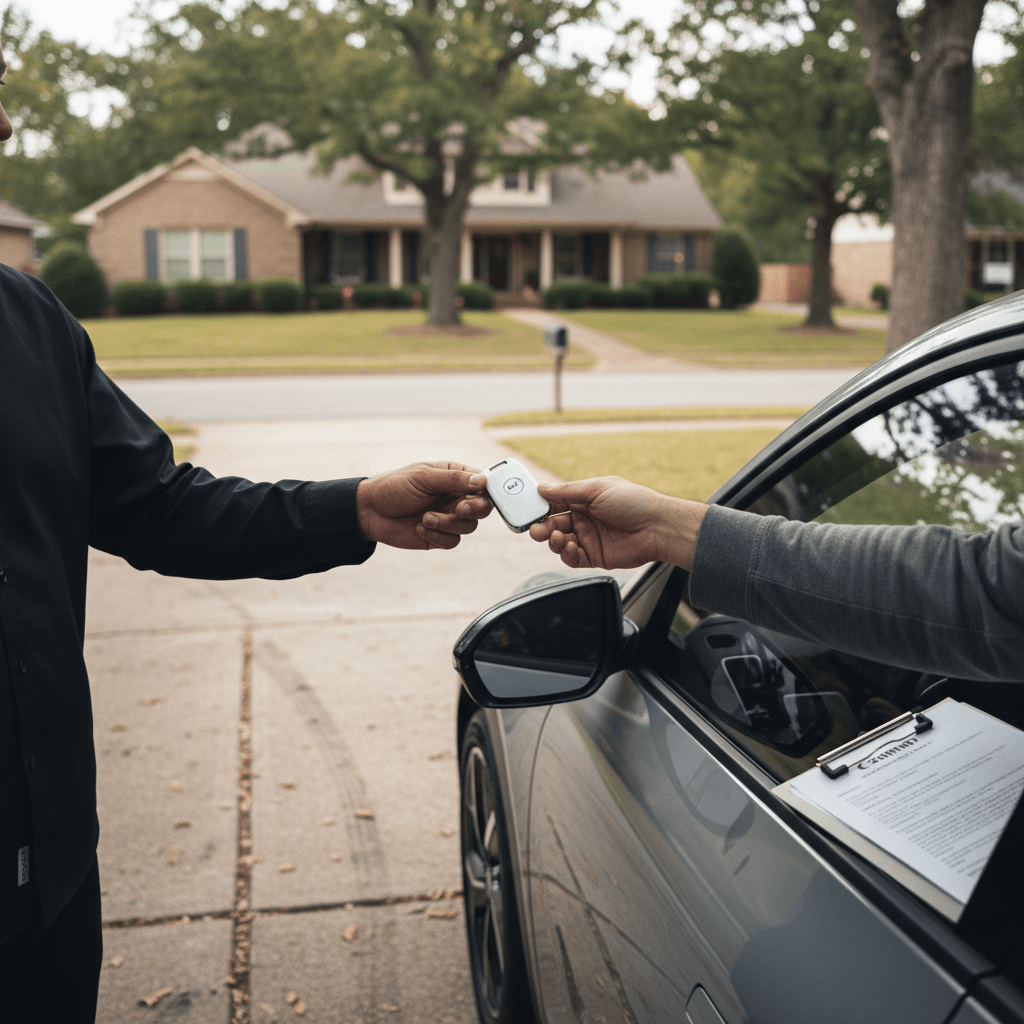
Fill out the title transfer with the buyer, including odometer reading and sale date. Provide a signed bill of sale, accept secure payment (cashier’s check, verified electronic transfer), remove plates, and cancel your registration.
Trading In or Selling to a Dealer or Online Buyer
If your priority is simplicity, not squeezing the last dollar out of the car, a trade‑in or instant‑offer route may be right for you. The big question is whether the convenience discount is worth it.
Trade-in at a Georgia dealer
- Best when you’re already buying another car that day.
- Saves sales tax on the difference in many states, Georgia’s tax rules are unique, so always ask how TAVT is calculated.
- Some dealers still guess at EV values, especially non‑Tesla models, and may lowball cars with healthy batteries.
Instant-offer/online buyers
- Enter your VIN and photos, get a firm offer fast.
- Pickup at your home or office anywhere in Georgia can be available.
- They’ll handle paperwork and payoff, but factor in that you’re trading some value for time and certainty.
Where Recharged fits in
Why Consider an EV Specialist Like Recharged
Selling a gas crossover in Georgia? Any corner lot can do that. Selling a three‑year‑old EV with fast‑charging quirks, partial self‑driving, and a battery that’s lost 7% of its capacity? That’s a different kind of sales job. An EV‑only retailer like Recharged is built for exactly that complexity.
How Recharged Makes Selling Your EV Easier
Especially if you want more than a rock‑bottom trade‑in, but less work than a full DIY sale.
Recharged Score battery health diagnostics
Every vehicle on Recharged gets a Recharged Score Report, a detailed look at battery health, charging behavior, and vehicle history. That gives buyers confidence and lets you justify a stronger price.
Data-backed pricing, not guesswork
Recharged benchmarks your EV against national and regional EV sales, not just generic used‑car data. That helps avoid the common Georgia dealer issue: underpricing EVs because they’re treated like just another compact SUV.
Nationwide reach from Georgia
Your buyer doesn’t have to live in Atlanta. Recharged offers nationwide delivery, so your Georgia EV can sell into a broader market where demand (and prices) may be higher.
EV-specialist support, fully digital
From payoff logistics to explaining battery reports, Recharged’s EV‑savvy team walks you through everything online or by phone. If you’re nearby, you can also use the Recharged Experience Center in Richmond, VA as a physical touchpoint.
Ready to find your next EV?
Browse VehiclesChoose how hands-on you want to be
Common Pitfalls to Avoid When Selling an EV
- Letting a generic gas‑car trade‑in number set your expectations for EV value.
- Listing your EV without any proof of battery health or fast‑charging performance.
- Ignoring Georgia’s title rules and assuming a bill of sale alone is enough.
- Forgetting to remove plates and cancel registration after the sale.
- Accepting sketchy payment methods (peer‑to‑peer apps, personal checks) for a high‑value transaction.
- Under‑explaining how and where to charge the car, confused buyers walk away or demand steep discounts.
Be picky about payment
FAQ: Selling an Electric Car in Georgia
Frequently Asked Questions About Selling an EV in Georgia
Bottom Line: How to Sell Your EV in Georgia With Confidence
Selling an electric car in Georgia sits at the intersection of old‑school paperwork and new‑school technology. You still need to nail the basics, clean title, clear bill of sale, canceled registration, but the real money is made by telling a compelling battery and charging story to the right buyer. Whether you choose a DIY private sale in Atlanta, a quick trade‑in in Augusta, or a specialist marketplace like Recharged, the key is to price based on real EV data, not guesswork, and to make buyers feel confident they’re stepping into the right electric future.
If you’re ready to move on from your current EV, start by gathering your records and getting clarity on battery health. From there, you can compare a private listing, local offers, and what an EV‑only platform like Recharged will pay or help you net. Georgia’s EV market is only getting stronger; with a bit of preparation, you can tap into that momentum and sell your electric car on your terms.