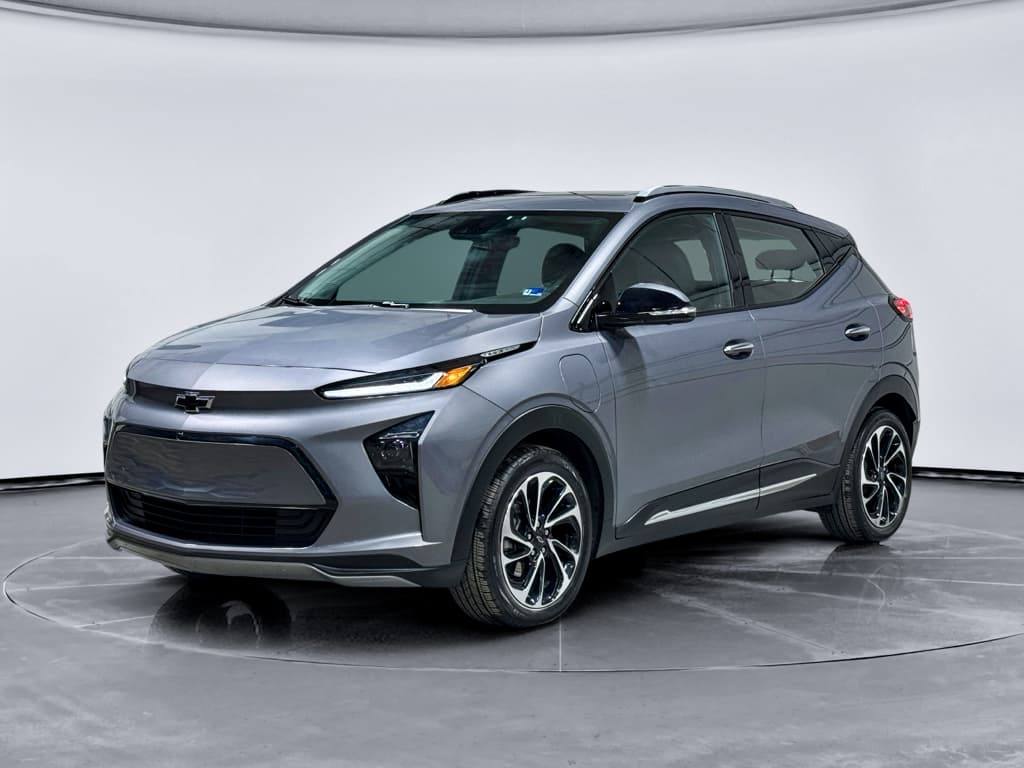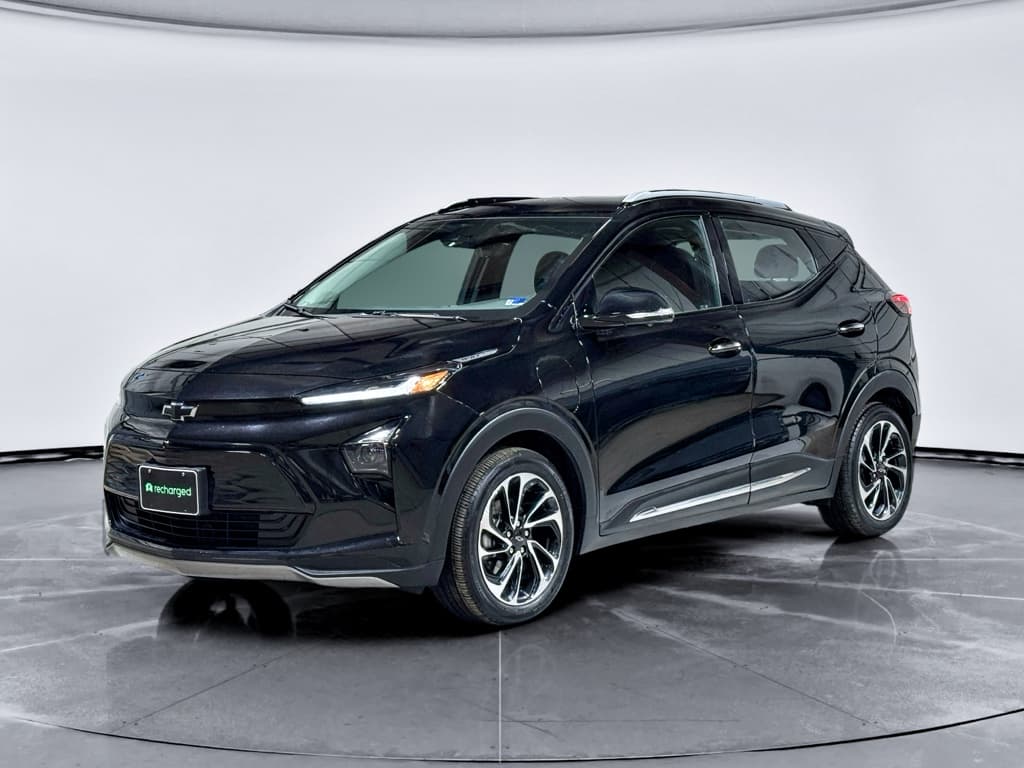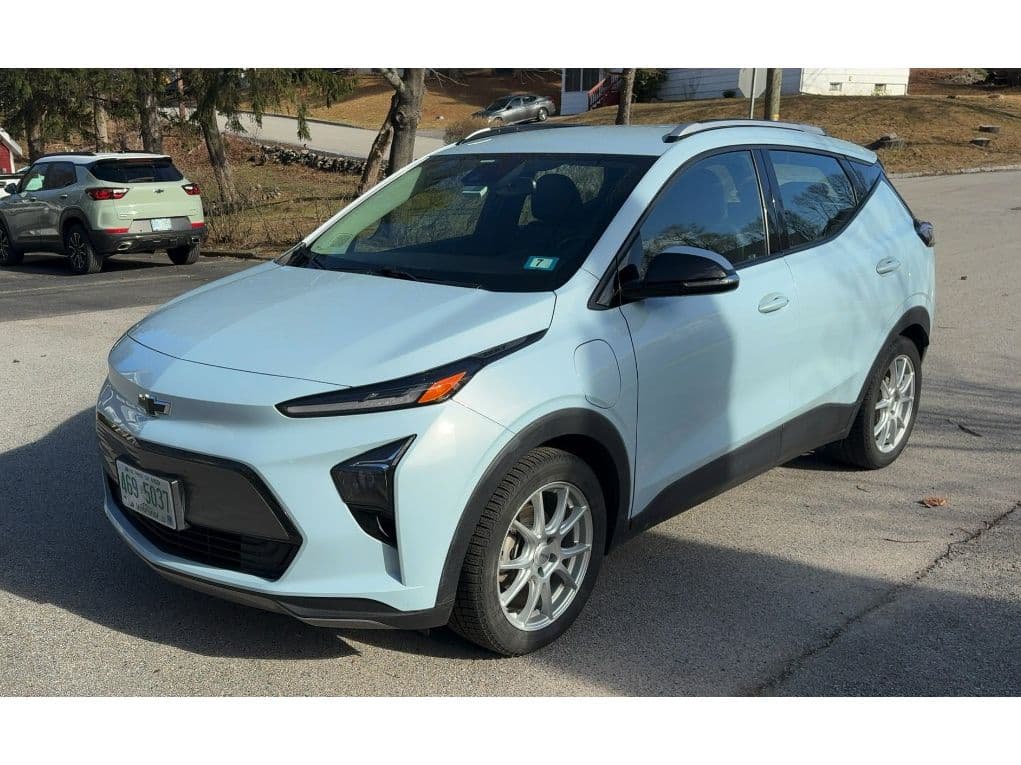
If you’re searching “sell my Chevrolet Bolt EUV,” you’re not alone. GM ended production of this generation of the Bolt and Bolt EUV in late 2023, and now, in 2026, thousands of owners are deciding whether to cash out, trade up to a newer Ultium‑based EV, or stick with a proven commuter. The good news: if you understand how EV shoppers think, and how to present your car, you can still get strong money for a Bolt EUV.
Quick take
Why Bolt EUV values look different in 2026
The Bolt EUV occupies an unusual spot in today’s used‑EV market. It’s compact, efficient, and relatively affordable, but it’s also built on GM’s older BEV2 platform, not the newer Ultium architecture. GM stopped building the first‑generation Bolt EV and EUV at Orion Assembly at the end of 2023 to clear room for Ultium‑based pickups and a future Bolt replacement. That decision froze supply while demand for budget‑friendly EVs kept growing.
Chevrolet Bolt EUV market snapshot
Because of that mix, older platform, discontinued model, but strong real‑world usefulness, pricing a Bolt EUV feels very different from pricing a used compact SUV or a newer Ultium EV. Asking prices that ignore battery health, recall status, and local incentives either sit on the market or leave money on the table.
What is my Chevrolet Bolt EUV worth today?
There’s no single answer, but you can get in the right ballpark quickly by looking at year, mileage, condition, and battery documentation. As of early 2026, many 2021–2023 Bolt EUVs are listing in the mid‑teens to low‑$20,000s, depending on mileage and trim, with trade‑in offers often several thousand dollars lower.
Sample Chevrolet Bolt EUV price ranges in 2026 (illustrative)
Rough retail asking ranges you might see in many U.S. markets. Your actual value depends heavily on battery health, options, and local demand.
| Model year & trim | Typical miles | Private‑party asking range | Dealer retail range | Trade‑in ballpark |
|---|---|---|---|---|
| 2021 Bolt EUV LT | 45,000–70,000 | $13,000–$16,000 | $15,000–$18,000 | $10,000–$13,000 |
| 2022 Bolt EUV LT | 30,000–50,000 | $15,000–$19,000 | $17,000–$21,000 | $12,000–$15,000 |
| 2023 Bolt EUV Premier | 15,000–35,000 | $18,000–$23,000 | $20,000–$25,000 | $15,000–$18,000 |
Use this as a directional guide, not a quote. Always cross‑check with live listings and offers.
Don’t treat these as offers
- Battery health and recall status can easily swing value more than leather seats or a sunroof.
- Mileage still matters, but less than on a gas car, high miles with a strong battery report can out‑sell low miles with no documentation.
- Local EV incentives and HOV‑lane rules can push values up in some states.
- Color, wheel upgrades, and Super Cruise (where equipped) may help, but only after buyers trust the battery.
Best places to sell a Chevrolet Bolt EUV
Once you have a rough value range, the next question is where to actually sell your Bolt EUV. Your choice affects both price and effort. For most owners, it comes down to four main paths: instant cash offer, dealer trade‑in, private sale, or a specialized used‑EV marketplace.
Four main ways to sell your Chevrolet Bolt EUV
Match the channel to your time frame, risk tolerance, and price target.
Instant cash offer from EV specialists
Some online buyers and EV‑focused platforms will give you a near‑instant offer for your Bolt EUV.
- Pros: Fast, convenient, usually less haggling.
- Cons: Offer may be conservative, especially if they can’t see battery data.
Dealer trade‑in
Trading in at a Chevrolet or multi‑brand store is the lowest‑friction move if you’re buying another car.
- Pros: Easiest paperwork; potential tax credit on the new purchase in some states.
- Cons: Typically the lowest price for your Bolt EUV.
Private‑party sale
Listing on marketplace sites or classifieds can maximize price, if you’re willing to work for it.
- Pros: Highest potential sale price.
- Cons: Time‑consuming, flaky buyers, safety and payment risks.
Used‑EV marketplace like Recharged
EV‑only platforms combine national reach with EV expertise.
- Pros: Audience already shopping for EVs, battery health is front‑and‑center, you can often choose cash offer or consignment.
- Cons: May charge a fee or commission, and availability can vary by region.
Trade-in vs private sale vs EV marketplace
When a trade‑in makes sense
If you’re moving into a new or newer EV and value convenience over every last dollar, a trade‑in is hard to beat. In some states, the value of your trade reduces the taxable amount of your new purchase, which partially offsets the lower number on the appraisal slip.
However, most franchised dealers still price used EVs cautiously. Many rely on generic book values that don’t fully account for a Bolt EUV with a fresh battery or excellent range.
When to go private or marketplace
If you’re not in a huge rush and your Bolt EUV is clean, documented, and has solid range, a private sale or EV marketplace usually nets more. You’re marketing directly to EV shoppers who understand what a cheap‑to‑run commuter is worth.
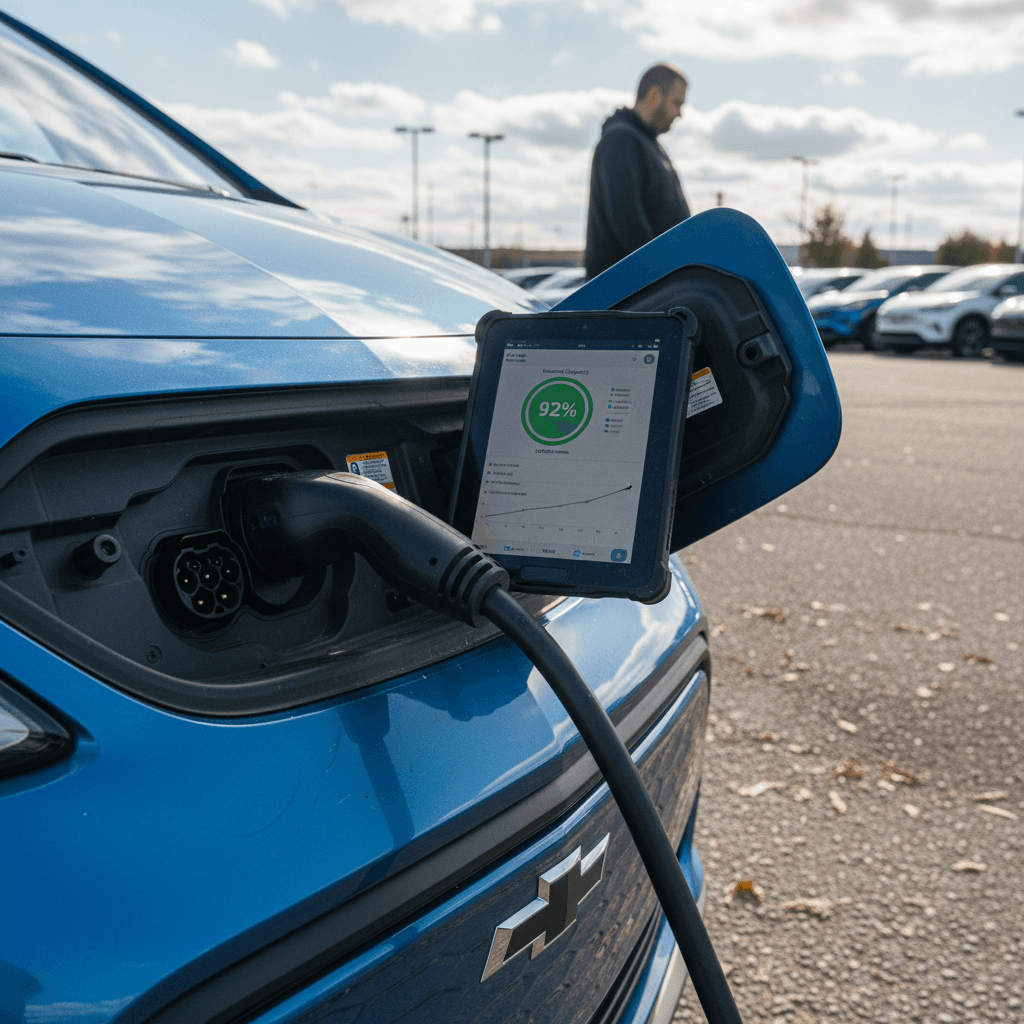
A platform like Recharged can handle photos, listings, buyer vetting, and even financing while showcasing your car’s Recharged Score battery health report, so you’re not starting from zero with every lead.
Think in “net dollars,” not just price
Battery health: your secret weapon when selling
On a gas car, buyers obsess over oil‑change records and transmission work. On a used EV like your Bolt EUV, battery health is the headline story. Two seemingly identical 2022 Bolt EUVs, same miles, same color, can be worth very different money if one shows strong range and a clean recall history while the other has unanswered questions.
Battery documentation buyers want to see
1. Recall repair documentation
If your Bolt EUV received a replacement pack under GM’s battery recall, include the service printout or dealer invoice. A new or newer pack can reassure buyers and support a stronger asking price.
2. Recent full‑charge range
Take photos of the dashboard at 100% state of charge after typical driving. Buyers like seeing real‑world range numbers, not just EPA estimates from a brochure.
3. DC fast‑charging history
If you’ve mostly charged at home on Level 2, say so. Heavy, daily DC fast charging can worry some buyers; light fast‑charging use is a selling point.
4. Recharged Score battery health report
List your car with Recharged and your Bolt EUV comes with a <strong>Recharged Score</strong>, a diagnostics‑backed view of usable capacity and pack health. That’s the kind of third‑party proof that helps serious EV shoppers move quickly.
How Recharged helps your Bolt EUV stand out
Ready to find your next EV?
Browse VehiclesStep-by-step: how to sell your Bolt EUV
From driveway to “sold”: a simple process
1. Decide your timing and goal
Are you trying to move quickly before a move or lease‑end, or can you wait a few weeks for a higher offer? Clarify whether speed or price matters more; that choice determines whether you lean toward a trade‑in, instant offer, or marketplace/consignment route.
2. Gather paperwork and service records
Collect your title or payoff information, recall paperwork, service history, and any charger purchase receipts. On a Bolt EUV, proof of recall completion and regular maintenance (coolant checks, tire rotations) can smooth the sale.
3. Get a realistic value range
Use online valuation tools and scan live listings for similar Bolt EUVs in your area. Pay attention to year, miles, trim, and whether ads mention new battery packs or recall work, those cues tell you what EV shoppers really pay for.
4. Get a battery health report
Before you list, get objective battery data. When you sell on Recharged, our <strong>Recharged Score diagnostics</strong> benchmark your pack’s health and range, then package that into a clear report every shopper can see.
5. Prep and photograph the car
Deep‑clean the interior, repair obvious cosmetic issues if they’re cheap to fix, and remove personal items. Then take bright, high‑resolution photos from multiple angles, include close‑ups of the charging port, wheels, and infotainment screen showing range.
6. Choose your selling channel
If you want the least hassle, compare a couple of instant offers and dealer trade‑in numbers. If you’re aiming for maximum value, create a listing with an EV‑centric marketplace like Recharged and lean on their experts to help with pricing, description, and buyer questions.
7. Handle payment and delivery safely
For private sales, insist on secure payment methods (no wire scams or cashier’s checks that can bounce) and complete a bill of sale plus state‑specific forms. When you sell through Recharged, we can help coordinate paperwork, payment, and even nationwide delivery so both sides stay protected.
Common mistakes that cost Bolt EUV sellers money
Avoid these Chevrolet Bolt EUV selling mistakes
Most are easy to fix, and they move the needle on price.
Ignoring battery questions
Listing your Bolt EUV with no mention of recall status or pack health is a red flag. Shoppers assume the worst and scroll on.
Copy‑pasting gas‑car ads
Generic lines like “runs great!” don’t cut it with EV buyers. They want range, charging details, and battery facts.
Underestimating time to sell
Private‑party sales can take weeks. If you only budget a weekend, you may end up dumping the car at a low trade‑in number.
Overpricing by $3–4k
Because new EV prices and incentives move quickly, over‑anchoring to last year’s numbers can leave your car sitting stale online.
Skipping light reconditioning
Simple fixes, detail, paint touch‑up, fresh mats, can make your Bolt feel newer and justify a stronger ask.
Forgetting tax and fee math
Sometimes the “lower” trade‑in leads to a similar or better net result once taxes and fees are factored in. Run the full numbers.
Watch for EV‑specific scam attempts
FAQ: selling a Chevrolet Bolt EUV
Frequently asked questions about selling a Bolt EUV
Bottom line: getting the most for your Bolt EUV
Selling a Chevrolet Bolt EUV in 2026 is less about chasing yesterday’s headlines and more about presenting today’s reality clearly: what your car’s battery can do, how it’s been cared for, and where it fits in the growing used‑EV landscape. Price it with live data, document the pack, and choose the right selling channel for your priorities, and your Bolt EUV can be more of an asset than a question mark.
If you want help with the heavy lifting, from battery diagnostics to photos, pricing, and buyer vetting, consider listing with Recharged. Our EV‑specialist team, Recharged Score battery health reports, and fully digital process are designed to make selling a used EV, including your Bolt EUV, as simple and transparent as owning one on its best day.