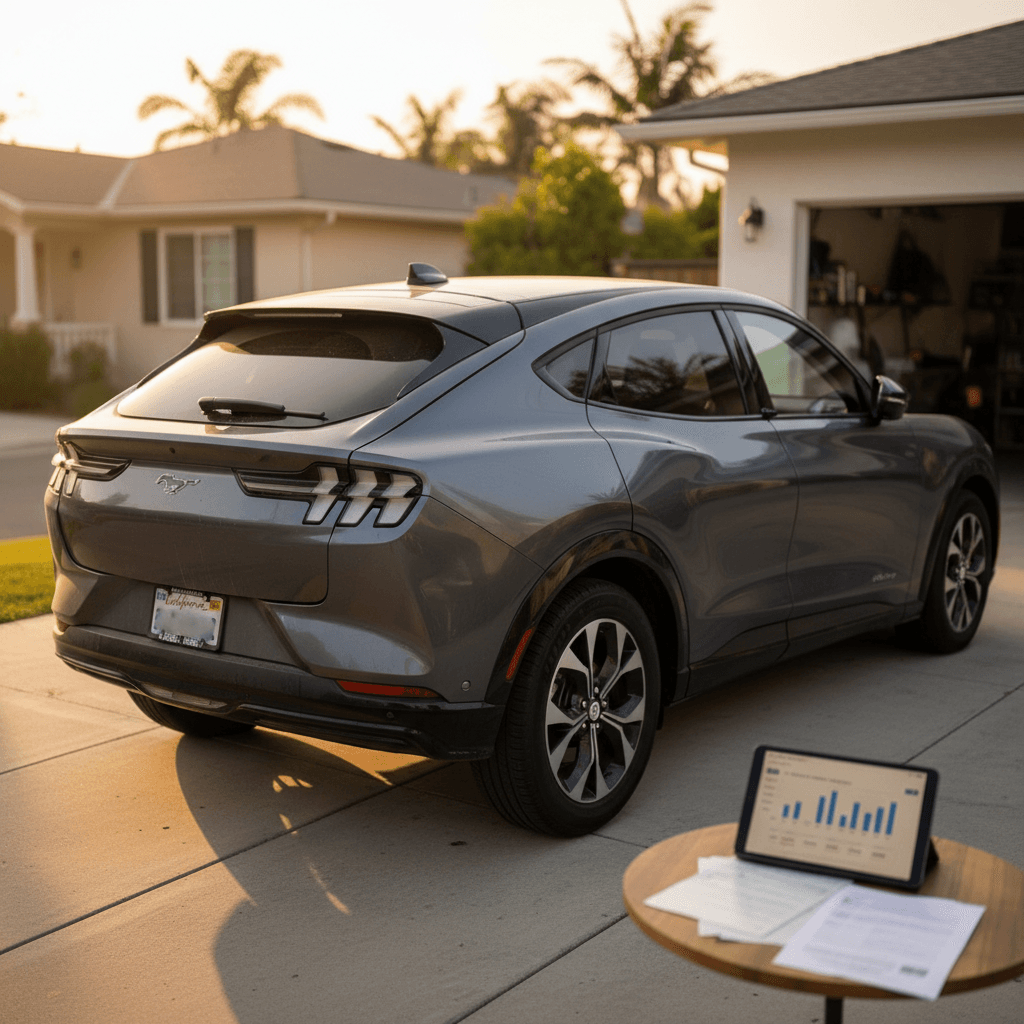
Thinking about how to sell your Ford Mustang Mach‑E in California in 2026? You’re not alone. Between softening EV prices, changing tax rules, and buyers who have heard every headline about EV depreciation, it can feel like the market has turned against you. The good news: with the right prep and the right sales channel, a Mach‑E can still sell quickly and for a fair price, especially in an EV‑savvy state like California.
Quick take
Why selling your Mustang Mach‑E in California feels tricky right now
California is still the country’s strongest EV market, but the landscape has changed fast. Federal EV tax credits for cars acquired after September 30, 2025 are gone, many local HOV and incentive programs have sunsetted, and buyers have read plenty of stories about EVs losing value quickly. On top of that, Ford cut new‑vehicle pricing on the Mach‑E for 2025, which dragged used values down with it.
Mustang Mach‑E resale reality check
Why this matters
How much is my Ford Mustang Mach‑E worth in 2026?
Used EV values are moving targets, and the Mach‑E is no exception. Across recent listings and purchase data, a typical non‑GT Mustang Mach‑E bought new has been losing roughly half its value in the first 4–5 years, with some trims faring a bit better or worse depending on incentives and equipment.
Very rough 2026 value snapshots for Ford Mustang Mach‑E
These are broad, illustrative ranges for private‑party sales in California with average mileage and clean history. Your actual value will depend on condition, options, service records, and battery health.
| Model year & trim | Typical miles | Private‑party range | Dealer trade‑in / instant offer |
|---|---|---|---|
| 2021 Mach‑E Select / Premium | 35,000–55,000 | $17,000–$22,000 | $14,000–$18,000 |
| 2022 Mach‑E California Route 1 / Premium | 25,000–45,000 | $19,000–$25,000 | $16,000–$20,000 |
| 2023 Mach‑E Premium / GT | 20,000–40,000 | $22,000–$30,000+ | $18,000–$24,000 |
| 2024–2025 Mach‑E (most trims) | 10,000–30,000 | $25,000–$33,000+ | $21,000–$27,000 |
Use these numbers as a sanity check, not a quote. Always cross‑check with live listings and offers.
How to reality‑check your number
Decide how you want to sell your Mach‑E in California
Before you snap photos or print a "For Sale" sign, decide how much hassle you’re willing to take on in exchange for price. With the Mach‑E, the gap between the easiest option and the best‑paying option can easily be a few thousand dollars.
Four main ways to sell a Mustang Mach‑E in California
Pick the balance of speed, price, and effort that fits your life right now.
1. Instant offer to a dealer or EV marketplace
Best if you want it gone this week.
- Fast online appraisal, sometimes same‑day pickup.
- Lower price than private party, but no test‑drives with strangers.
- Great if you still have a loan and don’t want to juggle payoffs.
2. Trade‑in when buying another car
Best if you’re replacing your Mach‑E.
- One transaction: sell and buy at the same time.
- Dealer handles payoff and paperwork.
- In a competitive market, you can sometimes push them to improve your trade number.
3. Private‑party sale
Best potential price, most work.
- List on multiple sites; manage messages, showings, and test‑drives.
- Need to be ready with battery health proof, charging info, and paperwork.
- Expect tire‑kickers and lowball offers before the right buyer appears.
4. Consignment with a specialist like Recharged
Best if you want dealer‑level marketing and EV expertise.
- Recharged markets your Mach‑E on a national EV‑focused platform.
- You keep more of the sale price than a wholesale‑only offer.
- Expert EV advisors handle buyer questions, financing, and delivery.
Where Recharged fits in
Ready to find your next EV?
Browse VehiclesGet your Mach‑E ready to sell
Buyers in California have options. A little prep will make your Mach‑E the one they remember, and the one they’re willing to pay for. You don’t need a full detail and new tires, but you do need to make the car clean, honest, and easy to evaluate.
Simple prep steps that add real money to your sale price
1. Get the car truly clean
Wash, vacuum, wipe down touchscreens and piano‑black trim, clean the frunk and cargo area, remove personal items, and peel off old stickers or decals. EV buyers notice grime on charge ports and screens.
2. Fix the obvious, cheap stuff
Burned‑out bulbs, missing charge‑port caps, worn wiper blades, and small plastic trim clips are inexpensive but send big signals about how the car was cared for.
3. Gather your paperwork
Collect your registration, title or payoff info, service records (including recall and software update receipts), tire invoices, and any home‑charger installation paperwork if you’re including a Level 2 unit.
4. Print or save your battery health report
If you’ve had a formal battery test, or a Recharged Score report, save it as a PDF and print a copy. If not, be ready to show real‑world range and recent charging habits in detail.
5. Take buyer‑worthy photos
Shoot in daylight, avoid harsh shadows, and show all four corners, interior, wheels, tires, charge port, frunk, rear storage, screen close‑ups, odometer, and the FordPass app if you’re comfortable.
6. Write a transparent description
Highlight the good (equipment, one‑owner, garage‑kept) and own the imperfections (curb rash, small dings). California buyers are seasoned; honesty often leads to a faster, smoother sale.
California paperwork and taxes when you sell a Mach‑E
California makes EV ownership relatively easy, but the paperwork still matters when you sell. The core steps haven’t changed in years, even as incentives and tax credits have come and gone.
What the seller is responsible for
- Vehicle title. If you own the Mach‑E outright, you’ll sign the California title and record the odometer. If there’s a lien, your lender will handle or release the title once the loan is paid.
- Notice of Transfer and Release of Liability. File this with the DMV (online is easiest) as soon as you sell so you’re not on the hook for tolls or tickets.
- Bill of sale. Not strictly required if you transfer title, but it’s smart. Include VIN, sale price, date, names, and signatures.
- Smog check? Not for the Mach‑E. As a zero‑emission vehicle, it’s exempt from California smog inspections.
What the buyer handles
- Sales tax and registration. In California, the buyer pays use tax and registration fees when they register the vehicle. You don’t collect tax in a private sale.
- HOV or incentive transfers. Past HOV decals and many incentive programs are expired or non‑transferable. Don’t promise perks you can’t deliver.
- Insurance and financing. If the buyer finances through a bank or credit union, expect an extra step for their lender paperwork and payoff verification.
- Out‑of‑state buyers. If someone from Nevada or Oregon wants your car, be clear that they’re responsible for registration and tax at home.
Watch the federal tax‑credit timing
Battery health: how to prove your Mach‑E is a good EV
With gas cars, buyers focus on oil changes and timing belts. With a used EV, everything revolves around the battery. The Ford Mustang Mach‑E has generally held up well, but California buyers will still ask some pointed questions about range and charging.
Ways to show your Mach‑E’s battery is healthy
You don’t have to be an engineer, just be prepared.
1. Real‑world range notes
Keep a log for a week or two:
- Typical % charge you start with.
- Miles driven before you recharge.
- Remaining % at the end of a commute.
It’s not scientific, but it’s relatable.
2. Screenshots of FordPass & cluster
Show state of charge (SoC), estimated range at 80–100%, and recent charge sessions. Buyers like seeing that you don’t fast‑charge to 100% every single day.
3. Third‑party or Recharged Score report
A formal battery health check, like the Recharged Score that comes with every vehicle sold on Recharged, turns buyer anxiety into confidence. It quantifies pack health instead of guessing from a range estimate.
If you’re not sure about your pack
Timing the market: when to sell your Mustang Mach‑E in California
You can’t control EV headlines or interest rates, but timing still matters. California’s EV market tends to be strongest when fuel prices spike and weakest when new‑car incentives are aggressive and inventory is heavy.
Two timing strategies that actually work
You want maximum dollars
Sell before your Mach‑E rolls over big mileage milestones like 40,000 or 60,000 miles.
Avoid listing right after major price cuts or new incentives on the latest model year, used values take a few months to catch up.
If you know you’ll move or lose garage parking within the year, consider selling a little early rather than hanging on through another model‑year change.
You want it gone with minimum stress
List when demand is naturally high: early spring and early fall are usually stronger than deep summer or holiday weeks.
Be flexible on price if you choose instant‑offer or trade‑in routes; a slightly lower number can be worth saving weeks of effort.
If your registration is due soon, selling a month or two before renewal keeps one more bill off your plate.
Selling your Mach‑E to Recharged: how it works
If you’d rather have EV specialists handle the hard parts, Recharged is built for exactly this moment in the market. Instead of treating an electric Mustang like an oddball used crossover, we evaluate it the way an informed California buyer would.
Option 1: Instant offer or trade‑in alternative
- Enter your Mach‑E’s details, year, trim, mileage, options, condition, on Recharged.
- Get a firm, data‑backed offer that reflects current EV market conditions, not just a generic Black Book number.
- If you accept, Recharged handles payoff logistics if there’s a lien, and arranges pickup or drop‑off, often without you stepping into a dealership.
- This works whether you’re just selling or using the money toward another vehicle you’ve found elsewhere.
Option 2: Consignment on the Recharged marketplace
- Recharged lists your Mach‑E on a national used‑EV marketplace with professional photos, a Recharged Score battery health report, and transparent pricing.
- EV‑specialist advisors field questions, arrange financing for buyers, and coordinate nationwide delivery, including from California to other EV‑hungry regions.
- You approve the pricing strategy, then let Recharged do the heavy lifting instead of playing part‑time dealer in your driveway.
Why this can beat going it alone
Step‑by‑step checklist to sell your Ford Mustang Mach‑E in California
From "maybe I should sell" to money in the bank
1. Confirm your payoff and equity
Contact your lender or check your Ford Credit / bank portal for the current payoff. Compare it to realistic sale values so you know whether you have equity, are roughly breaking even, or would need to bring cash to close a deal.
2. Research today’s Mach‑E prices in California
Pull live listings that match your year, trim, mileage, and condition. Look at actual transaction data when possible, not just dreamer prices. This sets your expectations before you see dealer or marketplace offers.
3. Decide how you want to sell
Trade‑in, instant offer, consignment, or private party. If you want support from EV specialists and a verified battery health report, start an instant offer or consignment conversation with Recharged.
4. Prep the car and documents
Clean the car, fix small issues, gather service records, range notes, and financing or title documents. If you work with Recharged, they’ll guide you through exactly what’s needed for your chosen route.
5. Set a clear, defensible price
Base it on data, not emotion. If you’re listing privately, leave a little room to negotiate but stay within the real‑world window. With Recharged, pricing is set using live EV market data and your Mach‑E’s Recharged Score.
6. Close the deal safely
Meet buyers in safe, public places with cameras (many police stations and bank branches offer this), verify funds before signing over the car, and file your Notice of Transfer with the DMV immediately. If you sell through Recharged, they coordinate funds and paperwork so you’re not taking risks.
FAQ: Selling a Ford Mustang Mach‑E in California
Common questions about selling a Mustang Mach‑E in California
Bottom line: should you sell your Mustang Mach‑E now?
If your Ford Mustang Mach‑E still fits your life, there’s no reason to panic‑sell just because you’ve seen scary depreciation charts. But if you’re outgrowing it, losing access to home charging, or staring down a big life change, 2026 is a perfectly reasonable time to sell in California, as long as you go in with clear eyes and good information.
Do your homework on pricing, gather your documentation, and decide honestly how much hassle you’re willing to accept in exchange for a few extra dollars. If you want a data‑driven offer, a verified battery health report, and EV‑specialist guidance from start to finish, let Recharged do the heavy lifting. Your Mach‑E has already done its job for you; this is how you make sure it gets a smooth, fairly‑priced second act.