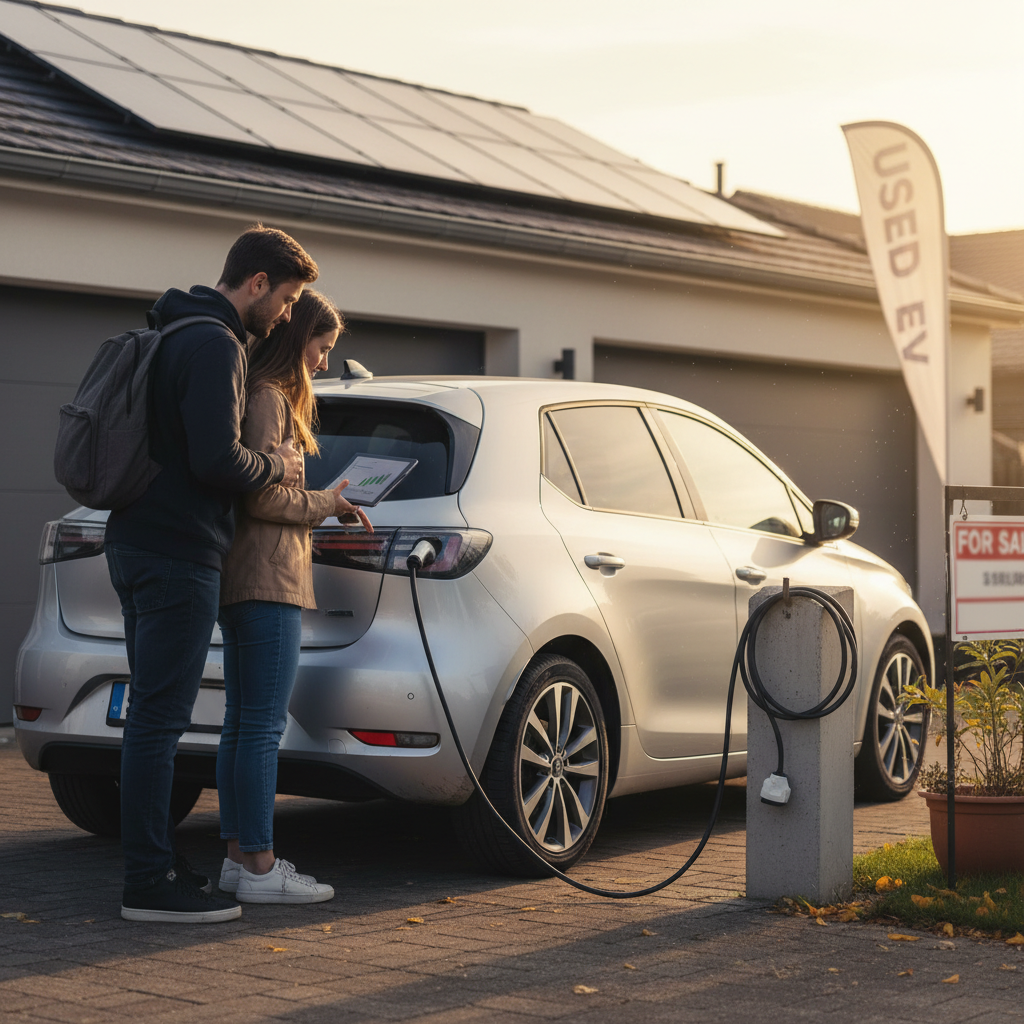
You absolutely can sell an electric car that still has a loan on it. People do it every day. The trick is understanding how the payoff, title, and timing work so you don’t end up writing a surprise check or leaving money on the table. In this guide, we’ll walk through exactly how to sell an electric car that still has a loan, what your options are, and how a used‑EV specialist like Recharged can simplify the whole process.
Good news
Can you sell an electric car that still has a loan?
Yes. When you sell an electric car with an outstanding loan, you’re really doing two things at once: selling the car and paying off the lender. The order and paperwork vary a bit depending on whether you trade in, sell to a dealer, or sell privately, but the core idea is the same: the loan must be paid so the title can transfer to the new owner.
- If your EV is worth more than your payoff, you have positive equity you can keep or roll into your next car.
- If your EV is worth less than your payoff, you have negative equity and will need to cover the difference or roll it into a new loan (if allowed).
- If the car is leased, the process is different, usually you’re buying out the lease first. This guide focuses on financed (loan) vehicles.
Check your state rules
Step 1: Know your payoff, value, and equity
Before you decide how to sell, you need three numbers: your payoff amount, a realistic market value, and your estimated equity. Those three will tell you which selling option makes sense, and which ones don’t.
Three numbers that matter before you sell
Payoff, value, and equity determine your best path
1. Loan payoff
Call or log in to your lender and ask for a 10–day payoff. That’s the amount you’d need to pay if you closed the loan within that window, including interest and any small fees.
2. Realistic EV value
Look up trade‑in and private‑party values on several sites, then compare to real used EV listings in your area. For a more EV‑specific view, you can also request an instant offer from a specialist like Recharged.
3. Your equity
Subtract payoff from market value:
Equity = Estimated sale price – Payoff
Positive = money in your pocket. Negative = you’ll need to cover the shortfall.
EV equity at a glance
Use an EV‑specific valuation
How selling an electric car with a loan actually works
If you’ve only ever owned paid‑off cars, the idea of selling a financed EV can feel backwards. You don’t have the title in your hand; the bank does. So how can you sell it? The key is that the buyer’s money is used to pay your lender, and any leftover (or shortfall) is settled at the same time.
Money and title flow, simplified
- You agree on a sale price with a buyer or dealer.
- Your lender provides an exact payoff quote good for several days.
- At closing, the buyer’s funds go directly to the lender (or via the dealer/marketplace).
- If the sale price is higher than payoff, you receive the difference.
- If the sale price is lower than payoff, you pay the difference.
- The lender then releases the title so it can be transferred to the new owner.
Who handles the details?
With a dealer or a marketplace like Recharged, their team typically:
- Contacts your lender for a payoff quote.
- Submits payoff funds and tracks the title release.
- Handles state paperwork and registration for the buyer.
In a private sale, you and the buyer arrange this yourselves, often closing at the lender’s branch or with a notary.
Why many sellers choose a pro
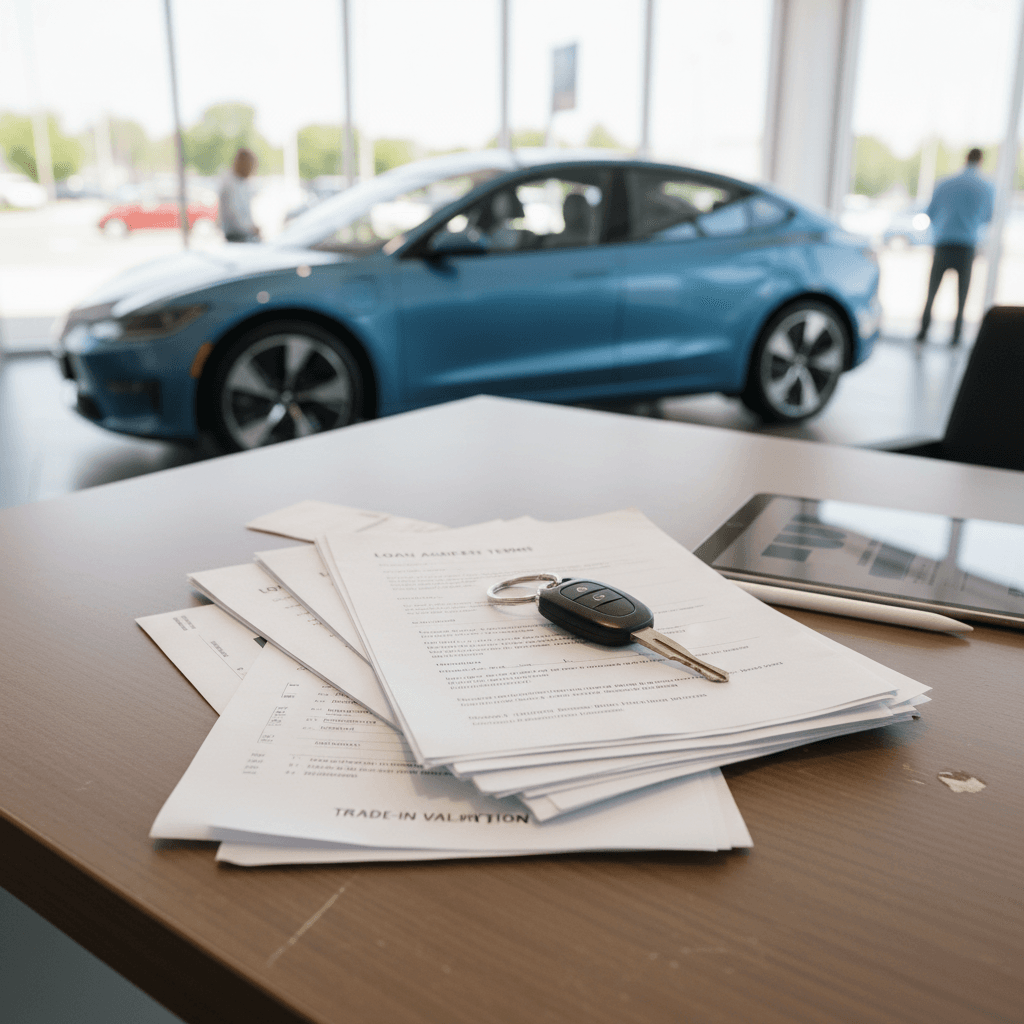
Four ways to sell an EV that still has a loan
Once you know your payoff and your electric car’s real market value, you can choose the selling route that fits your timeline, comfort level, and equity situation. Every option below can work with an outstanding loan, you’re just choosing who does the legwork.
Main options to sell a financed electric car
All can work with a loan; the differences are time, price, and hassle
1. Trade in to a dealer or EV retailer
Best for: Convenience, switching into another car, one‑stop transaction.
The dealer or retailer (like Recharged) appraises your EV, gets a payoff from your lender, and applies your equity (or negative equity) into the new deal. You usually hand over the keys and drive home in your next vehicle the same day.
2. Instant offer from an EV marketplace
Best for: Fast sale without buying another car.
Some companies will give you an instant offer for your EV, handle the payoff, and either cut you a check for your equity or have you pay the difference if you’re upside‑down. Recharged offers instant offers plus EV‑specific pricing based on battery health.
3. Consignment with an EV specialist
Best for: Getting closer to private‑party price without managing the sale yourself.
You leave the car with a specialist like Recharged to market, show, and sell it on your behalf. They coordinate with your lender when it sells, then settle the payoff and send you your proceeds.
4. Private‑party sale
Best for: Potentially squeezing the highest price out of the market.
You list the EV yourself, screen buyers, and agree on a price. Then you and the buyer work with your lender to pay off the loan and transfer title. It can net more money but adds time and risk, especially if you’re new to selling with a lien.
Compare your options: trade-in, instant offer, consignment, private sale
To decide between trading in your electric car, taking an instant offer, consigning it, or selling privately, look at three things: time, effort, and net dollars after your loan is paid.
How different ways to sell a financed EV stack up
Use this quick comparison to match your priorities to the right selling route.
| Option | Typical sale price | Who handles payoff & title | Time & effort for you | Best when… |
|---|---|---|---|---|
| Trade‑in to dealer/retailer | Lower than private‑party, but often competitive | Dealer or EV retailer | Very low – usually one appointment | You’re also buying another car and want a simple, same‑day swap |
| Instant offer (e.g., Recharged) | Competitive, often close to market | Marketplace (they pay your lender directly) | Low – online offer + one visit or pickup | You want to sell quickly and aren’t replacing the car right away |
| Consignment with EV specialist | Closer to private‑party | Specialist (they coordinate with lender when it sells) | Moderate – you leave car, they handle buyers | You’re willing to wait a bit longer to maximize value without doing the legwork |
| Private‑party sale | Highest, if you find the right buyer | You and the buyer work directly with lender | High – marketing, showings, paperwork | You’re comfortable handling payoff, paperwork, and meeting buyers |
Private‑party sales can bring the highest price, but professional options often make more sense once you factor in payoff complexity and time.
Where Recharged fits in
What if you owe more than your electric car is worth?
Negative equity, owing more on your loan than your EV is worth, isn’t rare, especially if you bought new, financed with little money down, or values in your segment have softened. The math can sting, but you still have options.
- Bring cash to closing. If your payoff is $28,000 and your car sells for $25,000, you’d bring $3,000 to cover the difference so the lender can release the title.
- Roll the negative equity into a new loan. Many lenders allow this if you’re buying another car and your credit supports it. You’ll be financing more than the new car’s price, which means higher payments and longer time to reach positive equity again.
- Wait it out. If you can, drive the EV longer while you pay down the loan or let the market catch up. This is often the most financially conservative choice.
- Maximize sale price. Present the car well, document battery health, and consider consignment with an EV specialist who can justify a stronger price to buyers.
Be careful rolling negative equity forward
Documents, timing, and how the money moves
Selling a financed electric car is as much about paperwork as it is about price. Getting your documents lined up ahead of time makes the hand‑off smoother, especially if you’re doing a private sale or working with an out‑of‑state lender.
Checklist: What you’ll need to sell an EV with a loan
1. Your loan payoff letter
Request a current payoff quote from your lender. Make sure it lists a good‑through date, includes any fees, and clarifies how they accept payoff (wire, cashier’s check, dealer portal, etc.).
2. Vehicle information
Have your VIN, current mileage, and your lender account number handy. You’ll need these for payoff, appraisals, and your bill of sale.
3. Registration and ID
Most buyers and dealers will ask for your current registration and a valid driver’s license. In some states, registration also confirms your name and address match the loan.
4. Any title or lien information
If you have a paper title with a lien holder listed, bring it. If it’s an electronic title, your lender or DMV will guide the release process once the loan is paid.
5. Service and charging records
Print or save receipts for maintenance, tire rotations, software updates, and any battery or charging work. EV buyers care about how the car has been treated.
6. Recharged Score or battery report
A battery‑health report, like a Recharged Score, helps justify your price, calms buyers’ fears, and can speed up the sale, especially if you’re selling privately.
How long does the payoff process take?
Dealers and marketplaces often wire payoff funds to your lender within one business day of your sale. Depending on whether your state uses electronic titles or paper, it can take anywhere from a few days to a few weeks for the title to be officially released and transferred.
The key for you: once your paperwork is signed and the car is handed over, you’re usually done. The business handling the sale tracks the payoff and title behind the scenes.
When do you get your money?
If you have positive equity and sell to a dealer or marketplace, you’ll normally get your portion at or shortly after closing, by check, ACH, or wire, depending on their process.
In a private sale, you and the buyer typically meet at the bank or credit union so funds can be verified, the lender is paid, and you receive any extra once the payoff is satisfied.
EV-specific tips when you’re selling with a loan
Selling any financed car involves payoff and paperwork, but electric vehicles add a few wrinkles buyers care about: battery health, range, and charging. Address those questions up front and you’ll have an easier time justifying your price and closing the deal.
- Lead with battery health. A transparent battery‑health report (like a Recharged Score) can be the difference between a nervous buyer and a confident one, especially in a private sale.
- Be honest about real‑world range. Share your typical daily driving and highway experience instead of only quoting EPA numbers.
- Gather charging accessories. Include your home charging cable, adapters, and any wallbox documentation you still have. Buyers notice when the charging kit is complete.
- Explain software and apps. Walk the buyer through app‑based features, over‑the‑air updates, and any subscriptions they’ll need to transfer or start.
- Highlight low maintenance. If you’ve avoided big ICE‑style expenses, oil changes, transmission work, etc., say so. It reinforces the value of your EV to the next owner.
How Recharged builds buyer confidence
Ready to find your next EV?
Browse VehiclesCommon mistakes to avoid when selling a financed EV
Most of the expensive mistakes people make when selling an electric car with a loan come down to rushing the math or skipping paperwork details. Here are traps to steer around.
Avoid these pitfalls
“The safest used‑EV deals happen when everyone can see the same honest picture of the car, battery, value, and payoff, before a single document gets signed.”
Frequently asked questions about selling an electric car with a loan
FAQs: Selling a financed electric car
Wrap-up: Choosing the best way to sell your financed EV
Selling an electric car that still has a loan isn’t about finding a magic workaround, it’s about knowing your payoff, understanding your real market value, and choosing the selling route that lines up with your life right now. Once you see your equity clearly, decisions that felt stressful start to look like simple math problems you can actually solve.
If you want a second opinion on what your EV is really worth, and how its battery health plays into that, consider getting a Recharged Score Report and exploring options like instant offer, trade‑in, or consignment through Recharged. However you decide to sell, take the time to understand your payoff, protect yourself on paperwork and payments, and you’ll hand off the keys with confidence instead of anxiety.