
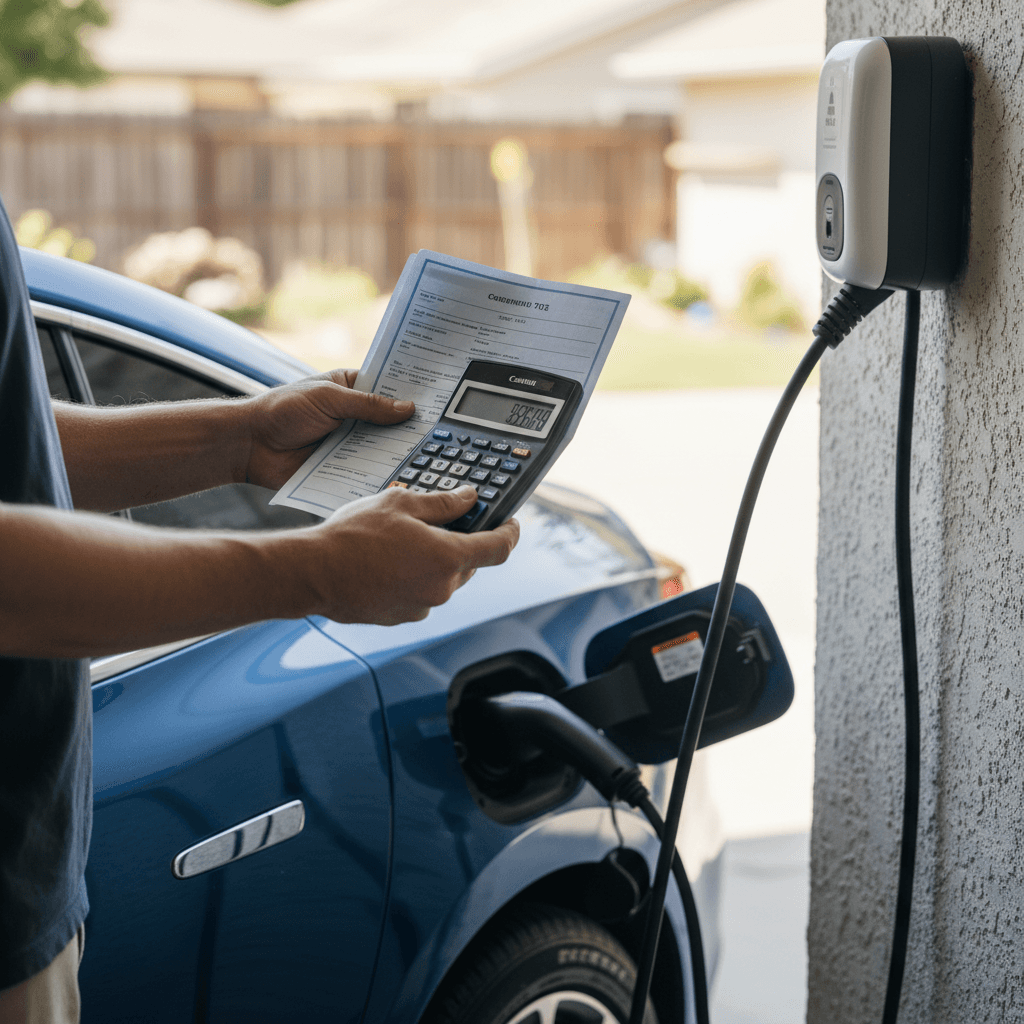
Thinking about selling your electric car and wondering about the tax implications? You’re not alone. Between EV tax credits, trade‑in rules, and capital gains, it can feel like you need a CPA riding shotgun just to list your car online. The good news: in most everyday situations, selling your personal electric car doesn’t create a huge tax bill, but there are important exceptions you should understand **before** you sign over the title.
Scope of this guide
Do you owe tax when you sell an electric car?
Let’s start with the question on everyone’s mind: **will I owe tax when I sell my EV?** If you bought the car for personal use and you’re selling it for less than you paid (which is usually the case, even in the EV world), you typically **won’t owe federal income tax** on the sale itself. The IRS does not tax **personal losses** on things like cars. However, if you somehow sell your electric car for more than your tax basis, maybe you snagged a crazy deal in 2020 and the used market spiked, you could have a **capital gain**, and that can be taxable.
Quick takeaways when selling an electric car
Key idea
How the IRS sees your electric car
For most people, an electric car is a **personal‑use asset**, like a couch with a VIN. You don’t get to deduct its decline in value, and you don’t report a loss when you sell it for less than you paid. You only report a sale to the IRS if there’s a **taxable gain** or if the car was used for business and you claimed deductions or depreciation.
Personal‑use EV
- Used primarily for commuting, errands, personal trips
- No depreciation deduction during ownership
- If you sell for less than what you paid, you don’t report the loss
- If you sell for more than your tax basis, the gain is usually a capital gain
Business or rideshare EV
- Used for Uber, Lyft, deliveries, or as a company vehicle
- You may have claimed depreciation or the standard mileage deduction
- Sale can trigger depreciation recapture and capital gain or loss
- Rules are more complex, usually worth a conversation with a tax pro
Mixed‑use warning
Capital gains rules when you sell an EV
Capital gains rules for electric cars are the same as for any other capital asset. If you sell the car for more than your **adjusted basis** (roughly, what you paid minus some adjustments), the difference is a **gain**. Whether that gain is short‑term or long‑term depends on how long you held the car.
Capital gains basics for EV sellers
Three questions determine whether you owe tax on the sale.
1. What’s your basis?
Your basis generally starts as your purchase price, including taxes and fees. If you claimed a federal EV tax credit, that effectively reduces your after‑tax cost, but the IRS does not explicitly say you must lower the car’s basis by the credit. Many tax pros still treat your cash price as the basis for simplicity, ask your preparer how they handle it.
2. What’s your sale price?
This is the total amount you receive for the car: the buyer’s payment minus selling costs like marketplace fees. In a trade‑in, you can think of the “price” as the value your dealer gives you for the old car.
3. Did you make a profit?
If sale price > basis, the difference is a capital gain. If you held the EV for more than a year, it’s usually a long‑term capital gain, which may be taxed at a lower rate than your regular income.
Yes, gains on cars can happen
Remember, the IRS cares about **gains**, not what feels fair. If you bought a low‑mileage Nissan Leaf cheap during a demand slump and sold two years later for more than your all‑in cost, that difference is, in theory, a taxable capital gain, even if you swear you “lost” money compared to some imaginary MSRP.
How EV tax credits affect your sale
The federal EV tax credits under the Inflation Reduction Act have created a weird psychological split: what you **paid** versus what the car effectively cost you after tax season. That raises a natural question: when you sell the EV later, does the old tax credit come back to haunt you?
- The federal clean vehicle credit is generally a benefit tied to the **year you bought** the car, not the year you sell it.
- You typically do **not** have to “pay back” the credit simply because you sold the vehicle, as long as you met the original qualification rules (for example, using the car primarily in the U.S., not violating income limits, etc.).
- If you claimed a credit on a car you actually weren’t eligible for, wrong income, vehicle doesn’t qualify, or you flipped it immediately as inventory, that’s a different story. The IRS can disallow the credit and bill you for additional tax, interest, and penalties.
- For most normal EV owners, selling the car years later doesn’t change the fact that you legitimately took a credit in a prior year. The sale is analyzed on its own: sale price vs. your basis.
Did the credit reduce your basis?
Trade‑in vs private sale: tax differences
When you’re ready to move on from your EV, you have two big options: **trade it in** to a dealer (or a service like Recharged’s instant offer or consignment), or **sell it privately**. The price might be different, but so are the tax side‑effects, especially when you’re buying another car.
Trade‑in vs private sale: how taxes compare
How selling your electric car through different channels can affect the taxes and fees you pay.
| Factor | Dealer Trade‑In | Private Sale | Selling via Marketplace/Consignment |
|---|---|---|---|
| Sale price | Often lower than private sale | Usually higher if you find the right buyer | Similar to private sale; platform may charge fees |
| Sales tax on next car | Many states tax only the difference between new car price and trade‑in value, potentially big savings | Usually pay sales tax on full price of the replacement car | Same as private sale; no trade‑in credit |
| Income tax on sale | Same capital gains logic; rare for personal‑use car | Same capital gains logic; rare for personal‑use car | Same rules; just more documentation |
| Paperwork | Dealer often handles payoff, title, and forms | You handle everything with the buyer and DMV | Platform may assist with paperwork and payment |
| Speed & effort | Fast and simple, potentially less money | More effort, photos, messages, test drives | Middle ground, more exposure, somewhat streamlined |
Details vary widely by state, but this table captures the most common patterns U.S. sellers see.
Where Recharged fits in
State and local taxes when you sell an EV
Federal income tax is only half the story. When you sell or trade your electric car, **state and local governments** may treat the transaction differently from an everyday purchase at the mall.
Common state‑level tax issues
These don’t all apply everywhere, but they’re worth checking before you finalize the deal.
Sales tax on used cars
In many states, the buyer owes sales tax when they register the vehicle, based on the purchase price. As the seller, you usually don’t collect or remit this tax in a private sale, but your buyer will care a lot about it.
Trade‑in tax credit
Several states reduce the taxable price of a new car by the amount of your trade‑in. This can make a dealer trade‑in more attractive even if the offer is a bit lower than a private sale.
Local quirks & EV fees
Some states and cities have extra registration fees for EVs, special documentation rules, or occasional EV incentives. None of these typically change your federal income tax, but they can change the net value of your deal.
Check your DMV and state revenue sites
1099‑K forms, marketplaces and paper trails
Thanks to evolving IRS reporting rules, you might see a **Form 1099‑K** in the mail if you sell your EV through a large online marketplace or use a payment app for the transaction. This form reports **gross payments** processed, not your profit, and not whether the sale is taxable.
If the amount on a 1099‑K includes the proceeds from selling your car, don’t panic. The form doesn’t magically make your sale taxable. It just means the IRS now has a data point. You’ll want good documentation, bill of sale, proof of what you originally paid, so that if your tax preparer needs to reconcile the 1099‑K, they can show there was **no taxable gain** (or calculate the correct gain if there was one).
Important nuance
Recordkeeping: what to save and why
When you sell an electric car, your future self, the one doing taxes next spring, will thank you for being a little obsessive about paperwork today. Good records make it easy to show that your sale either wasn’t taxable or to calculate any gain accurately.
Documents to keep when you sell an EV
Original purchase documents
Save the purchase agreement, bill of sale, and any documentation of dealer fees, taxes, or add‑ons. Together, these show your all‑in cost when you bought the car.
Financing and payoff statements
If you had a loan, keep paperwork showing how much you borrowed and your payoff amount when you sold or traded in. It helps reconstruct the economics of the deal if questions arise.
EV tax credit records
Hang onto the tax return where you claimed a federal or state EV credit, plus any dealer or IRS forms related to that credit. This is especially useful if the IRS ever asks how you qualified.
Sale or trade‑in documents
Keep the bill of sale, trade‑in agreement, or consignment contract that shows what you received for the car and any selling fees or commissions deducted.
Mileage and usage records (if any business use)
If you used the EV for rideshare or business, preserve your mileage logs and prior‑year tax returns showing how you claimed deductions or depreciation.
Correspondence with marketplaces or platforms
If you sold through a marketplace or payment app, save email confirmations and payout statements. They can help reconcile a 1099‑K later.
How long should you keep this stuff?
Special case: selling an EV used for business or rideshare
If your electric car has lived a double life, family hauler by day, Uber or DoorDash workhorse by night, the tax rules get more interesting. The IRS treats vehicles used in a **trade or business** very differently from purely personal cars.
When your EV counts as business property
- You used the car regularly for Uber, Lyft, Instacart or deliveries
- You claimed the standard mileage deduction or actual expenses on Schedule C
- Your company owns the EV and deducted depreciation
What happens when you sell
- You may have to recognize gain or loss on the business portion of the car
- Prior depreciation can be "recaptured" and taxed as ordinary income
- The personal‑use portion is still treated like any other personal car
This is CPA territory
Step‑by‑step checklist before you sell
Taxes shouldn’t stop you from getting a fair price for your EV, but they should influence **how** you sell and what documentation you keep. Use this checklist as a pre‑sale pit stop.
Pre‑sale checklist: avoid tax headaches later
1. Confirm how you used the EV
Was it purely personal, purely business, or mixed‑use? The answer changes the tax treatment. If there’s any business use, gather your prior tax returns and mileage logs.
2. Gather purchase and financing records
Pull your original purchase agreement, payoff documents, and any add‑ons you rolled into financing. You’ll need these to understand your basis and any potential gain.
3. Decide where to sell
Compare dealer trade‑in offers, instant‑offer services like Recharged, and private‑sale estimates. Consider not just the price, but also sales‑tax savings on a trade‑in and your time and risk tolerance.
4. Check state rules
Visit your state’s DMV and tax websites to understand how used vehicle sales, trade‑ins, and EVs are treated. Look for sales tax, documentation fees, and any EV‑specific quirks.
5. Plan how you’ll get paid
If you’re using a marketplace or payment app, know that a Form 1099‑K might appear later. Keep clean records so your tax preparer can show what portion, if any, was actually taxable.
6. Save everything in one digital folder
Scan or photograph your key documents and drop them in one folder labeled with the car’s VIN and sale date. When tax season arrives, you’re one email away from clarity.
FAQs about selling an electric car and taxes
Frequently asked questions
Bottom line: how to sell smart and avoid tax surprises
Selling your electric car doesn’t have to mean inviting the IRS into your garage. For most everyday owners who bought an EV for personal use and sell it for less than they paid, the **tax implications are minimal**: no deductible loss, but also no income tax due. The real work is in keeping clean records, choosing the right selling channel, and understanding where state sales tax and EV credits fit into the picture.
If your situation is more complex, business use, rideshare, or a rare case where you made money on the sale, loop in a tax professional before you file. And if you want a straightforward way to value and sell your EV, consider letting **Recharged** do the heavy lifting. With expert EV support, financing options, trade‑ins and consignment, plus a transparent Recharged Score Report on every car, you can move into your next electric ride with confidence, and without tax‑time drama.