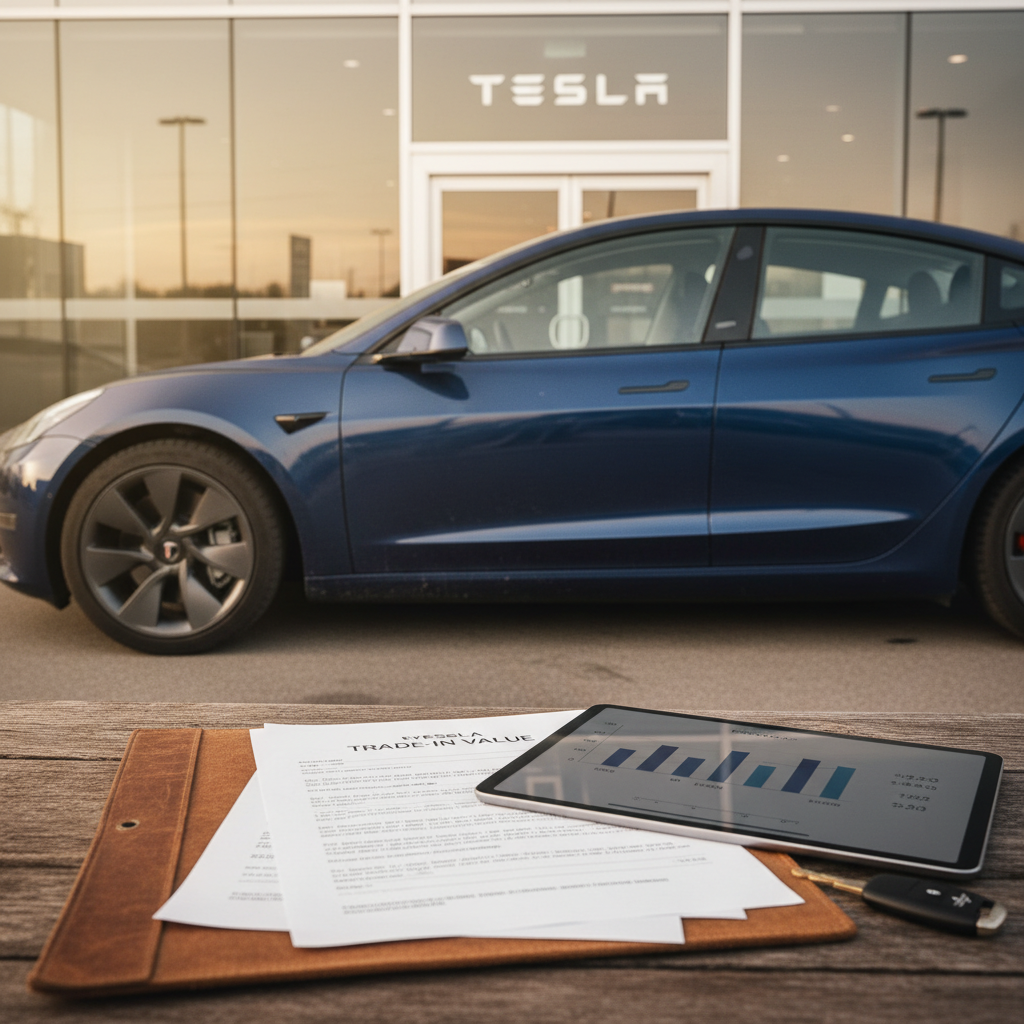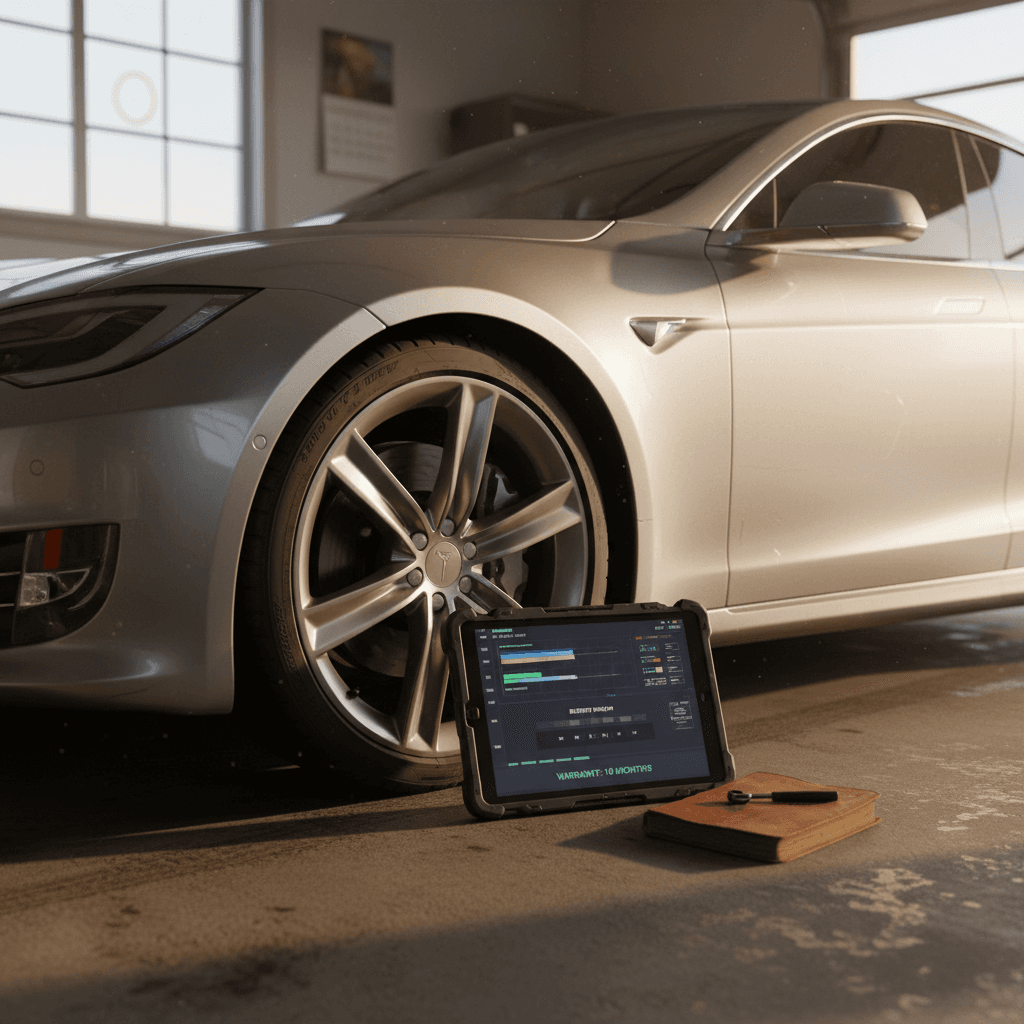
If you own an electric car, you’ve probably wondered whether you should sell your electric car before the warranty expires, especially the battery warranty. With EV prices swinging, incentives shifting, and battery tech improving fast, timing your sale can easily mean thousands of dollars gained or lost. This guide breaks down how warranties, battery health, and market trends interact so you can decide whether to sell, trade, or keep your EV with confidence.
Key idea in 30 seconds
How EV Warranties Work, and Which Ones Buyers Care About
Before you decide when to sell, it helps to understand the different warranties attached to your electric car. Buyers care most about the high-voltage battery and drive-unit warranties, but those aren’t the only ones affecting value.
- Bumper-to-bumper (basic) warranty: Typically 3–4 years or around 36,000–50,000 miles on new EVs. Covers most components except wear items. Once this is gone, buyers assume they’re on the hook for electronics, interior tech, and minor issues.
- Powertrain / drive-unit warranty: Covers the electric motor(s), gear reduction, and related hardware. Often similar in length to the battery warranty or slightly shorter.
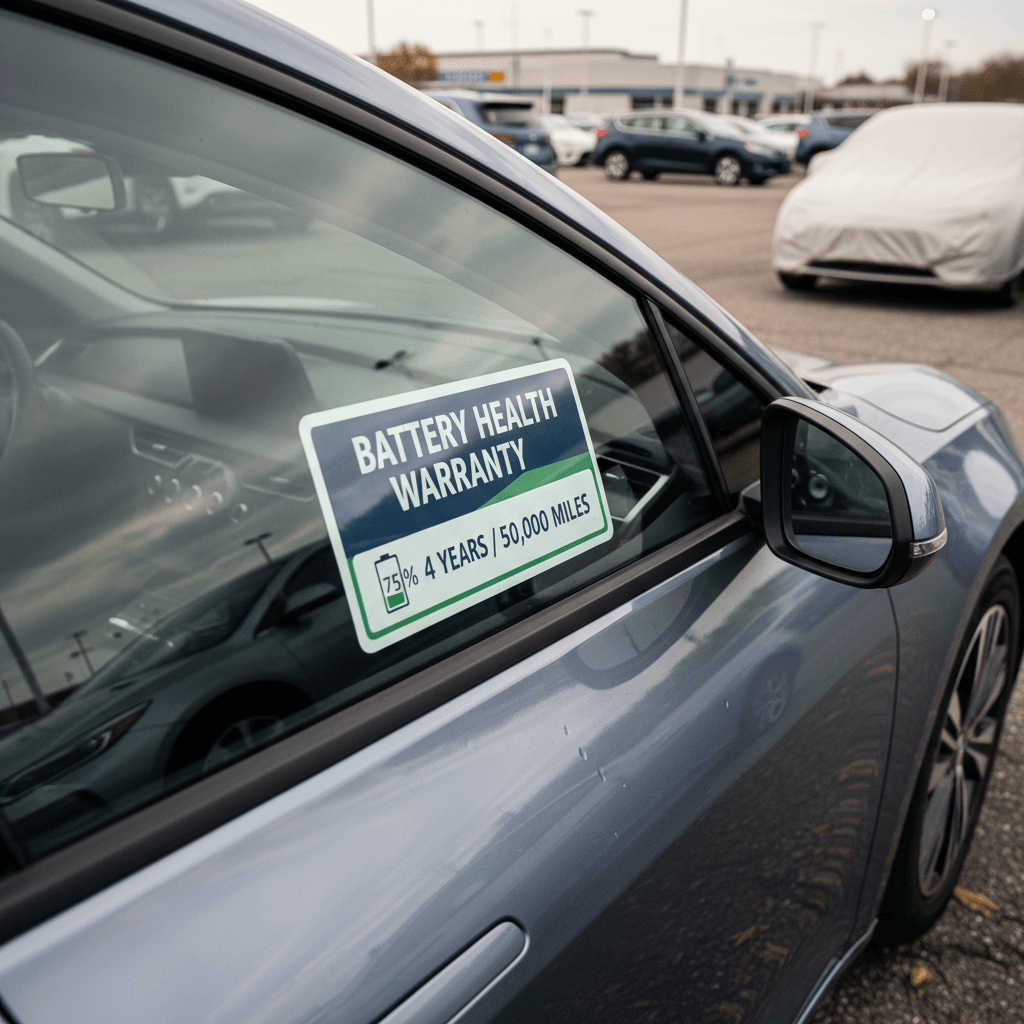
- High-voltage battery warranty: In the U.S., federal rules effectively push manufacturers to cover EV batteries for at least 8 years or 100,000 miles on new vehicles, with California and a few other states requiring up to 10 years/150,000 miles on certain models. Many brands match or exceed these baselines for marketing reasons.
- Corrosion and emissions warranties: Important, but they rarely drive buying decisions in the used EV market unless the vehicle lives in rust-prone areas.
- Extended warranties and CPO coverage: Some OEMs and third parties offer additional coverage, but these matter only if they are transferable and clearly documented for the next owner.
Watch the fine print
Why Warranty Coverage Matters So Much for Resale Value
EV batteries are still the single most expensive component in an electric car. Replacement packs can run well into five figures depending on the model, which is why remaining warranty coverage is such a powerful signal to used buyers and lenders.
How Warranties Influence Used EV Value
When an EV is comfortably inside its battery and drive-unit warranty, buyers mentally discount the worst-case scenario: that they might face a big repair bill. Once coverage is gone, or confusing, many shoppers either demand a steep discount or skip the car entirely. That’s why some owners aim to sell their electric car before the warranty expires, particularly if they plan to move into a newer EV anyway.
Think like a buyer
Best Timing Windows to Sell Your EV
Warranty dates are only one part of the timing question. Depreciation, model updates, and broader EV market swings all play a role. Still, there are a few common “windows” that tend to work well for many owners.
Common Timing Strategies for Selling an EV
How warranty, age, and market trends intersect
Early “flip” (1–3 years)
Best for: Early adopters chasing the latest tech or tax credits.
- Car still under full basic and battery warranty.
- Usually low miles and minimal degradation.
- Downside: You eat the steepest part of depreciation but can sometimes offset it with high used demand.
Mainstream sweet spot (3–6 years)
Best for: Owners who want strong resale value without replacing cars constantly.
- Battery warranty usually has 2–5 years left.
- Car often past biggest new‑EV price cuts and software bugs.
- Attractive balance for used buyers: modern features, warranty safety net, and lower price.
Pre‑warranty‑expiry (6–8+ years)
Best for: Risk‑averse sellers worried about post‑warranty repair exposure.
- Car approaching the end of battery coverage.
- Used shoppers still get some warranty runway.
- Good moment to exit if you’d lose sleep over a potential out‑of‑warranty pack repair.
Don’t ignore model updates
Compelling Reasons to Sell Before the Warranty Expires
There’s no one-size-fits-all answer, but several scenarios make a strong case for selling or trading your EV before the high-voltage battery warranty runs out.
When Selling Before Warranty Expiry Makes Sense
1. You’re already eyeing a newer EV
If you’d like more range, faster DC fast‑charging, or the latest driver‑assist tech, waiting until after the warranty expires rarely improves your financial position. You give up remaining warranty value while continuing to rack up miles and age.
2. Your battery health is borderline but still covered
If diagnostics show more degradation than typical for your age and mileage, selling while you can still get warranty repairs, or at least document health clearly, helps you avoid being the one holding the bag if the pack needs attention later.
3. You drive high annual mileage
High‑mileage drivers hit warranty mileage caps much sooner than the calendar date. If you’re on pace to cross 100,000 miles in year 5 or 6, it can be smarter to sell with 10,000–20,000 miles of coverage left instead of running right up to the edge.
4. Your model is losing ground to new tech
If your EV launched with competitive range but now looks dated compared with similar‑size models, used buyers will compare it directly. Selling before the gap widens further can preserve value, especially if the next generation adds big gains.
5. You’re uncomfortable with out-of-warranty risk
Some owners simply prefer predictability. If the idea of a big repair risk, even if unlikely, bothers you, there’s nothing wrong with timing your sale before major coverage ends and rolling into a newer EV with a fresh clock.
Don’t dump a car just to “stick” the next buyer
Good Reasons to Keep Your EV After the Warranty Ends
On the flip side, not everyone should sell their electric car just because the warranty calendar is coming up. In many cases, keeping a well‑maintained, paid‑off EV is cheaper than swapping into something newer.
Battery health still looks strong
Emerging real‑world data from fleet studies shows modern EV packs often degrade slowly when treated well, with average annual loss in the low single digits. If your state of health is still high, your real‑world range meets your needs, and you haven’t seen sudden drops, there’s no mechanical reason to bail out the day the warranty lapses.
In other words, the battery doesn’t know what date is on the calendar. Warranty end is a paperwork milestone, not an automatic failure point.
Your total cost of ownership is low
Once a car is paid off, even moderate depreciation hurts less than a new monthly payment. Insurance, registration, and taxes are often lower on an older EV, and routine maintenance remains modest compared with many gas vehicles.
If your lifestyle hasn’t changed and the car still fits your daily driving pattern, keeping it for several years beyond the warranty can be the cheapest option, even if resale value on paper looks muted.
- You mostly charge at home and don’t need the latest fast‑charging curve.
- You’re okay with some cosmetic wear and older infotainment, as long as the car is reliable.
- Your annual mileage has dropped, so you’re less likely to stress the pack heavily in the coming years.
- You’d rather invest in retirement, savings, or a home project than roll equity into another vehicle.
A realistic middle path
How to Check Your Battery Health Before Selling
Regardless of when you sell, one of the smartest moves you can make is to document your battery’s state of health (SOH). Buyers expect more than a guess; they want evidence. That’s also where platforms like Recharged lean in with objective diagnostics.
Battery Health Checklist Before Listing Your EV
1. Pull built-in battery data
Many EVs display rated range at 100% charge or a battery health percentage in the onboard menus. Record this data with date, mileage, and photos. While not perfect, it gives buyers a baseline view tied directly to your car.
2. Use brand-specific or third-party diagnostics
Some manufacturers offer official health checks through dealers. There are also independent tools and services that read deeper pack data. A professional report with SOH, cell balance, and charge history can be a powerful selling tool.
3. Gather charging history and habits
If you’ve done most charging at Level 2, avoided frequent 100% fast charges, and kept the car out of extreme heat when possible, say so, and back it up with app screenshots when available. Buyers know these habits support battery longevity.
4. Check for open recalls or software updates
Several EVs have had battery‑related software campaigns or pack replacements. Make sure your car is up to date. If a recall resulted in a new or refurbished pack, that’s a major selling point if documented properly.
5. Verify warranty terms and transferability
Print or download the battery and drive‑unit warranty language for your exact model year. Confirm whether coverage is fully transferable to the next owner and whether any conditions (like salvage title) would void it.
6. Get an independent condition report if you’re unsure
If you’re not comfortable interpreting battery data, consider using a marketplace like Recharged that provides a <strong>Recharged Score battery health report</strong>. Objective third‑party documentation reduces back‑and‑forth and boosts buyer confidence.
Maximizing Value When You Sell or Trade In
If you decide to sell your electric car before the warranty expires, the goal is simple: make your car the low‑risk, high‑clarity option in a shopper’s search results. That starts with how you present warranty and battery information, but it doesn’t end there.
Selling Options for Your EV (Before Warranty Ends)
How different sale paths handle pricing, hassle, and battery transparency.
| Option | Pros | Cons | Best For |
|---|---|---|---|
| Dealer trade-in | Fast, convenient, tax-credit friendly in many states; no dealing with strangers. | Lower offers; battery health often undervalued if dealer isn’t EV-savvy. | Owners upgrading to another new or used vehicle soon. |
| Instant offer / EV marketplace | Quick quotes, EV-focused pricing, often remote inspection and pickup. | Offer may be below private-party peak pricing; watch fees. | Sellers who value speed and safety over squeezing every last dollar. |
| Consignment with specialist | Professional marketing, wider reach, help explaining warranty and battery health. | Takes longer; consignment fee or margin cut. | Well-kept EVs with good warranty runway and strong battery health that deserve a premium audience. |
| Private-party sale | Potentially highest price if you market warranty and battery health well. | More time, test drives, fraud risk, paperwork on you. | Experienced private sellers in hot EV markets comfortable screening buyers. |
No single channel is best for every seller, match the approach to your timeline, risk tolerance, and comfort with paperwork.
Bundle value the smart way
How Recharged Helps When You’re Ready to Sell
If you don’t want to navigate all this alone, a specialist used‑EV marketplace can do the heavy lifting. Recharged is built specifically around battery health, transparent pricing, and a smoother selling experience for owners and buyers.
Ways Recharged Supports Your Sell-or-Keep Decision
Data, diagnostics, and a sale path that fits your goals
Recharged Score battery report
Every vehicle sold through Recharged includes a Recharged Score Report, which verifies battery health and provides context on degradation. That’s a big credibility boost if you list your EV before the warranty expires, and still valuable afterward.
Fair market pricing tools
Recharged tracks real‑world used EV transactions and adjusts for battery health, remaining warranty, mileage, and trim. That helps you avoid underpricing a healthy, warrantied EV, or overpricing one with more wear.
Flexible selling paths & nationwide buyers
Whether you want an instant offer, trade‑in, or consignment‑style listing, Recharged gives you options, plus nationwide delivery and support from EV specialists who speak the language of warranties and range, not just generic used cars.
Ready to find your next EV?
Browse VehiclesPrefer to talk in person?
FAQ: Selling Before Your EV Warranty Expires
Common Questions About Selling Before EV Warranty Expiry
Bottom Line: Should You Sell Now or Wait?
Deciding whether to sell your electric car before the warranty expires comes down to three levers: battery health, your personal risk tolerance, and what’s happening in the EV market. If your battery report looks good, the car still fits your life, and the payment is comfortable, or gone, there’s no ticking time bomb when the warranty clock hits zero. On the other hand, if you’re ready for newer tech, uncomfortable with rare but expensive repair risk, or staring at a great deal on your next EV, selling before warranty expiry can be a smart move.
Wherever you land, make your decision with data, not fear. Document battery health, confirm warranty terms, and get real offers before you commit. If you want help reading the tea leaves, or you’re ready to sell, Recharged can provide a verified battery health report, fair market pricing, and a sale path that matches your priorities, whether that’s maximum dollars, minimal hassle, or a painless trade into your next EV.