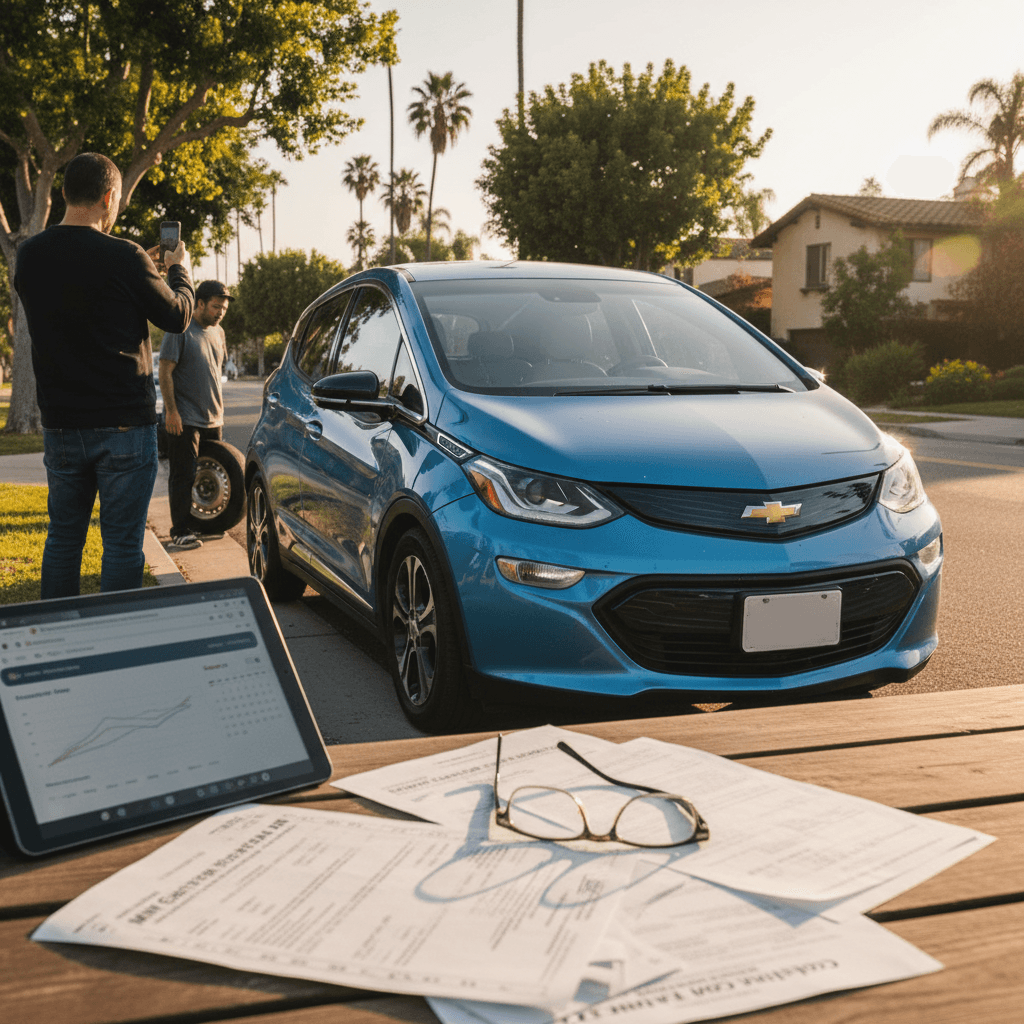
If you’re looking to sell a Chevrolet Bolt EV in California, you’re in an interesting spot. The state still leads the nation in EV adoption, but new EV sales cooled a bit in 2025 while the used electric market picked up momentum. That means there are plenty of buyers for a well‑priced, well‑documented Bolt, especially if you present its battery health and history the right way.
Why this guide is different
Why California is a strong market for your Bolt EV
California still has the largest EV fleet in the country and continues to add hundreds of thousands of plug‑in vehicles to the road each year. Even though new EV registrations softened a bit in late 2025, used EV inventory became more attractive and affordable, creating a stronger secondary market for shoppers who were priced out of new models. For a compact, efficient hatchback like the Bolt EV, that translates into solid buyer interest, especially in dense, urban coastal markets where parking is tight and fuel costs are high.
California’s EV landscape at a glance
For you as a seller, the key message is this: demand hasn’t disappeared. It has shifted toward value. Buyers are looking more carefully at price, battery life, and charging costs. If you can speak clearly to those three points, your Bolt will stand out in a crowded California marketplace.
Think like a value shopper
How much is my Chevrolet Bolt EV worth in California?
Chevrolet Bolt EV pricing in 2026 depends on model year, mileage, battery history, and recall status. Earlier Bolts took a resale‑value hit during the high‑profile battery recall years, but the market has become more rational as buyers better understand which cars have brand‑new or remanufactured packs and how that affects long‑term value.
Main factors that drive Bolt EV value
Know what buyers and appraisers care about in California
Model year & trim
Newer Bolts (2022–2023) and Bolt EUVs typically command higher prices, especially with options like Super Cruise or DC fast‑charge capability.
Odometer mileage
California shoppers expect some freeway miles. Clean, documented highway use with regular service can still sell well even at higher mileage.
Battery & recall status
Cars with documented replacement packs or recall completion can sometimes sell for more than similar‑age Bolts that never received a new battery.
Typical Chevy Bolt EV value bands in California
These broad bands give you a starting framework. Always confirm with current market data and a battery‑health report.
| Vehicle profile | Example years | Miles | Market position |
|---|---|---|---|
| Early Bolt EV, original pack, base trim | 2017–2018 | 80k–120k+ | Typically trades at the lower end of the market; value depends heavily on battery health. |
| Early Bolt EV with documented replacement battery | 2017–2019 | 60k–120k | Often priced in the mid‑range because a fresher pack offsets age. |
| Mid‑cycle Bolt EV with good history | 2019–2021 | 40k–80k | Solid "sweet spot" for value shoppers, modern features with acceptable range and price. |
| Latest‑generation Bolt EV/EUV, well‑equipped | 2022–2023 | Under 40k | Commands the strongest prices, especially EUV models with driver‑assist options. |
Price expectations vary widely by condition, options, and mileage; think of this table as directional, not definitive pricing.
Don’t anchor on national averages
Battery health: the number one factor in Bolt EV resale
With any used EV, but especially with a compact like the Bolt EV, usable range is what buyers are really paying for. That makes your high‑voltage battery the star of the show. Two cars with the same odometer mileage can be worth very different amounts if one still delivers close to its original range and the other has lost a noticeable chunk of capacity.
What California buyers want to see
- Documented battery health instead of vague "range feels fine" claims.
- Proof the GM battery recall work was completed, if applicable.
- Charging habits that suggest the pack hasn’t been abused, moderate DC fast‑charge use and regular Level 2 home charging.
How to show it confidently
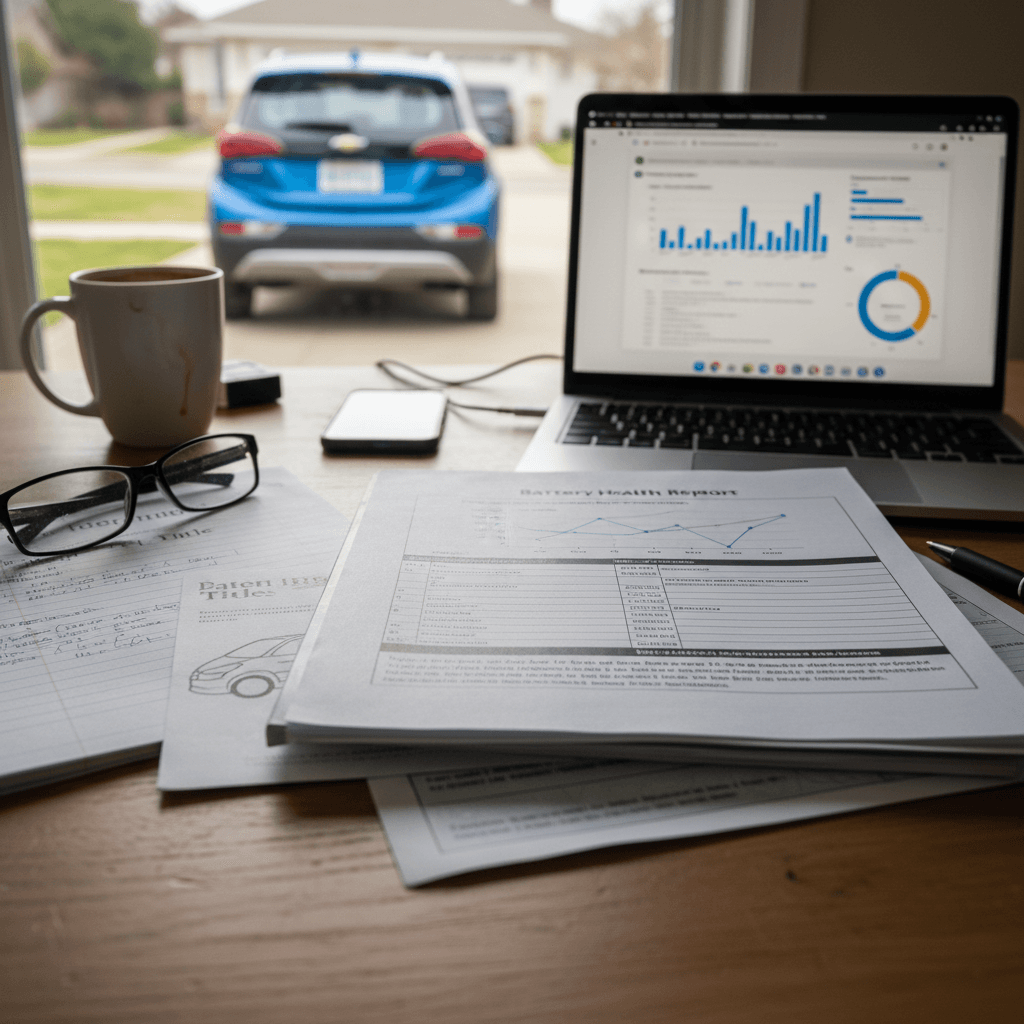
- Get a professional battery health report (such as the Recharged Score) instead of relying on dash estimates alone.
- Gather service and recall records from a Chevrolet dealer or your records.
- Take clear photos or screenshots of range estimates at a known state‑of‑charge as supporting evidence.
Leverage a Recharged Score report
Best ways to sell a Chevrolet Bolt EV in California
You have four main routes to sell a Chevrolet Bolt EV in California: private party sale, trade‑in at a dealer, instant online offer, or listing with an EV‑focused marketplace like Recharged. Each option strikes a different balance between price, time, and hassle.
Compare your Bolt EV selling options
Price, convenience, and EV expertise all matter
Private party sale
Pros: Often yields the highest selling price if you’re patient, especially in EV‑savvy California metros.
Cons: You field calls, vet buyers, manage test drives, and handle the DMV work yourself.
Best for: Owners comfortable with marketing, negotiation, and safety logistics.
Dealer trade‑in
Pros: Fast and simple, roll your Bolt’s value into your next car purchase the same day.
Cons: Offers can be conservative, and some dealers still undervalue EVs or shy away from earlier Bolts.
Best for: Convenience‑first sellers who prioritize time over top‑dollar.
EV‑focused marketplace (Recharged)
Pros: Tailored to used EVs, with tools like battery‑health diagnostics, fair‑market pricing, financing, and nationwide buyers.
Cons: You’ll follow a guided selling process instead of a quick one‑and‑done dealership visit.
Best for: Sellers who want expert help presenting and pricing an EV, without losing thousands in value.
Instant online offer
Pros: Fastest path to cash; you get a number in minutes from large online retailers.
Cons: Algorithms may not fully credit a fresh battery or rare options, and re‑inspection can reduce the final offer.
Best for: Situations where speed matters more than every last dollar.
Where Recharged fits in
Step-by-step checklist to get your Bolt ready to sell
Pre‑sale prep for your Chevrolet Bolt EV
1. Confirm recall and service history
Contact a Chevrolet dealer or log into your GM account to verify that all recalls, especially any battery‑related campaigns, are complete. Gather service invoices showing regular maintenance like tire rotations and brake checks.
2. Get a battery health assessment
Arrange a <strong>professional battery diagnostic</strong>, such as the Recharged Score, to document remaining capacity and estimated real‑world range. This can materially improve buyer confidence and support a stronger price.
3. Clean, detail, and fix the small stuff
In California’s competitive used‑EV scene, appearance matters. Wash, wax, and detail the interior. Replace inexpensive items like wiper blades, burned‑out bulbs, and a cracked charging‑port door if needed.
4. Photograph your Bolt like a pro
Shoot photos in good daylight on a clean street or driveway. Capture all four corners, interior, cargo area, wheels, tires, charge port, and infotainment screens. Include close‑ups of any flaws so buyers see you’re being honest.
5. Prepare a simple spec & range sheet
List your Bolt’s key specs, model year, trim, EPA range when new, typical range at 80–90% charge today, and your usual charging patterns. Buyers appreciate a one‑page summary they can scan in seconds.
6. Decide on your minimum acceptable price
Based on current California listings, guidebook values, and your battery health report, pick a realistic asking price and a private "walk‑away" number. This keeps negotiations grounded and prevents emotional decisions in the moment.
Don’t skip battery documentation
Paperwork you need to sell a Bolt EV in California
California has clear requirements for transferring any used vehicle, and EVs are no exception. Having your documents ready before you list the car will make the sale feel seamless to buyers and help you avoid DMV surprises.
- California Certificate of Title, signed by all owners listed (or lien release if there’s a loan payoff).
- A completed bill of sale or sale agreement with price, date, and odometer reading.
- Valid smog exemption documentation, if requested. (Most pure EVs like the Bolt are exempt, but confirm current rules before you sell.)
- Odometer disclosure statement, usually part of the title or bill of sale forms.
- Service and recall records, including battery recall completion proof if applicable.
- Your battery‑health or Recharged Score report, printed or saved as a shareable PDF.
DMV and tax details change
Common pricing mistakes California Bolt sellers make
Even in an EV‑savvy state, it’s easy to miss the mark when you set an asking price for your Chevrolet Bolt EV. Aim too high and your listing sits. Aim too low and you leave real money on the table, especially if your battery is in excellent shape.
- Ignoring battery condition and pricing strictly by year and miles.
- Copying a single high listing from your zip code instead of looking at what actually sells.
- Forgetting to account for a brand‑new or low‑mileage replacement pack after a recall.
- Setting one price for every selling channel instead of adjusting slightly for trade‑in vs. private sale.
- Dropping the price aggressively after a week, when EV shoppers often research for several weeks before pulling the trigger.
Use a range, not a single number
How Recharged helps you sell a Chevy Bolt EV
Selling a used EV isn’t the same as selling a gas car. Range anxiety, battery myths, and fast‑changing incentives all weigh on buyers’ minds. Recharged was built specifically to make buying and selling used EVs simple and transparent, and that’s especially true for models like the Chevrolet Bolt EV and Bolt EUV.
What Recharged can do for California Bolt sellers
Tools and support tailored to used EVs
Recharged Score battery diagnostics
We test and document your Bolt’s real‑world battery health, then package that into an easy‑to‑understand Recharged Score report that you can share with buyers.
Fair market pricing guidance
Recharged analyzes recent sales, California‑specific demand, and your vehicle’s battery condition to help you land on transparent, data‑backed pricing.
Multiple ways to sell
Choose from financing‑ready marketplace listings, trade‑in, consignment, or instant offer options, backed by EV‑specialist support from first quote to final paperwork.
Nationwide delivery & reach
Recharged isn’t limited to your local zip code. Nationwide visibility and delivery open your Bolt up to more shoppers who specifically want an efficient EV commuter.
EV‑specialist guidance
Our team lives and breathes EVs. We can walk you through battery questions, tax‑credit considerations, and how to present your Bolt’s strengths clearly.
Fully digital experience
From valuations and paperwork to payment and logistics, Recharged offers a streamlined, mostly digital process that fits your schedule, no dealer back‑and‑forth required.
Ready to find your next EV?
Browse VehiclesTurn your Bolt EV into your next EV
FAQs about selling a Chevy Bolt EV in California
Frequently asked questions
Key takeaways for California Bolt EV sellers
Selling a Chevrolet Bolt EV in California in 2026 is all about clarity and credibility. Buyers want to understand how healthy the battery is, how the car was used, and why your price makes sense in a shifting EV market. If you document battery condition, gather your records, and price within a realistic band for your model year and mileage, your Bolt should find a new home without a protracted waiting game.
You don’t have to navigate that process alone. Recharged was built from the ground up for used EVs, with tools like the Recharged Score battery‑health report, expert pricing guidance, financing, trade‑in and consignment options, and nationwide delivery. Whether you’re cashing out of EV ownership or moving from a Bolt EV into your next electric car, a little structure and the right partner can turn selling your Chevy Bolt in California from a chore into a smooth, confident transaction.